Call Garreth, Cameron & CallyAI: 0115 9893488

FREE UK shipping on orders over £100.00 & FREE gifts on checkout

Useful Links
Your Account

Talk to us

Garreth, Cameron & CallyAI · Mon to Fri
Call 0115 989 3488Free advice on your build
Thanks, that’s with us. We reply the same working day.
That didn’t send. Please give us a call instead.

Useful Links

Quick Access

Want to chat?

Call Garreth, Cameron, CallyAI
Today On: 0115 9893488
Click Here For Our Contact Form


Bucket Seat Rigidity And Flex: What Should You Expect?

Buying guide, fibreglass against Kevlar against carbon

It happens at the counter most weeks. Somebody puts a hand on the side bolster of a bucket seat, gives it a push, feels it give a fraction, and looks up to ask whether that is normal. It is a fair question, and the honest answer is that the bit they have just pushed is almost never the bit that moves once the seat is bolted into a car.

This page is about how much movement to expect from a bucket seat, what makes a shell stiff, and what fibreglass, Kevlar and carbon each change. Garreth and Cameron have been selling these across the counter in Nottingham for long enough to have watched every version of the question, including the common one: is carbon worth it. Every weight on this page is the manufacturer’s own published figure.

  • Most of the movement a driver feels is the brackets and the floor under them, not the shell
  • A rigid shell is doing one job: holding you where the harness and the head restraint expect you to be
  • FIA approval adds structure, so the approved seat is usually the heavier one. Tillett’s B6 is 4.5 to 5.1 kg, the FIA B6 Screamer 5.8 to 6.1 kg
  • The word carbon covers three different builds: a carbon surface on a glass shell, a full carbon shell, and carbon woven with aramid
  • Twin skin and backframe construction changes stiffness more than the choice of fibre does
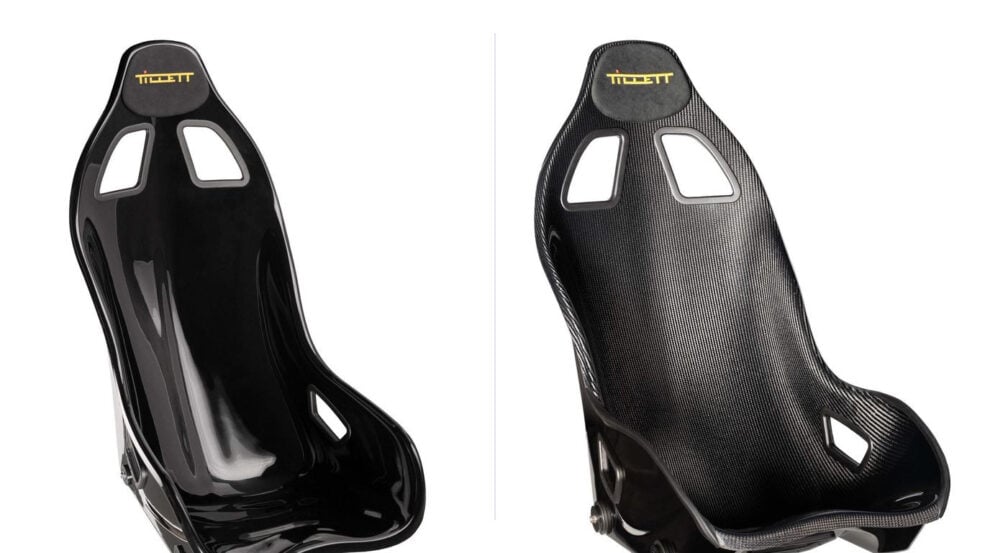
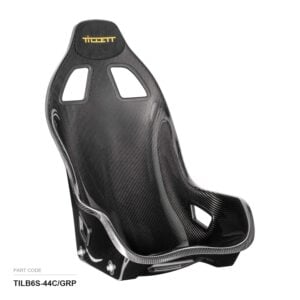
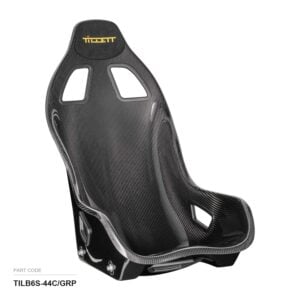
Two identical Tillett B6 bucket seats side by side, the left one in black gloss GRP and the right one in carbon GRP with the woven carbon surface visible
The same Tillett B6, twice. Black gloss GRP on the left, Carbon/GRP on the right. Tillett publish one weight range for the model, 4.5 to 5.1 kg, and it covers both.

Where the movement actually comes from

A bucket seat in a car is three things stacked up: a moulded shell, the brackets and subframe holding it, and the floor those brackets bolt through. All three move a little under load. They do not move by anything like the same amount.

The shell is the stiffest of the three. A one piece composite moulding in the shape of a seat is a very efficient structure, which is exactly why the shape is curved and rolled at every edge. What gives first is almost always further down: a long side mount bracket, a sliding runner, or a thin section of floorpan that was never designed to take a single bolt in the middle of a panel.

Where the movement comes from

load1231The shellThe stiffest of the three. Amoulded composite shell movesvery little on its own.2The mountsSide mount brackets, thesubframe and any runner. Longarms add movement.3The floorThe panel the brackets boltthrough, and the thinnestsection of the three.

This is why the showroom push test misleads people. Pushing the top of an unbolted shell tells you about the shell on its own, held at nothing. Bolted down through both mounting points, the same shell behaves completely differently. Cameron’s first question when somebody reports a seat that moves is never about the seat, it is about what it is bolted to.

What a rigid shell is actually for

Rigidity in a bucket seat is not about feel, and it is not about comfort. It is about keeping the driver in the position the belts were set up around. A harness is tensioned against a body in a fixed place. If the structure under that body moves, the geometry the harness was adjusted to moves with it.

Tillett put it plainly on their own B6 Screamer page, and they build the shells so it is worth quoting them: the seat’s ultra rigid design “keeps the occupant in the intended position within the cockpit”, which they describe as vital for stopping the harness and head restraint device from becoming loose.

That is the whole argument for stiffness in one sentence, and it explains the thing that surprises people most about approved seats.

The approved seat is usually the heavier one

Tillett are the cleanest example in our range, because they sell the same shape in both forms. The B6 is the non-FIA seat. The B6 Screamer is the FIA 8855-1999 version of the same design, out of the same factory, in the same two finishes. Side by side you would struggle to tell them apart.

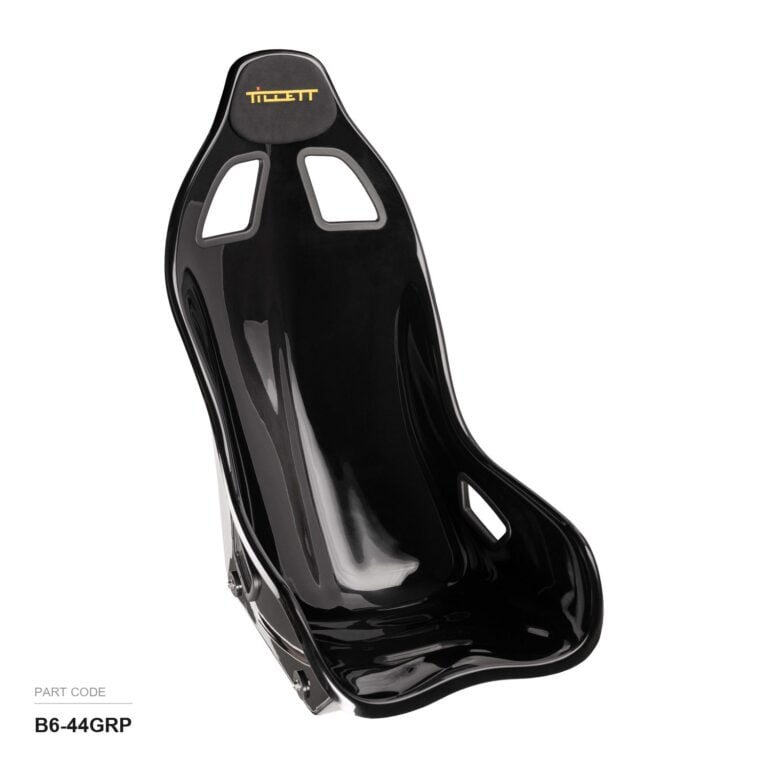
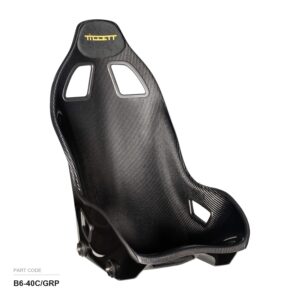
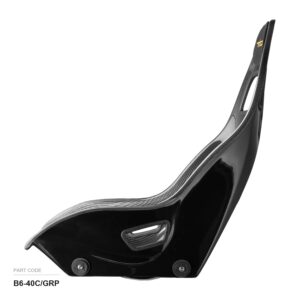
Tillett B6 GRP race car seat in black gloss, front three quarter view, part B6-44GRP
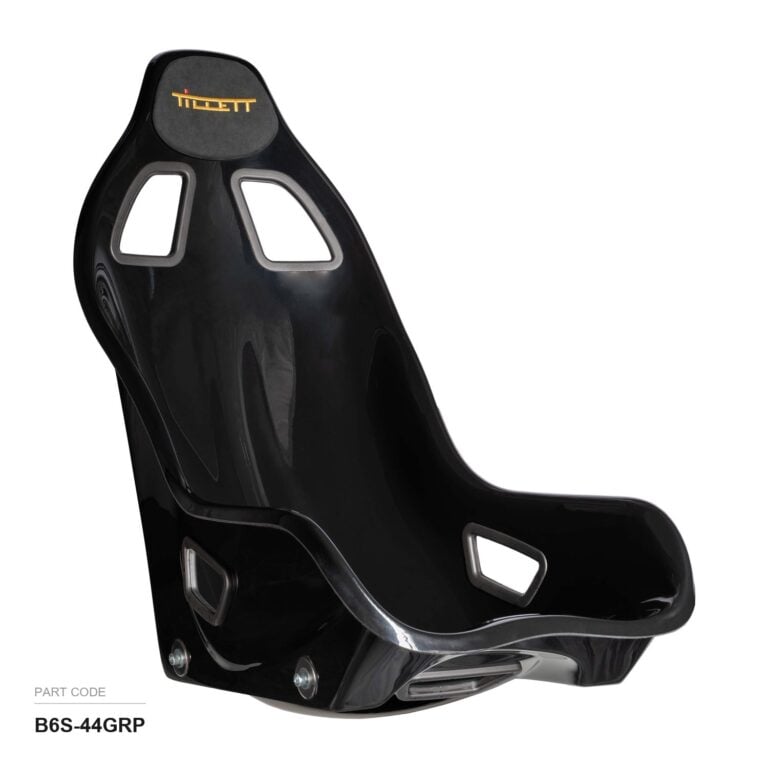
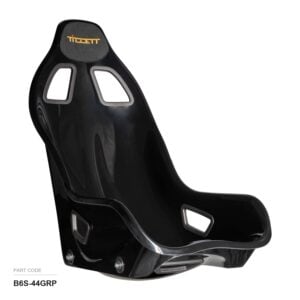
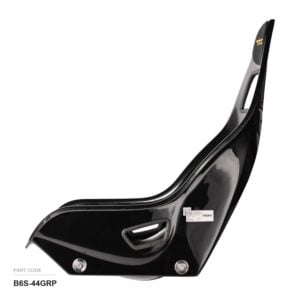
Tillett B6 Screamer GRP FIA race car seat in black gloss, front three quarter view, part B6S-44GRP

Left, the Tillett B6 in GRP. Right, the FIA homologated B6 Screamer in GRP. Same shape, same finish, and the approved one carries about a kilo more structure.

Tillett publish 4.5 to 5.1 kg for the B6 and 5.8 to 6.1 kg for the B6 Screamer, and they explain the gap themselves: the B6 has a lighter construction because it does not need to meet FIA requirements. Approval is not a sticker applied to a finished seat. It is a set of loads the shell has to carry, and carrying them takes material.

Worth saying clearly, because it is the other half of the same fact: a non-FIA shell is not a soft one. Tillett describe the current B6 as stronger and more rigid than the B6 they sold for the previous twenty years. The approved seat is built to a published standard and dated for scrutineering, and that is what you buy when you buy one. If you want the detail on which standard to look for, we covered that separately in FIA 8855-1999 against FIA 8855-2021.

Those four are the B6 family, two non-FIA and two approved, and they are counter picks from a much bigger shelf. The full ranges are in Tillett car racing seats, FIA racing bucket seats and track day bucket seats.

What the word carbon means on a seat listing

This is the one that costs people money, because carbon on a seat listing describes three different builds and the prices reflect all three. Garreth’s view is that you should know which one you are buying before you look at the price, not after.

BuildWhat it isWhat it changesExample in our range
Carbon surface on a glass shellA carbon outer skin laid over a GRP structureThe look and the surface. Makers publish the same weight range for both finishesTillett Carbon/GRP, about £265 above the GRP B6
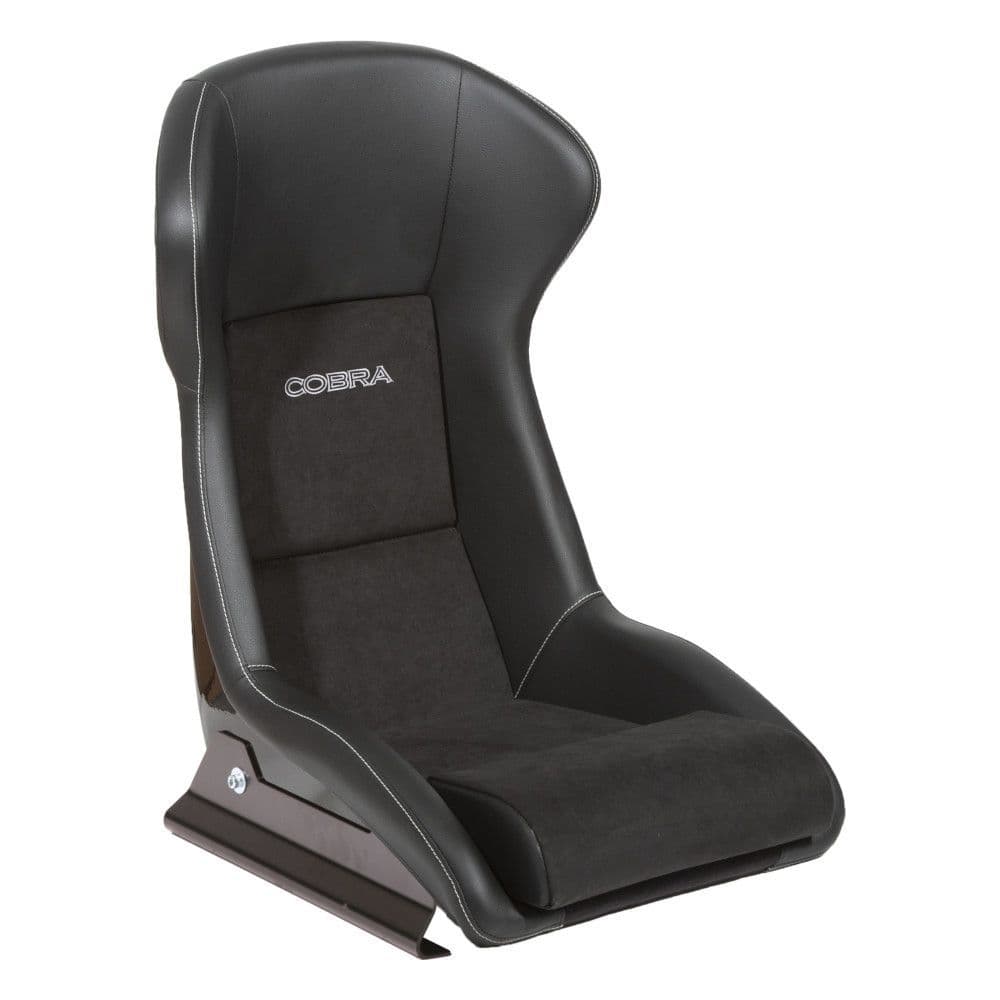
Wet lay carbonA layer of carbon applied to the fibreglass shellThe look, and a small weight saving. Cobra quote 17 lb against the GRP shell’s 19 lbCobra Nogaro Speedster Wet Lay Carbon, about £660 above the GRP Speedster
Full carbon shellThe whole structure laid up in carbonReal weight. Cobra publish 10.2 kg for the GRP Nogaro Circuit and 5.3 kg for the carbon oneCobra Nogaro Circuit Carbon, about £1,800 above the GRP Circuit
Carbon woven with aramidCarbon and Kevlar in the same laminateCarbon stiffness with aramid toughness in the weaveSparco Legend Carbon Kevlar, Recaro Pro Racer SPA Carbon-Kevlar

Weights are the manufacturers’ published figures. Price gaps are the difference between the two versions of the same seat in our range.

Tillett describe the material difference about as even handedly as anyone: carbon fibre has the edge on strength, stiffness and lower weight, while GRP is not far behind on strength and weight but uses lower cost materials and a simpler process. That gap is real in a laminate. Where it stops being the whole story is that a seat is not a flat panel, and the way the shell is built matters more than the fibre in it.

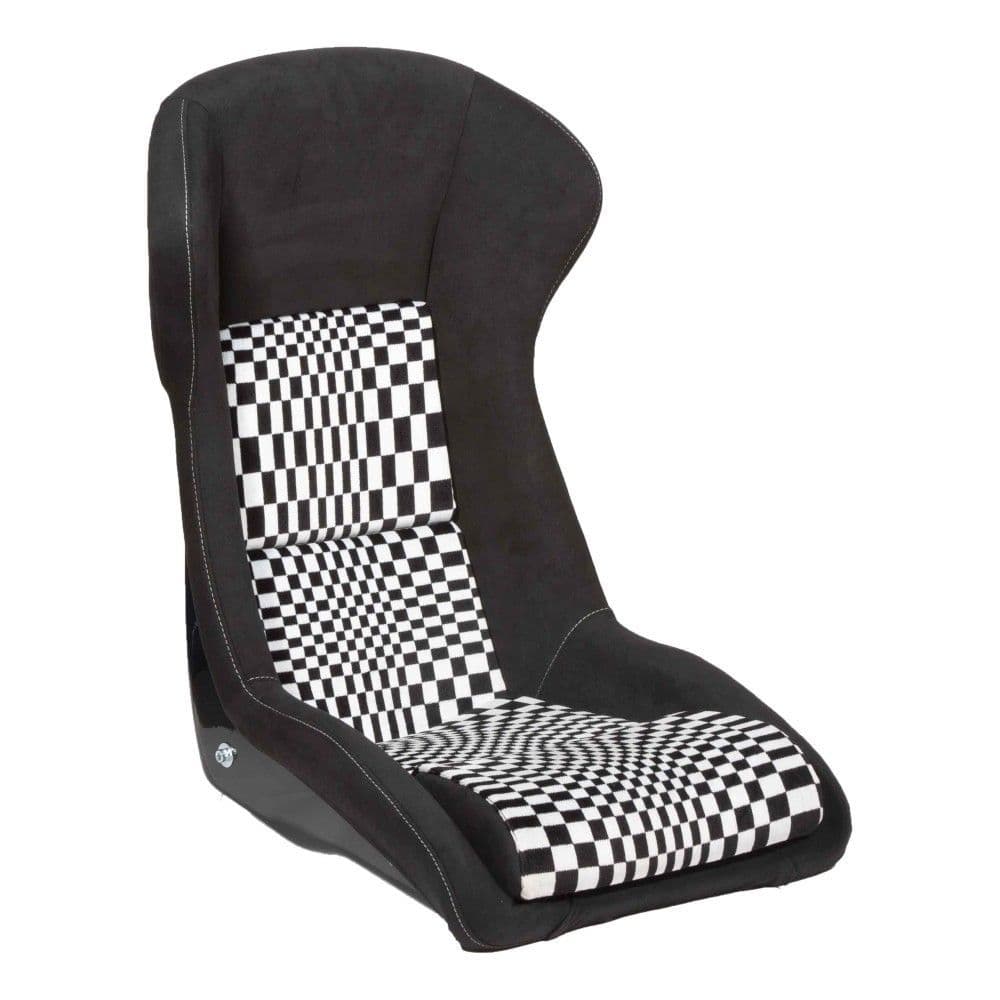
Three Nogaros, three builds, one shape. There are plenty more in carbon racing seats and fibreglass FIA racing seats.

Single skin, twin skin and backframes

Here is the part that gets missed. The biggest single change in shell stiffness across our range is not glass to carbon. It is how many skins the shell has.

Take Tillett’s W1i. As a single skin shell it is 1.9 kg. Add the backframe, which is a second composite moulding bonded to the front skin, and it becomes 3.5 kg. Tillett’s own description of what that second moulding does is the useful bit: it makes the seat a fully self-supporting rigid structure. Same shape, same material, and the construction is what turns it into a stiff box section.

Their B8 and B10 work the same way. Both are twin moulding seats, and Tillett attribute the rigidity to the construction directly: the B8 is rigid and strong because of its twin moulding, the B10 has the strength and rigidity of a twin skin moulding. The B10 does that at 4.5 kg, which is lighter than plenty of single skin shells.

Why two skins beat a thicker one

A flat panel resists bending in proportion to how far its material sits from the centre. Bonding a second moulding to the back of a shell pushes material out to both faces and leaves a gap in the middle, which is the same reason a box section beats a solid bar of the same weight.

It is also why the rolled edge around a bucket seat matters. Tillett offer their shells edges on and edges off, where edges off trims the rolled lip at the leg area to squeeze the seat between a gearbox tunnel and a door sill. The roll is structure as well as trim.

Tillett W series racing seat in carbon GRP shown with its bonded composite backframe, which turns the single skin shell into a self-supporting structure
A Tillett W shell with the backframe bonded on. The second moulding is what makes it self-supporting.

Where Kevlar and aramid sit

Kevlar is an aramid fibre, and it does a different job from carbon. Carbon is the stiff one. Aramid is the tough one: it takes impact and abrasion well and it holds a damaged laminate together instead of letting it come apart. In seat shells it is normally used alongside glass or carbon in the same laminate, which is why you see it described as a Kevlar shell on a seat that is not made only of Kevlar.

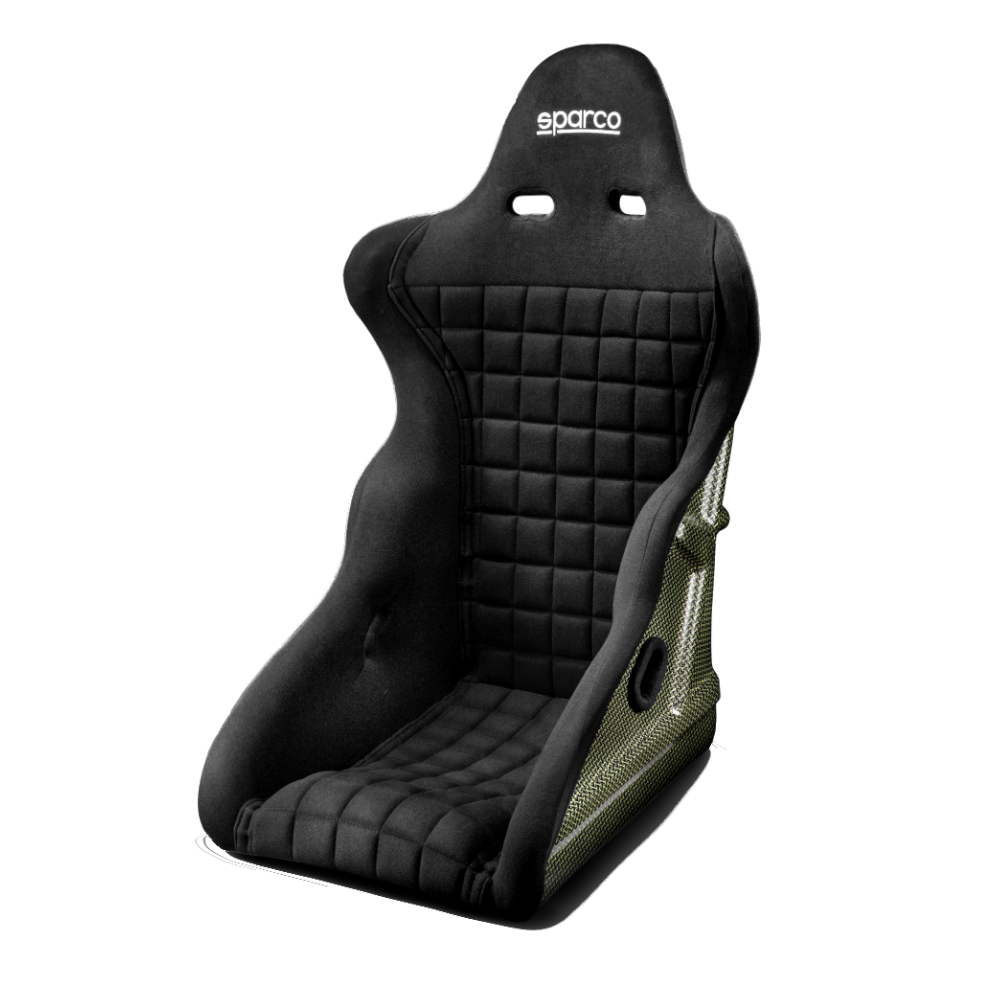
Corbeau’s System 3 seats are the ones most people mean when they ask us about Kevlar. Bride use an aramid and FRP combination on their bucket range. Sparco and Recaro weave aramid with carbon at the top of theirs. All of them sit in the same weight bracket as a good glass shell, so aramid is not the material you pick to save weight.

Picking between the three fibres

For most cars the choice is settled by budget and by what the seat is for, not by the laminate. A glass shell in a well built seat, bolted to a decent subframe, is a stiff installation.

Aramid earns its place where a shell takes knocks: endurance stints, shared cars, anything getting climbed in and out of all weekend.

A full carbon shell earns its place where the weight is genuinely worth the money to you, which on a Nogaro is about five kilos.
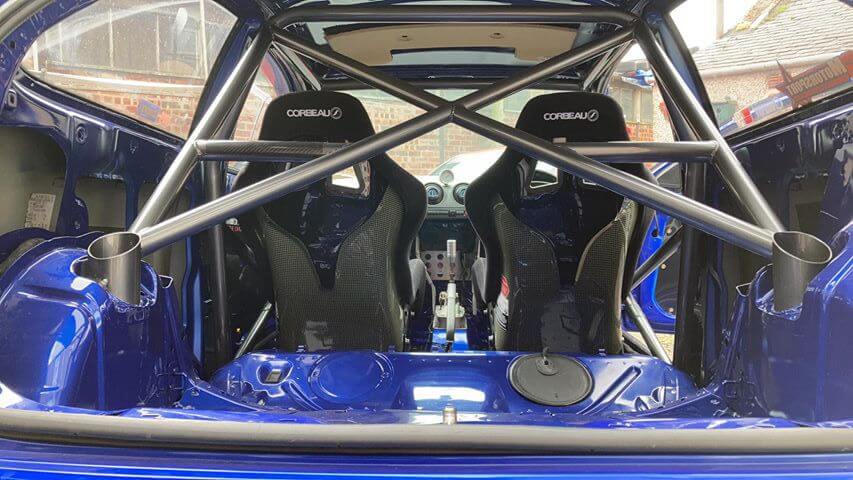
A pair of Corbeau Pro Series System 3 bucket seats seen from behind through the roll cage of a blue customer car, the woven aramid shell backs visible on both
A customer’s pair of Corbeau Pro Series System 3 seats from behind. The aramid weave runs across both shell backs.

Those four are examples, not the whole shelf. Kevlar racing seats has the rest of the aramid shells, and bucket seats is the full range.

What we notice on the showroom floor

Nobody publishes a deflection figure for a seat shell, so what follows is our own read from sitting in them on the showroom floor. It is a hands on impression built up over a lot of seats and a lot of customers, not a measurement.

The clearest difference is carbon. Sit in a carbon shell and it is obviously more rigid than a glass one. It is not a subtle thing you have to go looking for, and it is what customers notice first when we stand two seats next to each other and let them try both. Which build you are sitting in counts here, because a full carbon shell and a carbon face over a glass shell are different products, and the table further up splits them.

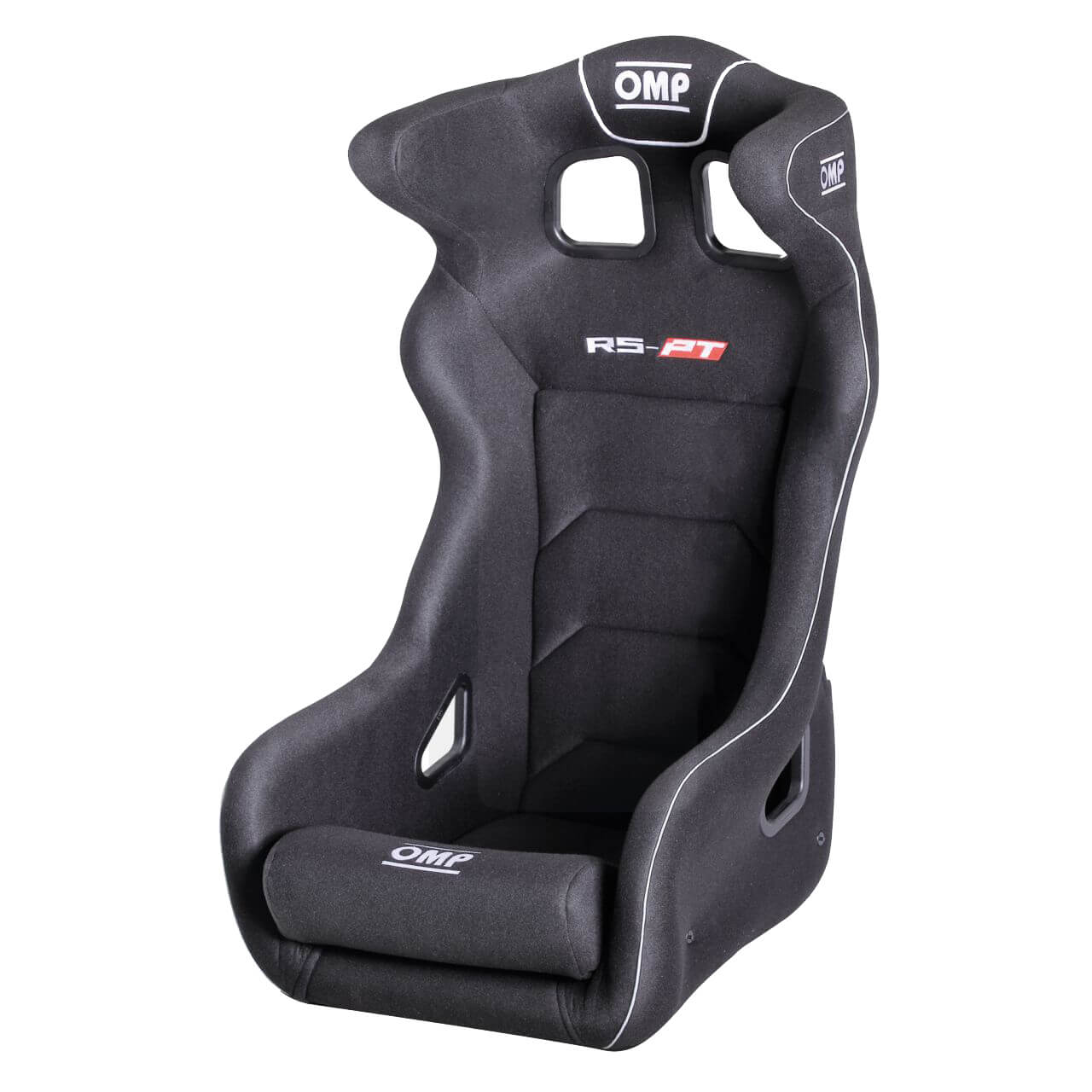
Across the fibreglass shells, Mirco and OMP are the two that feel most locked down when you drop into them. Sparco and Recaro sit close behind, and the four are near enough together that anybody moving between them will be choosing on shape and size long before stiffness comes into it. Garreth’s view is that once you are in that group you have a rigid seat, and the next hundred pounds does more good on the subframe than on the shell.

One fibreglass seat from each of the four, and they are counter picks from far bigger ranges. The rest are in FIA racing bucket seats, and the full carbon shells are in carbon racing seats.

Cameron’s answer when somebody rings to ask about this is always the same: come and sit in three of them back to back on the same afternoon. Ten minutes of that tells you more than any spec sheet, because the difference between a rigid shell and a very rigid one is something you feel through your back rather than something you read.

Karting does it the other way round

One thing worth knowing if you have come from karting, because it explains a lot of crossed wires. In a kart the seat is part of the chassis. There is no suspension, so how much the seat flexes changes how load moves across the tyres, and Tillett sell soft, standard and rigid kart shells on purpose. They even build split stiffness shells, rigid down the sides with a soft centre.

In a car none of that applies. The suspension does the load transfer and the seat has one job, which is holding you still. So a kart driver used to choosing a shell by flex is not being daft, they are applying a rule that stops at the end of the pit lane.

So what should you expect?

What you are buyingWhat the shell is doingWhere to spend next
Non-FIA glass shell, road and track dayA stiff moulding built to the maker’s own spec, lighter than the approved version of the same seatThe subframe and side mounts, which is where the movement is
FIA approved glass shellExtra structure to carry the loads the standard sets, and a dated homologation labelHarness geometry, so the stiffness is actually being used
Carbon surface on a glass shellStructurally the glass seat, with a carbon outer faceNothing. This is the finish you wanted
Full carbon shellThe stiffest and by some way the lightest build of the same seatMounting hardware to match, so you are not hanging it off long brackets
Aramid or carbon-aramid shellToughness in the laminate, weight similar to a good glass seatCushion sets, because these are usually the ones living in a car all season

Common questions

Some movement in the assembly is normal, and most of what you feel is the bracket, the runner and the floor under the mounting points, not the shell. If a seat feels loose to you, the first thing to look at is what it is bolted to and how long the bracket arms are.

Sitting in them on our own floor, a carbon shell is obviously the more rigid of the two, and Tillett say the same about the laminate: carbon has the edge on strength and stiffness. How much of that reaches the finished seat depends on whether the carbon is the whole structure or a surface over a glass shell, and on whether the shell is single or twin skin. Check which build you are looking at before comparing two prices.

Because approval is a set of loads the shell has to carry, and carrying them takes material. Tillett publish 4.5 to 5.1 kg for the B6 and 5.8 to 6.1 kg for the FIA B6 Screamer, and say directly that the B6 is lighter because it does not need to meet FIA requirements.

Not usually. Aramid is chosen for toughness and impact resistance, and the aramid shells in our range sit in the same weight bracket as a good glass seat. Full carbon is the build that changes the weight.

Makers build their non-FIA shells to their own specification, and Tillett describe their current non-FIA B6 as stronger and more rigid than the B6 it replaced. What an approved seat adds is a published standard and a dated label for scrutineering.

No, they are shell weights. Tillett also note that seat weights vary by up to ten per cent, and that adding a cushion and back panel set puts roughly another kilo on. Mounts, runners and subframes are all on top of that.

💬
Still weighing it up?Come and push on a few yourself

The seats in this guide are on the showroom floor in Nottingham, bolted and loose, and ten minutes with your hands on them settles the carbon question faster than any page can. Ring Garreth and Cameron on 0115 9893488, or tell us the car and what you are doing with it and we will tell you where the money is best spent.

Need a personal recommendation?

We're here to ensure you pick the right seat. Contact us today.
Our showroom virtual walk through!
Have a walk around our showroom before you even buy your new seats. 
Our hands on experience, is what allows us to bring you our recommendations.
Free UK Shipping

On all orders above £100

In-Store Shopping

Try before you buy

Easy Delivery Tracking

Aftership Tracking Updates