Call Garreth, Cameron & Jack: 0115 647 8650

FREE UK shipping on orders over £100.00 & FREE gifts on checkout

Your garage NewAdd your car and see the parts that fit
Useful Links
Your Account

Talk to us

Garreth, Cameron & Jack · Mon to Fri
Call 0115 647 8650Free advice on your build
Thanks, that’s with us. We reply the same working day.
That didn’t send. Please give us a call instead.

Useful Links

Quick Access

Want to chat?

Call Garreth, Cameron, Jack
Today On: 0115 647 8650
Click Here For Our Contact Form


The Best Tillett Seat For Your Caterham Or Westfield

Seat guide, Caterham and Westfield

Tillett make about twenty car seats and only a handful of them will physically go into a Caterham or a Westfield. The good news is that Tillett already know which, and say so on their own website, so this is less a matter of opinion than it looks.

Below are the two we would put in a Seven, the two harnesses we would bolt in with them, and the numbers you need to mount the lot. If you want the wider view across every brand, our Westfield and Caterham bucket seat overview covers Cobra as well.

  • Width decides it. The B6 at 40cm with the rolled edges cut off is the seat Tillett themselves name for Caterham and Lotus
  • Our top two: the B6 from £793.80 with an integrated headrest, and the W1i from £433.40 with none
  • The W1i shell is 1.9kg because it has no headrest. In a Seven the roll bar hoop carries one instead
  • Both bolt straight to the floor on bottom mounts, which is what Tillett recommend for a narrow cockpit
  • Top two harnesses: the Schroth ASM four point and the TRS Magnum four point FIA, both made in Caterham and Westfield specific versions
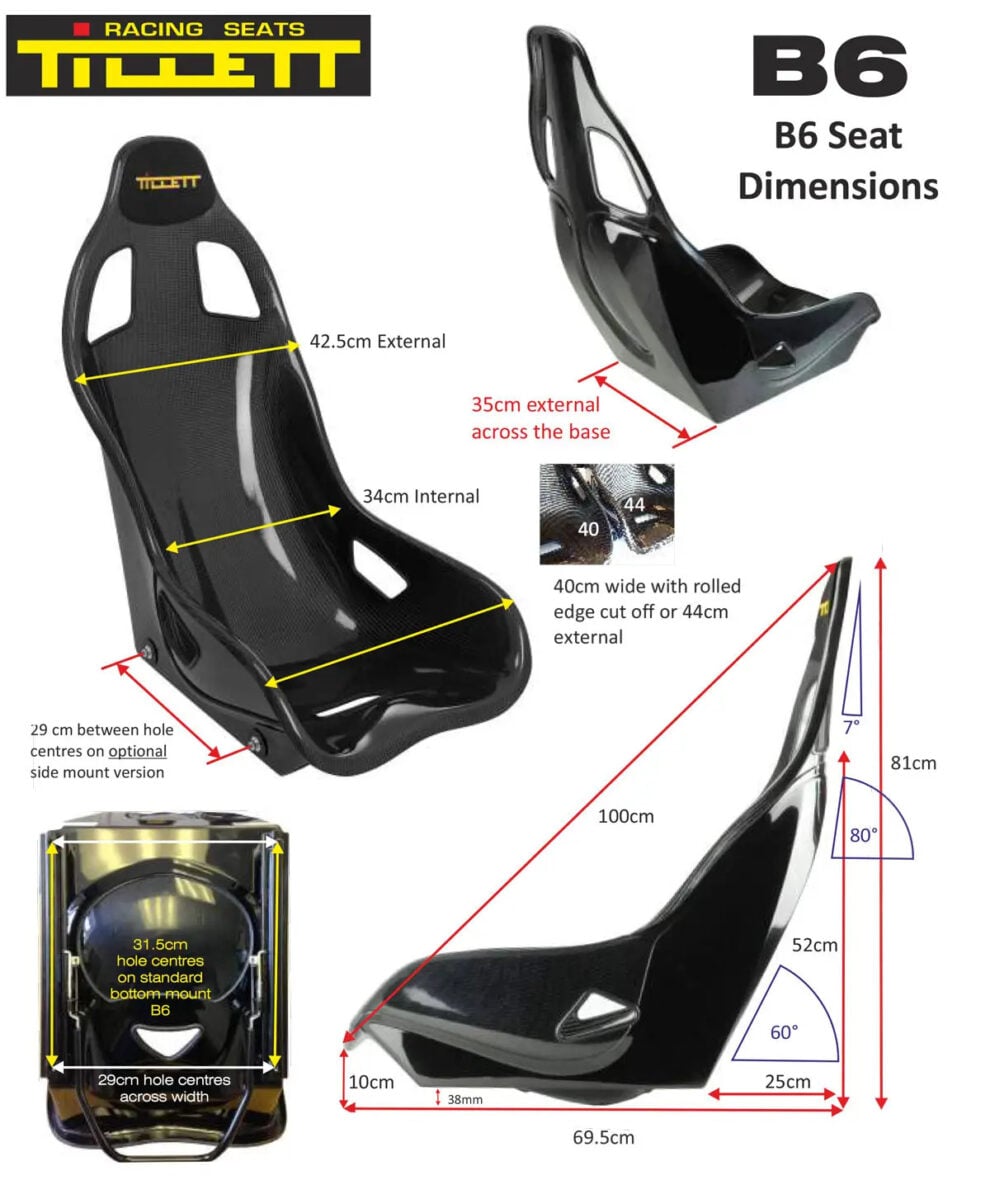
  • Bottom mount hole centres are 31.5cm front to back and 29cm across, off Tillett’s own drawing
  • A harness is never anchored to the seat. It goes to the chassis or the roll bar, every time
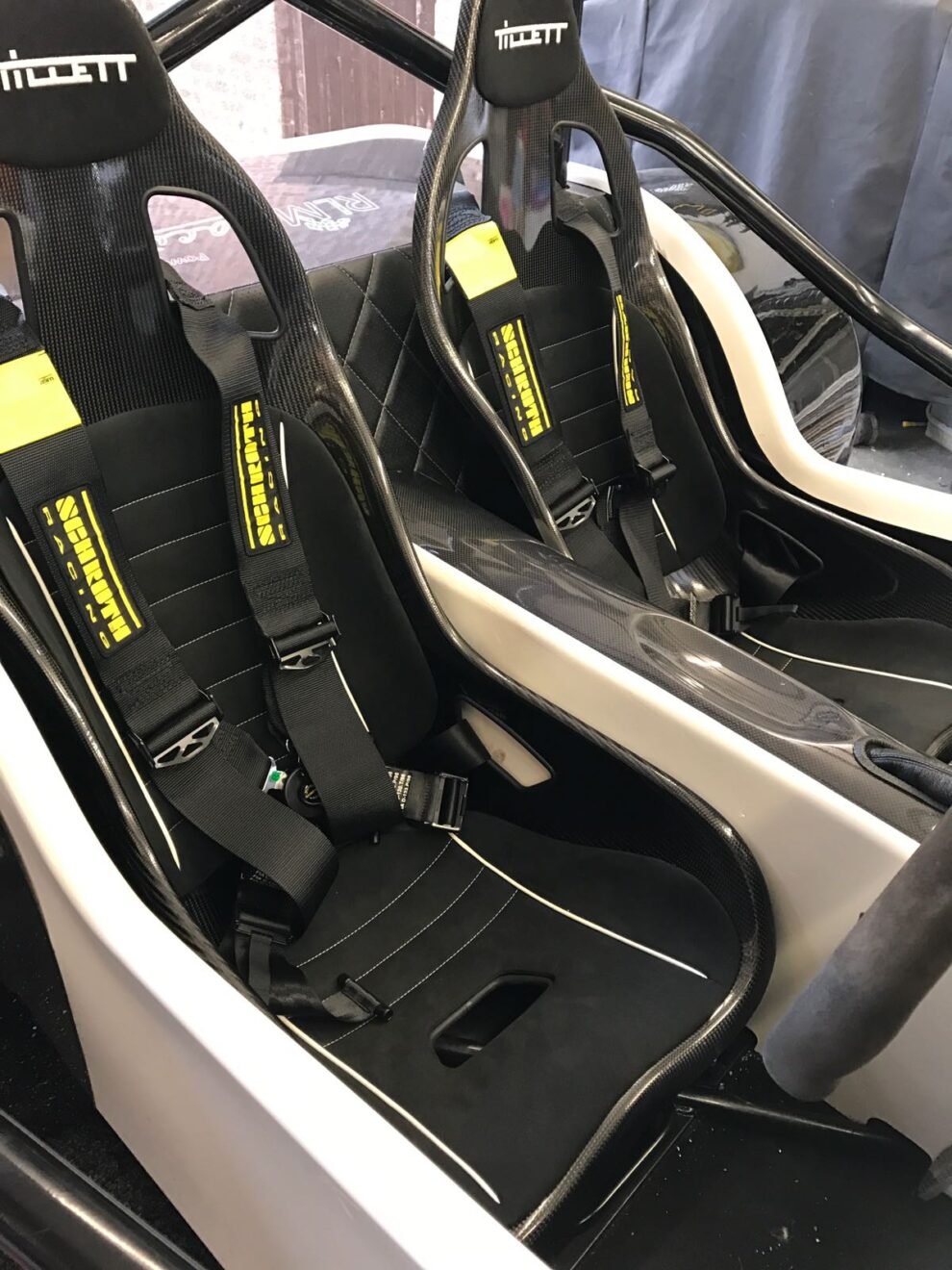
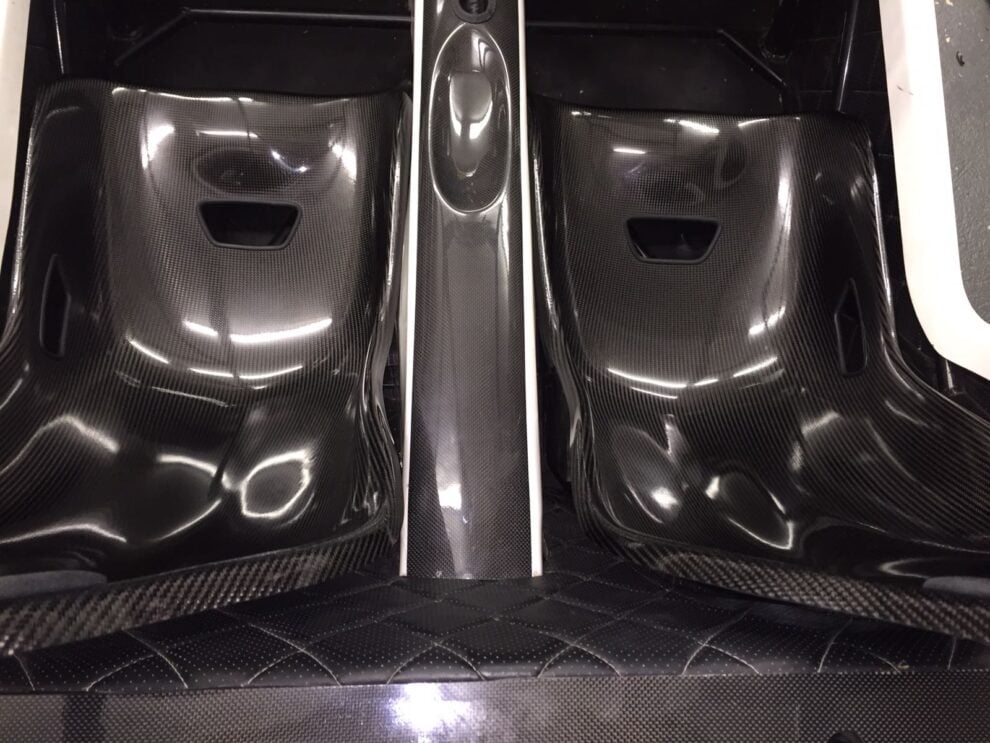
Two Tillett B6 Carbon bucket seats fitted in a customer MNR Vortx Seven style kit car, with Schroth four point harnesses bolted in and the roll bar behind
A customer’s MNR Vortx on a pair of Tillett B6 Carbons with Schroth four point harnesses. This is the combination this page argues for, photographed in the car.

The cockpit picks the seat, not you

In most cars you choose a seat on how it holds you. In a Seven you choose it on whether it goes in at all. You have a flat aluminium floor, a transmission tunnel down the middle that does not move, a body sill either side that does not move either, and about a foot of usable width between them once the seat is in. Everything else is a detail.

Two Tillett B6 Carbon bucket seats seen from behind, sitting either side of the transmission tunnel in a Seven style kit car, showing how little room there is between them
The reason width decides this. Two B6 shells either side of the tunnel in a customer Vortx, with barely a finger between the shells and the bodywork. Get the width wrong and nothing else about the seat matters.

This is where Tillett do something most seat makers do not. Their shells are moulded with a rolled lip around the outer edge of the leg area, and that lip can be left on or cut off at the factory. On the B6 that is the difference between 44cm across the outside and 40cm, and 4cm is an enormous amount of room in a car this narrow. Their own words on the B6 page are that the narrow B6-40 “can often be seen in vehicles such as the Lotus, and Caterham’s”, with the 44cm edges-on version going into GT and saloon cars instead.

So the answer to which Tillett fits a Seven is really two answers: which model, and which cut. Get the cut wrong and the right model still will not go in.

The numbers off Tillett’s own drawing

Worth having these in front of you before you order anything, because you can check them against a tape measure in your own car in about five minutes.

Tillett B6 seat dimension drawing: 42.5cm external and 34cm internal across the shoulders, 35cm across the base, 40cm with the rolled edges cut off or 44cm with them on, 81cm tall, 69.5cm deep, 31.5cm bottom mount hole centres
Tillett’s own B6 dimension sheet. The two figures that decide a Seven fit are 40cm across the outside with the rolled edges cut off, and 35cm across the base. The 31.5cm bottom mount hole centres are what you drill to.

The two that decide whether it goes in are 40cm across the widest point with the edges cut off, and 35cm across the base. The base figure is the one people forget: the shell is widest at the shoulders, but it is the base that has to sit between the tunnel and the sill. The 31.5cm and 29cm hole centres are the bottom mount pattern, which is what you will be drilling to.

Measure the tunnel cover, not the tunnelOne owner on the USA7s forum fitted the 40cm cut and still took a little material off the sides to clear his tunnel cover. The trim and carpet on top of the tunnel can be a centimetre a side on its own, and it is the trimmed width that the seat has to live with. Measure with everything in place that is going to stay in place.

Top pick one: the Tillett B6

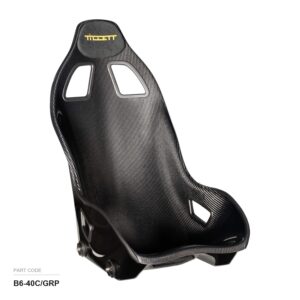
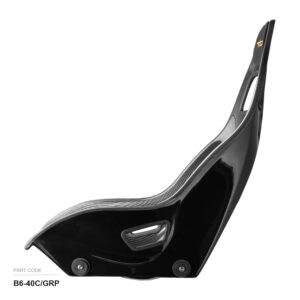
This is the one, and it is not a close call. Tillett name it for these cars, the trade fits it to these cars, and it is the seat in the photograph at the top of this page. Order it as the B6-40 with the rolled edges cut off and it drops into a Caterham or a Westfield without an argument.

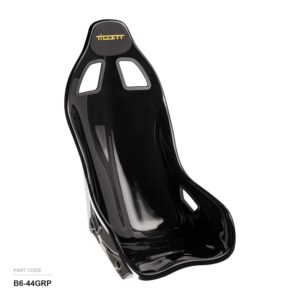
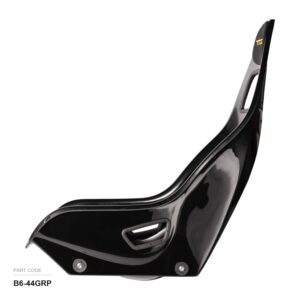
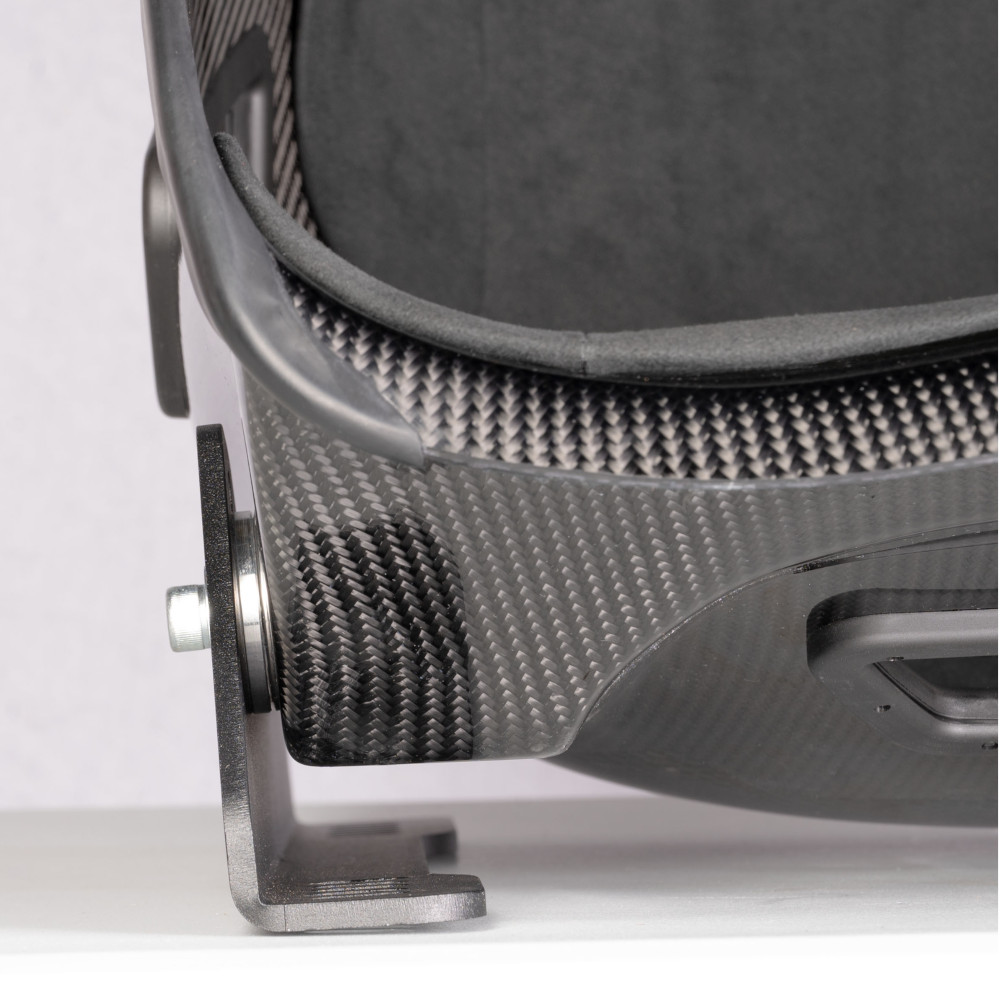
What you get for the money is a one piece composite shell with the headrest moulded in, so it is a complete seat on its own with nothing to add behind your head. It takes a six point harness, it is 32in to 36in on the waist, and the shell is 4.5kg to 5.1kg. In GRP it is £793.80 and in carbon and GRP £1014.30, and the carbon is about the finish and not the weight, because Tillett quote the same weight range for both. It is Road and Track, which suits a road registered Seven and a track day car and is fine for most club events that do not specify a homologated seat.

If a scrutineer is going to look at itThe B6 is not homologated. The B6 Screamer is the same shell with FIA 8855-1999 approval, at £1028.63 in GRP, and usefully both edge configurations are homologated, so cutting it down to 40cm for a Seven does not cost you the approval. If your class regulations call for a homologated seat, buy the Screamer and not the standard B6.

Top pick two: the Tillett W1i

The W1i is the same idea with the headrest taken off, and in a Seven that turns out to be an advantage. The shell weighs 1.9kg. Not a typo: one point nine, against four and a half for the B6, because the whole head area is simply not there. Add the optional back frame and it is 3.5kg, still lighter than anything else in the range.

What carries your head instead is the roll bar. Tillett say the W1i suits “an application where there is already a headrest support in existence”, and a Seven with a hoop behind the seats is exactly that. Caterham racers have been doing it for years: W1i in the floor, headrest pad on the roll bar. It comes in the same 40cm edges-off and 44cm edges-on cuts, mounts by bottom or side mount on embedded M8 fittings, and is £433.40 in GRP or £503.79 in carbon and GRP. It takes a four point harness.

The trade off is honest enough. You are buying a lighter, cheaper, lower seat and taking on the job of mounting a headrest to the bar. If the car is a road car that occasionally sees a circuit, take the B6 and have it done with. If it is a race or sprint car where every kilo is argued over, the W1i is the better buy.

★

Take the B6 if

The car is road registered, you want one part that does the whole job, and you would rather not fabricate a headrest mount. It is the default and the one we sell most of for these cars.

⚙

Take the W1i if

The car is built for competition, you already have a roll bar that can carry a headrest, and 1.9kg against 4.5kg matters to you. It is also £360 cheaper in GRP.

▢

Either way, order the 40cm

Both come as 40cm with the rolled edges cut off or 44cm with them on. For a Caterham or a Westfield it is the 40cm, and it is specified when the seat is made instead of cut afterwards.

Those four are the two picks in both materials. The rest of the range, including the Screamer and the head-supported C1, sits in Tillett car racing seats.

How they mount in a Seven

Tillett give both seats a choice of bottom mount or side mount, and for these cars the answer is bottom mount. Their own B6 page says it plainly: bottom mounts are “preferred in super narrow cockpits”. The shell sits on the floor on four bolts through the 31.5cm by 29cm hole pattern, nothing hangs off the sides, and you lose no width at all to brackets.

It also means no runners, and in a Seven that is usually the right call and not a compromise. Owners on the Seven forums bolt straight through the floor and set the position once, because there is so little fore and aft travel available that a slider earns very little. Set it up with the pedals where you want them and leave it. If the car is shared between two drivers of different heights, that is the one case for a rail, and it is worth ringing us about before you commit.

▢

Bottom mount, four bolts to the floor

The Seven answer. 31.5cm hole centres front to back, 29cm across. Use a spreader plate or a washer of decent area under the floor on each bolt, because aluminium sheet on its own is not much to pull against.

⚙

Side mount, if you need lower or angled

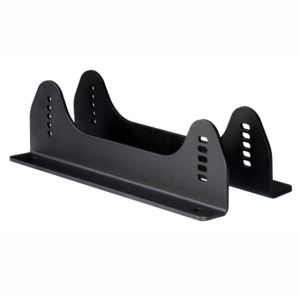
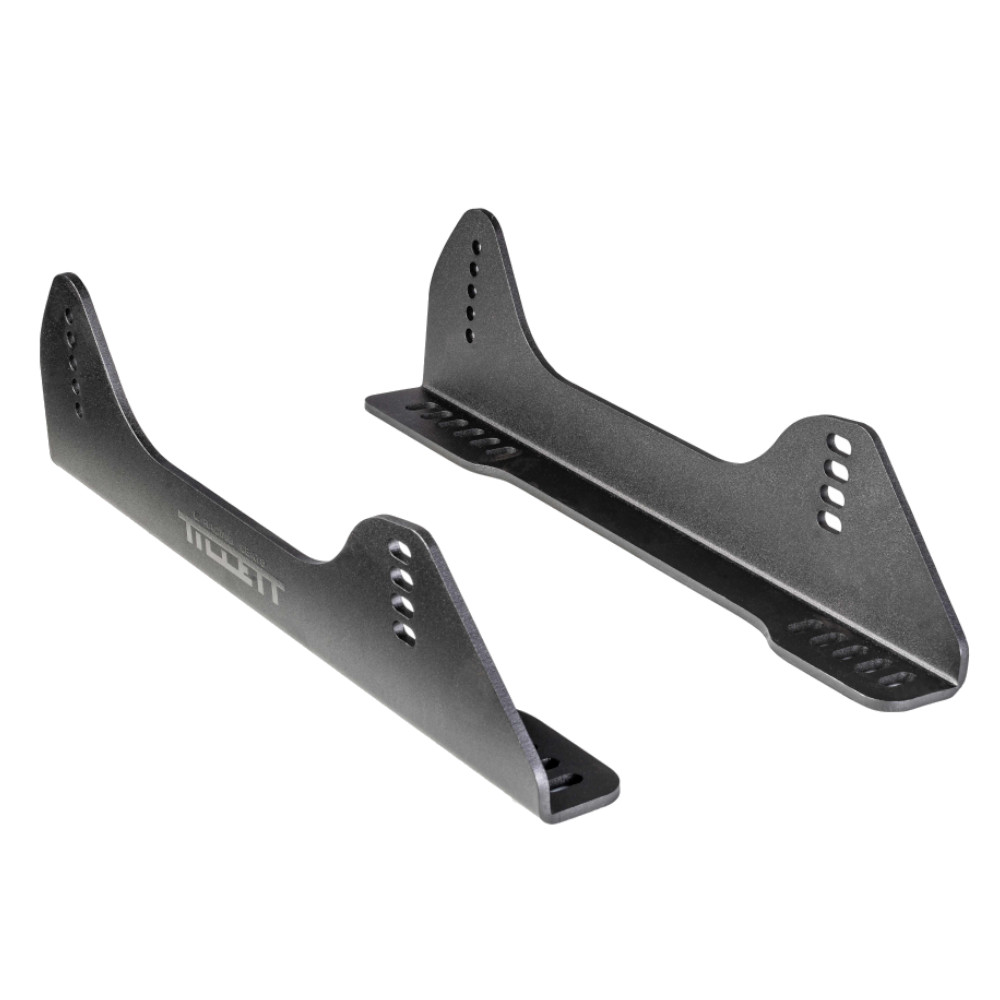
Tillett’s STBO and STBI aluminium side mounts are £116 and fit the B6. Side mounting generally gets the shell lower and lets you set the backrest angle, but the brackets take width you may not have and you need a frame down to the floor.

★

What we would not use

The TLPK1 low profile kit, despite the name. It exists to solve seat to roofline clearance in low GT cars. A Seven has no roof, so it fixes a problem you do not have.

The top two harnesses

Both of these come in versions cut specifically for a Caterham and for a Westfield, which matters more than it sounds: strap lengths and end fittings are made to suit the car, so you are not left with half a metre of surplus webbing in a cockpit that has nowhere to put it. Our Caterham and Westfield harness guide runs through the whole range; these are the two we would fit.

★

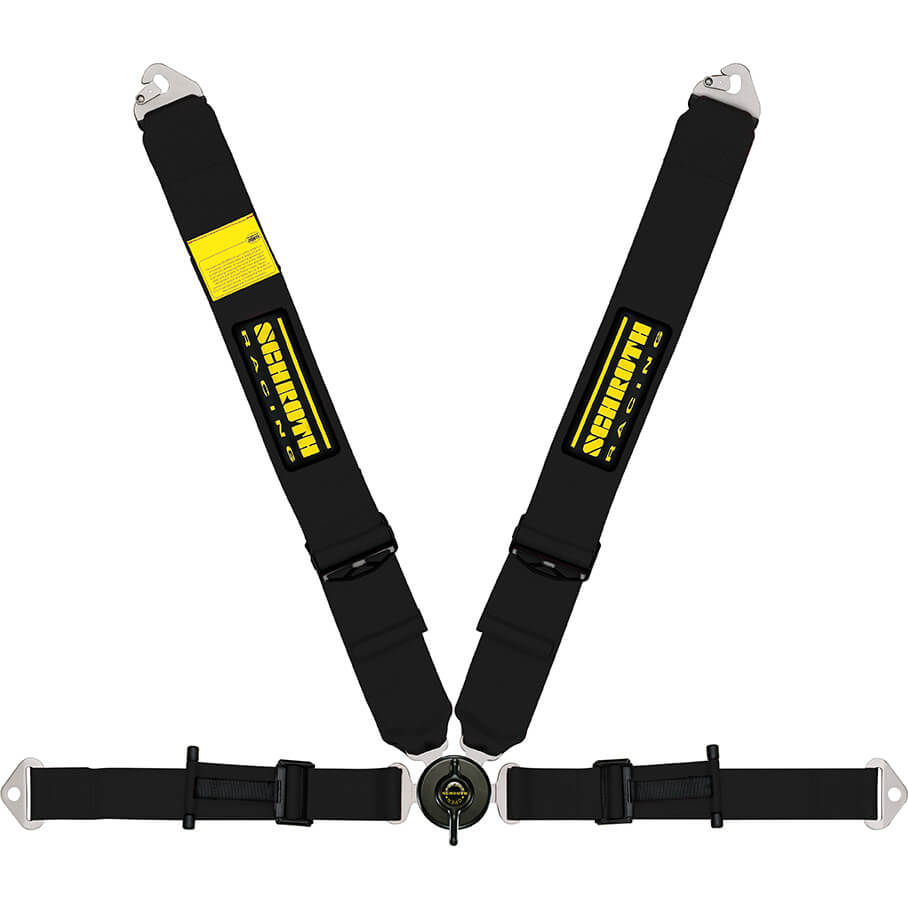
Schroth Caterham II / Westfield II ASM, four point

The four point done properly. Schroth’s ASM webbing is designed to stop you sliding forward under the lap strap in a frontal impact, which is the known weakness of any four point without a sub strap, and it is the reason we put this first. FIA 8854-1998 and ECE approved, 3in shoulders to 2in laps, alloy adjusters, bolt in fittings and an aircraft buckle. £315.31 for the Caterham version, £290 for the Westfield. Order per side, they are handed.

⚙

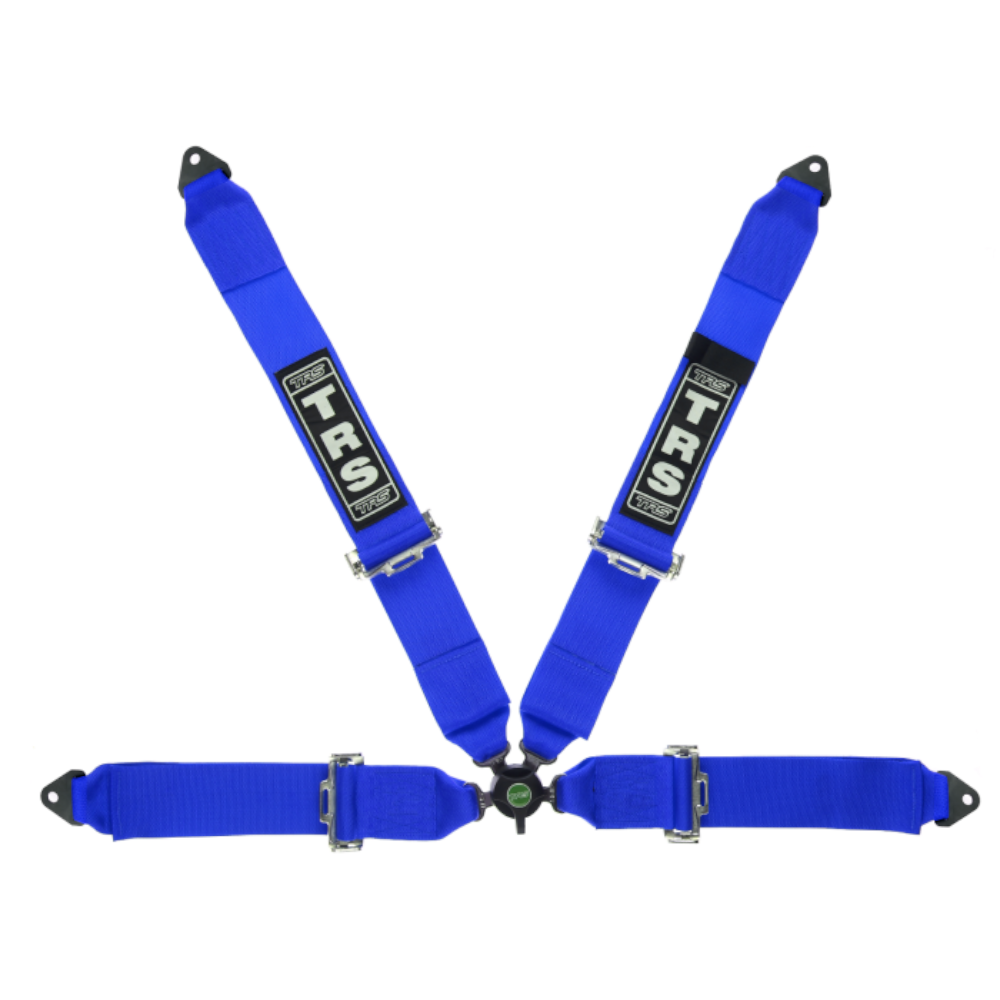
TRS Magnum four point FIA

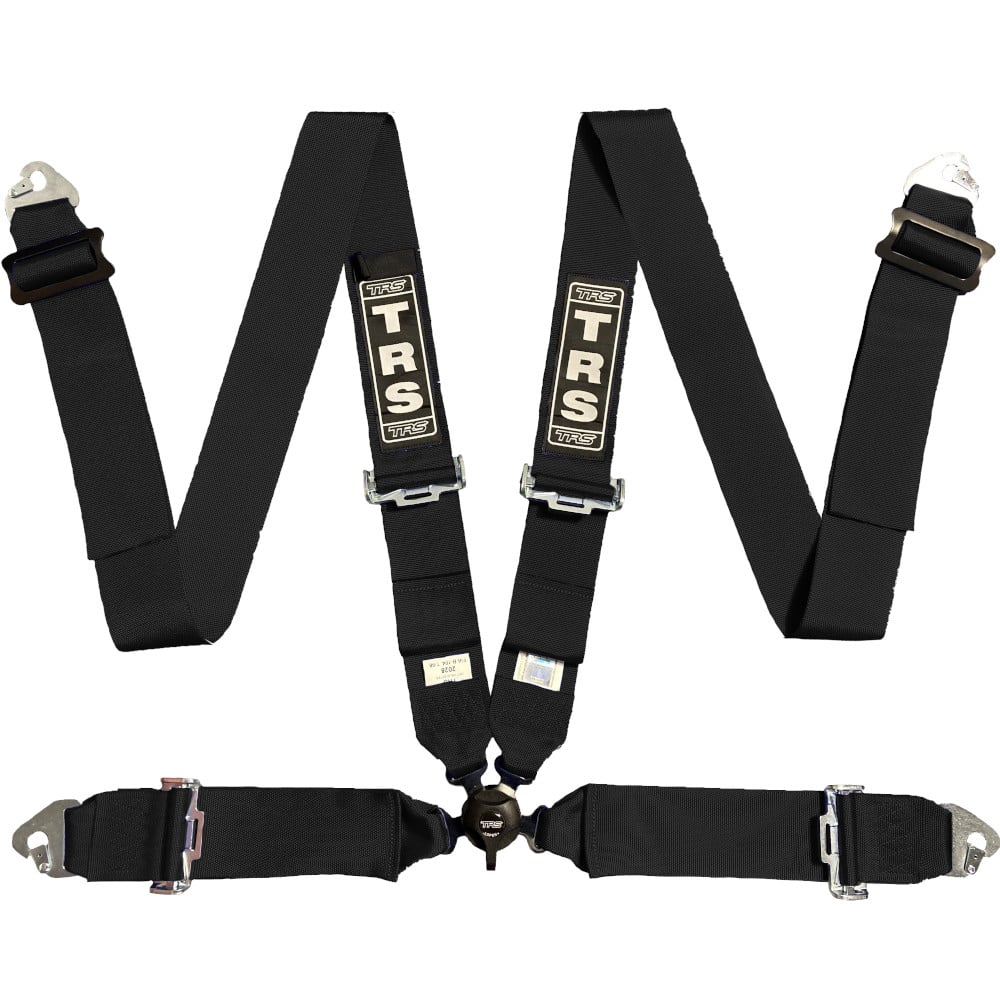
The value FIA belt and a properly thought out one. Full 3in webbing top and bottom, shoulder straps sewn to length at 50cm from adjuster to fixing so there is no spare fabric in the cockpit, thumb loops, and velcro on the outer lap strap so the straps stay put on the seat while you climb in over the side. £205 Caterham, £199 Westfield, in eight or nine colours. Made to order, so a specification sheet is taken before it goes into production.

If you need six pointsBoth picks above are four point belts, because that is what most of these cars run and what Caterham themselves supply. If your class needs six, the TRS Pro six point at £199 is the Road and Track option and the Willans Silverstone LDT6 at £289 is the FIA one, both in Caterham specific versions. A six point needs a sub strap route through the seat base, which both the B6 and the W1i have.

Fitting the harness, and the one rule people break

The rule that catches people out in a Seven is that a harness is never anchored to the seat, or to anything the seat is bolted to. Not the shell, not the brackets, not the floor pan immediately under it. It goes to the chassis or to the roll bar. In a car where the most convenient hole is often right behind the seat, that is a real temptation and it is the wrong answer.

The numbers, which are the same ones in our harness fitting guide: shoulder straps no more than 45 degrees below horizontal measured from the top of your shoulder, and never angled upwards. If you run a frontal head restraint, no more than 20 degrees. Between the two shoulder straps, 10 to 25 degrees in plan, symmetrical about the seat centreline. Fixings steel, minimum M12 grade 8.8 or 7/16in UNF, and a new mounting point in sheet wants a counter plate of at least 40 square centimetres and 3mm thick. If you are looping a strap round the roll bar, three passes through the three bar slide and 100mm of tail left over.

The roll bar is the anchor, and it needs to be up to itAnchoring shoulder straps to a bolt-in roll bar is normal practice in these cars, but the bar has to be man enough and mounted properly to take a harness load. If yours is a styling hoop and not a structural one, it is not a harness anchor. Send us a photograph of what is behind your seats and we will tell you what we think before you drill anything.

The two seats side by side

Tillett B6Tillett W1i
Width, edges cut off40cm40cm
Width, edges left on44cm44cm
Across the base35cmNot published
Shell weight4.5kg to 5.1kg1.9kg, or 3.5kg with the back frame
HeadrestMoulded into the shellNone, use the roll bar
Harness6 point compatible4 point compatible
MountingBottom mount or side mountBottom mount or side mount, embedded M8
Bottom mount hole centres31.5cm x 29cmEmbedded M8 fittings
ApprovalRoad and track. Screamer version is FIA 8855-1999Road and track
Waist32in to 36inTo approx 100kg and 36in
Price, GRP£793.80£433.40
Price, carbon and GRP£1014.30£503.79

Ex VAT, per seat, seat only. Widths and weights are Tillett’s own published figures; the hole centres come off their B6 dimension drawing. Neither price includes mounts or a harness.

Common questions

No, and you should not. The 40cm edges-off version is made that way, so you order it as the cut you want. It is a manufacturing option, not a modification.

In most Sevens, no. That is the GT and saloon car width. Order the 40cm and save yourself the afternoon.

Not meaningfully. Tillett quote 4.5kg to 5.1kg for the B6 and do not split it by material, so treat the carbon as a finish, not a weight saving. If you want light, the W1i at 1.9kg is where the weight actually goes.

Yes, on the roll bar rather than the seat, which is how Caterham racers run it and what Tillett design the seat around. Tell us what your hoop looks like and we will talk through the pad and the mount.

The Schroth ASM four point. It is designed to work without a sub strap, which is the situation you are in, and it is FIA and ECE approved. Anchor the shoulder straps to the roll bar and the laps to the chassis.

Usually yes, and the photographs on this page are a customer MNR Vortx on a pair of B6 Carbons. The cockpits vary more than a Caterham to Westfield comparison does though, so measure between the tunnel and the sill first and send us the figure.

Yes. Both seats have a route for the sub strap through the base, and there are Caterham specific six point belts from TRS and Willans. The extra job is finding a sound anchor for the sub strap ahead of the seat.

💬
The next stepMeasure between the tunnel and the sill, then ring us

One figure gets you most of the way: the clear width across your floor between the trimmed tunnel and the sill, with everything in place that is staying in place. Ring Cameron on 0115 647 8650 with that and whether the car is road, track or race, and he will tell you which of the two seats to have, in which cut, and what it needs to bolt down. If you are building something that is not a Caterham or a Westfield, Garreth has seen most of the Seven derivatives through the workshop and will tell you honestly if it is a measure twice job.

Need a personal recommendation?

We're here to ensure you pick the right seat. Contact us today.
Our showroom virtual walk through!
Have a walk around our showroom before you even buy your new seats. 
Our hands on experience, is what allows us to bring you our recommendations.
Free UK Shipping

On all orders above £100

Showroom

Try before you buy, by appointment

Delivery Tracking

Updates by email and text