
Which FIA Bucket Seats Have A Classic Look Instead Of Big Racing Logos?
Looking for an FIA bucket seat that looks classic? Houndstooth, tartan, diamond stitch and period shapes that carry FIA 8855-1999, with prices and what fits.

Call Garreth, Cameron & Jack: 0115 647 8650
FREE UK shipping on orders over £100.00 & FREE gifts on checkout
Talk to us
Call Garreth, Cameron, Jack
Today On: 0115 647 8650
Click Here For Our Contact Form
A customer came in this week with a Sim-Lab P1X, the original one, not the Pro, and the same question I get about aluminium profile rigs generally. He wanted a proper bucket seat in it, and he had been comparing shoulder widths on a spreadsheet. That is the wrong measurement to be comparing.
Shoulder width decides whether you fit the seat. It has nothing to do with whether the seat fits the rig. On a P1X the frame hands you two lengths of 40×40 profile to bolt to, and how far apart you set them is the only fitment number that matters. Sim-Lab publishes that figure for seven seats. Get it right and the seat drops on in an afternoon. Guess it and you are unbolting the base to move a rail by 20mm with the seat sat on the carpet.
Working out those combinations is most of my week here, and this page runs in the order I would actually do the job: what the older P1X gives you, the number that decides it, then the seats we hold and who each one suits.

What is on this page
Worth being clear which cockpit we are talking about, because Sim-Lab has run three versions of this frame. The original P1X came first. The P1X Pro replaced the universal corner brackets with bespoke sandwich plates and pre-drilled holes. The P1X Ultimate is the current one. If yours went together with corner brackets and the manual is dated January 2023, you have the original.
Pull the bill of materials out of that manual and the frame is simple. The base is two 160×40 profiles at 1350mm, tied together by two 160×40 cross members at 500mm. The uprights are 120×40 at 780mm. The pedal tray is a 160×40 and an 80×40, both at 470mm. There is an 80×40 at 550mm for the shifter or handbrake.
And then there are two 40×40 profiles at 500mm. That pair is your seat mount. Everything on the frame is M8, down to the 65 M8 slot nuts in the box.
What is not in the box is a seat bracket. Sim-Lab does not include one with the P1X, so the frame gives you two bare rails and leaves the connection to the seat up to you. People tend to discover that after the seat has arrived, which is why this page covers brackets as well as shells.
Two 160x40 profiles at 1350mm, with two 500mm cross members between them.
Two 40x40 profiles at 500mm. These are the ones that decide which seat fits.
M8 throughout, including 65 M8 slot nuts. Sparco side mounts are M8 too.
Sim-Lab sells a bucket seat bracket set for these frames, and the last page of its manual is the useful bit. It lists seven seats and, for each one, the distance the two seat profiles need to be set at. Sim-Lab words it as these “should be close enough to save you some time and trouble”, so treat it as where to start, not a tolerance.
| Seat | Distance between the seat profiles | In inches |
|---|---|---|
| Sparco R100 | 305mm | 12" |
| Sparco Rev | 370mm | 14.6" |
| Sim-Lab Speed 3 | 370mm | 14.6" |
| Sim-Lab Speed 1 | 380mm | 15" |
| Sparco Circuit II | 400mm | 15.7" |
| Sparco Grid | 400mm | 15.7" |
| Sim-Lab Speed 1 XXL | 435mm | 17.2" |
Four of the seven are Sparco and we hold all four. That is not me talking my own book either, because Sim-Lab lists the Sparco Grid Q and the Sparco Circuit II on its own seat page alongside the Speed 1. If you want the shortest route from box to first lap, buy a seat that is already on that list.
The spread across the whole table is 130mm, which sounds like a lot until you notice the rails only have to move 65mm each. The T-slot does the rest.
I had this wrong for a while myself. Sparco publishes a figure on its own drawings called FIX width, front and rear, and it looks exactly like the number you would set the rails to. It is not.
The Rev is the clearest example. Sparco gives 394mm across the front fixings and 384mm across the rear. Sim-Lab gives 370mm between the profiles. Those two figures describe the same joint from opposite ends, one measured across the seat’s own mounting faces and the other across the rig’s rails, with the bracket sitting between them. Set your P1X rails to 394mm because that is what the Sparco drawing says and you are more than 20mm out before you start.
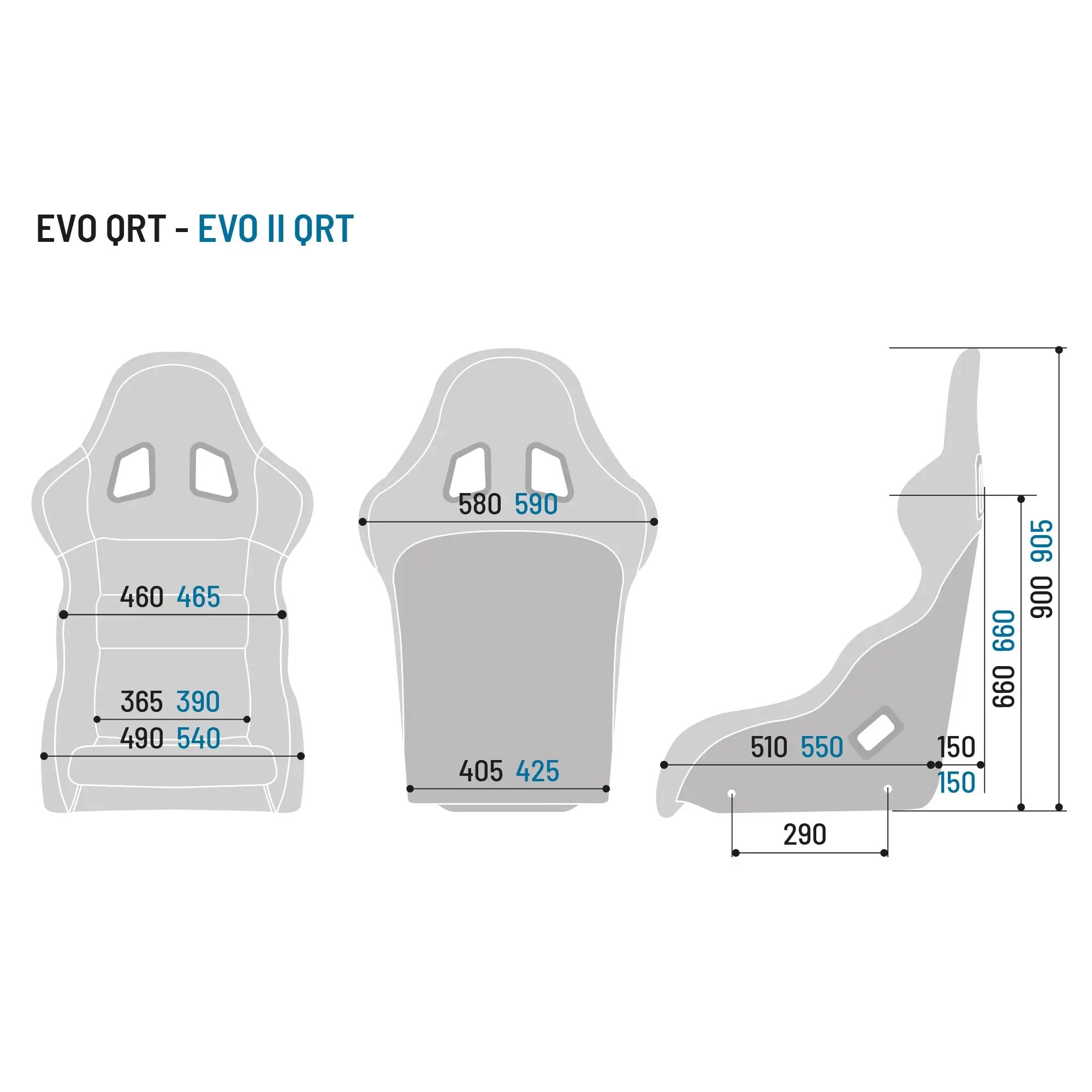
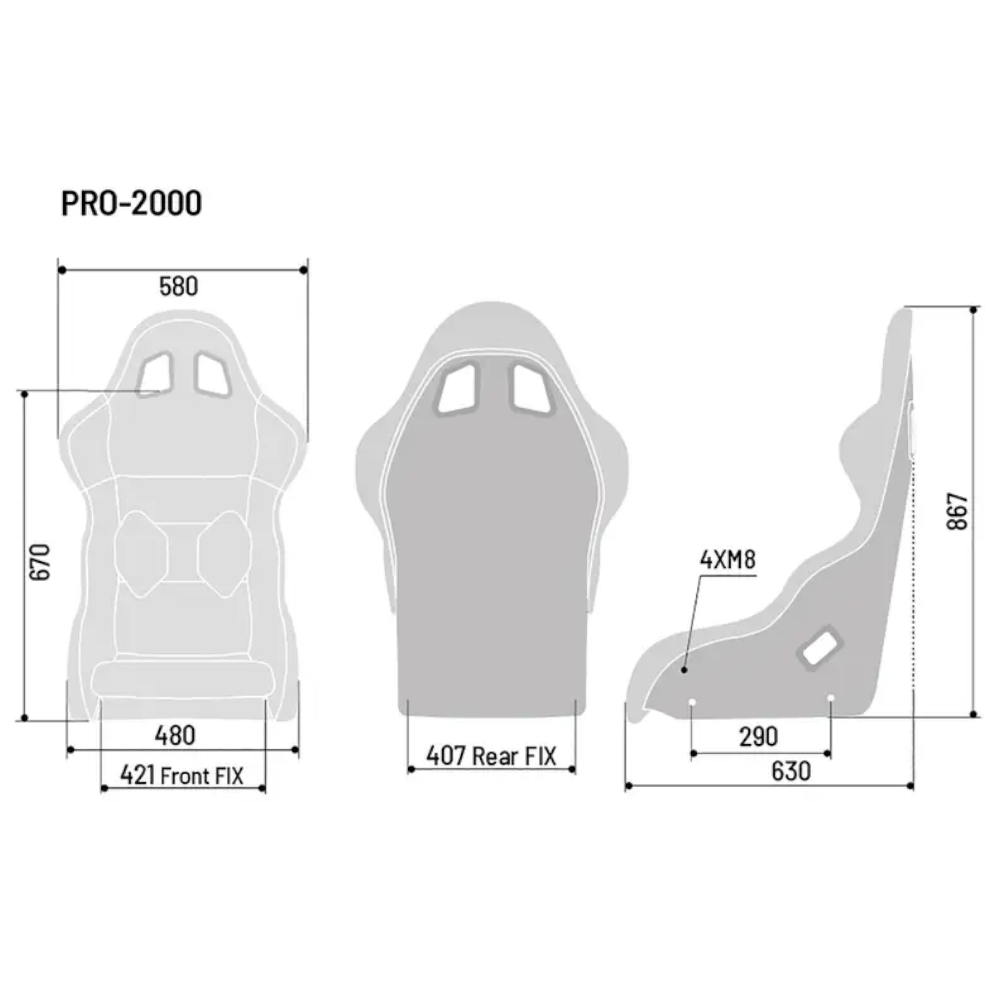
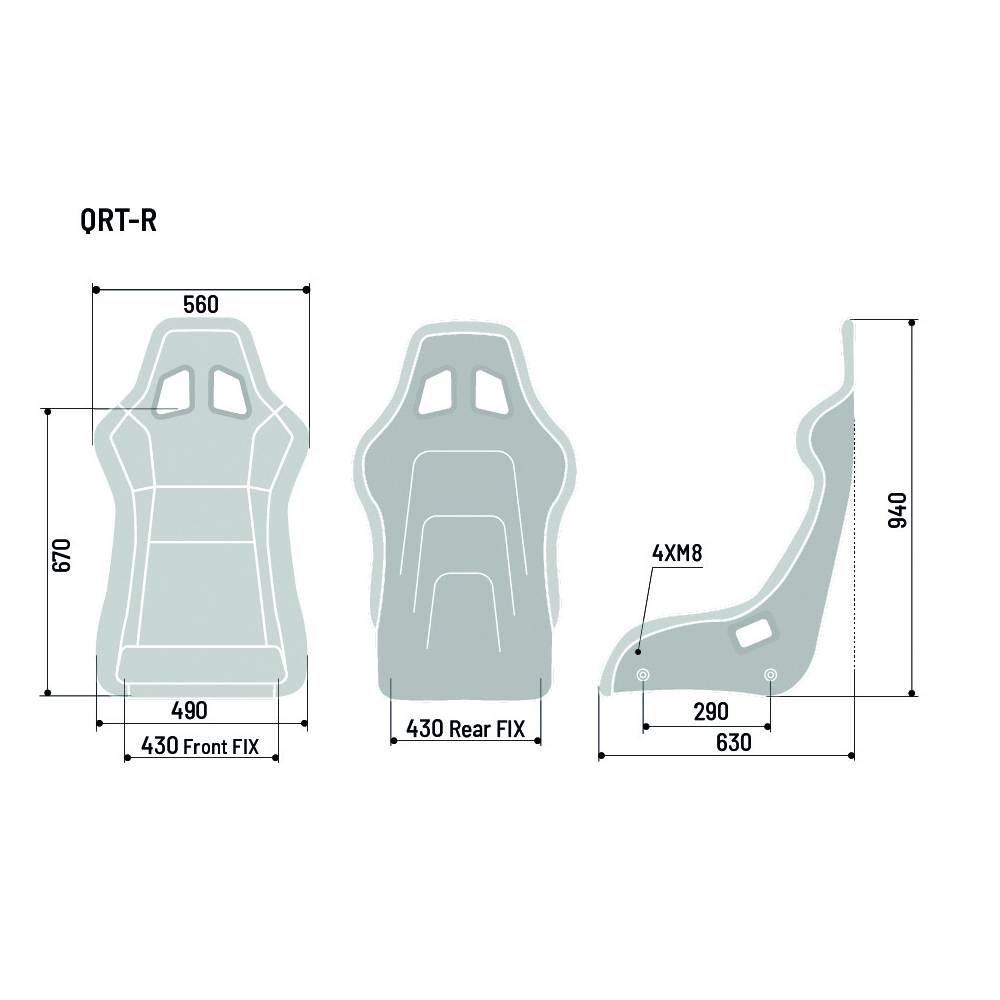
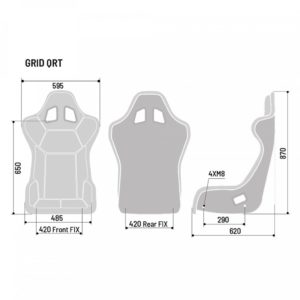
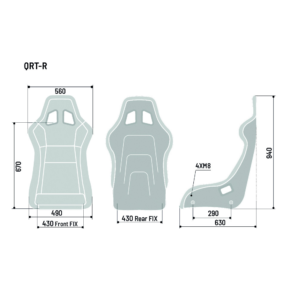
The other number is the one nobody mentions, because it never changes. Every Sparco side-mount drawing I pulled shows four M8 fixings at 290mm apart, front to back. The Evo, the Pro 2000, the QRT-R and the Rev. Four out of four, all 290mm.
Our own listings say the same thing from the other direction. The Sparco long side mount is described as fitting most Sparco side-mounted seats plus OMP, Sabelt, Motamec, Cobra and Corbeau, anything with a 290mm side hole spacing.
So the fore and aft pattern is settled before you choose anything. Once your rails are at the right width, a seat swap two years from now is bolt for bolt. Worth knowing when you are deciding how much to spend on the first one.
One thing to keep straight before the recliners come up further down. 290mm is the side mount figure. Sparco’s reclining seats do not side mount at all, they bolt through their base on 345mm by 271mm, which is a different arrangement and a different number. Both are M8 and both say Sparco on them, which is exactly why people get the two mixed up.

The cheapest way onto Sim-Lab’s compatibility list, and for a lot of people it is where I would stop.
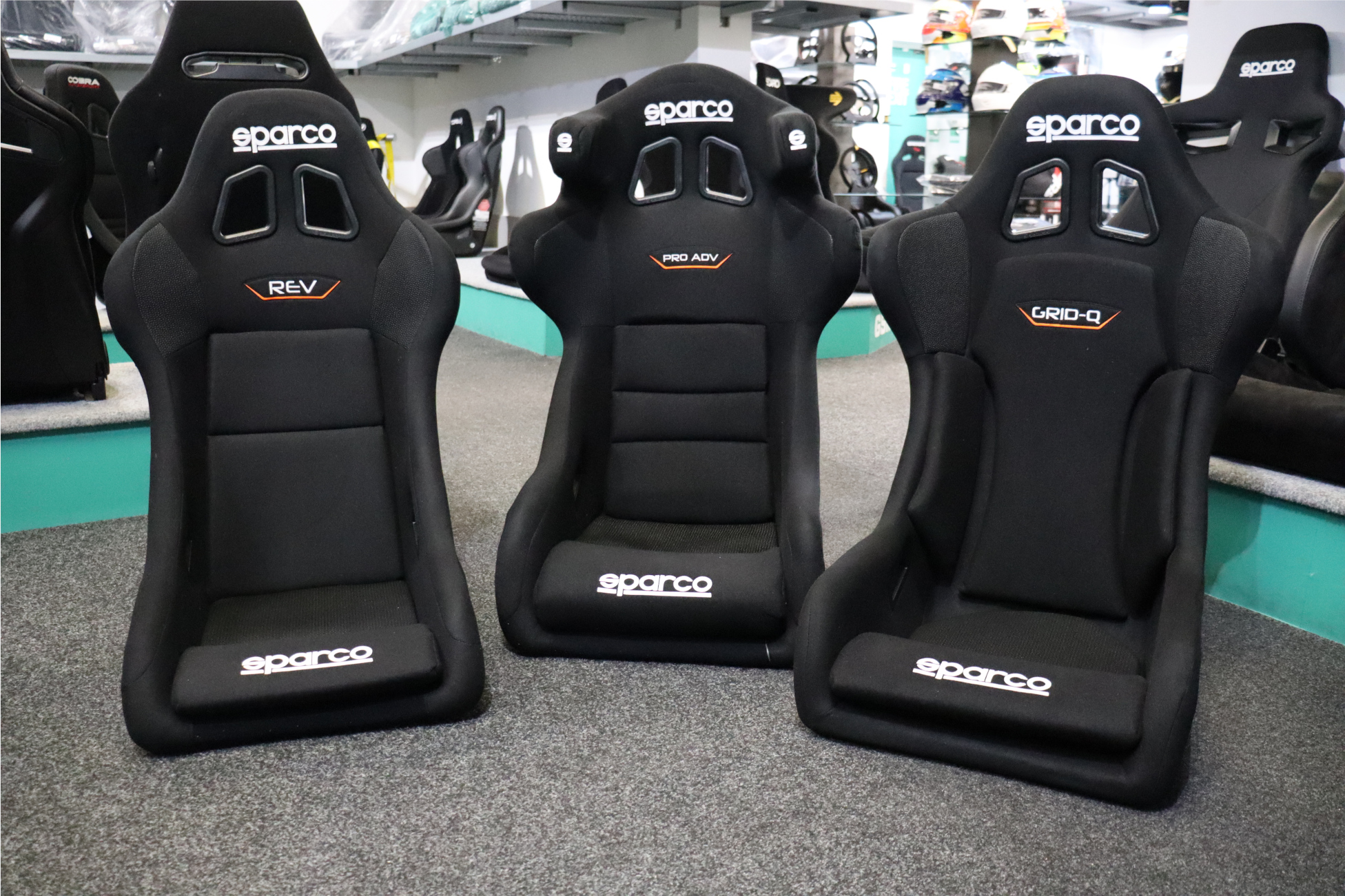
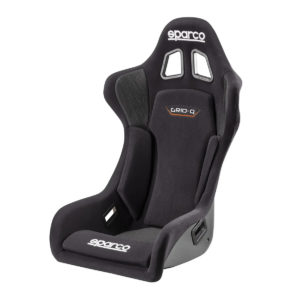
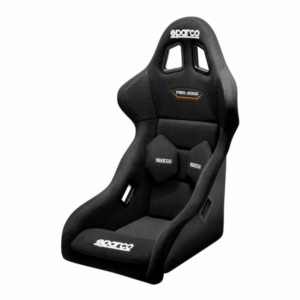
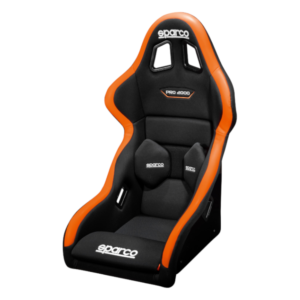
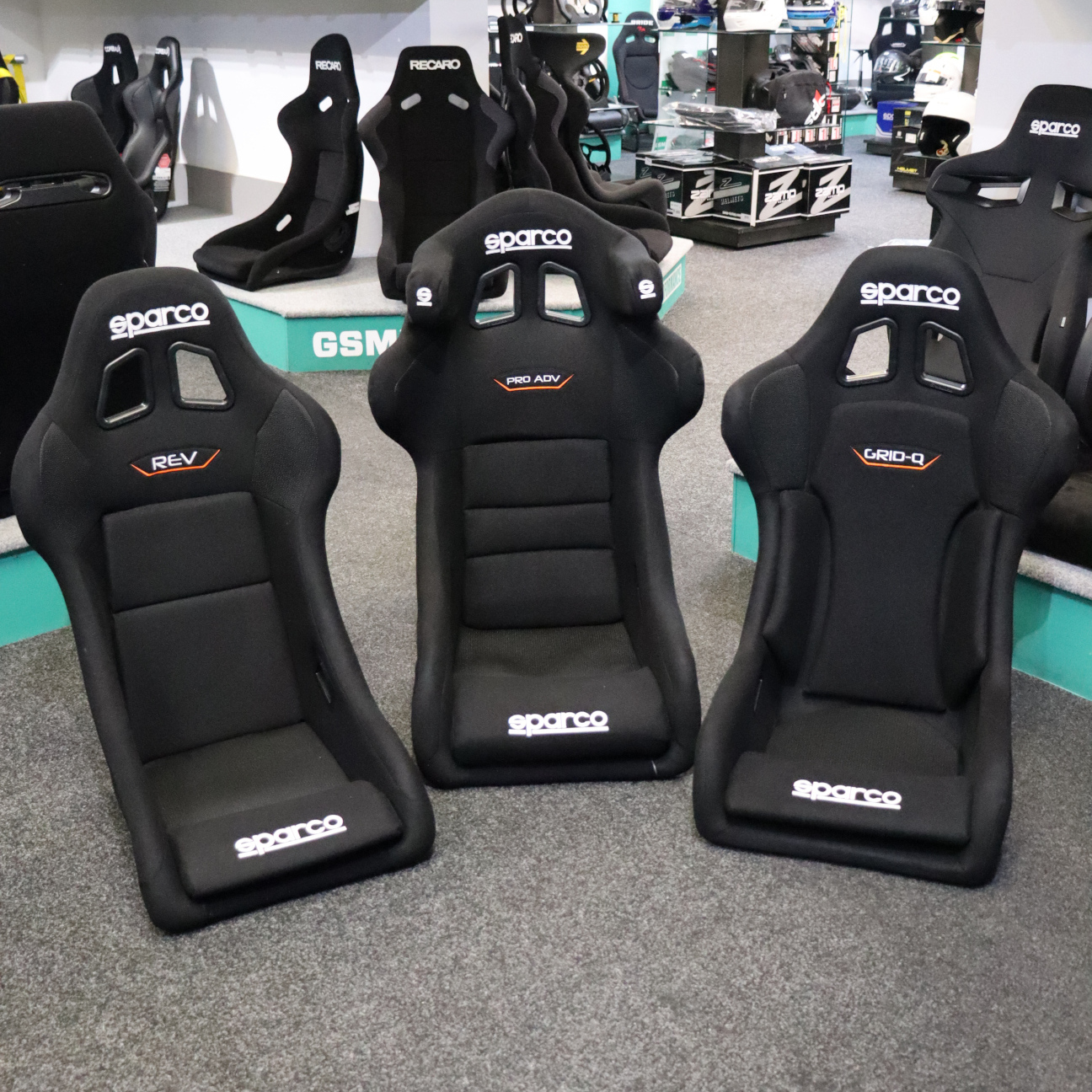
The Grid Q sits at 400mm on Sim-Lab’s table, the same as the Circuit II, so if you set your rails for one you have set them for the other. It is a 6.5kg fibreglass QRT shell, 90cm tall, 59cm across the shoulders, with removable cushions held on by Velcro. That last part gets undersold. On a rig you are in the seat for three hours at a stretch, not a 20 minute stint, and being able to pull a cushion out to free up an inch of hip room after an hour is worth more than most of the spec sheet.
It has no head restraint wings. In a car that is a real decision. On a rig with three screens it means nothing sits between your ear and the side monitor, and I have had people come back to change a winged seat for exactly that reason.
There is a vinyl version, the Grid Q Sky, if you would rather wipe it than brush it.
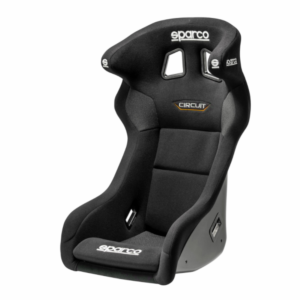
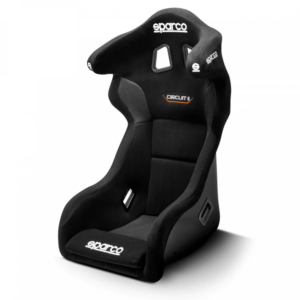
This is the one Sim-Lab names on its compatibility page and sells itself, and it is where I would put a first-time buyer who wants the seat to look like a race seat. Integrated head protection, a slim backrest that gives more lateral support than the Grid Q, and a single piece low front leg cushion so your thighs sit inside the shell instead of perched on it.
The few pounds between Circuit I and Circuit II is not a size ladder in the way people expect. Circuit I is the standard shell and Circuit II is the XL. If you are between the two, take the II, because a fibreglass shell that is slightly too big can be padded and one that is slightly too small cannot be made bigger.
Ours is listed against a 28 to 32 inch waist. That is a genuinely snug seat, and it is the number to check before anything else on this page.
The third seat on Sim-Lab’s list, at 370mm, and the narrowest side-mount bucket on this page. Sparco’s drawing puts it at 560mm across the shoulders and 615mm deep, so it takes up less room than the Grid Q in every direction.
It is 7.1kg with integrated lumbar support and non-slip fabric on the shoulders and base cushion. Sparco describes the sizing as sitting between the old Rev and the Rev II, which is a polite way of saying it suits more people than either of them did.
The sim-labelled Rev is out of stock at the moment. The homologated one is the same QRT shell, it is in stock, and on this seat the two listings sit within about nine pounds of each other, so there is nothing to wait for.
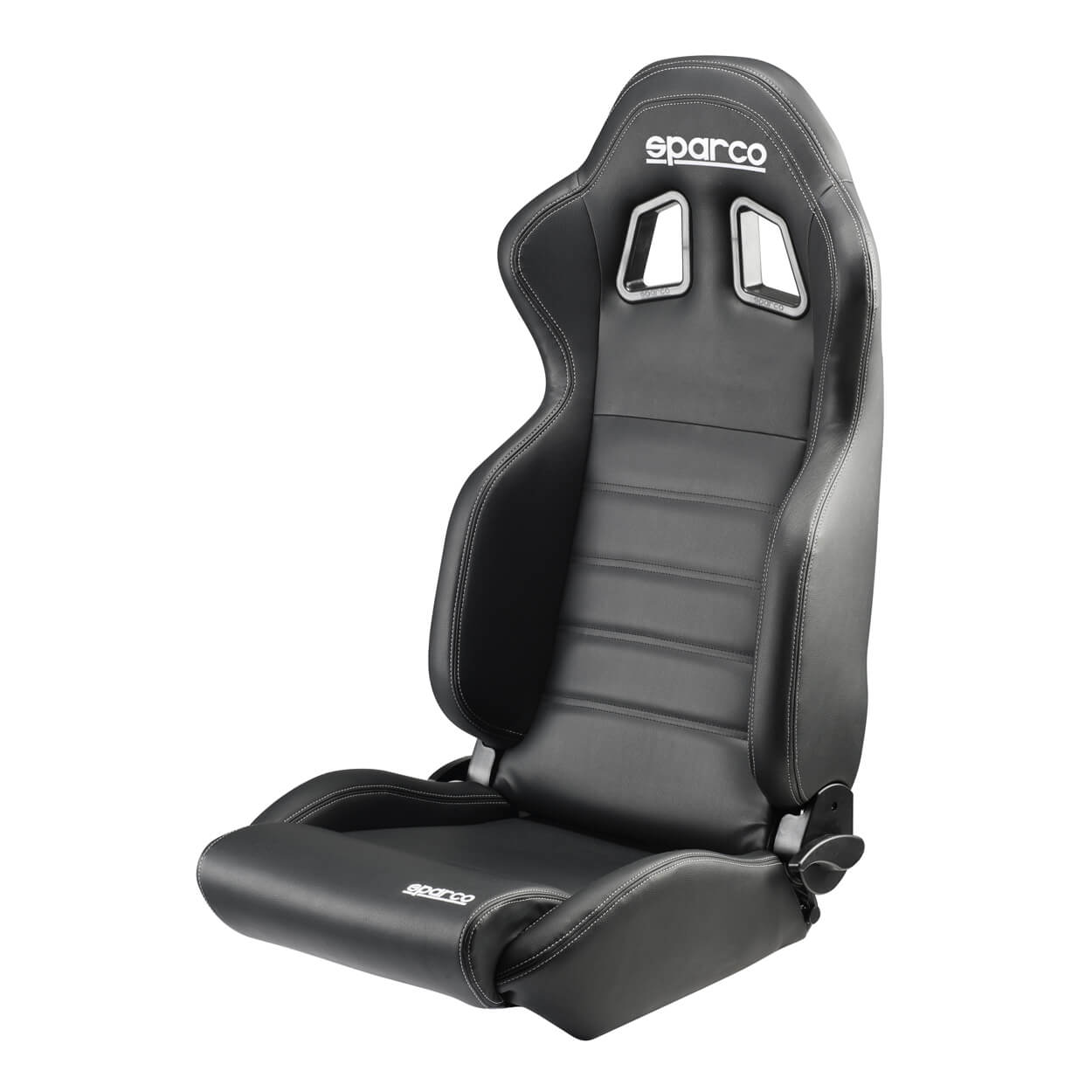
The fourth seat on Sim-Lab’s list, at 305mm, and the one that surprises people. The R100 is a reclining sport seat on a tubular steel frame, not a fixed-back shell, and it is the cheapest way onto that list by a wide margin.
It mounts differently, and this is the part worth getting right. It bolts down through its base, not through side brackets, so the rails run underneath it instead of beside it. Every Sparco reclining seat shares one base pattern: 345mm across by 271mm front to back. Sparco’s own dimension guide lists the R100, the R333, the R600 and the SPX all on 271 x 345, so a rail spacing that suits one suits the lot.
Note that it is not the 290mm from further up this page. 290mm is the side-mount figure on the fixed-back seats. The recliners are a different arrangement and a different number, and mixing the two up is the easiest mistake to make here because both are Sparco and both are M8.
The width is where it gets neat. Sim-Lab publishes 305mm between the profiles, and the 40×40 profile itself takes up the other 40mm, which puts the two rails at 345mm centre to centre. That is the Sparco base width exactly. The fore and aft measurement takes care of itself, because the rails are T-slot for their whole length, so you slide the seat to where you want it and tighten up.
What the money buys is a steel-framed seat that reclines, has an integrated headrest and carries harness slots in the backrest for a four point. It is a road seat that happens to suit a rig, which is a fair description of what a lot of people are after. The R100 in cloth or vinyl is the entry point at £282, the R500 and the GT sit above it, and the rest is in Sparco reclining sport seats.
The Evo is the seat most people arrive asking for, and it is not on Sim-Lab’s list. That does not mean it will not fit. It means you set the rails off your own bracket instead of off a published figure, which takes ten minutes with a tape measure and is not a reason to avoid the seat.
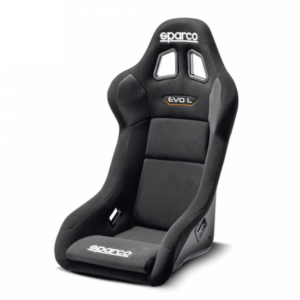
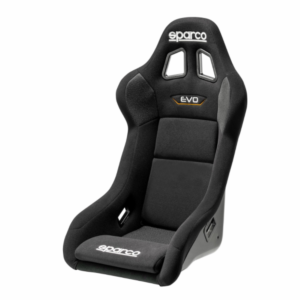
What the Evo gives you over a Grid Q is a shape built around a GT driving position, 6.8kg, and integrated lumbar support you notice on hour two, not lap two. The sizes run Evo, Evo L, Evo XL. Read our guide on which Sparco Evo QRT seat is right for you before you order, because the sizing is not what the names suggest and it is the question I answer most often about them.
Four more. None of them are on Sim-Lab’s list, all of them share the same 290mm pattern, so all four are a tape measure away from bolting on.
The one with the most published detail. Sparco’s drawing gives 580mm across the shoulders, 630mm deep, and FIX widths of 421mm front and 407mm rear. It is 8kg, it has two lumbar supports and moveable side cushions, and unusually for this list it carries base mounting points as well as side ones. If the seat ever moves into a car, that flexibility is worth having.
For drivers over six foot. Deep side bolsters, integral head protection, and a one-piece cushion that comes out for washing, which after a summer of endurance stints is not a small thing. It is the heaviest here at 9.3kg, and on a rig bolted to the floor that costs you nothing.
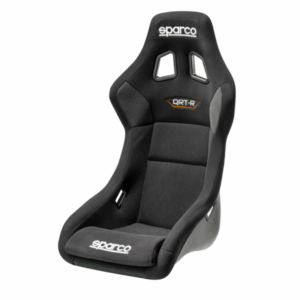
The largest shell in the range, and the one to look at if the Circuit II still feels tight. 430mm FIX front and rear, 560mm across the shoulders, 940mm tall, and only 7.1kg for the size of it. The 30 per cent weight saving Sparco quotes for QRT is most obvious on this one when you pick it up.
The odd one out, and the only seat here designed for sim racing from scratch instead of adapted to it. Formula seating position with a hard built-in recline, a headrest you can move up and down for different drivers, and a shell wide enough for most builds. It takes its own dedicated side mounts, not standard brackets and it is not harness compatible, so it sits in a different conversation from the rest of this page. If you run single seaters instead of GT cars, it is the right seat and nothing else on this list is close.
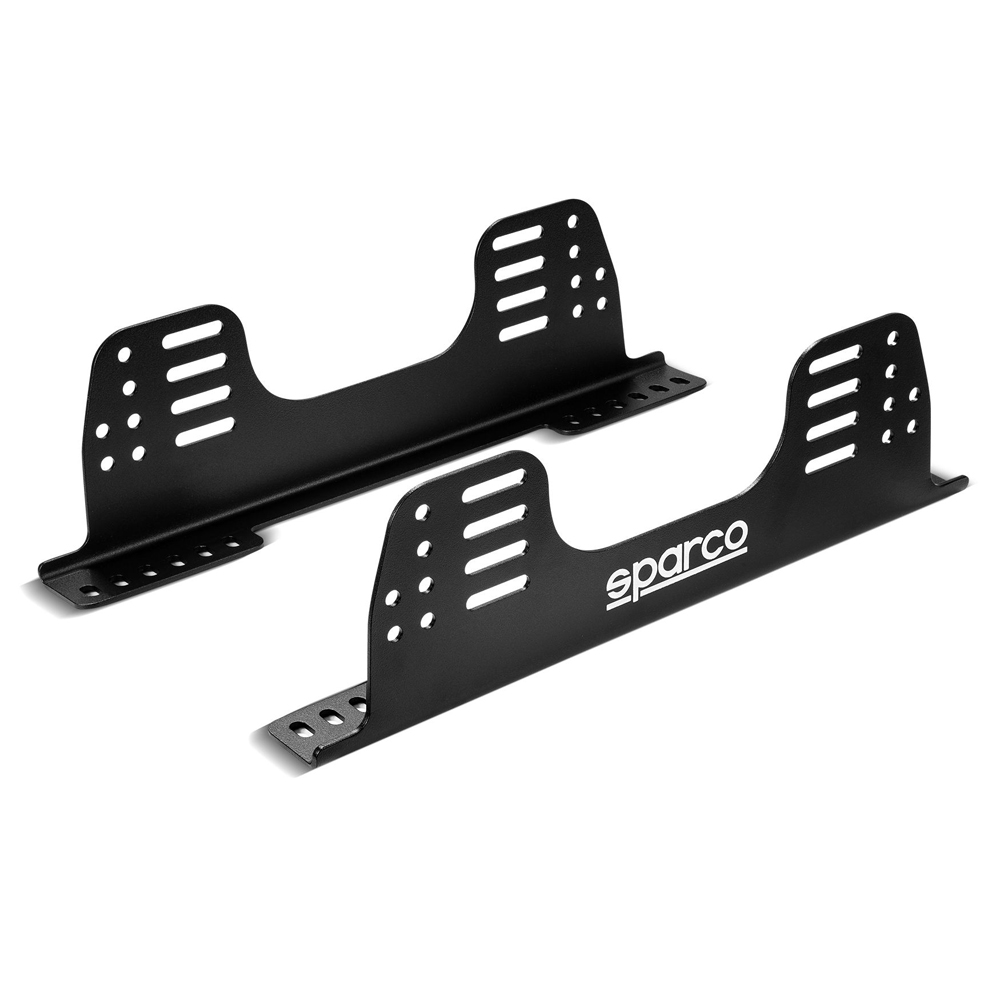
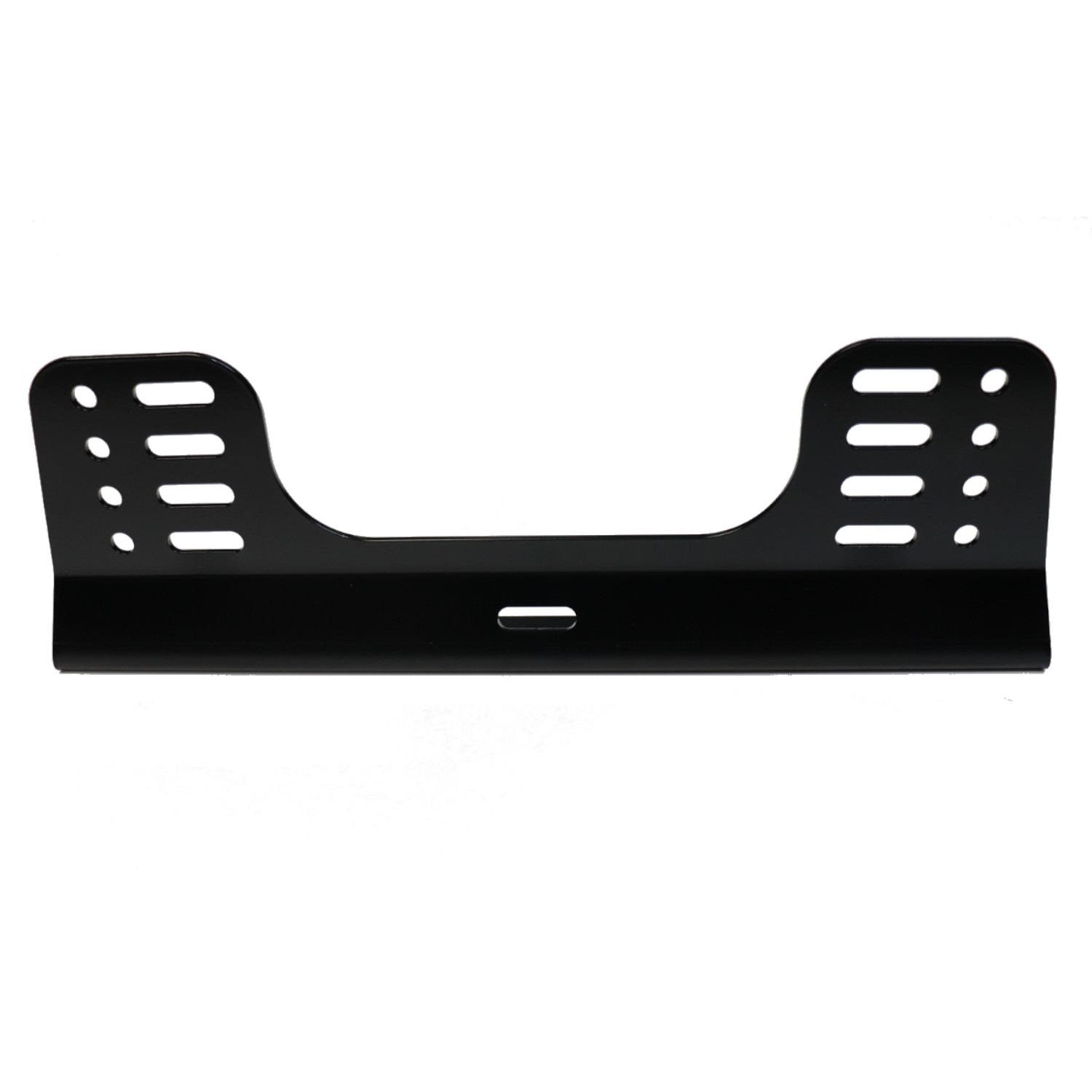
Sim-Lab’s own Bucket Seat Bracket Set is the designed-for-purpose answer. 4mm aluminium plates, left and right, four M8 bolts onto 40mm, 45mm or 1.5 inch profile, or straight onto their seat slider. It was sold out on Sim-Lab’s store when I looked, which is the usual reason people ask us what else works.
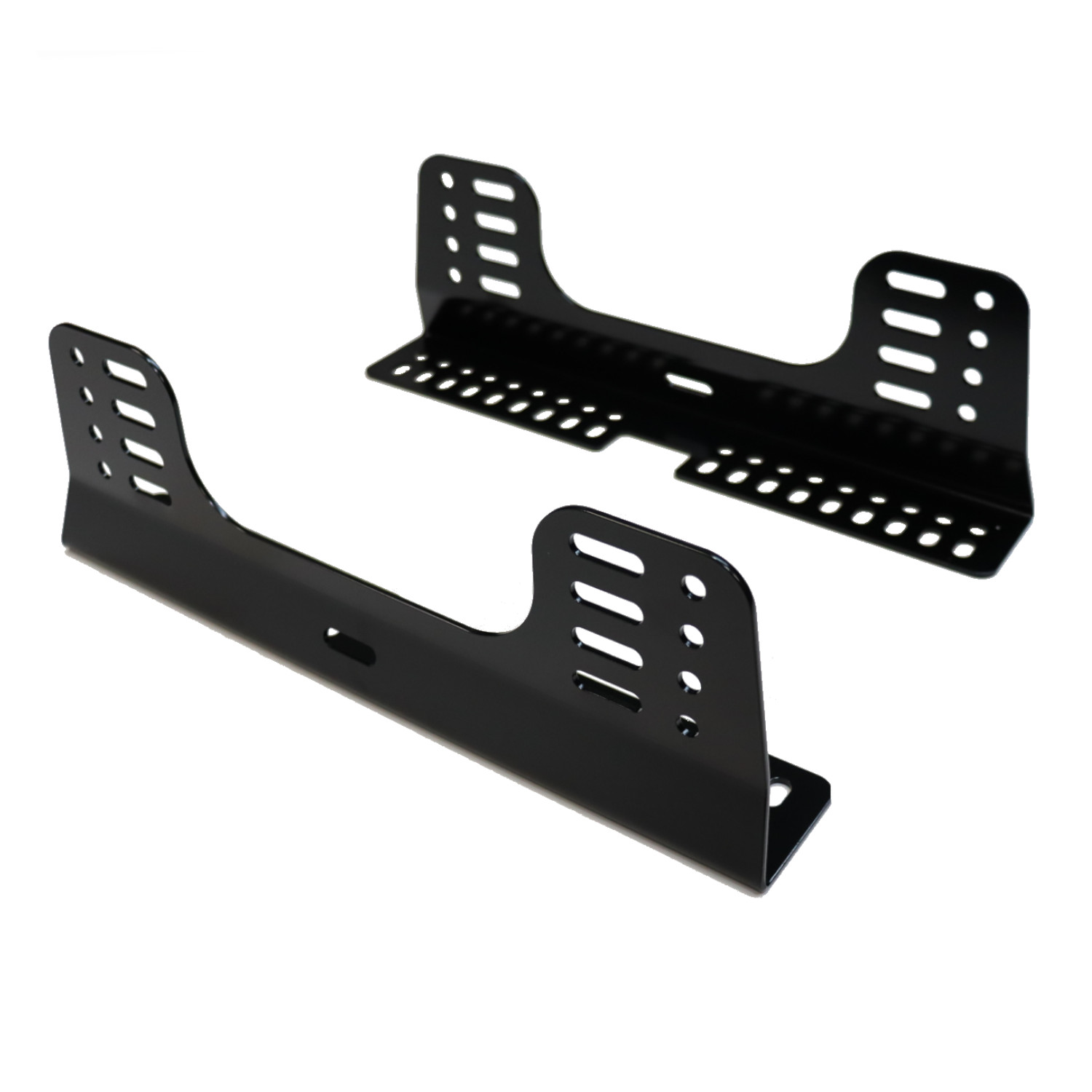
What else works is an ordinary car side mount, because the seat end of the joint is identical. Any multi-drilled M8 side mount picks up the 290mm pattern, and the flat base flange bolts down into the 40×40 T-slot on M8 slot nuts. Check the flange hole positions against a 40mm wide profile before you order, since that is the one dimension that varies between brands.
The Sparco FIA Steel Long Side Mount Brackets are 460mm long and explicitly listed for a 290mm spacing, so they are the closest thing to a factory answer. The Endurance Motorsport Multi Point M8 brackets have the most holes and therefore the most adjustment. The QMS universal mounts are the cheapest way to get the seat off the carpet. The last pair are for the GP only.
If you also bought Sim-Lab’s Sparco seat slider, the bracket set bolts straight onto it, so you do not need both a slider and a spacer.
| Seat | Sim-Lab rail spacing | Head support | Weight | Driver |
|---|---|---|---|---|
| Sparco R100 | 305mm | Integrated headrest | 13kg | All sizes, base mount 345 x 271 |
| Sparco Grid Q QRT | 400mm | No | 6.5kg | Under 6ft, 32 to 36in waist |
| Sparco Grid Q Sky QRT | 400mm | No | Not published | Under 6ft, 32 to 36in waist |
| Sparco Rev QRT | 370mm | No | 7.1kg | All heights, 32 to 36in waist |
| Sparco Circuit I QRT | 400mm | Yes | Not published | All heights, 28 to 32in waist |
| Sparco Circuit II QRT | 400mm | Yes | Not published | All heights, 28 to 32in waist |
| Sparco Pro 2000 QRT | Measure | No | 8kg | All heights, 32 to 36in waist |
| Sparco Evo QRT | Measure | No | 6.8kg | Under 6ft, 28 to 32in waist |
| Sparco Pro ADV QRT | Measure | Yes | 9.3kg | Over 6ft, 32 to 36in waist |
| Sparco Evo XL QRT | Measure | No | 6.8kg | Over 6ft, 36 to 40in waist |
| Sparco Evo L QRT | Measure | No | 6.8kg | Over 6ft, 32 to 36in waist |
| Sparco GP Sim Racing Seat | Own mounts | No | Not published | Under 6ft, 32 to 36in waist |
| Sparco QRT-R | Measure | No | 7.1kg | All heights, 32 to 36in waist |
Every seat above except the R100 is fibreglass, side mount and 4 x M8 at 290mm. The R100 is a steel framed recliner that bolts through its base. All of them are supplied as a seat only. Where the spacing column says measure, it means Sim-Lab has not published a figure for that shell, not that it will not fit.
Every seat on this page also exists as an FIA homologated version of the same QRT shell. The sim version is that shell without the homologation label, and it is cheaper by between twenty five and a hundred and twenty pounds.
| Shell | Sim version | FIA version |
|---|---|---|
| Grid Q | £396.00 | £525.60 |
| Grid Q Sky | £414.00 | £438.97 |
| Circuit | £436.80 | £528.00 |
| Circuit II | £441.60 | £561.60 |
| Rev QRT | £405.00 | £414.00 |
| Evo QRT | £466.80 | £570.00 |
| QRT-R | £618.00 | £652.80 |
Prices include VAT and were correct on 3 August 2026. The sim versions are not FIA approved and are sold for simulator use. If the seat is going in a rig, that is the version to buy, and the hundred and twenty pounds saved on a Circuit II is better spent on brackets and a slider. If there is any chance the seat ends up in a car that gets scrutineered, buy the homologated one now.
Sparco publishes a dimension drawing for most of the range. These four are the ones worth having open when you set the rails. The 290mm figure at the bottom of each side view is the M8 pattern, and it is the same on all of them.


It bolts to a bracket, and the bracket bolts to the P1X. There is no seat bracket in the P1X box, so you need either Sim-Lab's Bucket Seat Bracket Set or a car side mount. The seat end of the joint is four M8 bolts at 290mm on every Sparco in this range.
It depends on the seat. Sim-Lab publishes 305mm for the Sparco R100, 370mm for the Rev, 400mm for the Grid and the Circuit II, and 435mm for its own Speed 1 XXL. If your seat is not on that list, measure your bracket and work back from it.
No. FIX width is measured across the seat's own mounting faces and the Sim-Lab figure is measured across the rig's rails. On the Rev they differ by more than 20mm. Set the rails to Sim-Lab's figure and use the Sparco drawing to check clearance.
The seat end is the same. Both frames present a 40mm profile to bolt a bracket to, and Sim-Lab's bracket set covers 40mm, 45mm and 1.5 inch profile. The differences between the two cockpits are in the base structure and the wheel mounting.
Only if more than one person drives the rig. On a single driver setup the T-slot gives you all the fore and aft adjustment you need and you set it once. Sim-Lab's bracket set bolts straight onto its slider if you do want one.
Yes, and Sim-Lab publishes a figure for one: the Sparco R100 sits at 305mm on its list. Just do not carry the 290mm across from the bucket seats, because that is the side-mount figure. Sparco recliners bolt through the base on 345mm by 271mm instead. On a P1X that works out well: 305mm between the profiles plus the 40mm the profile occupies puts the rails at 345mm centres, and the T-slot handles the fore and aft. After that it comes down to how much the seat holds you. A reclining shell moves with you where a fixed back holds your hips still under braking. If you want the rig to feel like the car, buy a fixed back. If you want something you can sit in all evening and get out of easily, the R100 is on that list for a reason.
For most people walking in with a P1X, the Sparco Grid Q with a set of Endurance multi point side mounts. It is on Sim-Lab’s list at 400mm, the cushions come out so you can tune the fit after you have bought it, and nothing sits beside your ears on a triple screen. Entry price on the seat is £396.00 including VAT.
If the budget is the deciding factor, the R100 at £282 is the cheapest seat on Sim-Lab’s list and it reclines, which suits a rig that doubles as a desk chair. Just remember it bolts through its base, not through side brackets, so it is a different job.
If you want the seat to look the part and you are under a 32 inch waist, spend the extra on the Circuit I. It is the same 400mm rail spacing, so you are choosing on shape, not fitment.
Over six foot, the Pro ADV. Over a 36 inch waist, the Evo XL or the QRT-R. Running single seaters, the GP and its own mounts, and ignore everything else on this page.
The reason P1X seat questions get complicated is that everyone starts from the seat. Start from the rails instead. There is one number to set, Sim-Lab publishes it for seven seats, and four of those seven are Sparco.
If you can get to Nottinghamshire, come and sit in them. The sim range is on display in the showroom, and the difference between a Grid Q and a Circuit II is a 30 second decision once you are in them and about a fortnight of reading if you are not. Visits are by appointment, so book a slot first, and bring the measurement off your bracket. We will tell you which of these drops straight on.
The full range is in Sparco sim racing seats, and if you are still building the rig, the sim rig harness piece covers the next thing you will want. Sim-Lab’s own manuals are at sim-lab.eu, and the seat drawings come from Sparco.

Looking for an FIA bucket seat that looks classic? Houndstooth, tartan, diamond stitch and period shapes that carry FIA 8855-1999, with prices and what fits.

How to install a bolt-in roll cage: what bolt-in means in practice, who does the job, the order of work, plates and bolts, torque figures, padding, checks, time and cost, from the makers’ own fitting sheets and the Motorsport UK and FIA rules.
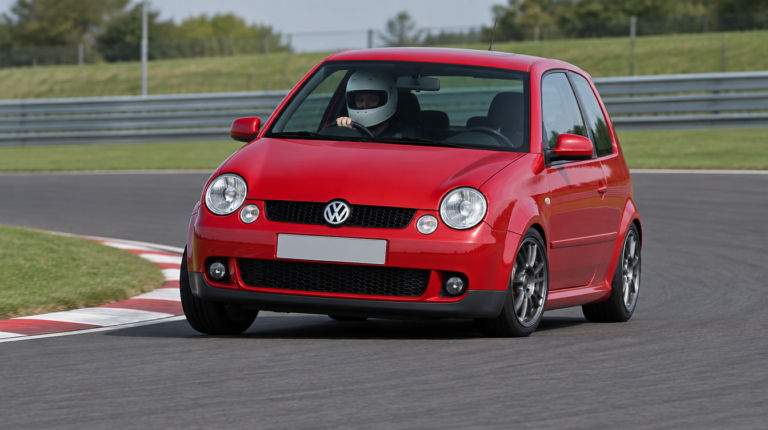
The five reclining sport seats we recommend for the Volkswagen Lupo, with the Sparco sub-frame route, runner pairing table, and a full fitting guide built around the 345mm bolt pattern.
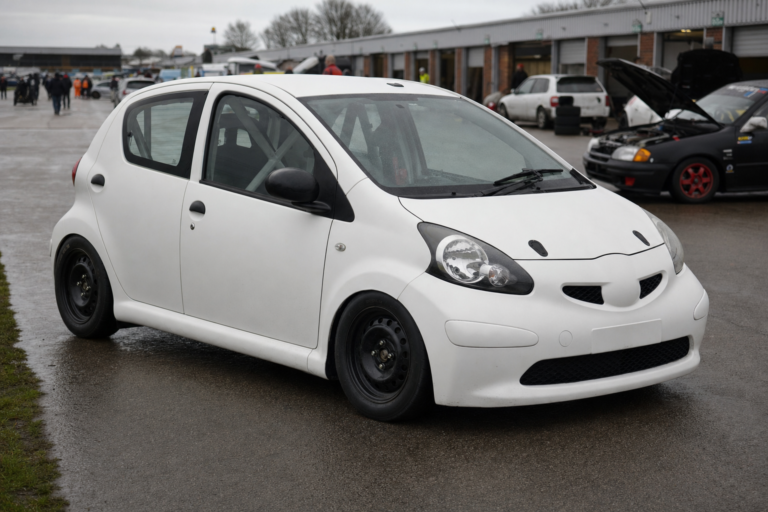
Does the Safety Devices Toyota Aygo bolt-in rear cross cage fit the 5-door? The listing says 3-door only. We’ve gone through every Aygo cage we list to see what each says about doors and what to ask first.
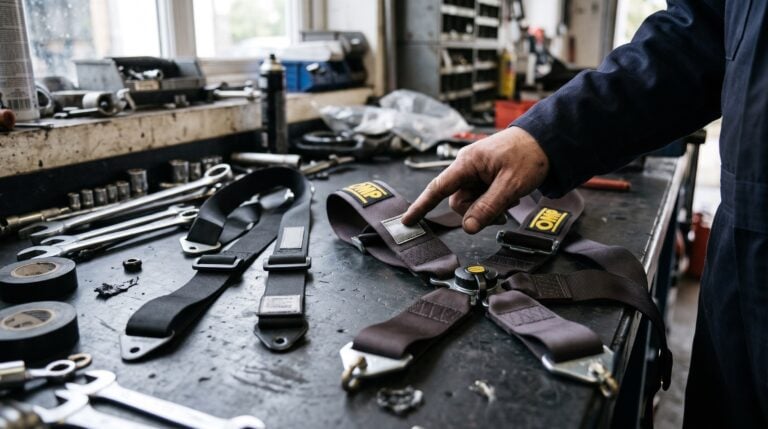
Road legal against FIA harnesses: what the E mark and the FIA label mean, which belt goes where, what a scrutineer checks under Motorsport UK rules, and the belts we would start from with live prices.
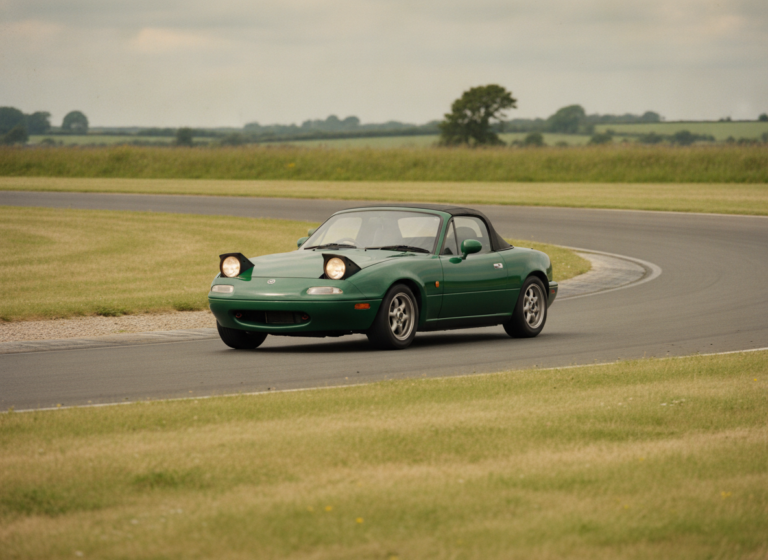
Every Custom Cages roll cage kit for Mazda: 16 kits covering the MX5 (NA, NB and NC), the RX7 (Mk1, Mk2 and Mk3 FD) and the RX8. Half-track DIY options, 6-point national spec and full multipoint, in CDS and T45.
On all orders above £100
Try before you buy, by appointment
Updates by email and text