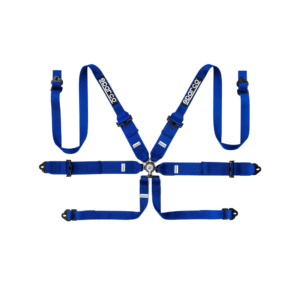
“Sparco Eye Bolt and Plate Set” has been added to your basket. View basket
Running A Harness Without A Roll Cage: The Honest Guide
Harness fitting guide, no cage required
If the showroom phone has one question it never stops asking, it is this one: can I run a harness without a roll cage? It arrives more ways than any other harness question we get, by phone and by email, from road cars, track day cars and half-built projects, and the honest answer deserves a whole page instead of a hurried minute between calls.
So here it is. Yes, for a road or track day car there are two proper routes to a harness with no cage in sight, and both are cheaper than most people expect. What matters is choosing the right type of harness for the use, giving the straps the anchorages the rulebook names, and letting the seat do its share. All three below, priced and in stock.
- Two proper routes with no cage: an E-marked clip-in harness for the road, an FIA four point for track days
- The clip-in route starts at £102.00 with the eye bolts included in the box
- The rulebook names the fixings: steel, minimum 7/16in UNF or M12 grade 8.8
- The seat has to hold its share: harness slots in the backrest are not optional
- Keep the original three point belts fitted and working, whichever route you take
The straight answer first
For a road car or a track day car, yes: a harness without a cage is a normal, well-served installation, and the harness makers build specific product for it. OMP describe their Road range as built for modified road cars, clipping to eye bolts or captive mounts instead of wrapping a cage bar, and TRS sell their Clubman clip-in with E homologation and the eye bolts in the box. This page is that world.
Where the cage genuinely enters it is competition. Championship rulebooks decide what a race or rally car runs, harness and cage usually arrive in the regulations together, and in Motorsport UK’s own definitions a harness bar is a member fitted across a cage. If you are building to a rulebook, build to the rulebook. For everyone else, read on.
Route one: the E-marked clip-in for road cars
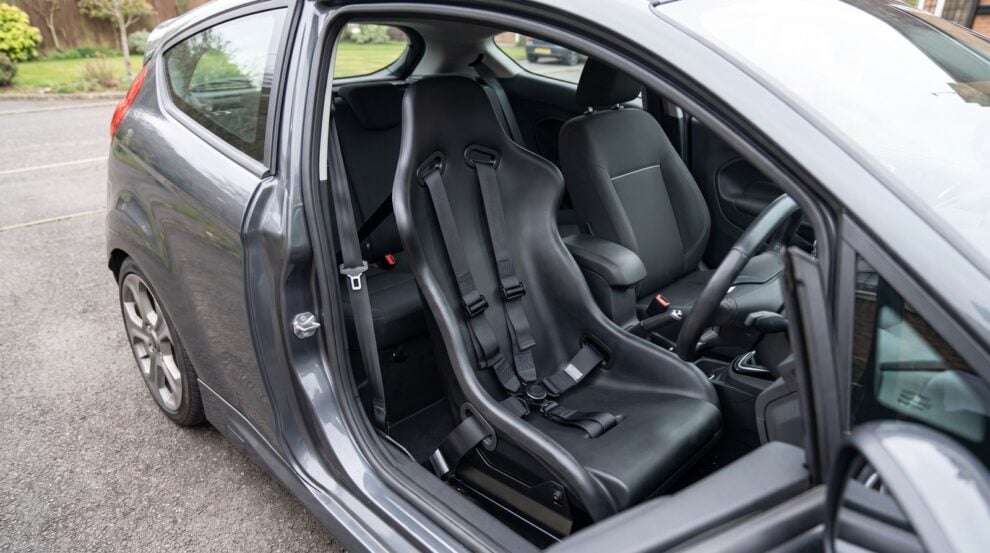
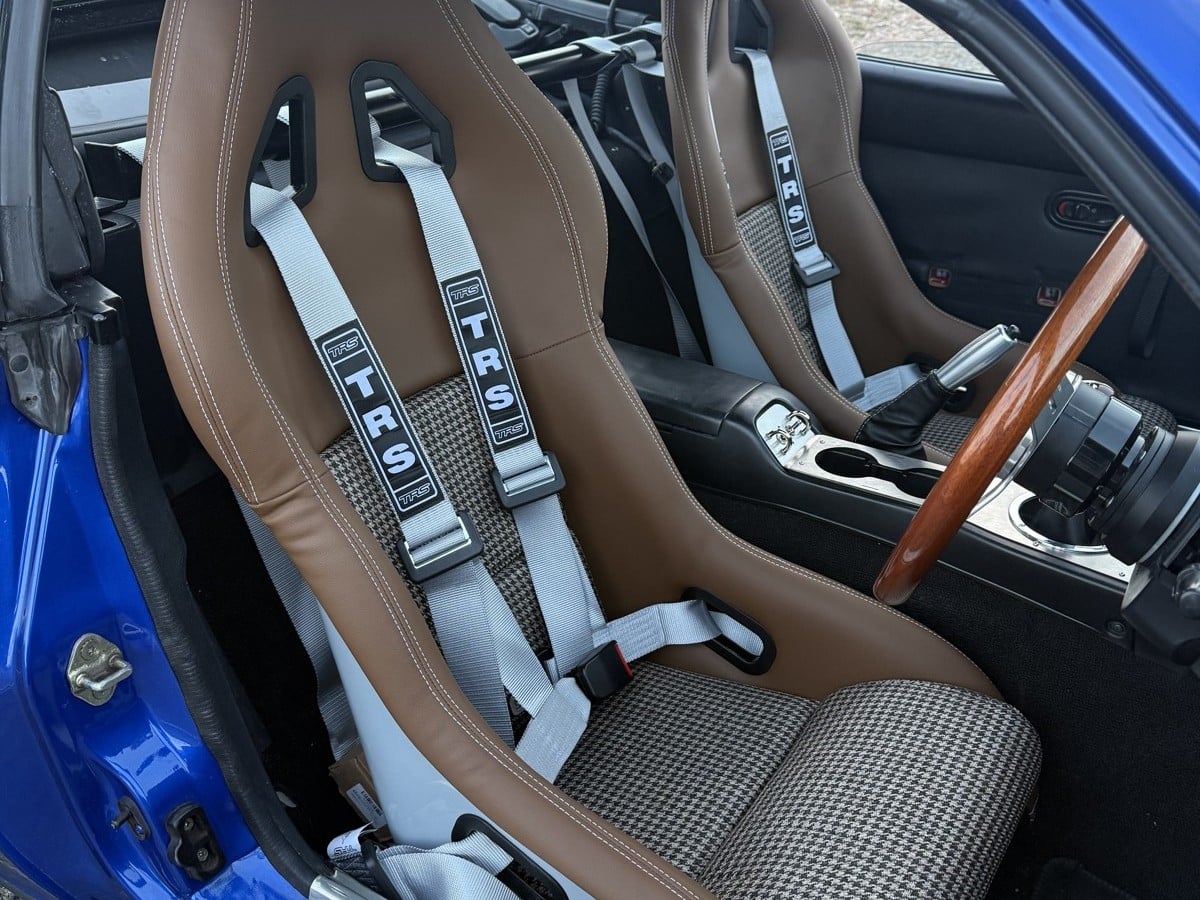
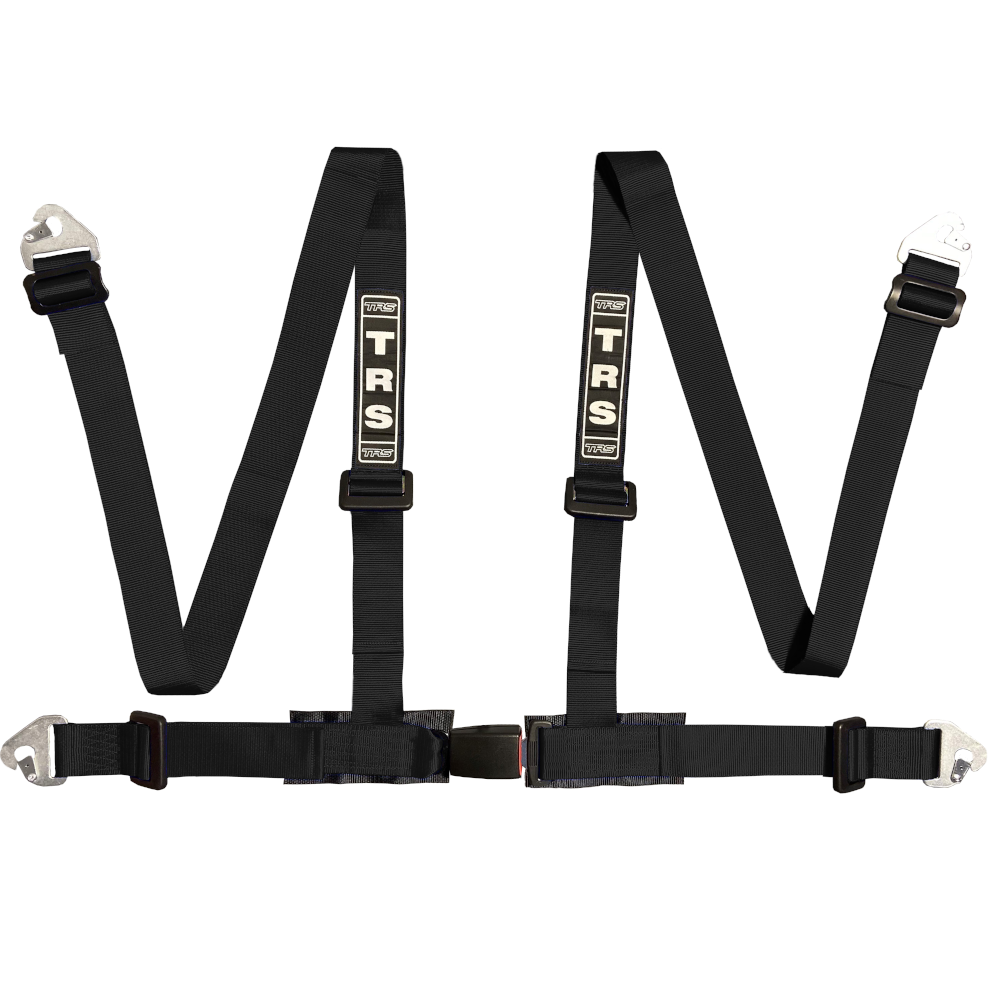
Clip-in harnesses are the road answer. The TRS Clubman at £120.00 carries E homologation ECE 16.08, uses snap hooks onto eye bolts, and ships with the 7/16in eye bolts included. The OMP Road 4M at £120.00 is the same idea from Genoa. And for MX-5 owners the TRS car-specific clip-in at £102.00 is the neatest install we sell, which is exactly what the customer car in the photo is running.
Two habits make this route work: keep the original three point belts fitted and usable, and use the harness as the extra layer for spirited driving, not a replacement for the car’s own belts. That is how every clip-in customer we serve runs theirs.
-
From £120.00 Incl. VATFrom £100.00 Excl. VATPayPal CreditAmazing valueSelect options This product has multiple variants. The options may be chosen on the product page
-
From £120.00 Incl. VATFrom £100.00 Excl. VATPayPal CreditSelect options This product has multiple variants. The options may be chosen on the product page
-
From £102.00 Incl. VATFrom £85.00 Excl. VATPayPal CreditAmazing valueSelect options This product has multiple variants. The options may be chosen on the product page
Route two: the FIA four point for track days
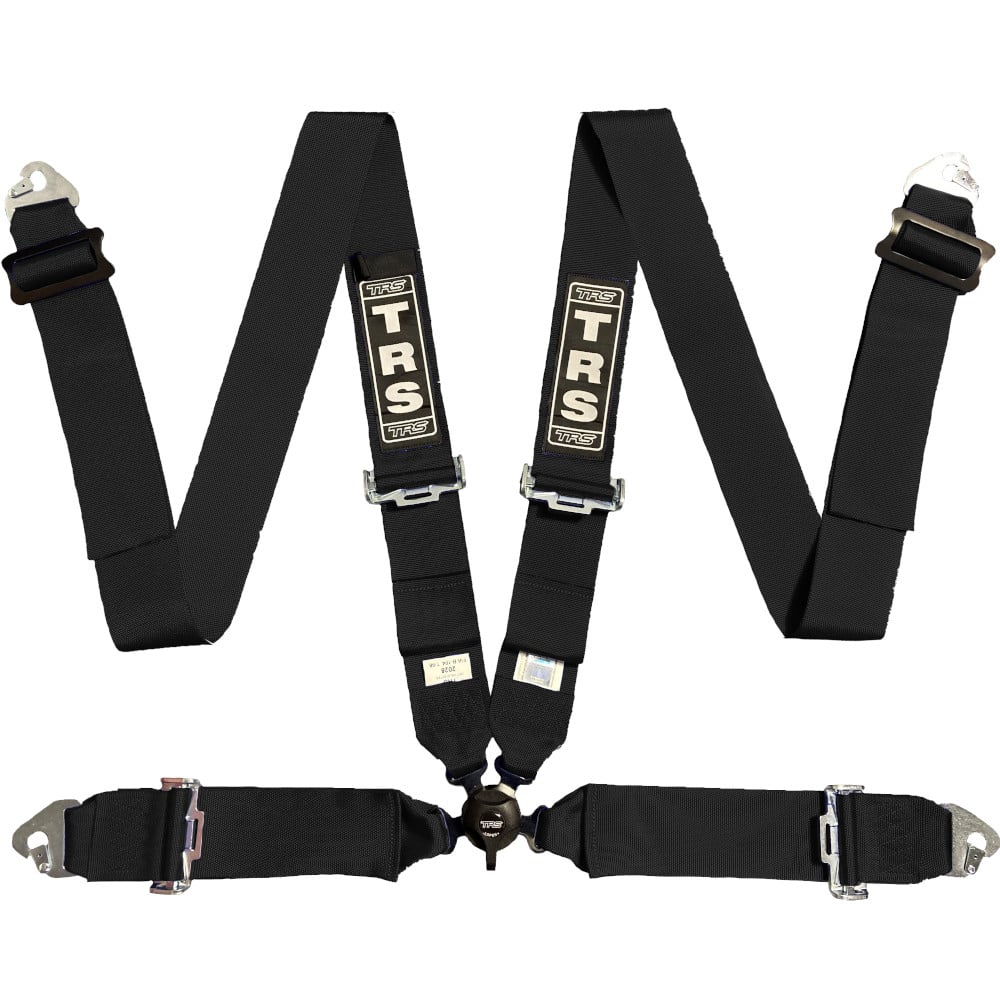
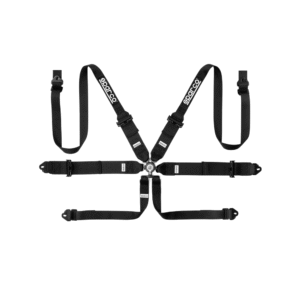
Track day drivers who want competition webbing without competition paperwork go FIA. The TRS Magnum four point at £246.00 is FIA and SFI homologated, comes complete with eye bolts, and its 3in webbing is the sort of kit that outlasts the car. Garreth’s steer on the money: at £126 over the clip-in, the Magnum is the buy-once belt, and he would spend the difference every time on a car that sees circuits. Step to six points and the crotch straps anchor to the floor, so a cage still is not the blocker; the Sparco Competition H-3+2 at £237.60 is the FHR-ready example. Which layout suits you is a whole subject of its own, and our four, five or six point guide settles it properly.
-
From £246.00 Incl. VATFrom £205.00 Excl. VATPayPal CreditAmazing valueSelect options This product has multiple variants. The options may be chosen on the product page
-
From £237.60 Incl. VATFrom £198.00 Excl. VATPayPal CreditSelect options This product has multiple variants. The options may be chosen on the product page
What the straps actually mount to
Where the four ends go with no cage in the car, drawn side on and not to scale. The lap straps use the original belt anchorages or eye bolts beside the seat; the shoulder straps run rearward to eye bolts with backing plates, and the run stays SHALLOW: no more than 45 degrees below horizontal, 20 with an FHR. Our fitting guide covers measuring it properly.
No cage means the car’s own steel does the anchoring, and the geometry matters more than the shopping. Lap straps pick up the original seat belt anchorages or eye bolts beside the seat. Shoulder straps run rearward through the seat’s slots to eye bolts through the body, always with a backing plate on the blind side, and here is the part that catches people: the run must stay shallow, no more than 45 degrees below horizontal, or 20 degrees if you wear an FHR, and never angled upwards. An anchor point directly behind the seat base is too close; the distance rearward is what keeps the angle honest, which is why the rear belt anchorages or rear seat pan mounts usually make the best points. Two more rules complete the set: the harness never anchors to the seat or its supports, and the fixings are steel, minimum 7/16in UNF or M12 grade 8.8, or exactly what the harness maker specifies. Most of the harnesses above include them.
Aftermarket bolt-in harness bars exist for some cars and can tidy the shoulder run, but they are car-specific and we would sooner match one to your car on the phone than have you guess. The angles that make any of this work, and the five mistakes we keep seeing, are in our harness fitting guide.
-
From £30.00 Incl. VATFrom £25.00 Excl. VATPayPal CreditAmazing valuePerfect add-onSelect options This product has multiple variants. The options may be chosen on the product page
-
From £47.99 Incl. VATFrom £39.99 Excl. VATPayPal CreditPerfect add-onSelect options This product has multiple variants. The options may be chosen on the product page
The seat has to hold up its end
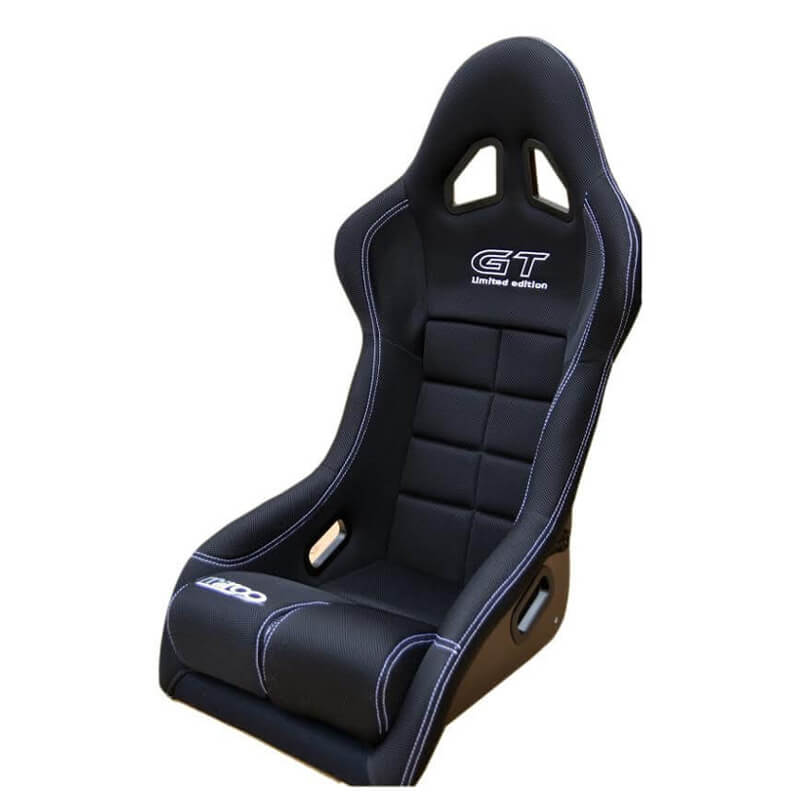
A harness needs a seat with harness slots in the backrest, full stop. Feed straps over the top of a standard seat and they slide, rub and sit at the wrong height. The good news from the other direction: a bucket seat works perfectly well with the car’s standard three point belt, so you can fit the seat first and add the harness later, which is exactly the order half our customers do it in. Cameron’s rule when you ring: seat first, harness second, and tell him the car so the anchorages get checked while you are still on the phone.
-
From £388.80 Incl. VATFrom £324.00 Excl. VATPayPal Credit250+ coloursKlarna ReadySelect options This product has multiple variants. The options may be chosen on the product page
What the routes cost
| Route | Parts | Total inc VAT |
|---|---|---|
| Road clip-in, MX-5 | TRS MX5 clip-in harness, car-specific | £102.00 |
| Road clip-in, most cars | TRS Clubman with eye bolts included | £120.00 |
| Track day FIA | TRS Magnum 4 point with eye bolts included | £246.00 |
| Extra anchor hardware if the car needs it | Sparco eye bolt and plate set £7.44, TRS snap hooks £30.00 | from £7.44 |
| Add a seat with harness slots if the car does not have one yet: from £388.80 | ||
Prices include VAT, checked 24 August 2026, everything in stock on the day. Eye bolts come in the box with the TRS harnesses shown.
Common questions
Do I keep the original seatbelts?
Yes, always. The standard three point belt stays fitted and usable, does the everyday work, and the harness is the extra layer for the drives that deserve it. Every route on this page leaves the original belts exactly where they are.
Which harness is actually road-appropriate?
The clip-in road ranges: the TRS Clubman carries E homologation ECE 16.08 and the OMP Road range is built for modified road cars by design. Competition FIA belts are built for circuit use; plenty of track day cars run them, and the road miles stay on the standard belts either way.
Can I run a six point without a cage?
The crotch straps of a six point anchor to the floor, not a cage, so the cage is not the blocker there either. What a six point does demand is the right seat apertures and more anchor points, so ring us with the car and the seat before choosing six over four.
Are the Endurance seat belt brackets right for my lap straps?
They solve a specific job, carrying belt fittings on the seat side, and whether they suit your car depends on the car and the seat frame. It is a two minute answer on the phone with the car in front of us, and a bad guess bolted to a floor pan helps nobody, so ring 0115 9893488 before ordering them for harness duty.
Do I need a HANS device with a harness?
For road and track day use a HANS is a choice, not a requirement, and it needs the right helmet posts and belt widths to work. Our HANS guide on GSM Performance covers the whole subject.
What about competition?
Then your championship rulebook is the boss, not this page. Harness and cage requirements arrive together in most disciplines, and the cage side is its own world, which our roll cage guides cover. Tell us the series and we will spec to its regulations.
💬
The next stepTell us the car and how you use it
That is genuinely the whole conversation: which car, road or track days, and whether there is already a seat with slots in it. Cameron checks the anchorages against the car while you are on the phone and the right harness leaves with the eye bolts in the box. Ring 0115 9893488, and if you have been putting this question off for months like most people who ask it, today is a fine day to stop.
Need a personal recommendation?
We're here to ensure you pick the right seat.
Contact us today.