Call Garreth, Cameron & CallyAI: 0115 9893488

FREE UK shipping on orders over £100.00 & FREE gifts on checkout

Useful Links
Your Account

Talk to us

Garreth, Cameron & CallyAI · Mon to Fri
Call 0115 989 3488Free advice on your build
Thanks, that’s with us. We reply the same working day.
That didn’t send. Please give us a call instead.

Useful Links

Quick Access

Want to chat?

Call Garreth, Cameron, CallyAI
Today On: 0115 9893488
Click Here For Our Contact Form


Social
FacebookXInstagramTikTokYouTubePinterest
Harnesses / Buying guide

Is a 3 inch or a 2 inch FIA harness right for your car?

The inch on the label is the shoulder strap, and it settles one thing before anything else: whether that belt is homologated to be worn without a frontal head restraint. The lap strap width is a separate choice, and most of the range mixes the two.

70 mmFIA minimum, the 3 inch
44 mmMinimum used with an FHR
133FIA harnesses we list
38Mix a 3 inch and a 2 inch
The short version

If you wear a HANS or another frontal head restraint, you want shoulder straps built for it, which means either 44 mm all the way or 70 mm that narrows where it crosses the device. If you do not wear one, you want 70 mm shoulder straps, because a 44 mm shoulder strap is homologated only for use with a device. The lap strap is a separate call and either width meets the standard. Everything under that is us showing our working.

A man in navy workwear beside a stripped-out rally shell with a roll cage and one fixed-back bucket seat fitted
Most harness enquiries reach us at about this stage. Cage in, seat bolted down, belts still to decide.
01 / Where the inch comes from

Inches are the nickname. The standard is written in millimetres

This one comes across the counter most weeks. Somebody has two harnesses open on their phone, the belts look near enough identical, one says 3 inch and one says 2 inch, and they want to know which is the better buy. It is a fair question with an awkward answer, because the two belts are not competing for the same job.

The place to start is a number none of us actually say out loud. Nobody at the FIA has ever written the word inch into a harness standard. What everyone calls 3 inch and 2 inch is rounded off the millimetre figures in FIA 8853-2016, and once you have those in front of you the argument settles itself.

A shoulder strap has to measure at least 70 mm wide under load. That is the belt we all call a 3 inch. There is then a second, separate specification for a shoulder strap used with a frontal head restraint, and that one has to measure at least 44 mm. That is the 2 inch.

The standard does not describe the 44 mm strap as an alternative you may pick if you fancy it. It says the use of those straps is restricted to being worn with an FHR, and that they have to carry a specific FIA label saying as much. A narrow shoulder strap is a different homologation with a condition attached to it.

StrapFIA minimum widthArticleWhat it is called in the trade
Shoulder70 mm6.4.13 inch
Shoulder, used with an FHRTHE RESTRICTED ONE44 mm6.4.1.12 inch
Double shoulder, body plus device belt70 mm and 44 mm6.4.1.23 plus 2
Pelvic, the lap strap44 mm6.1.12 inch minimum, 3 inch common
Crotch strap44 mm6.2.1Sub strap
Z strap25 mm6.3.1The 6 point pair

Note the lap strap line. The FIA minimum for a pelvic strap is 44 mm and it does not move when the shoulder width changes. A 2 inch lap belt is at the minimum and a 3 inch lap belt is comfortably over it. Both are homologated, which is why you will find the two sold side by side under the same model name.

02 / The bit people miss

The shoulder width and the lap width are separate choices

For years we talked about these as two kinds of harness, the 3 inch one and the 2 inch one, as though you picked a lane and everything else followed. We had that wrong. What corrected us was going through our own stock list properly.

We list 133 published FIA harnesses across the two main categories. Only 48 of them are 3 inch top and bottom. Thirty-two are 2 inch throughout. The other 53 mix the two, and the most common build in the whole range, on 38 products, is a 3 inch shoulder feeding a 2 inch lap.

So the shoulder and the lap are two independent measurements that happen to get sold under one nickname. Someone asks us to compare a 3 inch against a 2 inch, we put an OMP First on the counter next to an OMP Tecnica 2, and the lap strap has quietly changed as well while everybody was looking at the shoulders.

BuildHow many we listShoulderLap
3 inch to 3 inch4870 mm70 mm
3 inch to 2 inchMOST COMMON3870 mm44 mm
2 inch to 2 inch3244 mm44 mm
2 inch to 3 inch544 mm70 mm

Counts taken from our own catalogue on 6 August 2026, and ten products in those categories have no width recorded yet. Treat it as the shape of the range, give or take.

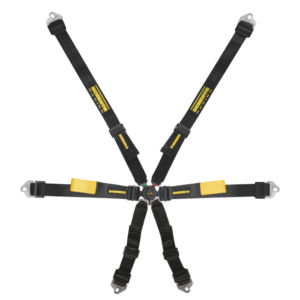
OMP First 3 inch Saloon 6 point harness in black, showing wide shoulder and lap straps
OMP First 3 inch Saloon. Wide shoulders, wide lap, and it works with or without a device.
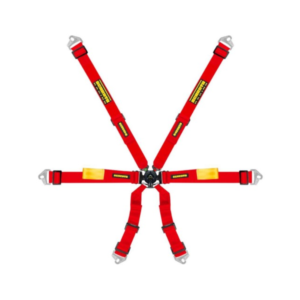
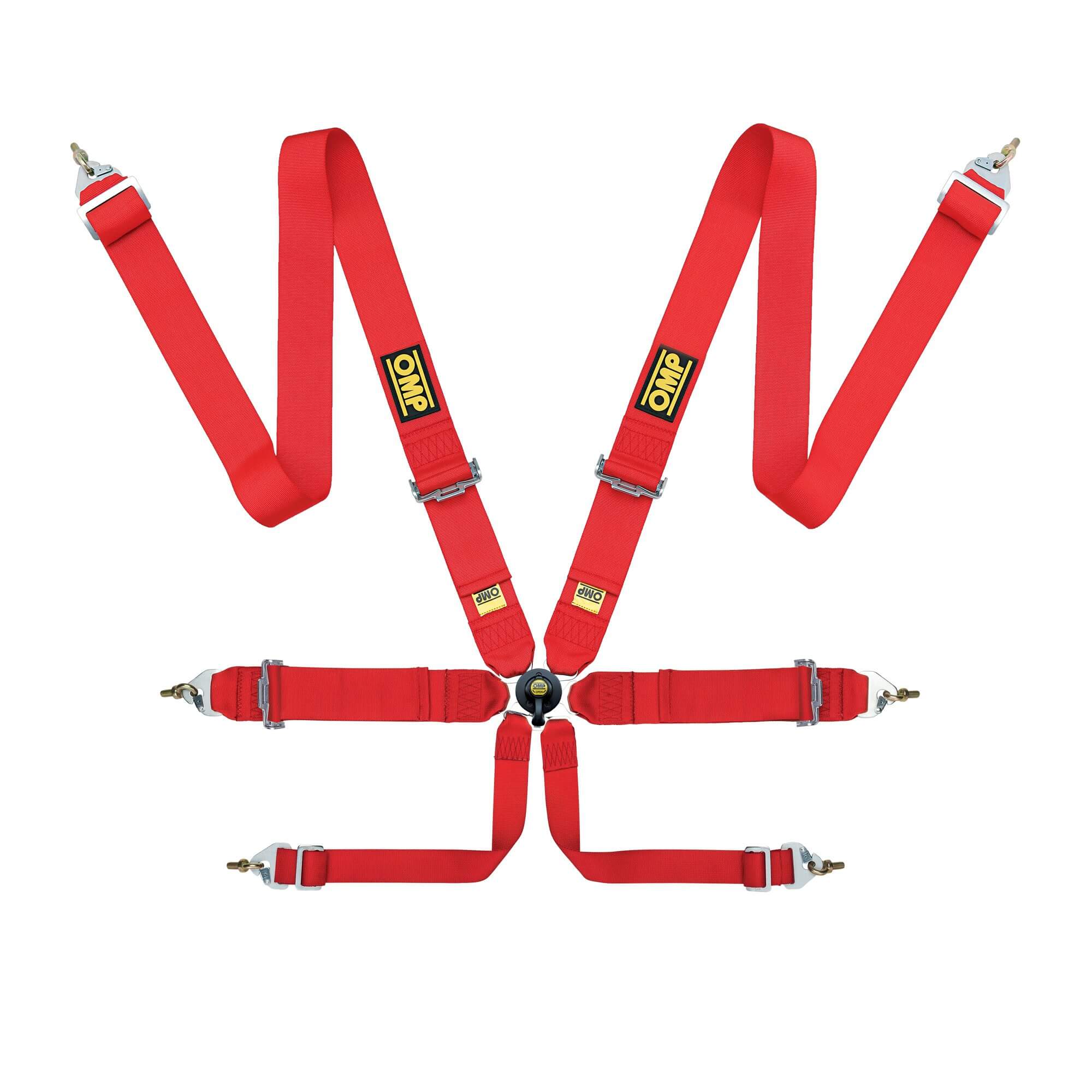
OMP Tecnica 2 Formula 6 point harness in red, showing narrow shoulder and lap straps
OMP Tecnica 2 Formula. Narrow shoulders and narrow lap, built for use with a device. This is the pair we put side by side on the counter.
03 / How a shoulder strap is made

Three ways a shoulder strap gets built

Once you stop thinking of it as wide or narrow, the range sorts itself into three groups. Hardly anybody asks for the third one by name and it is often the one we end up selling, because plenty of drivers assume that running a device commits them to a narrow strap across the chest all day. It does not.

1

Full width, 70 mm the whole way

The traditional belt. Wide across the chest, wide over the shoulder. It works with or without a device, so it is the flexible option, and it is what you want if you are not wearing an FHR. Our shop tags these HANS Friendly.

2

Narrow, 44 mm the whole way

Built to sit properly on the arms of a device and homologated for that use under Article 6.4.1.1. The Schroth 2×2 belts, the OMP Tecnica 2 pair and the Sparco H-2 range are all this. Tagged HANS Specific.

3

Wide, stepping down where it crosses the device

A 70 mm strap that narrows to roughly 50 mm for the section over the device, then carries on. TRS describe their Magnum FHR version as using 50 mm webbing on the upper shoulder to suit a HANS device, and Sparco sell the same idea as the Competition H-3+2. FIA 8853-2016 also covers a genuine double strap, a 70 mm body belt running alongside a 44 mm device belt, adjusted separately.

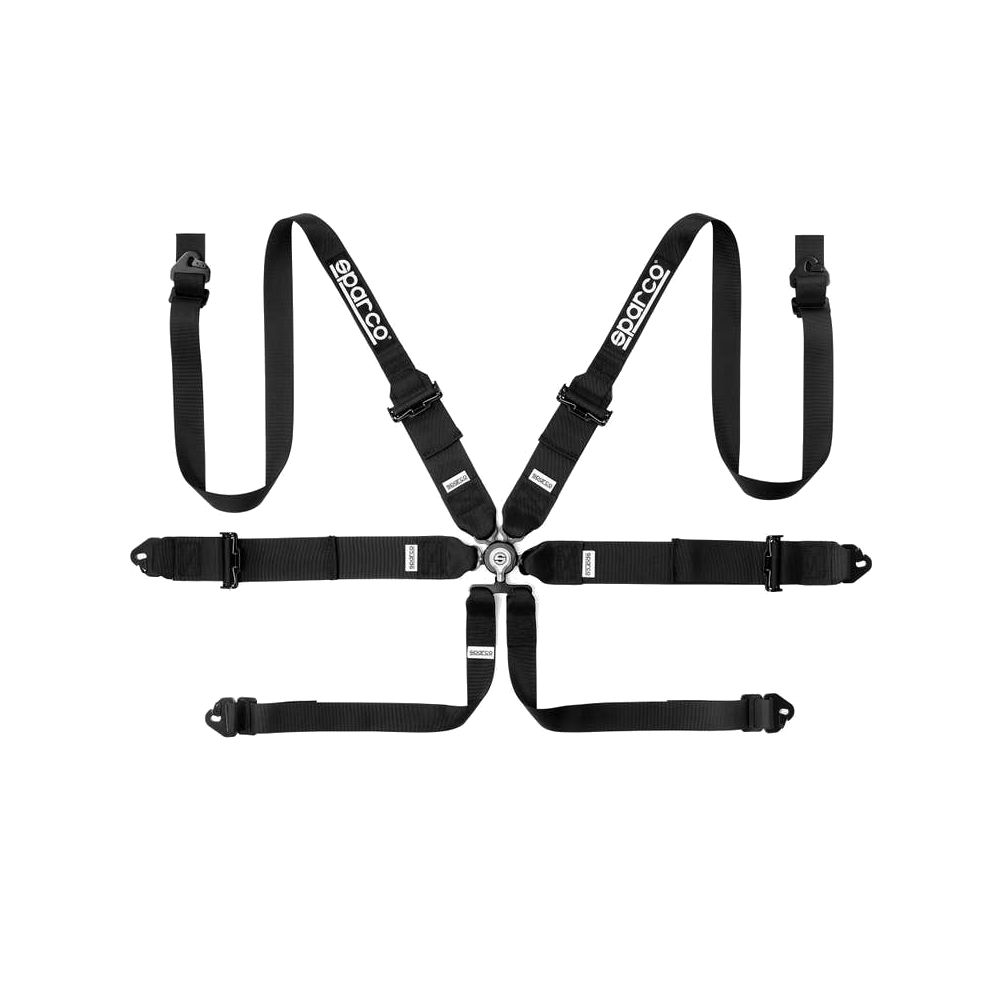
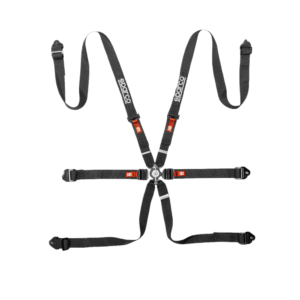
Sparco Competition H-3 six point harness in black with full width shoulder straps
Sparco Competition H-3. Full width all the way over the shoulder.
Sparco Competition H-3+2 six point FHR harness in black with shoulder straps that narrow at the top
Sparco Competition H-3+2. Same belt, narrowed for the section that crosses the device.
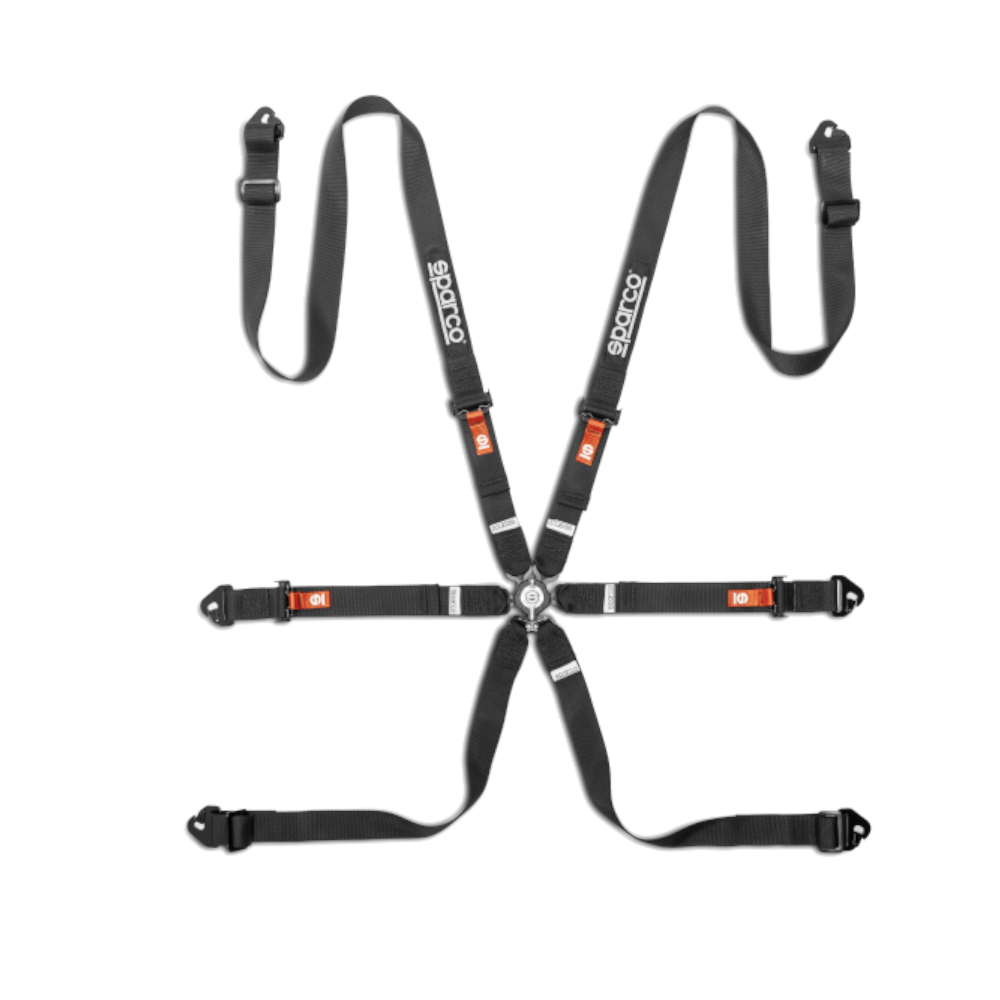
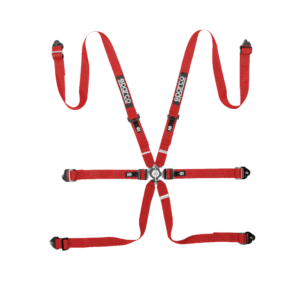
Sparco Competition H-2 PU six point harness in black with narrow shoulder straps throughout
Sparco Competition H-2 PU. Narrow the whole way, for use with a device.
04 / The decision

Everything turns on whether you wear a frontal head restraint

Answer this one first. It depends on your event and your habits more than on the car, which is why we always ask it before we ask what you drive.

The reason the width matters is geometry. A device sits on your shoulders with two flat arms lying forward along the top of them, and the shoulder straps run over those arms and clamp the whole thing down. A strap that is too wide for the arm can creep sideways off it. A strap sized for the job stays where it was put. Put a device on over the counter with both belts and you can see it in about ten seconds, which is quicker than either of us can explain it.

1

You always wear a device

Go narrow or stepped. A 44 mm belt throughout, or a 70 mm belt that steps down over the arms if you would rather keep the width across your chest.

2

You never wear one

Go 70 mm. It is the wider spread of load on your shoulders and it is the version homologated for use on its own.

3

Sometimes yes, sometimes no

Go 70 mm, which covers both, and accept that the strap sits less precisely on the device than a dedicated one would. Club drivers who run the same car at test days and race weekends usually land here.

4

You are about to start wearing one

Buy for where you are heading. Belts last years, and buying a 70 mm set six months before you take up an FHR is a decision you will make twice.

The angle matters as much as the width

Motorsport UK requires the shoulder straps to sit no more than 45 degrees below horizontal. Where a device is used they recommend no more than 20 degrees below horizontal, and the straps must never angle upwards. Work that out before the harness bar is welded in, because it can rule out a mounting point that looks perfectly sensible otherwise.
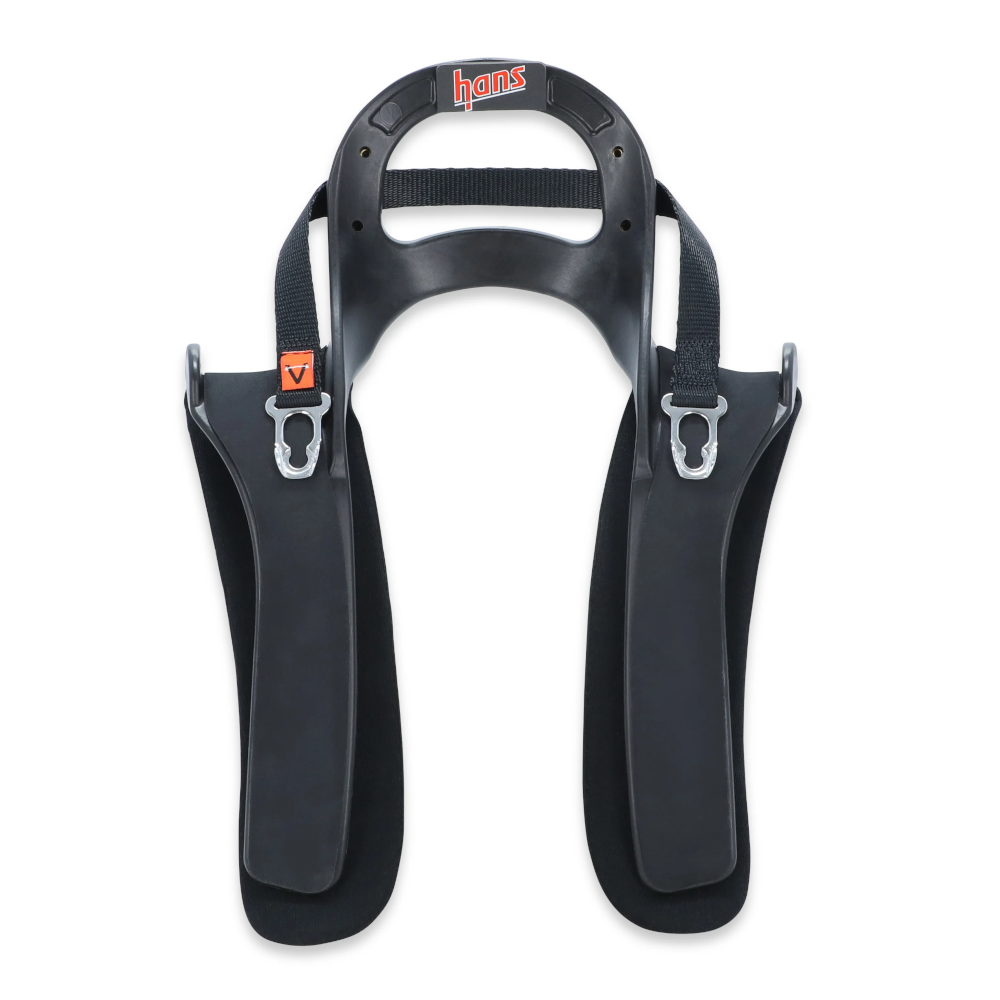
A HANS IV frontal head restraint viewed from the front, showing the collar and the two flat arms that lie along the top of each shoulder
A HANS IV from the front. Those two flat arms are what the shoulder straps have to run over, and they are the reason the narrow belt exists at all.
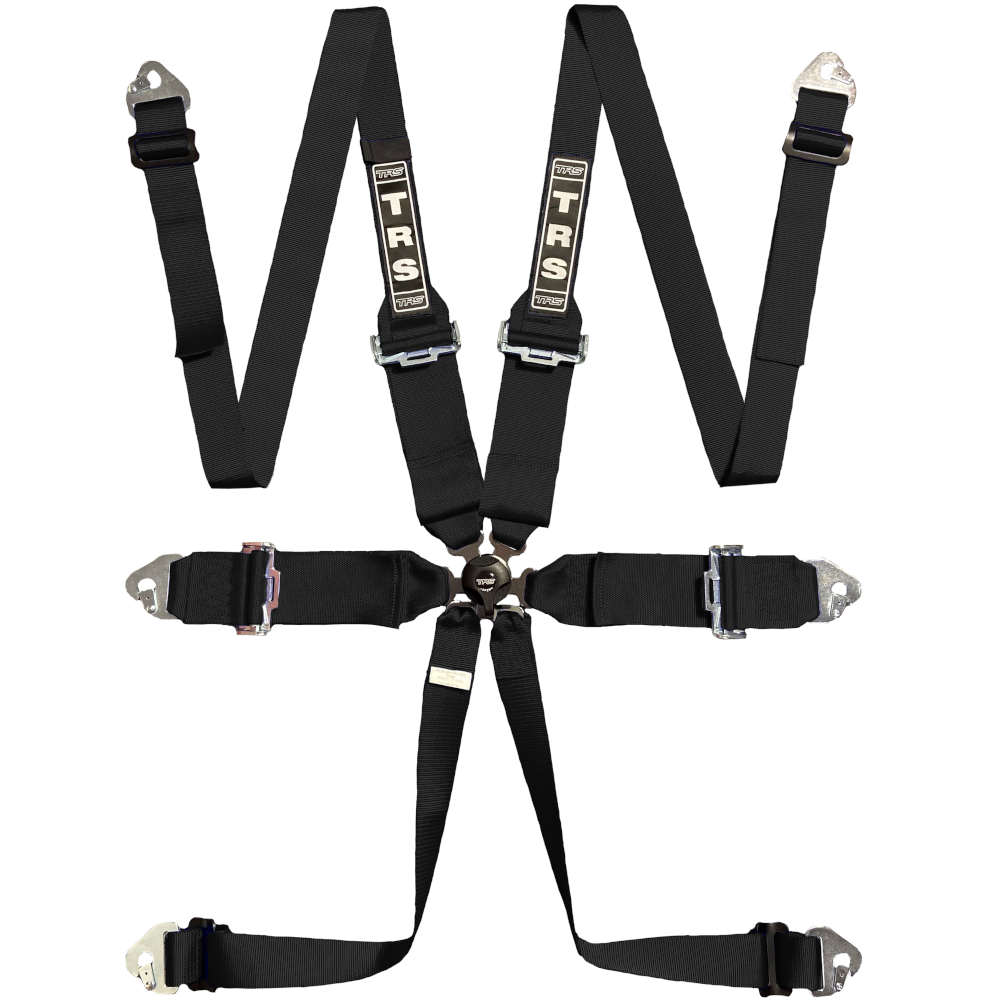
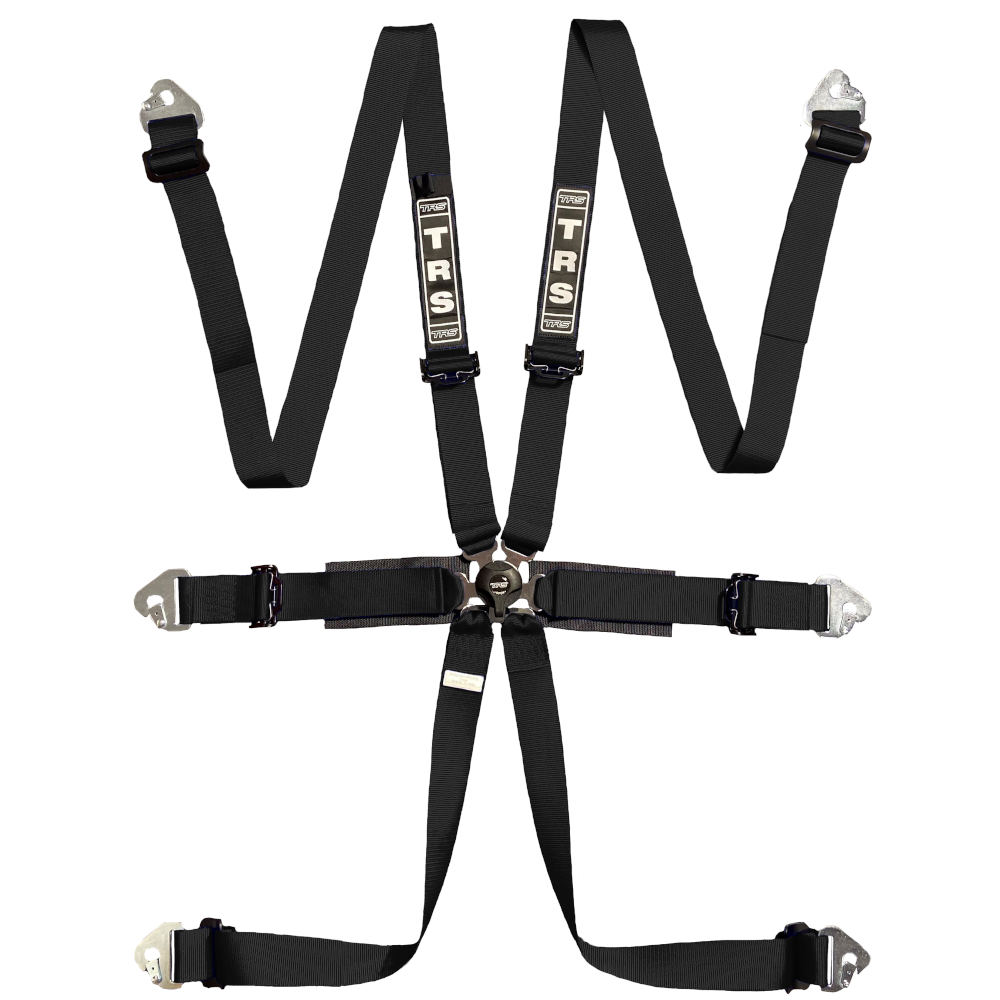
TRS Magnum 6 point FIA HANS harness belt in black
The TRS Magnum 6 Point HANS is the belt built to sit on it, stepping down to 50 mm webbing across the upper shoulder.
05 / The second decision

The lap strap is a comfort and fitment question

With the shoulders settled, the lap strap is a much freer choice. Both widths clear the 44 mm FIA minimum, so this one comes down to your seat and your build.

A 3 inch lap strap spreads its load across more of you and plenty of drivers find it kinder over a long stint. A 2 inch strap feeds through a tight pair of seat slots more easily, sits lower and more precisely on the pelvis, and is what most of the modern competition belts use. Both are good answers to different questions.

Usually it is the seat that decides, and this is Cameron’s corner of the job. He has the tape measure out before most customers have finished the sentence, because some shells have generous lap belt openings and take either width without complaint, while others are tight enough that a 3 inch strap arrives at an angle and never quite lies flat. Nobody can tell which from a product photograph.

Send us the seat with your enquiry

Tell us the exact seat model and Cameron will tell you which lap width feeds through its openings properly. It takes him a minute and it saves you a return.

06 / The range, brand by brand

OMP

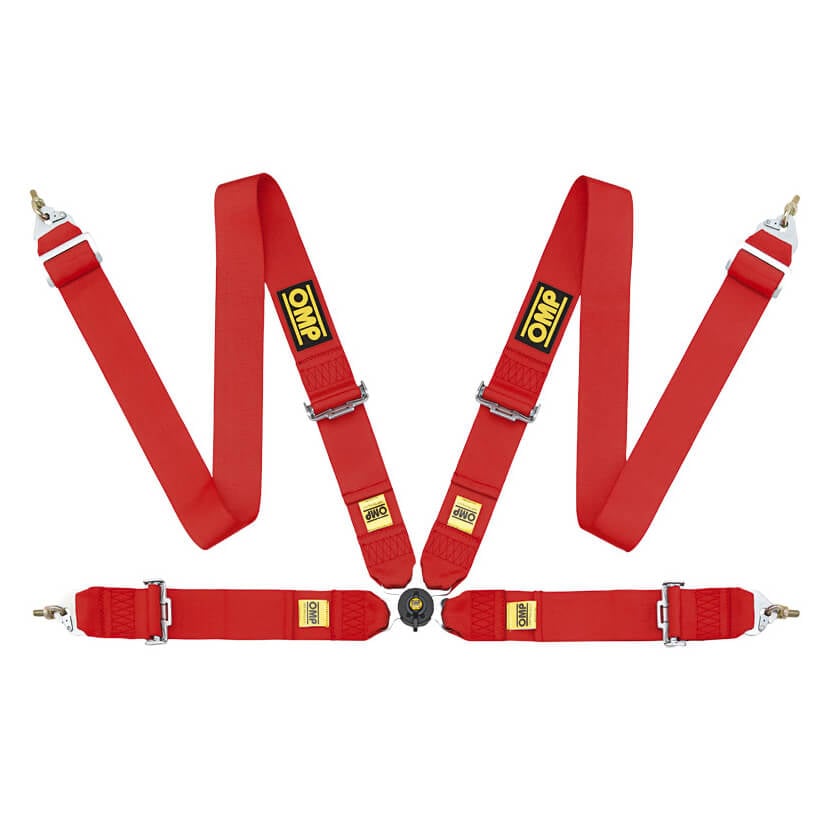
The First is the 3 inch. The 2 inch equivalent is the Tecnica 2.

We get asked for an OMP First in 2 inch and there is not one, which is worth saying plainly because that enquiry goes round in circles otherwise. The First 3" Saloon is a 3 inch belt top and bottom, homologated to FIA 8853-2016, and it is where most people start with OMP.

OMP put their narrow belts under the Tecnica 2 name instead. The Tecnica 2 Prototype and the Tecnica 2 Formula are both 2 inch throughout and built for use with a device, and they differ in which car they are cut for, with the same webbing on both. The 801 four point sits on the older FIA 8854-1998 approval, so check its label date against your regulations before you commit to it.

Pick the First up next to the Tecnica 2 and you have the whole argument in your hands. Two OMP harnesses, same maker, same standard, and both the shoulder and the lap have changed.

  • From £151.20 Excl. VAT Select options This product has multiple variants. The options may be chosen on the product page
  • From £168.89 Excl. VAT Select options This product has multiple variants. The options may be chosen on the product page
  • From £220.00 Excl. VAT Select options This product has multiple variants. The options may be chosen on the product page
  • From £220.00 Excl. VAT Select options This product has multiple variants. The options may be chosen on the product page
07 / The range, brand by brand

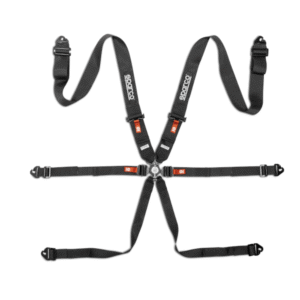
Sparco

The H number tells you the width. H-3 is wide, H-2 is narrow, H-3+2 is the stepped one.

Sparco name their belts more helpfully than most once you know the code. The Competition H-3 and the H-3 Steel run a 3 inch shoulder into a 2 inch lap, which is that most common build in the range. The Competition H-2 PU and the H-2 PD are the 2 inch versions built for a device.

The one to know about is the Competition H-3+2. The name is the specification: a 3 inch strap that steps to 2 inch where it crosses the device. If you want the wide belt across your chest and the narrow section where the device needs it, that is the part number, and it usually comes as a surprise to people who thought the choice was binary.

The four point Club Racer is a different animal, tagged not compatible with a device and sitting on FIA 8854-1998. Fine for what it is. Check the date on it.

  • From £178.50 Excl. VAT Select options This product has multiple variants. The options may be chosen on the product page
  • From £185.00 Excl. VAT Select options This product has multiple variants. The options may be chosen on the product page
  • From £185.00 Excl. VAT Select options This product has multiple variants. The options may be chosen on the product page
  • From £198.00 Excl. VAT Select options This product has multiple variants. The options may be chosen on the product page
  • From £202.00 Excl. VAT Select options This product has multiple variants. The options may be chosen on the product page
  • From £372.00 Excl. VAT Select options This product has multiple variants. The options may be chosen on the product page
08 / The range, brand by brand

TRS Motorsport

The widest range we stock, and the naming rewards a careful read.

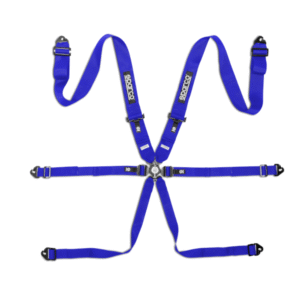
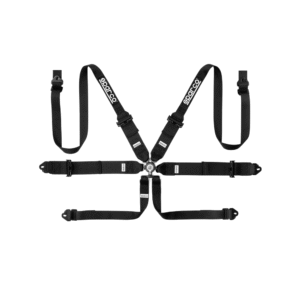
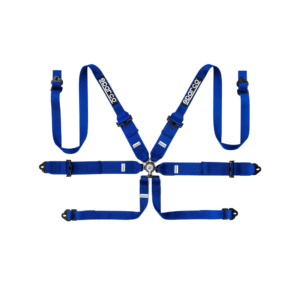
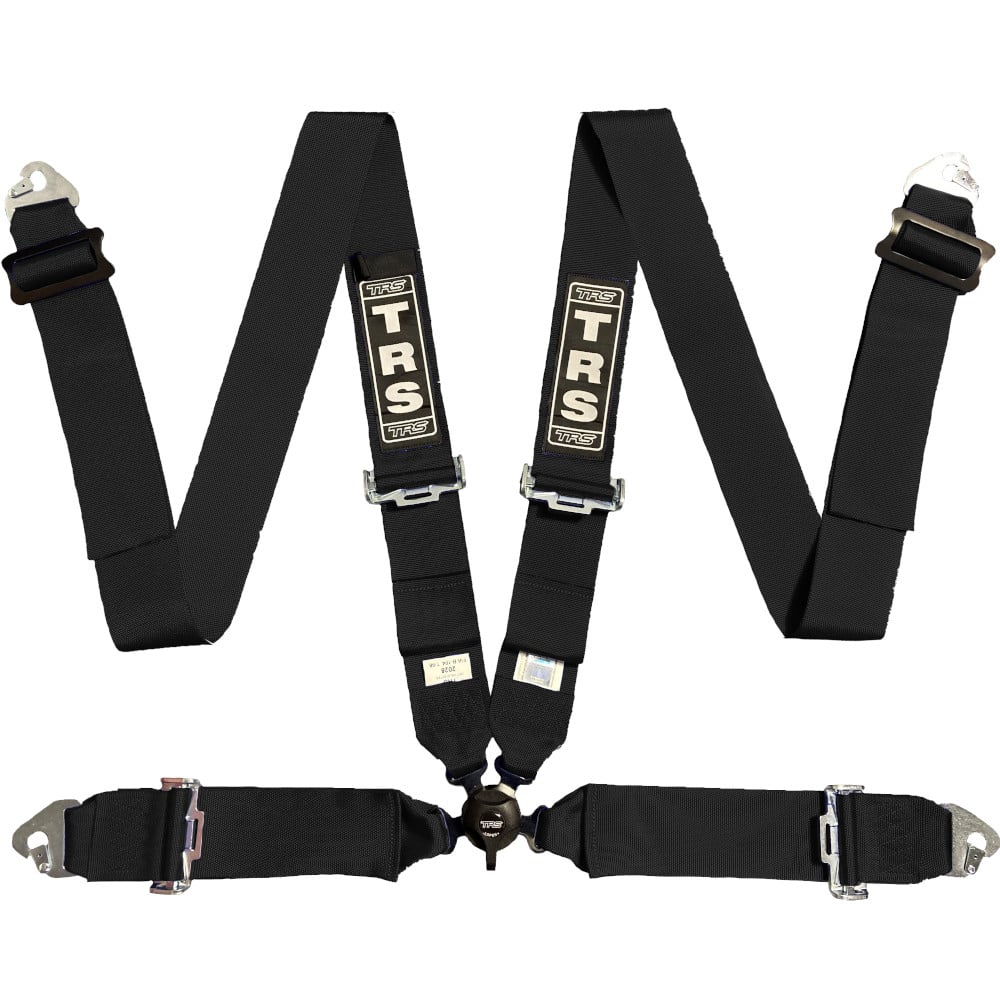
TRS list 31 FIA harnesses with us, more than anyone else, and the model names carry the information if you slow down over them. A Magnum 6 Point is 3 inch throughout and works with or without a device. A Magnum 6 Point HANS is the same belt built for a device, and TRS achieve that by stepping the upper shoulder down to 50 mm webbing where it passes over it. The word HANS in a TRS model name is doing real work.

The Pro family goes a different way, running a 3 inch shoulder into a 2 inch lap. The Pro 6 Point and the New Pro Superlite are the versions that work either way, and the Pro International HANS Only is exactly what its name says. Superlite and Ultralite refer to the adjusters, so they change the weight and the feel in your hand without touching the width decision at all.

The alloy adjusters on the lighter TRS belts are much nicer to use, and that is worth saying because it does not show up in a spec table. You notice it when you are cinching the lap straps down in a hurry with gloves on.

  • From £185.00 Excl. VAT Select options This product has multiple variants. The options may be chosen on the product page
  • From £195.00 Excl. VAT Select options This product has multiple variants. The options may be chosen on the product page
  • From £205.00 Excl. VAT Select options This product has multiple variants. The options may be chosen on the product page
  • From £209.00 Excl. VAT Select options This product has multiple variants. The options may be chosen on the product page
  • From £225.00 Excl. VAT Select options This product has multiple variants. The options may be chosen on the product page
  • From £259.00 Excl. VAT Select options This product has multiple variants. The options may be chosen on the product page
09 / The range, brand by brand

Schroth Racing

Schroth put the answer in the model name. 2×2 and 3×2 are the two measurements.

Schroth make this easiest of anyone. The number pair in the name is shoulder by lap, in inches. A Profi 2×2 is 2 inch shoulder and 2 inch lap and it is built for a device. A Profi 3×2 is the same harness with 3 inch shoulders, so it works whether or not you wear one. Same belt, same maker, one digit apart, and that digit is the entire decision.

The rest of the 2×2 family follows the pattern. Clubman 2×2 at the sensible end, Flexi 2×2 and Enduro 2×2 above it. The ASM four point belts are a separate thing again and are tagged as not compatible with a device.

Schroth hardware feels different to the Italian belts the moment you pick it up. Heavier adjusters, a firmer webbing that takes a while to soften. Some customers love it straight away and some find it stiff for the first few outings, so it is worth handling a set before you commit if you can get to us.

  • £302.65 Excl. VAT Add to basket
  • From £313.13 Excl. VAT Select options This product has multiple variants. The options may be chosen on the product page
  • From £358.13 Excl. VAT Select options This product has multiple variants. The options may be chosen on the product page
  • From £370.01 Excl. VAT Select options This product has multiple variants. The options may be chosen on the product page
  • From £387.38 Excl. VAT Select options This product has multiple variants. The options may be chosen on the product page
  • From £501.61 Excl. VAT Select options This product has multiple variants. The options may be chosen on the product page
10 / The range, brand by brand

Willans

The widths are printed in the product title, which saves an email.

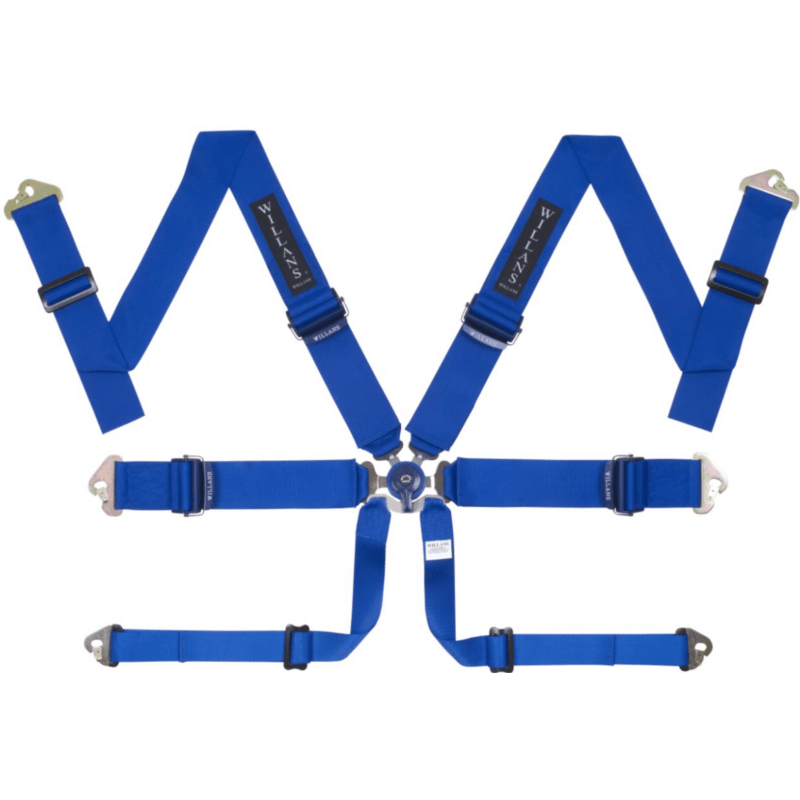
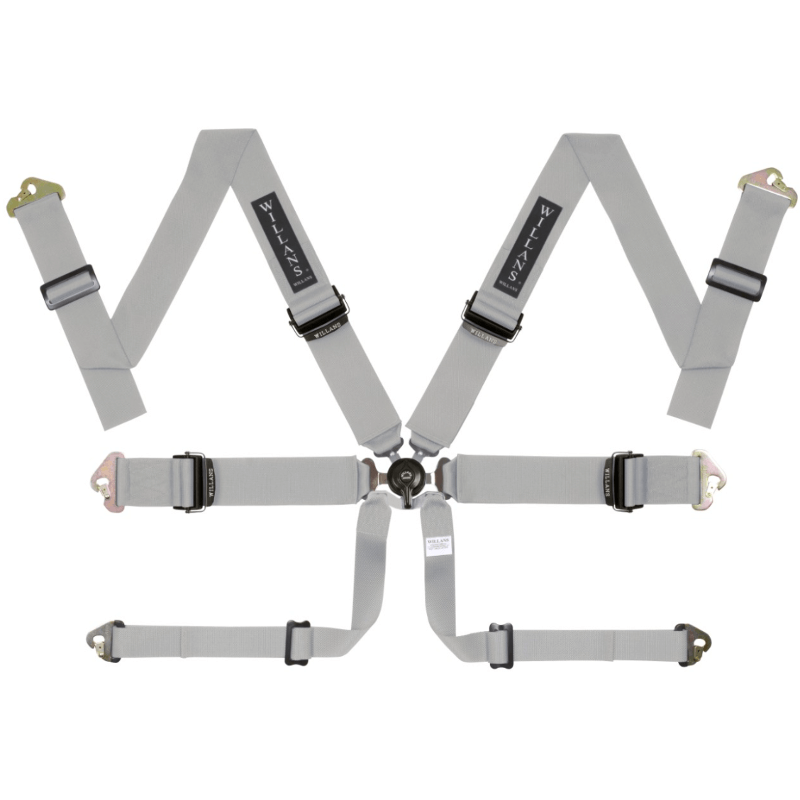
Willans put both measurements in the listing name, so a Silverstone 632 reads as 3 inch shoulder and 2 inch lap before you have opened the page. The Silverstone 622 is the 2 inch shoulder version of the same belt for a driver in a device.

The Club T6 and the Silverstone LDT6 are the 3 inch by 3 inch saloon belts, and a fair number of the Willans four point sets carry the older FIA 8854-1998 approval, so the label date is the thing to check on those. There are Caterham and Westfield specific sets across the range as well, which matters more than the width if you run one of those cars.

  • From £225.00 Excl. VAT Select options This product has multiple variants. The options may be chosen on the product page
  • From £267.00 Excl. VAT Select options This product has multiple variants. The options may be chosen on the product page
  • From £267.00 Excl. VAT Select options This product has multiple variants. The options may be chosen on the product page
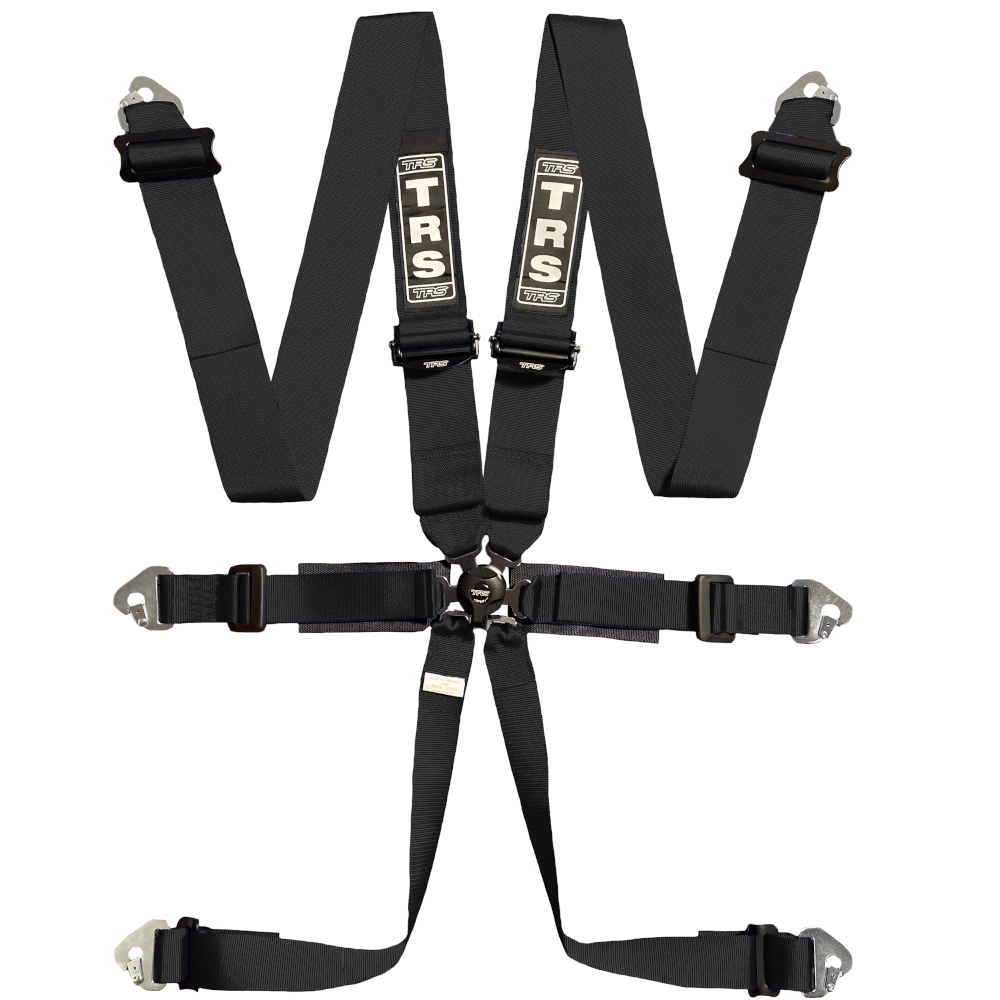
  • From £294.78 Excl. VAT Select options This product has multiple variants. The options may be chosen on the product page
11 / Side by side

The main models on one screen

Widths and approvals read from each product record on 6 August 2026.

The column that matters most is the fourth one. Optional means the belt works with or without a device. Required means the shoulder straps are built for one and should be worn with one.

HarnessBrandPointsShoulder to lapFHRApproval
OMP First 3" SaloonOMP63 to 3OptionalFIA 8853-2016
OMP 801OMP43 to 3OptionalFIA 8854-1998
OMP Tecnica 2 PrototypeOMP62 to 2RequiredFIA 8853-2016
OMP Tecnica 2 FormulaOMP62 to 2RequiredFIA 8853-2016
Sparco Competition H-3Sparco63 to 2OptionalFIA 8853-2016
Sparco Competition H-3+2Sparco63 to 2RequiredFIA 8853-2016
Sparco Competition H-2 PUSparco62 to 2RequiredFIA 8853-2016
Sparco Club RacerSparco43 to 2Not compatibleFIA 8854-1998
TRS Magnum 6 PointTRS63 to 3OptionalFIA 8853-2016
TRS Magnum 6 Point HANSTRS63 to 3, steppedRequiredFIA 8853-2016
TRS Pro 6 PointTRS63 to 2OptionalFIA 8853-2016
TRS Pro International HANS OnlyTRS63 to 2RequiredFIA 8853-2016
Schroth Profi 3×2Schroth63 to 2OptionalFIA 8853-2016
Schroth Profi 2×2Schroth62 to 2RequiredFIA 8853-2016
Schroth Clubman 2×2Schroth62 to 2RequiredFIA 8853-2016
Willans Club T6Willans63 to 3OptionalFIA 8853-2016
Willans Silverstone 632Willans63 to 2OptionalFIA 8853-2016
Willans Silverstone 622Willans62 to 2RequiredFIA 8853-2016

The full range runs well past this. There are 127 belts in the FIA harness category and another 28 in the FHR harness category, plus the brand pages for OMP, Sparco, TRS, Schroth and Willans.

12 / Before you buy

Read the label before you read the price

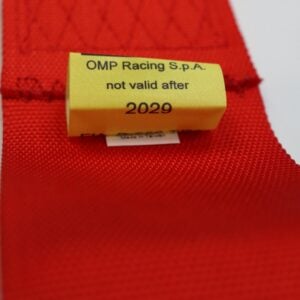
Two numbers live on the left shoulder strap and both are worth finding before you order anything. The first is the standard. FIA 8853-2016 is the current one, and you will still see FIA 8854-1998 on plenty of belts in stock, including some very good ones.

The second is the date. Motorsport UK guidance grants a five-year extension at the end of the initial five-year life for harnesses homologated to 8853-2016. Their worked example is a label reading not valid after 2018, which then runs to 31 December 2023. Add five years to the year on the label and that is your Motorsport UK date. The extension is written for 8853-2016, so an 8854-1998 belt is read off its own label.

Garreth’s view on this is blunt, and it is the one bit of buying advice on the page he would give anyone. The date is part of the price. Two belts a hundred pounds apart with three years between their labels are not the same purchase, and the dearer one is often the cheaper one by the time you are done with it. Work out the cost per season before you compare the tickets.

International events read differently

The five-year extension is a Motorsport UK provision for events under their regulations. If you are entering an FIA international event, work from the label date and the event regulations.

13 / Getting it in the car

The numbers that decide where it mounts

Width is the easy half. Where the straps land is what makes a harness work, and it is the part that gets left until last and rushed. These figures come from the Motorsport UK installation guidance, and they are the ones we check when somebody sends us a photo of a mounting plan. Eye bolts and mounting hardware are in the harness mountings category, and if the straps are going to sit against a shoulder for a few hours a set from the harness pads range is money well spent.

If your question is a road car rather than a competition one, the road harness against FIA harness guide covers that ground properly.

1

Shoulder angle

A maximum of 45 degrees below horizontal. With a frontal head restraint, no more than 20 degrees below horizontal is recommended, and never angled upwards.

2

Fixings

Bolts of at least 7/16in UNF or M12 8.8. New mounting points in the chassis want steel counter plates of at least 40 cm2 and 3 mm thickness.

3

Looping around a harness bar

Pass the strap three times through the 3-bar slide with at least 100 mm of tail protruding, and get the slide as close to the bar as it will sit.

4

The complete set

Fit it as the manufacturer supplies it. The homologation covers the assembly, so straps and buckles do not get mixed between sets.

14 / Straight answer

What we would actually fit

Between us we do this all day, so here is where we land instead of leaving you with a shrug about personal preference. Cameron works out the fit, Garreth decides what is worth the money, and on this subject they mostly agree.

Club car, no device, test days and the odd sprint. That is a 3 inch by 3 inch six point, and the TRS Magnum 6 Point is the one we keep coming back to. The OMP First does the same job for less, and Garreth would put the difference towards the seat every time.

Racing with a device every time out, go to a 2 inch belt. The Schroth 2×2 family is lovely if the budget reaches, and you can feel it in the hardware. The Sparco H-2 PU is the sensible one.

Wearing a device but hating a narrow strap across your chest, look at the Sparco H-3+2 or the TRS Magnum HANS. This is the one we push hardest across the counter, because most people have never been told it exists and it fixes a complaint they had written off as the price of running a device.

And if you genuinely do not know whether you will be in a device this time next year, buy 3 inch and revisit it. Nothing gets locked in, and Cameron can talk you through the swap when it happens.

15 / Questions

Harness width questions we get asked

Is a 2 inch harness weaker than a 3 inch one?

No. FIA 8853-2016 puts both through the same webbing strength and dynamic tests, and the breaking loads in the standard do not change with the strap width. The narrow shoulder strap exists so it sits correctly on a frontal head restraint, and the standard restricts its use accordingly.

Can I use a 2 inch shoulder harness without a HANS or FHR?

A 44 mm shoulder strap is homologated under Article 6.4.1.1 of FIA 8853-2016, which restricts its use to being worn with an FHR, and those straps carry a specific FIA label saying so. If you are not wearing an FHR, choose a belt with 70 mm shoulder straps. If your event mandates an FHR anyway, the point is academic, you will be wearing one.

Does the lap strap have to match the shoulder strap?

No, and on most of our range it does not. Of the 133 published FIA harnesses we list, 38 pair a 3 inch shoulder with a 2 inch lap. The FIA minimum for the pelvic strap is 44 mm whichever shoulder width the harness uses.

What is the difference between HANS Friendly and HANS Specific on your product pages?

HANS Friendly means the belt works whether or not you wear a frontal head restraint, which in practice means full width 70 mm shoulder straps. HANS Specific means the shoulder straps are built for use with a device, either because they are 44 mm all the way or because they narrow where they cross it. Those are our own shop terms for sorting the range, so read the harness label and the maker instructions for the homologation itself.

What does the 3 inch stepping down to 2 inch mean?

Some belts use 70 mm webbing over most of the shoulder and narrow to around 50 mm for the section that passes over the device. TRS describe their Magnum FHR version as using 50 mm webbing on the upper shoulder to suit a HANS device, and the Sparco Competition H-3+2 is the same idea. You get a wide strap across the chest and a narrower one where the device needs it.

How long is an FIA 8853-2016 harness accepted by Motorsport UK?

Motorsport UK grants a five-year extension at the end of the initial five-year life for harnesses homologated to FIA 8853-2016. Their guidance says to add five years to the year shown on the label, so a label reading not valid after 2018 runs to 31 December 2023. That extension applies to 8853-2016 only. Read your own label and your event regulations.

What angle should the shoulder straps run at?

Motorsport UK requires the shoulder straps to be a maximum of 45 degrees below horizontal. Where a frontal head restraint is used they recommend no more than 20 degrees below horizontal, and the straps must not be angled upwards at all. That is worth checking before you decide where the harness bar goes, because it can rule out a mounting point that otherwise looks fine.

Can I mix a 3 inch shoulder strap with a 2 inch lap strap from another set?

No. Buy the complete set as the manufacturer supplies it. The homologation belongs to the whole assembly, and a lot of these belts are sold in width combinations already, so the pairing you want almost certainly exists as a part number.

Which width is more comfortable?

On the shoulders the wider strap spreads its load over more of you, and most drivers who do not wear a device prefer it. On the lap it is less clear cut and depends on the seat as much as the belt. Send us the seat model with your enquiry and we will tell you which lap width feeds through its slots properly.

Come and see us

Bring the seat in and we will put a belt through it with you

If you are anywhere near the showroom, bring the seat and we will feed both widths through the slots on the counter so you can see which one lies flat. If you are not, send us the seat model, whether you wear a frontal head restraint and what you compete in, and Cameron will come back with a part number.

Browse the FIA rangeSee what is in stock now
Free UK Shipping

On all orders above £100

In-Store Shopping

Try before you buy

Easy Delivery Tracking

Aftership Tracking Updates

How can I help?

Before you leave. Is there anything I can assist with? With 17 years of industry knowledge and hands-on experience, I’m here to help. Let’s get you race ready!