Call Garreth, Cameron & Jack: 0115 9893488

FREE UK shipping on orders over £100.00 & FREE gifts on checkout

Your garage NewAdd your car and see the parts that fit
Useful Links
Your Account

Talk to us

Garreth, Cameron & Jack · Mon to Fri
Call 0115 989 3488Free advice on your build
Thanks, that’s with us. We reply the same working day.
That didn’t send. Please give us a call instead.

Useful Links

Quick Access

Want to chat?

Call Garreth, Cameron, Jack
Today On: 0115 9893488
Click Here For Our Contact Form


You've unlocked two free gifts All two are in your basket at no charge.
  • Gift box
  • GSM Performance Customer Car Colouring Book Edition 1

Will I Fit In A Bucket Seat? The Waist And Height Guide To Every Shell We Stock

Sizing by jeans waist and height, off our own listing data

"I am six foot two with a 36in waist. Will I actually fit?" Cameron hears a version of that most weeks, and the internet hears it daily, usually answered by strangers guessing at each other's hips. His answer starts with two numbers you already know: your jeans waist and your height. Nearly every seat we list carries both as filterable bands, because we got tired of the guessing too.

Garreth puts the why in one line: a shell that would grip your slimmer mate will hold you in a corner about as well as a park bench, so size the seat to the body actually driving the car. This page explains the bands, unpicks the three measurements that all get called "the width", and picks real in-stock shells for slim, standard, wide and tall drivers. And if you are anywhere near Nottingham, the showroom settles it in five minutes flat.

  • Nearly every seat we list carries a driver waist band and a height rating you can filter by
  • The bands run from a 28in to a 42in jeans waist, and 32in to 36in is where most shells live
  • XL means wider, never taller: some XL shells are rated for drivers under 6ft
  • Internal width fits you, external width fits the car, and they get confused constantly
  • The showroom in Nottingham has shells right across the size range on display to sit in
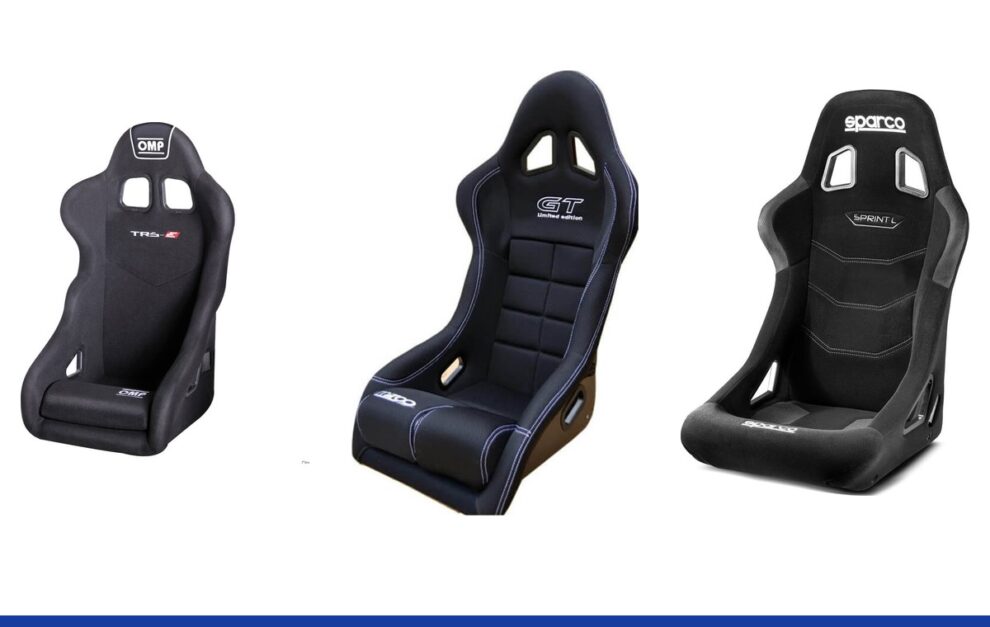
Three bucket seats from the SportSeats4u range spanning the size range: OMP TRS-E, Mirco GT 3D and Sparco Sprint L
Three shells off our shelves spanning the range: a slim-friendly OMP TRS-E, the standard-fit Mirco GT and the Sparco Sprint L, one of only a handful of shells rated to a 42in waist. Same rule for all of them: size the seat off your jeans waist and your height, the two numbers this whole page runs on.

Two numbers answer it: jeans waist and height

Forget the brochure charts for a minute. The waist figure that matters is the number on the jeans you would drive in, because a shell grips you at the hips and thighs the way denim does, and the trade sizes accordingly: Tillett, the most precise of anyone about this, rate their standard shells to a 100kg driver with a 36in jeans waist and their XL shells to 130kg and 40in. Height matters separately, because it sets where your shoulders meet the harness slots and where your eyes sit against the head supports.

Our listings carry both as bands: a driver waist range in inches and a height rating either side of 6ft. Here is how the whole catalogue splits.

Listings per waist band, August 202628in to 32in48 listings32in to 36in248 listings36in to 38in33 listings36in to 40in63 listings40in to 42in5 listings

Live listing counts by driver waist band, pulled from our own product data in August 2026. Counts are listings, so pairs and seat and harness bundles are in there, but the shape of the graph is the honest picture: the market builds for a 32in to 36in waist, and the 40in to 42in end is five listings deep. If you are at either end of this chart, that is exactly when to ring us before ordering anywhere.

XL is a width, never a heightThe trap in every size chart: XL shells are wider through the hips and shoulders, and several of them are rated for drivers under 6ft. The OMP TRS-E XL in our own data is exactly that, a wide shell for a shorter driver. Tall and slim usually means a standard shell with the right mounts, and broad but 5ft 8in means XL. Pick the band for your build, not the biggest letter.

Where to put the tape

Two minutes with a tape beats any amount of guessing, and it is the first thing Cameron asks for. The mistake almost everyone makes is quoting their trouser size, which is a clothing convention and not a measurement. Measure the body that is going in the seat.

  1. Waist, over the clothes you drive inTape round the widest part of your hips and seat, not your natural waist and not the number on your jeans label. Trouser sizes flatter, seats do not. Measure sitting down if you can, because you spread when you sit and that is the shape the shell has to hold.
  2. Height, in shoesStraight against a wall. This decides the under and over 6ft rating. It is a shoulder measurement in disguise: it sets where your shoulders meet the harness slots, and it says nothing about legroom.
  3. Shoulder width, if you are broadAcross the back from the outside of one shoulder to the other. Worth doing if you carry weight up top, because a shell can suit your hips and still pinch at the shoulder.
  4. Add your kitWinter coat, race suit, rib protector, harness pads: whatever you actually wear in the car. An inch of clothing is the difference between snug and wedged.
When you are between two bands, size upA shell that is slightly roomy can be padded, and most makers sell inserts for exactly that. A shell that is slightly tight cannot be made bigger. Garreth would take the roomier one every time on a road car, and only go snug when the car is a race car and the driver is in a suit.

Internal, external, base: which width is which

Half the confusion online comes from three different measurements all being called the width. When a listing quotes one bare number it is nearly always the external shell width, and buying on that number tells you whether the seat fits the car, not whether you fit the seat. Cobra are the honest exception in the fixed range: every Cobra race shell we list publishes its external width and its base width, 555mm to 590mm across the shells in stock as we write this.

where you sitABCA Internal widththe space you sit in.This one fits youB External widththe widest point ofthe shell. Fits the carC Base widththe mounting face,for frames and tunnelsforward

The three widths that get mixed up in every forum thread. When a maker quotes one width with no label it is almost always B, the external shell width, which tells you whether the seat clears your door card and tunnel but says nothing about your hips. A is the one your body cares about, and hardly anyone publishes it, which is why the showroom exists.

How to read a maker's size chart

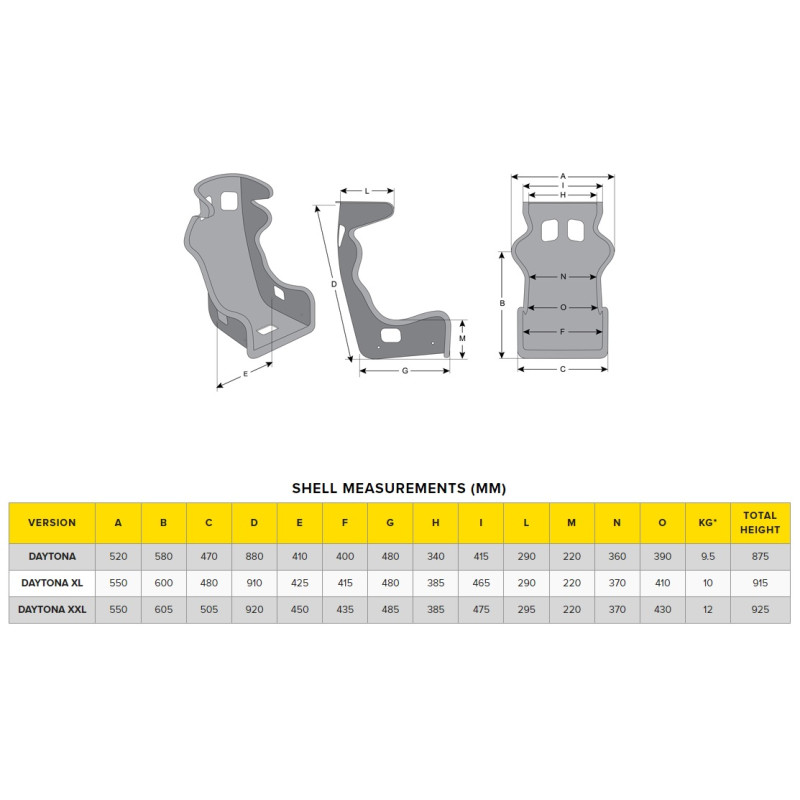
Here is the thing customers tell us they find impossible, and they are right to. A maker's size drawing is a technical document written for people who already know the conventions: two columns of numbers with no units, a seat outline from three angles, and the one figure you actually want buried among the mounting dimensions.

The rules for reading one are simple once somebody says them out loud. Everything is millimetres. The widest figure across the top of the backrest is the shoulder room. The figure across the seat base is your hip room. The numbers next to a bolt symbol are mounting dimensions, so they belong to the fitter and not to you. Where two sets of numbers share one drawing, the chart is covering two sizes of the same shell at once.
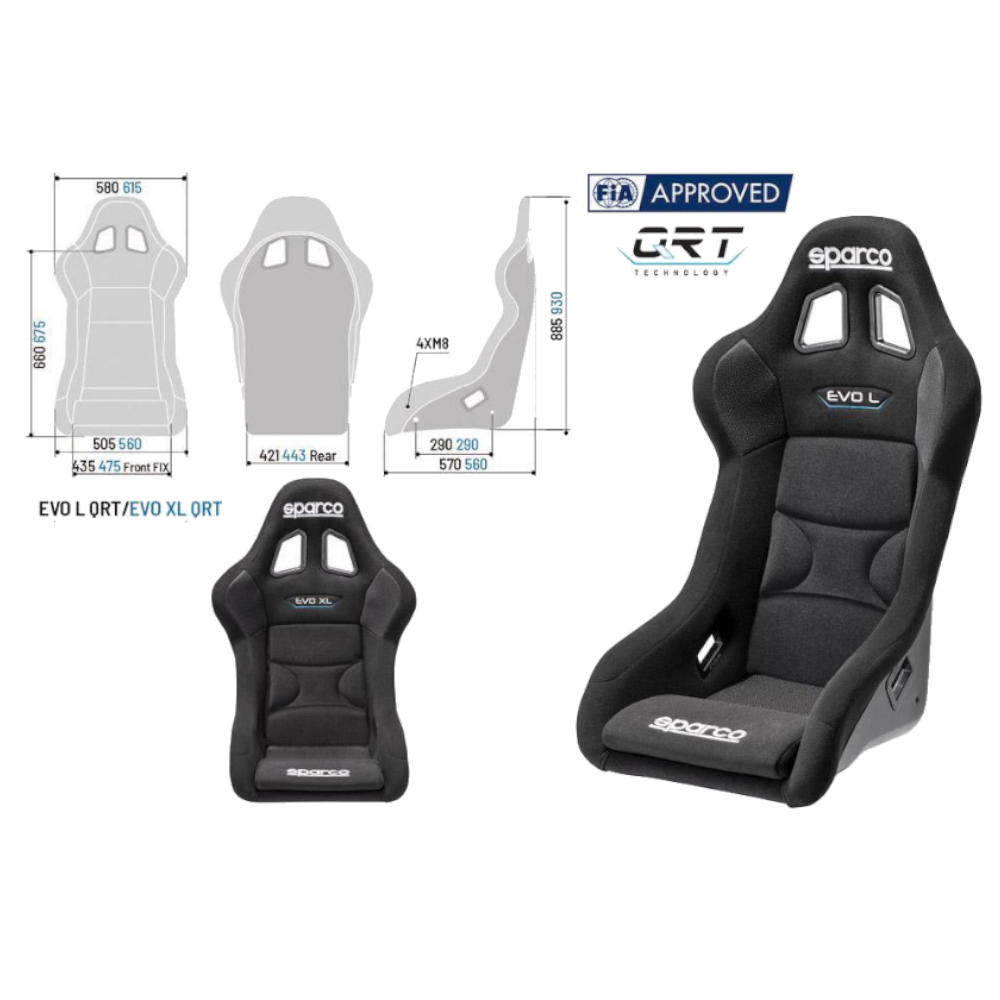
Sparco size guide drawing for the Evo L QRT and Evo XL QRT bucket seats, showing shoulder width, seat height and the M8 side mount spacing
Sparco's own drawing for the Evo L and the Evo XL. Two sets of numbers on one picture: the darker figures are the L, the lighter ones the XL. Read the widest across the shoulders and you have the number that decides whether the seat suits your build.

This particular drawing is worth a second look, because it shows what stepping up a size actually buys. Sparco put the Evo L and the Evo XL on one sheet, and across the shoulders the two go from 580mm to 615mm. That is 35mm, a little over an inch, and on a broad set of shoulders it is the difference between held and pinched. The side mount spacing stays at 290mm on both, which is the reassuring part: going up a size in the same family does not change what the seat bolts to. If the chart in front of you does not give a figure you need, send us the model and Cameron will put a tape on ours.

Slim drivers: 28in to 32in

The 28in to 32in band matters more than people think: a slim driver in a standard shell slides across the seat in corners, which defeats the whole point of the purchase. The tight shells hold a smaller frame properly, and two of them cost less than a set of good tyres. The Sparco Circuit QRT is Garreth’s pick of this end: a serious FIA shell that happens to fit slighter drivers beautifully.

Those four are examples from this band, not the whole of it. Plenty more shells carry the same rating, and colours, trims and pair listings sit alongside each one. Browse the full bucket seat range or ring us with your numbers and we will shortlist from everything, including the seats not shown here.

Standard build: 32in to 36in

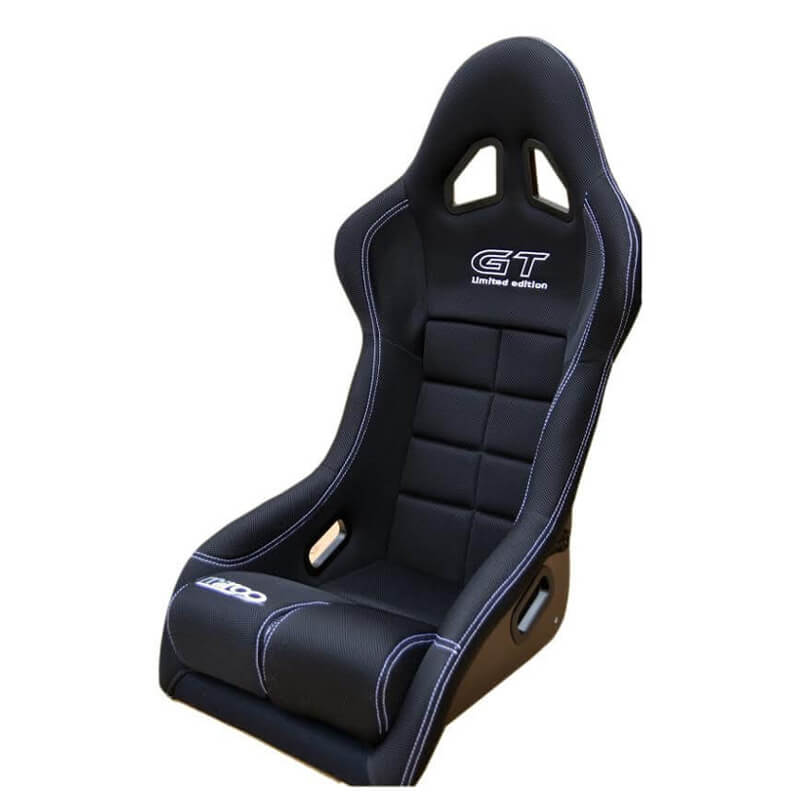
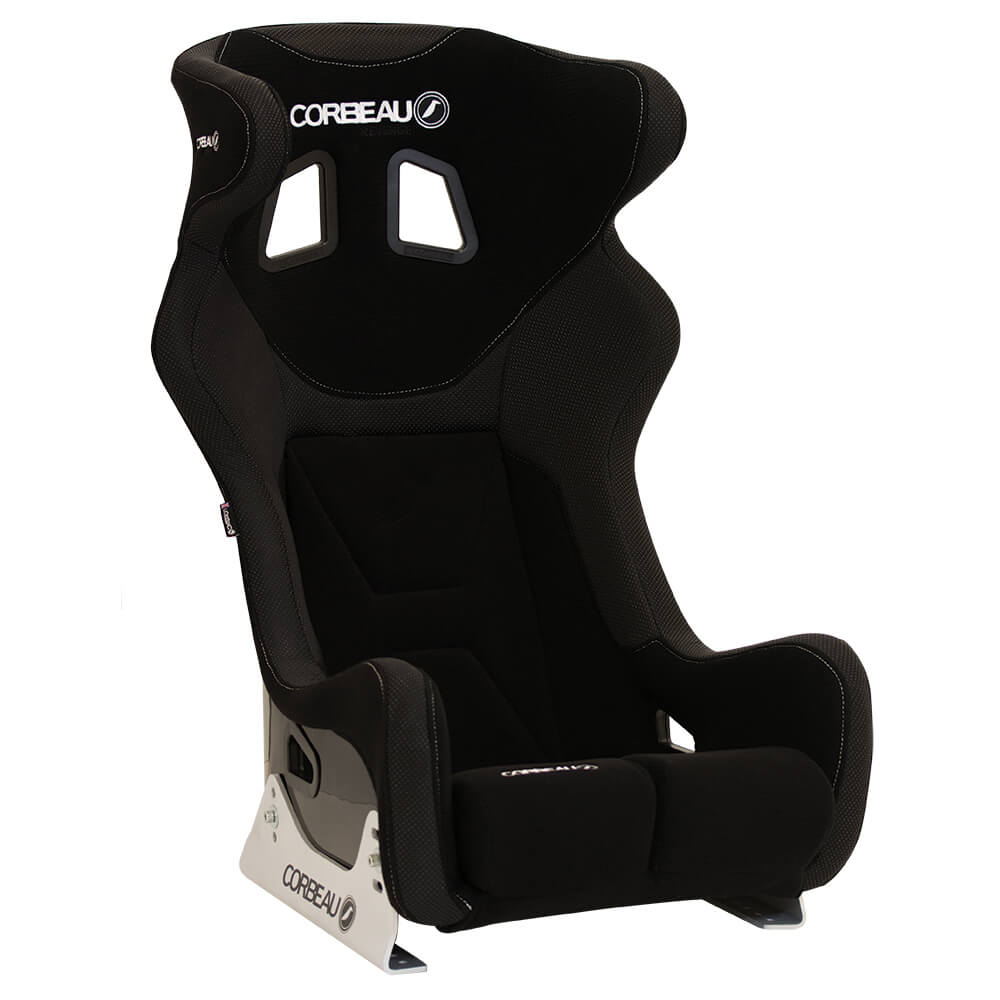
This is where the market lives, and where most of the catalogue sits. Every brand builds its core shell for this band, so choosing here is about the car and the budget more than the fit. From the Endurance Clubman that gets a first track car sorted, through the Mirco GT that sits on our in-store FIA display, to the Corbeau Revenge X when the build deserves it.

Again, four examples out of a long list. This band has the deepest choice of any on the page, which is good news for your budget and bad news for narrowing it down on your own. The full bucket seat range is there to browse, and a phone call is quicker.

Wider drivers: 36in and up

From 36in the range narrows and the labels multiply: XL, L, wide, big and tall. Ignore the letters and read the band. The 36in to 40in group has real choice in it. Past 40in the honest picture is the chart at the top of this page: a handful of listings, of which the Sparco Sprint L is the bargain and the OMP WRC-R XL is the rally proven one. Broad shouldered drivers should also look at the head support widths on our measured head support page, because shoulders meet the seat up there too.

Six examples from the wide end, picked to span the price range. There are more, and we can order in wider shells that we do not hold on the shelf. The big and tall range gathers the wide and tall rated shells together in one place.

Past a 42in waist, go reclining or go measuredFixed shells thin out past 42in, and pretending otherwise sells you a seat you will not use. The reclining route carries genuinely wide rated seats, and our larger drivers recliner guide covers it properly. Or ring us: Cameron has put a tape inside most of the showroom shells for exactly this call.

Tall drivers: over 6ft

Height brings a second question the waist bands cannot answer: headroom. A tall driver’s problem is usually the car before it is the seat, which is why the fix is often a lower mounting position with the same shell. Our tall and long side mounts guide covers moving the seat down and back, and the mounting guide explains what each layer of the stack adds to your seat height. The shells below are built with the longer torso in mind from the start, and the TRS-X is the budget surprise of the tall range.

One thing to check on every tall pick: the waist band still applies. The Sebring LP is a snug 28in to 32in shell for the tall and slim, so a taller driver with a broader build should be looking at the WRC-R XL in the section above.

Three examples, and nothing like a complete list. Height ratings are the thinnest data we hold, because most makers publish a width and leave height to the fitter, so this is the band where ringing us saves the most time. The big and tall range is the wider shelf these came from.

What the wrong size feels like

Worth knowing before you buy, because these are the complaints that come back to us and every one of them is a sizing problem wearing a different hat.

★

Too big

You slide across the seat under cornering and end up bracing with your left leg, which is tiring and slow. The harness feels loose no matter how you pull it. On a road car it just feels like a firm bench. Fixable with padding or inserts, which is why we say size up when you are torn.

☰

Too small

Pressure on the outside of your hips within twenty minutes, numbness down a thigh, and real difficulty getting in and out with the door only half open. A rib protector or a winter coat turns tight into unusable. This one has no fix once the seat is in the car.

The five minute version: come and sit in them

Every number on this page exists because you cannot sit in a seat through a screen. If you can get to Nottingham, do that instead. The showroom keeps shells right across the size range on display, slim through XL, and you can drop into three or four back to back and feel the difference in a way no chart delivers.

Bring the helmet if the car wears one, bring the coat you drive in, and if you already own the harness, mention it. Ring 0115 9893488 before you set off and Cameron will have the shells in your bands stood out ready.
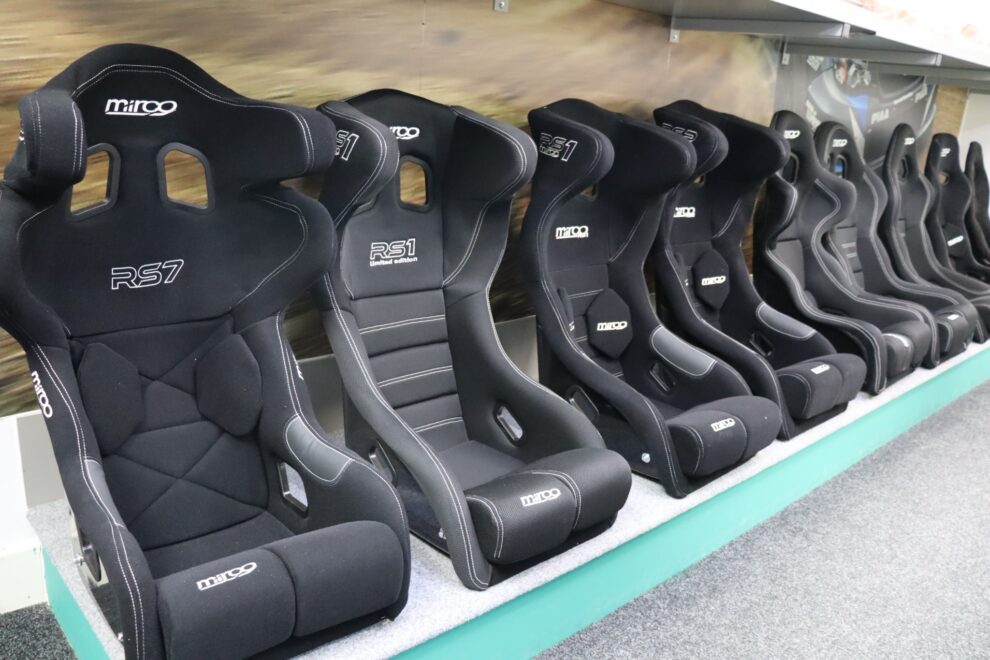
Row of Mirco bucket seats on the FIA display shelf in the SportSeats4u showroom, including the RS7 and RS1
Part of the FIA shelf in Nottingham. Stand in front of a row like this and the width differences you have been reading about stop being numbers. Five minutes here settles what an evening of forum threads cannot.

Common questions

Towards the band you drive in, not the one you diet towards. Winter layers, a harness and two hours of circuit time all want the roomier side of the line. A slightly roomy seat takes padding; a slightly tight one takes nothing.

Standard, almost always. XL buys width you do not need and gives up the hold you do. Sort the height with the mounting instead: low side mounts or a low subframe put the headroom back without touching the shell size.

A fixed shell mostly is, from stock, and we would say so to your face. The reclining range is built with far more width and our larger drivers guide walks through it band by band. There are also wide fixed shells we can order in, so the phone call costs nothing.

That is the external width question, and it is a real one in narrow cockpits: check the B figure against the space between your tunnel and door card at the widest point of the seat. Cobra publish it on every race shell we list; for other brands, ring us and we measure the shell in the showroom.

No, and they are not meant to. Each row on this page is a handful of examples chosen to show what a band looks like at different budgets. The full range runs to hundreds of shells once you count colours, trims and pair listings, and some sizes we order in to order in. Tell us your numbers and we will search the lot.

Yes, and you should. The showroom in Nottingham keeps shells right across the size range on display, and five minutes in two of them beats an evening of forum threads. Ring ahead and we will have your bands ready to sit in.

💬
The short versionSend us your jeans waist, your height and the car

Three facts, one phone call, and the guessing stops. Cameron matches the band, checks the shell against the car, and tells you honestly when the answer is a different seat to the one you fancied.

Once the size is settled, the mounting guide is the next question you will have: what the seat bolts to, and what that costs. The head support depth page has Cameron’s measured figures for how the top of the seat fits. Ring 0115 9893488 with the two numbers and the car, and we will have a shortlist for you before the kettle boils.

Need a personal recommendation?

We're here to ensure you pick the right seat. Contact us today.
Our showroom virtual walk through!
Have a walk around our showroom before you even buy your new seats. 
Our hands on experience, is what allows us to bring you our recommendations.
Free UK Shipping

On all orders above £100

Showroom

Try before you buy, by appointment

Delivery Tracking

Updates by email and text