Call Garreth, Cameron & Jack: 0115 647 8650

FREE UK shipping on orders over £100.00 & FREE gifts on checkout

Your garage NewAdd your car and see the parts that fit
Useful Links
Your Account

Talk to us

Garreth, Cameron & Jack · Mon to Fri
Call 0115 647 8650Free advice on your build
Thanks, that’s with us. We reply the same working day.
That didn’t send. Please give us a call instead.

Useful Links

Quick Access

Want to chat?

Call Garreth, Cameron, Jack
Today On: 0115 647 8650
Click Here For Our Contact Form


Five six-point harnesses: adjusters and FHR checks

Which six-point harness gives you easier adjustment without paying for features you do not need? Start with the adjusters you will actually reach in the cockpit. Check the shoulder and lap hardware separately, along with the required frontal head restraint.

Our April 2025 guide shortlisted five harnesses on cost and adjustment. Here we check the adjuster materials, FHR requirements and part references, including a Sparco code mismatch. Compare current prices on the linked listings alongside the mounting parts you need.
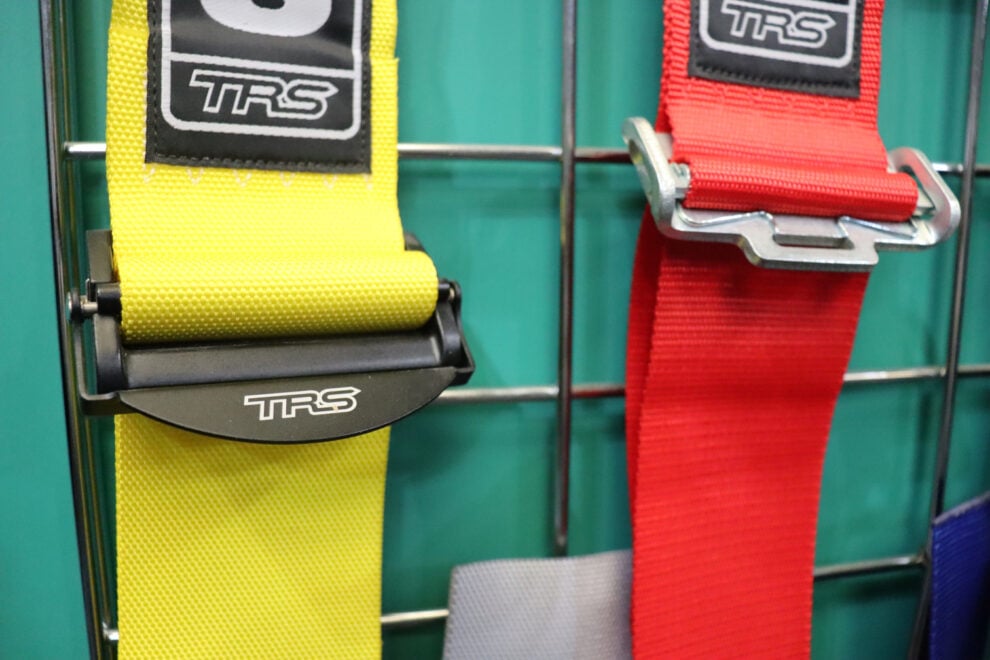
A black alloy adjuster on a yellow TRS harness strap beside a pressed steel adjuster on a red TRS strap, hanging on a harness display
Alloy against steel: a black alloy adjuster on the yellow strap, a pressed steel adjuster on the red one.

What to compare before paying for alloy

The adjuster’s design, position and pull direction matter as well as its material. A pull-down lap adjuster may be easier to reach in a tight cockpit, while a shoulder adjuster needs to sit where the instructions require it. Alloy by itself does not establish easier operation, a stronger harness or a better fit.

  • Check which adjusters are aluminium: shoulder, lap or both. A buckle made from aluminium does not tell you the adjuster material.
  • Allow room to pull the free webbing in the required direction and to release the adjuster.
  • Compare the complete supplied kit, including its end fittings, label date and any extra mounting parts.

For shared cars, try the adjustment with the seat and driving position set for each driver before finalising the installation. Do not alter webbing or swap components to create a different specification.

The five choices from our original guide

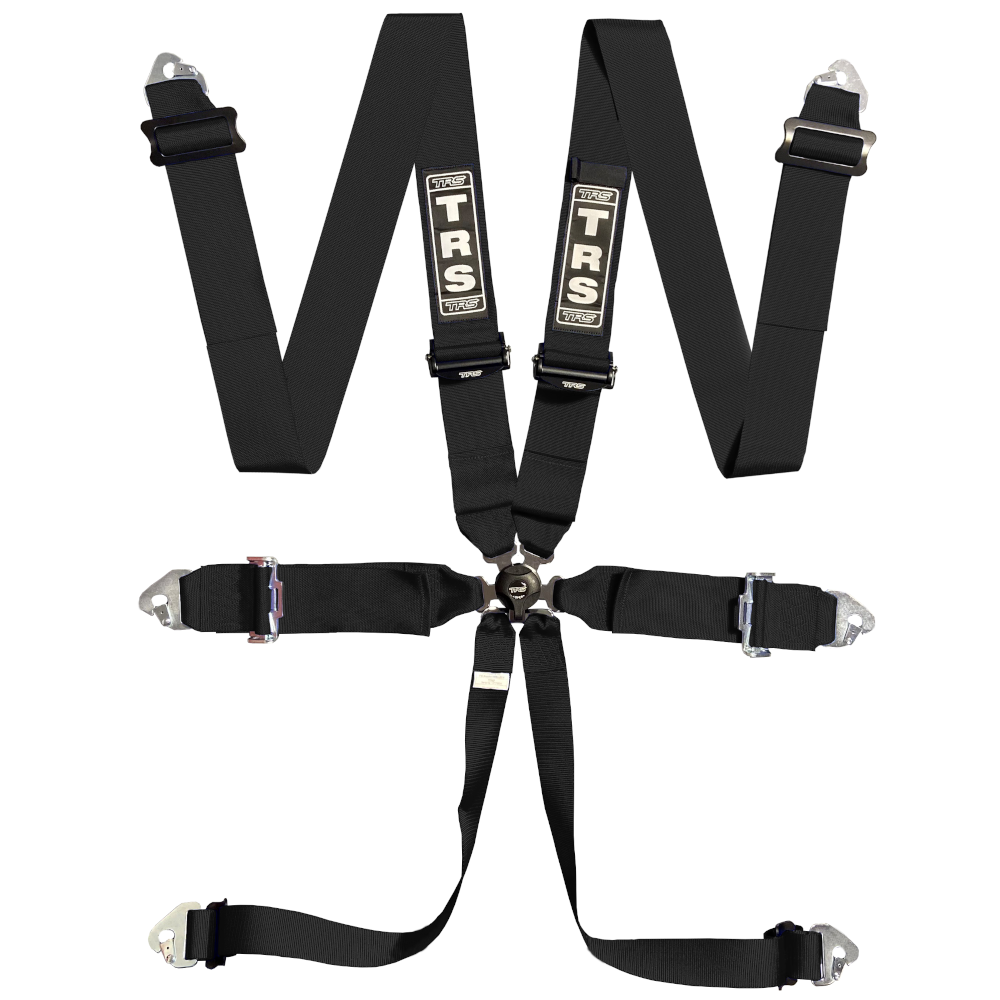
1. TRS Magnum six-point Superlite. TRS specifies aluminium shoulder adjusters and steel lap adjusters for the Superlite. Its current Magnum six-point page distinguishes that arrangement from the standard steel version and the Ultralite’s aluminium shoulder and lap adjusters. It also identifies a 140g composite quick-release buckle attached to the crotch strap.

Our Superlite listing gives 75mm shoulder and lap webbing. The Magnum Ultralite six-point is the related option for aluminium at both of those positions; that does not mean every fitting or every strap uses aluminium. TRS describes the Magnum family as FHR compatible, with snap-hook fixing and a shoulder wrap option to be used as instructed.

2. Schroth Enduro 3×2. This remains a useful quick-adjustment comparison, but the manufacturer’s 94500 product page does not specify the adjuster material. It identifies Enduro pull-down lap adjustment, 75mm shoulders, 50mm laps and FIA 8853-2016. Choose it on those verified details, without assuming the adjusters are alloy.

Schroth marks it “FHR specific: no”. That does not mean “not HANS compatible”: Schroth’s own FHR FAQ says typical 75mm racing shoulder belts can work with an FHR when properly installed. Our shop’s contrary compatibility wording needs checking against the exact belt and device; do not use it as permission to omit an FHR required by your event.

3. OMP One 3+2 Endurance. OMP’s 2026 catalogue, printed pages 86–87, identifies DA0-0205-A02 with aluminium shoulder adjusters and steel/high-strength aluminium endurance lap adjusters. It specifies polyester webbing and an ergal-and-magnesium buckle assembly. This is mixed hardware, not an all-aluminium harness.

The catalogue comparison table, printed pages 106–107, marks the Endurance version as pull-down and FHR only. Our listing uses the older DA0205BHSL reference, so confirm the supplied revision, strap widths and end fittings. The “3+2” name alone cannot settle those details or prove that the harness fits a particular car without a cage.

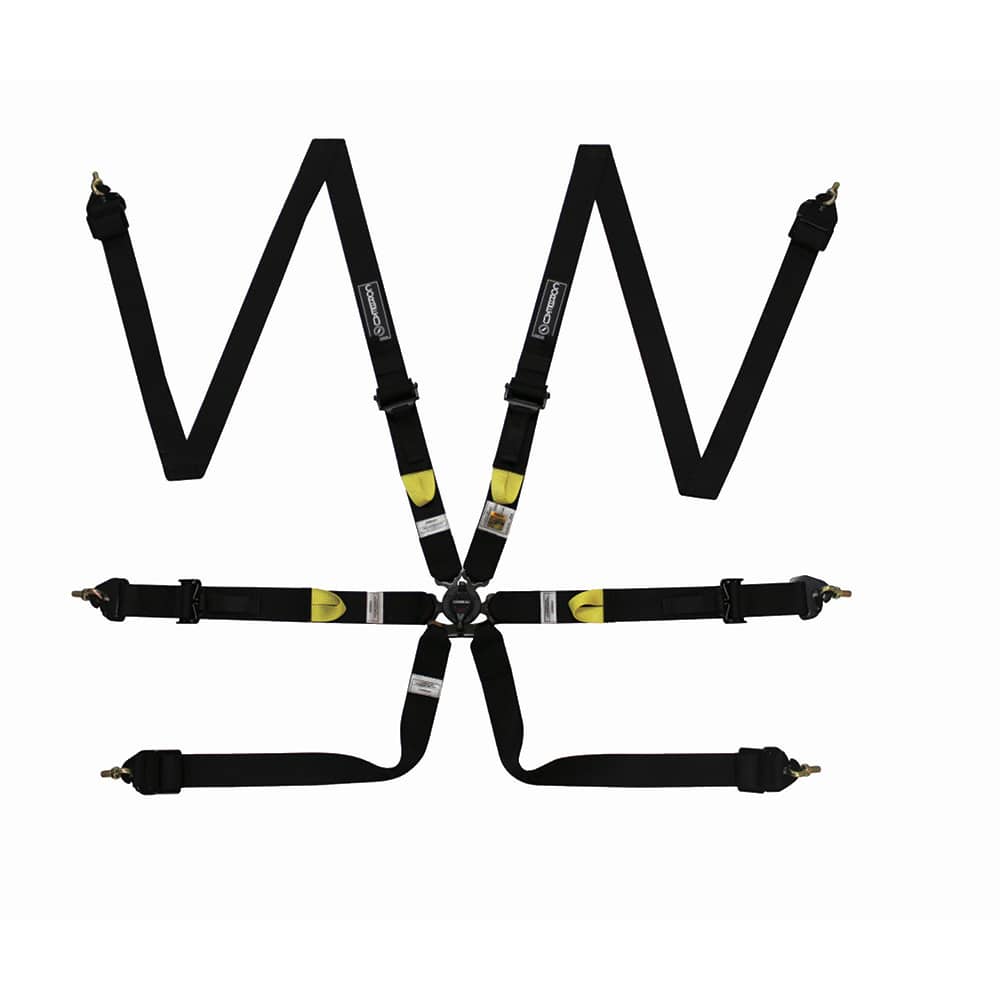
4. Corbeau Ultima Pro H2026. Corbeau’s exact H2026 page specifies 50mm webbing throughout, aluminium adjusters and a magnesium-alloy release box. It is a six-point FIA 8853-2016 harness specifically for FHR use. The magnesium-alloy release box is a separate component from the aluminium adjusters.

Keep the full H2026 reference when ordering. The H3026, S3036 and F2026 are other Ultima variants with different layouts; do not transfer this model’s specification or FHR requirement to the whole range.

5. Sparco Pro Racer Alloy: confirm the code. This was the Sparco choice in the original April guide. The current listing is named Alloy but carries 04818RH1. Sparco’s 2026 catalogue, printed page 195, identifies that code with steel shoulder and lap adjusters and an aluminium buckle.

Confirm the actual supplied part number and adjusters before buying it as the alloy option. The separately listed Sparco Pro Endurance carries 04818RHALPD1; it is not the same code. Sparco Japan’s retained H-3+2LT page identifies that legacy reference with aluminium adjusters, six points and FIA 8853-2016.

The Japanese page marks that reference as discontinued there, which does not establish UK availability. Ask about the exact version, label date, widths and fitting instructions. A harness name or a stock photograph cannot resolve the code discrepancy.

FHR requirements: check the whole combination

HANS is one type of frontal head restraint. Match the actual device, seat, harness and anchor geometry; selecting a strap width on its own cannot approve the combination.

  • FHR-only: Corbeau specifies this for H2026, and OMP’s current table does so for One 3+2 Endurance.
  • FHR compatible: TRS describes its Magnum family this way. Follow the supplied version’s instructions.
  • Not FHR specific: Schroth uses this wording for Enduro 3×2. Its FAQ accepts typical 75mm racing shoulders with an FHR, subject to correct installation.
  • Sparco: resolve the exact part reference first, then follow that model’s FHR and fitting requirements.

Your championship can require an FHR even where a harness is not restricted to FHR use. Garreth’s advice is to send the car, event and full belt reference together; Cameron can help identify the specification questions before you order.

Fitting and dates

Use the instructions for the actual supplied harness and FHR to plan the installation. Set the seat and driver position first, then check the shoulder route, lap position, crotch slots and anchorage requirements. There is no universal shoulder-angle recipe for every model in this shortlist.

Our motorsport harness fitting guide gives background, and Schroth publishes its manufacturer instructions. Resolve any difference between older guidance and the current supplied instructions with the manufacturer before fitting; do not drill a seat or substitute end fittings on the strength of a general blog.

Read the sewn-in labels on the harness you will receive, including the standard and “not valid after” year. Ask for photographs before ordering if the date affects your planned season. Event rules and any national extensions must be checked for that event; a model name does not establish eligibility.

Our harness date guide explains the label questions. A future expiry year does not clear accident damage, frayed webbing or faulty hardware. Follow the manufacturer’s inspection and replacement requirements, including any earlier service limit.

Material is only one part of the choice. Check the approved harness design, where the adjusters sit and how you reach them in the cockpit. Do not assume alloy alone makes a harness stronger or easier to use.

TRS specifies aluminium shoulders for Superlite and aluminium shoulders and laps for Ultralite. Corbeau specifies aluminium adjusters on H2026; OMP uses aluminium shoulders and mixed lap hardware. Schroth’s Enduro page does not state the material, and the Sparco Alloy listing has a code discrepancy to resolve.

Schroth marks it not FHR specific, which does not mean incompatible. The manufacturer’s FAQ says typical 75mm racing shoulder belts can work with an FHR when correctly installed. Check the exact belt, device and geometry with Schroth and follow your event’s requirements.

No. Check the actual harness label, configuration, condition and the event’s current rules. The listings in this guide advertise FIA 8853-2016, but that does not resolve the Sparco code mismatch or establish approval of your complete installation.

Ask for photographs of the sewn-in labels on the harness being supplied, including the standard and not-valid-after year. Check your event’s rules and the manufacturer’s service requirements; damage or faulty operation can require replacement before that date.

Check the full harness reference first

Send the car, seat, FHR and event details so we can help check the right version and supplied kit.

Choosing a six-point harness?

Tell us the car, seat, FHR and event, plus the full harness reference.
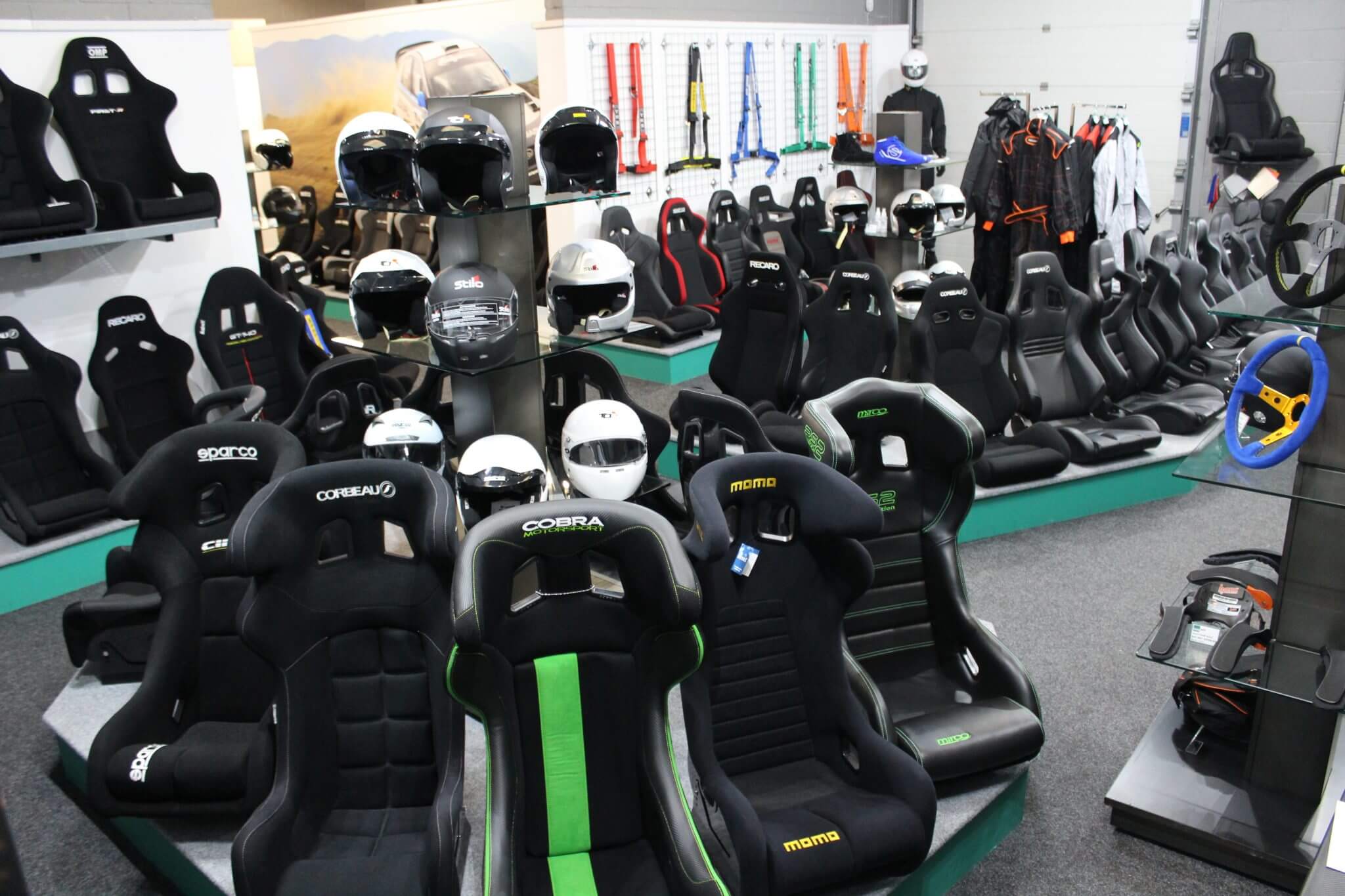
Our showroom virtual walk through!
Have a walk around our showroom before you even buy your new seats. 
Our hands on experience, is what allows us to bring you our recommendations.
Free UK Shipping

On all orders above £100

Showroom

Try before you buy, by appointment

Delivery Tracking

Updates by email and text