

How Long Do FIA Harnesses Last? Expiry Dates And The Rules Explained
Every season somebody rings us after a scrutineer has failed belts that look brand new. The surprise is always the same, because webbing does not grey out like an MOT certificate, and a harness that has lived its whole life in a garaged car can look showroom fresh on the day it stops being accepted.
Harness life is not a judgement call, it is a date printed on a label, plus one rule about how far past that date you can go. This page covers the label, the extension, the older standards that follow different rules, and what all of it should change about how you buy. Cameron checks label years on the belts that leave here every week, so this is the conversation exactly as we have it across the counter.
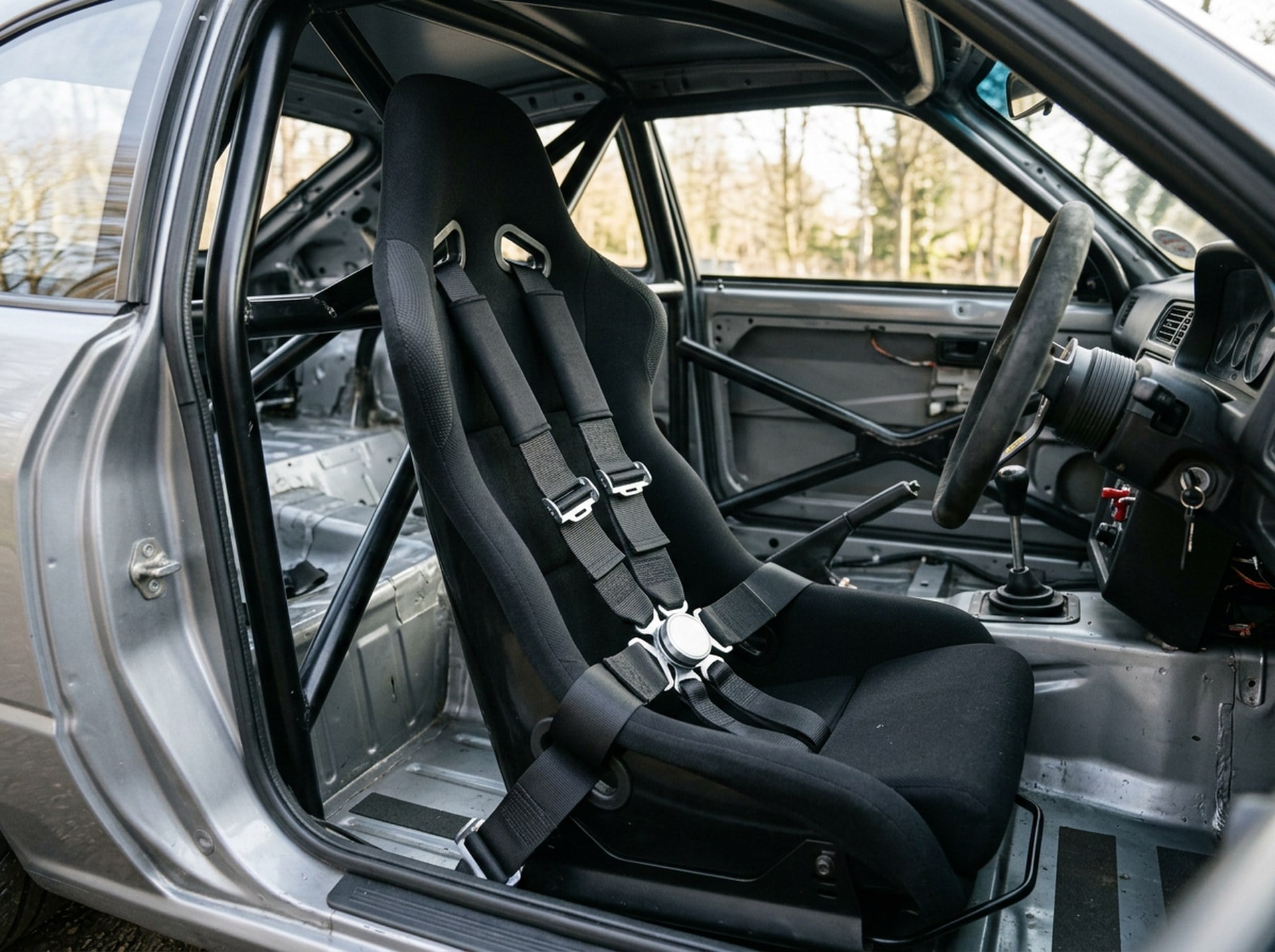
The label is the whole answer
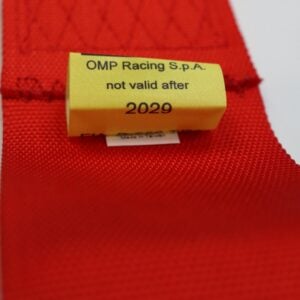
Every FIA homologated harness carries a label with a year on it, worded NOT VALID AFTER. That is the harness telling you its own homologation life, set when it was made. Current belts are homologated to FIA standard 8853-2016, and the label year is the one every rule that follows hangs off.
So before anything else: go and read the labels on your belts. They are usually on the shoulder straps near the adjusters. If the label is missing or unreadable, a scrutineer cannot pass what they cannot read, and neither can we, so treat an unlabelled harness as an expired one.
The five year extension
Here is the part that surprises people in the good direction. Motorsport UK’s harness guidance gives an FIA 8853-2016 harness an extension of five years beyond the year on its label, running to the 31st of December of that final year. Their own worked example: a harness labelled NOT VALID AFTER 2018 could be used until 31 December 2023.
So the sum for a current belt is short: take the year printed on the label, add five, and your belts are done at the end of that year. Not the month you bought them, not five years from fitting, the label year plus five, to New Year’s Eve.
One honest caveat from us: that is Motorsport UK’s national guidance, and your class or series regulations always have the final say. International events run to the FIA’s own dates. If you tell us where you compete, we will check the specific rule with you before you spend anything.
Older standards play by older rules
The extension belongs to 8853-2016. The older FIA 8854-1998 standard gets no extension at all: the year on its label is the year it is done, full stop. If your car came with belts already fitted, this is the first thing to check, because a used race car’s harnesses are very often the previous owner’s problem quietly becoming yours.
You will also still find 8853/98 labels out there on old stock and second hand belts. Same advice: bring us the label wording, or a photo of it, and we will tell you exactly what you have and how long it has. What we will not do is guess, because the label wording differs between standards and the difference is the whole answer.

What this means when you buy
The label year is set when the harness is made, which means two identical belts on two shelves can carry different years. A harness that has sat in a distributor’s warehouse for three seasons has spent three years of its life doing nothing for you.
That leads to the two buying rules we would give anyone. First, ask for the label year before you order, from us or from anyone else. Cameron will read you the label off the actual belt going in your box, not the stock photo. Second, never buy second hand webbing. You cannot see UV exposure, you cannot see a crash, and you cannot see the difference between a stored harness and a cooked one. The saving is small and everything it buys you is unknown.
Garreth’s view on the money side: belts are the wrong place to economise by stretching dates, because the entry point is genuinely cheap. A fresh 4 point FIA belt starts at £165.00 inc VAT, and against a season of entry fees that is not the line item to gamble on.
The checks between now and then
Between purchase and expiry, give the belts the same look over the car gets. Fraying or fluffed edges on the webbing, cuts and nicks where straps pass through brackets, colour bleached by sunlight, adjusters that slip or will not run, bent or corroded hardware. Any of those and the harness comes out regardless of the date, and it is worth doing properly at the start of every season while the interior is already apart.
Mounting matters as much as the date, and it has its own rules on angles and hardware. That is a page of its own, but if you are fitting belts to a harness bar, the short version is three passes through the 3-bar slide with 100 mm of tail, and if any of that sentence is new, ring us before you fit them.
Fresh belts on the shelf
Every harness we sell is FIA homologated and every label gets read before it ships. Four we would point most people at, covering the spread from club track days to full rally spec. If you run a HANS device, the shoulder width question matters too, and our 3 inch vs 2 inch guide covers that decision properly.
The club answer
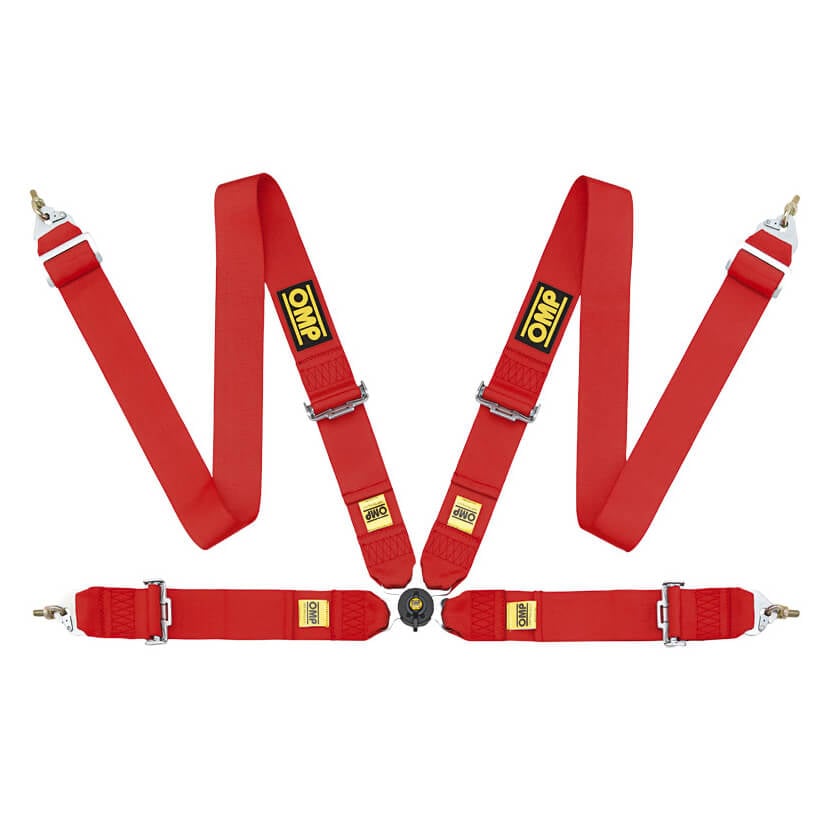
The QMS 4 point and OMP 801 are the two we sell most to track day and sprint drivers putting belts in for the first time. Honest webbing, current 8853-2016 homologation, and change from £200 either way.
- FIA 8853-2016 homologated
- From £165.00 inc VAT
- Label year read to you before dispatch
- 4 point, the club starting point
-
From £165.00 Incl. VATFrom £137.50 Excl. VATPayPal CreditSelect options This product has multiple variants. The options may be chosen on the product page
-
From £181.44 Incl. VATFrom £151.20 Excl. VATPayPal CreditSelect options This product has multiple variants. The options may be chosen on the product page


-
From £298.55 Incl. VATFrom £248.79 Excl. VATPayPal CreditSelect options This product has multiple variants. The options may be chosen on the product page
-
From £246.00 Incl. VATFrom £205.00 Excl. VATPayPal CreditAmazing valueSelect options This product has multiple variants. The options may be chosen on the product page


The step up
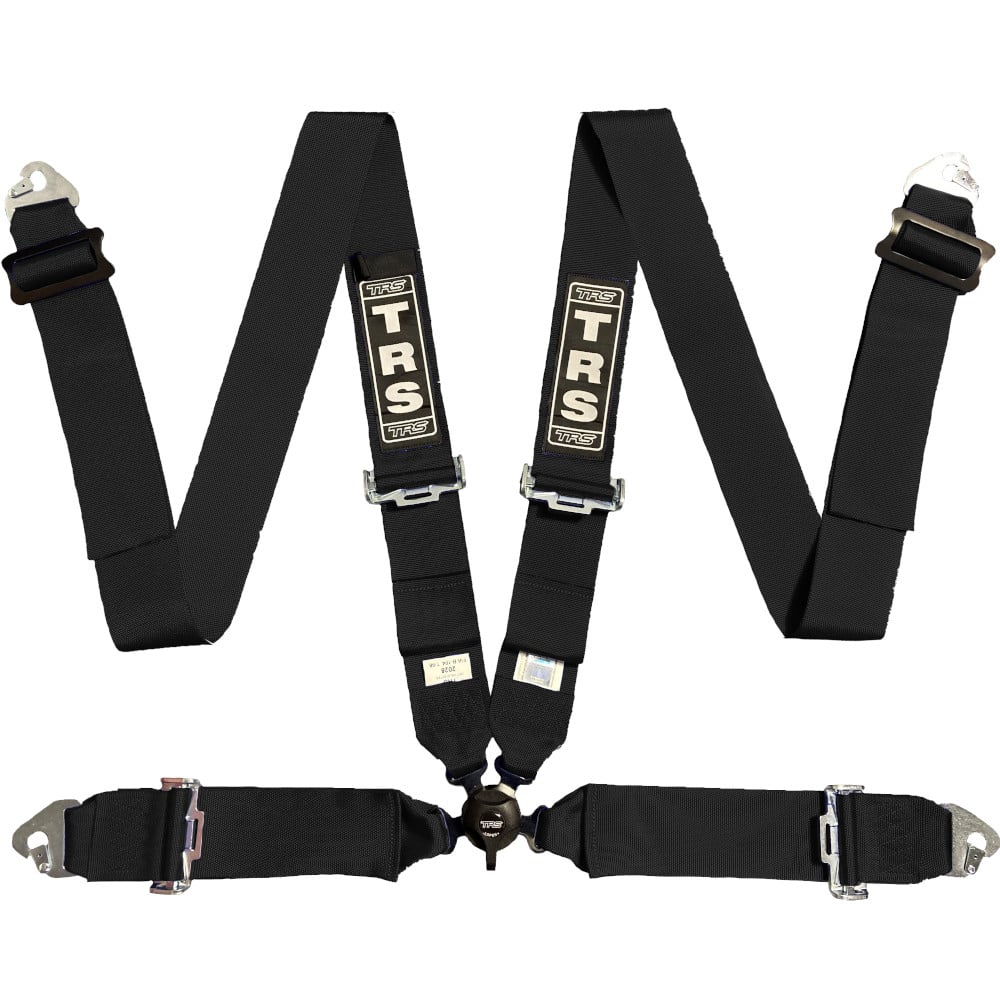
The TRS Magnum is the belt half the club paddock runs and the Schroth Clubman II brings ASM geometry to the 4 point layout. The buying rule above applies to these like anything else: ask for the label year and we will read it off the belt in your box.
- TRS made in Britain, Schroth the German benchmark
- Both FIA 8853-2016 homologated
- HANS-specific versions available in the same families
- 6 point versions of both in stock
Common questions
When in the year does a harness actually expire?
Does the extension apply to 2 inch HANS harnesses too?
My belts are expired but the webbing looks perfect. Can I still use them?
The car came with harnesses fitted. How do I know what I have?
Should harnesses be replaced after an accident?
The short version
Read the label. On an 8853-2016 belt, add five years to the year printed on it and you are done at the end of that year. On 8854-1998 there is no extension, the label year is final. No label, no harness. Crashed, cut or cooked webbing goes in the bin whatever the date says.
And when you buy, ask for the label year, because a fresher label is free life and it costs one question.
Put the expiry year in your phone the day the belts arrive and the whole subject goes away until it matters. The full range is under FIA motorsport harnesses, with the HANS-specific belts in their own category.
Not sure what your labels say, or what your class accepts? Ring us on 0115 9893488 or send a photo of the label, and we will give you a straight answer while you wait.
How often do FIA harnesses need to be replaced?
Check the “NOT VALID AFTER” label on the shoulder strap near the adjuster. Under the current FIA 8853-2016 standard you get five years past the printed year, so a harness labelled 2018 is good until the end of 2023. The older FIA 8854-1998 standard gets no extension, the printed year is the end date.
Replace a harness sooner than that if the webbing is cut, burned or stained, or if it’s been in a crash, and always ask for the label year before buying one secondhand.