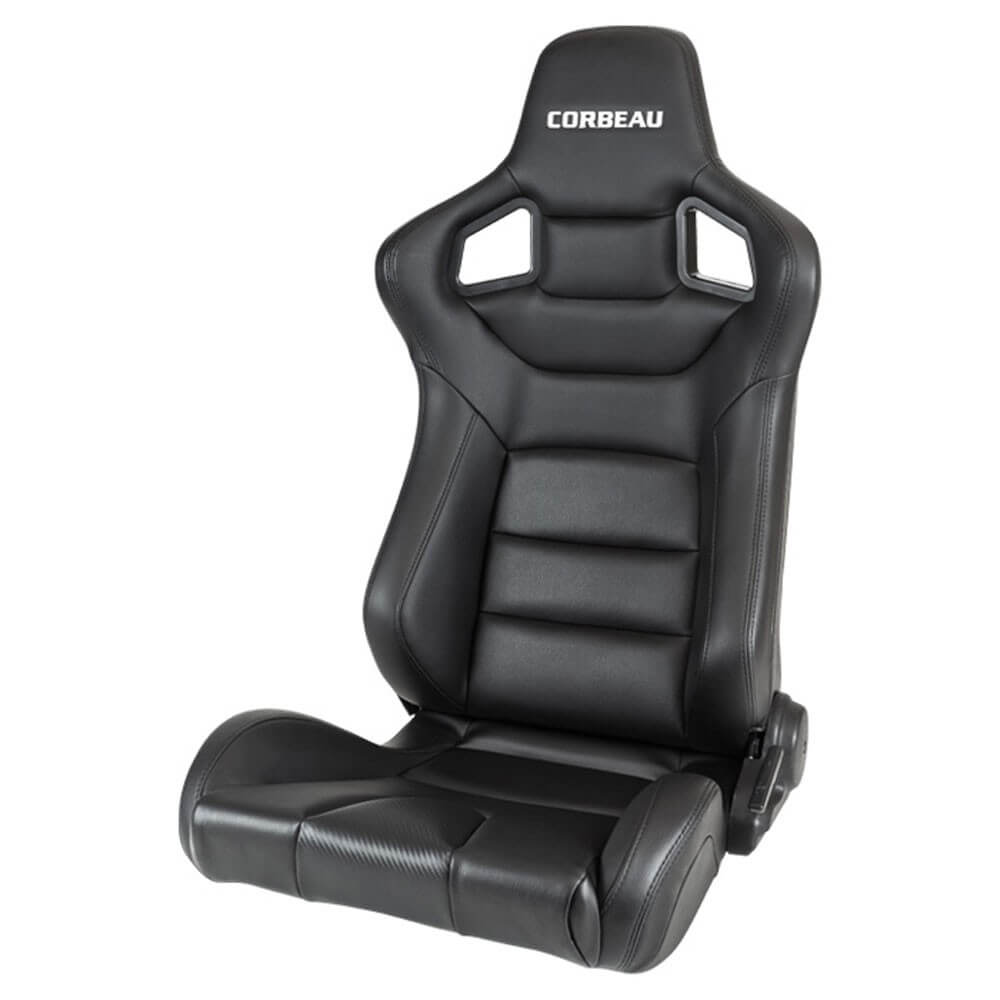
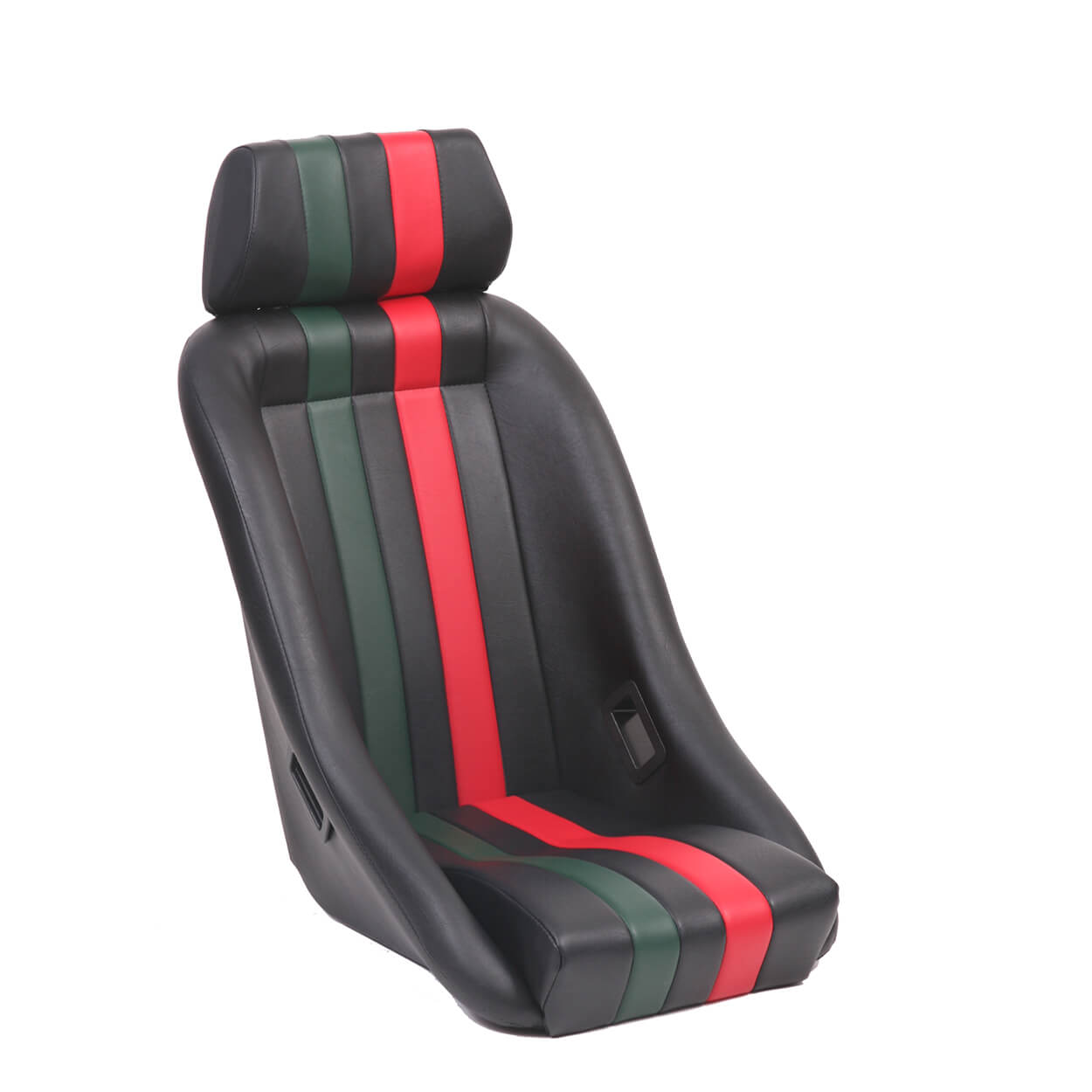
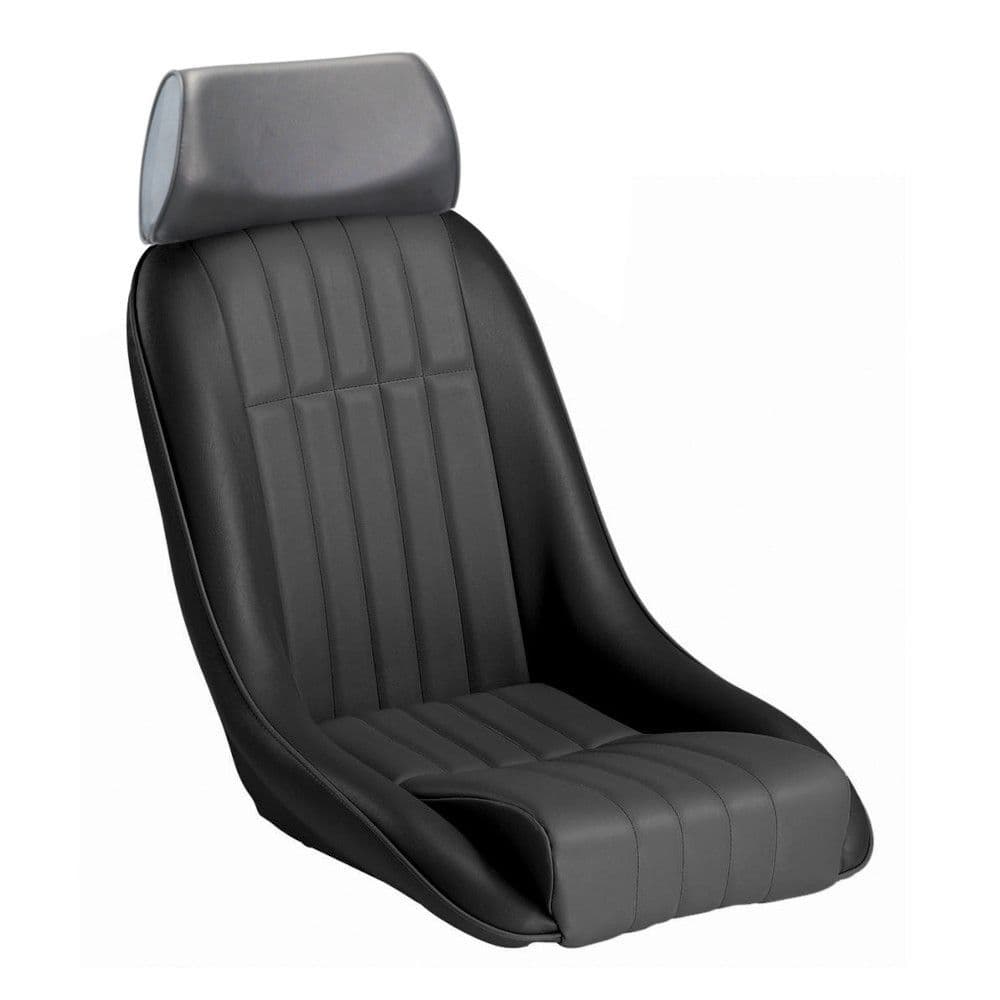
Cobra Monte Carlo Signature bucket seat. Part number COB-MONTE-CARLO-Signature. Made to order.
Signature is about colour, not grade
Any one or two colour combination, in soft grain vinyl, leather, or leather and Dinamica, with matching or contrasting piping and stitching.
The seat underneath is the same Monte Carlo. What you are buying on this listing is the freedom to specify it in something other than black, which is the whole reason the tier exists.
The pricing catches people out
This listing starts lower than the Leather Monte Carlo, because its entry point is vinyl. Specify Signature in leather, though, and it costs considerably more than that Leather listing does.
That is not a mistake. Bespoke colour leather is the expensive part. If black leather is what you want, the Leather listing is the cheaper way to the same seat.
The seat
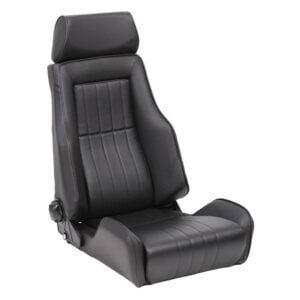
A fixed back steel frame bucket from the Classic family, with the headrest included. Base mount, supplied as seat only, Road and Track approved, four point harness compatible.
Fixed back means it holds you properly and it is harder to live with on a long road journey than a reclining seat. That trade is the honest one to weigh, and if the car does big miles the Stuttgart is worth a look instead.
Tell us the car and we will confirm the frame alongside it.
Base bolt pattern is 291mm by 330mm, Cobra’s standard spacing across the range. That is why their runners come in a 291mm handle width, and it is the number to check against any frame you already own.
Will I fit in this seat?
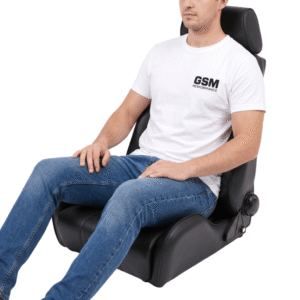
The maker lists no driver size restriction on this seat, so it suits the full range of heights and waists. Those are the paper numbers; how a seat actually feels to sit in and climb out of is a different question, and our showroom team sit in these seats every day, so call us with your height and waist and we will give you the honest answer.
Is this seat FIA approved?
No, this is a road and track day seat rather than a homologated competition seat. For events that require an FIA seat, look at the FIA-approved shells in the range, and ask us if you are unsure what your series needs.
What do I need to fit it to my car?
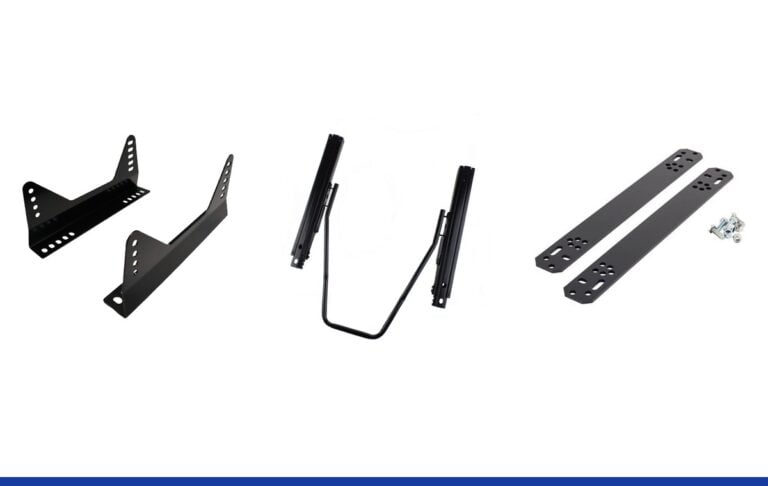
This is a base-mount seat: it bolts down through its base, the simpler stack for road cars. You will need the car-specific frame, and a sliding runner if you want fore-and-aft adjustment. Our guide on base mount versus side mount walks through the whole stack, and tell us your car and we will quote the full kit.
Does it work with harnesses and a HANS device?
The shell takes 4 point compatible. If you are planning the full seat, harness, and HANS setup, tell us the car and we will spec it end to end.
How do I know it will feel right, not just fit on paper?
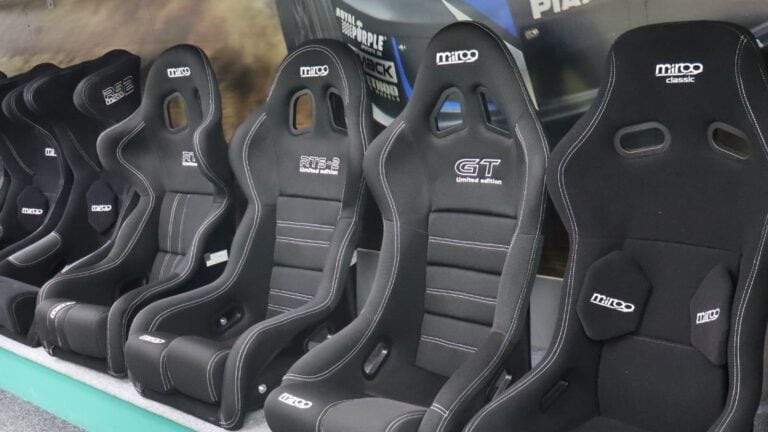
Fair question, because makers publish widths and weights, never feel, and two seats with identical numbers can feel nothing alike in the car. We keep the ranges on display in the Nottingham showroom, you are welcome to come and sit in them, and if you cannot get to us, call and describe your build, as the team sit in these seats every day. Our head support measurements guide shows the kind of real-world data we collect.