4, 5 Or 6 Point? Choosing The Right FIA Harness Layout
Harness listings throw two numbers at you and people usually get the wrong one first. There is the width, three inch or two inch, which we covered in its own guide because it has a rule behind it most buyers do not know. And there is the layout, four, five or six point, which is what this page is about.
The layout question sounds expensive, as though every extra strap costs real money. Across our FIA homologated belts the whole ladder from four point to six spans about sixty pounds, which is less than most people expect and a lot less than the cost of buying the wrong layout for your seat. Here is how to pick.
What the number counts
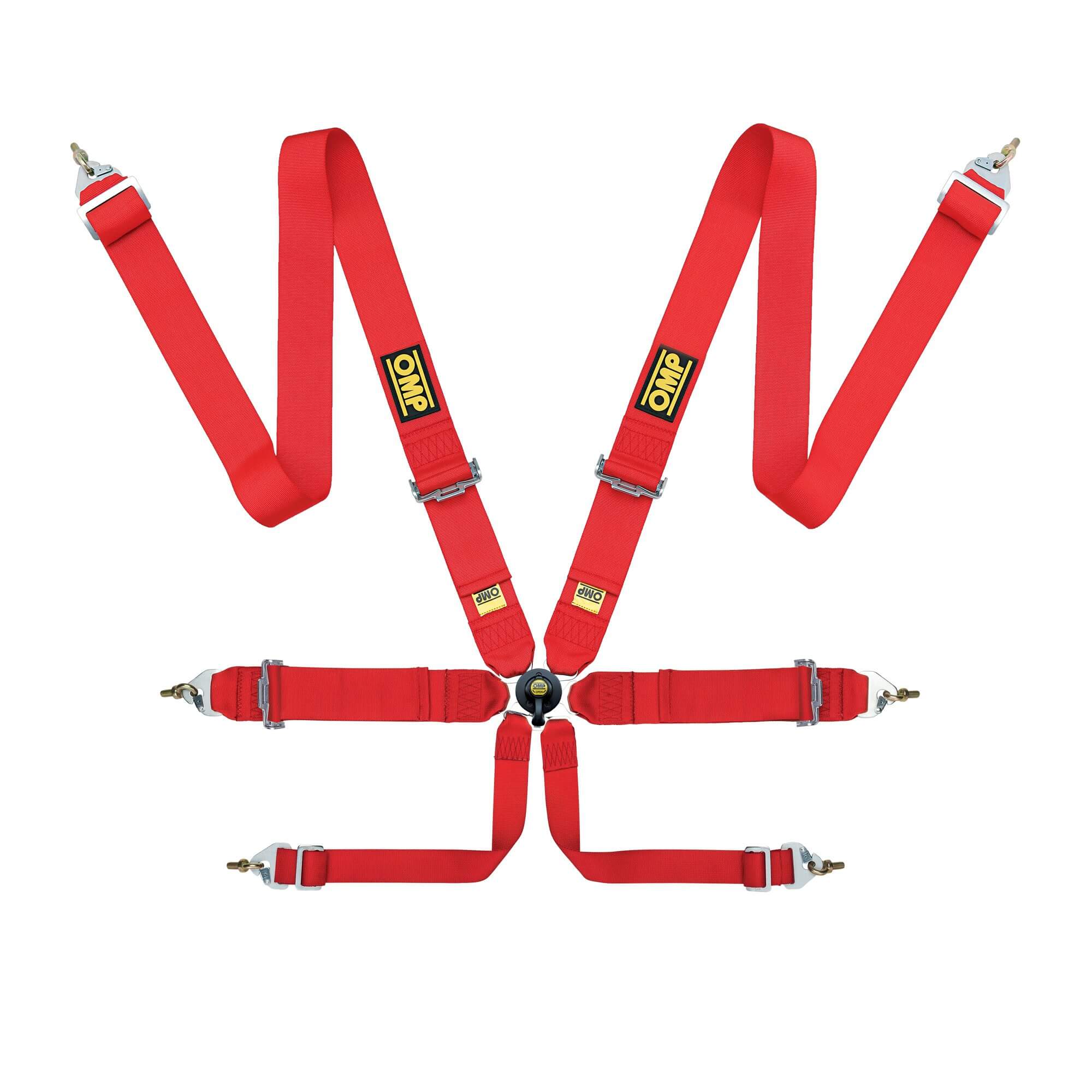
The number is simply how many straps meet at the buckle, and the only part that changes between them is what happens between your legs.
| Layout | The straps | What it is for |
|---|---|---|
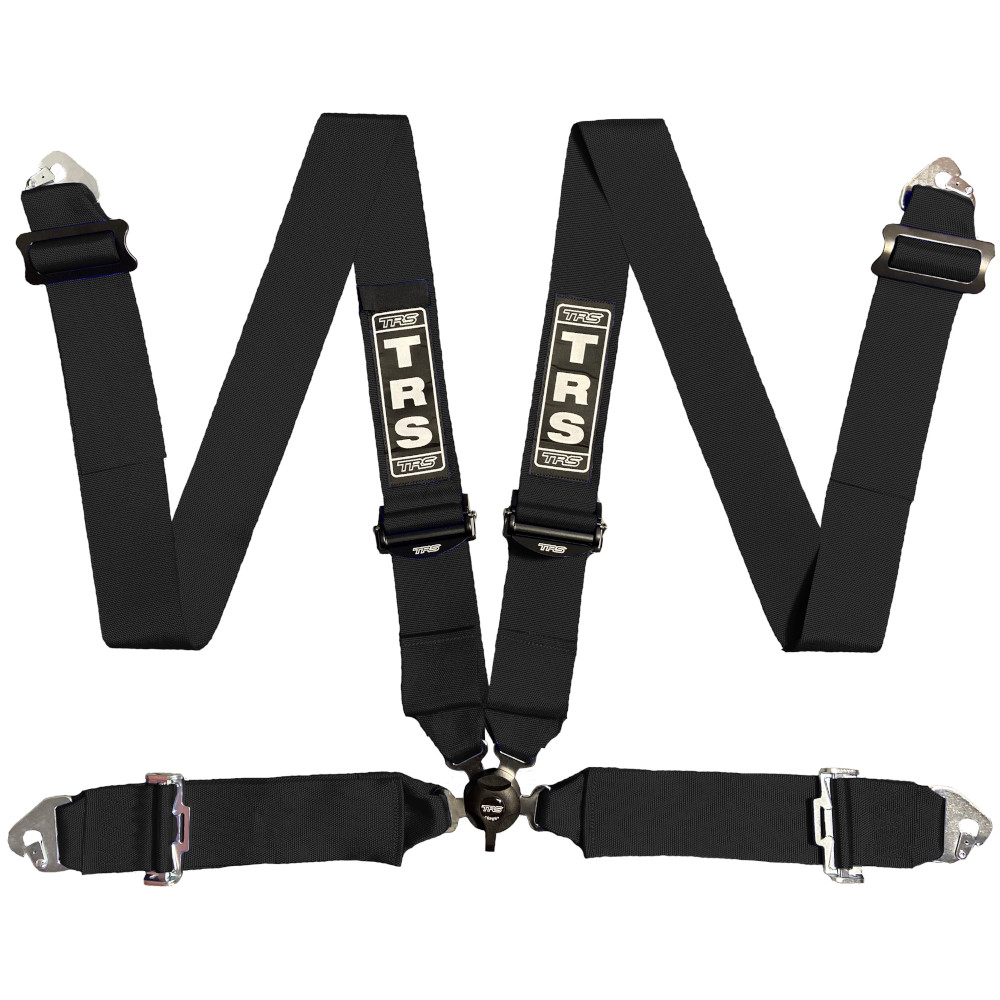
| 4 point | Two shoulder, two lap | Road and track use. No sub strap, so the lap belt is held by geometry and how tightly you wear it |
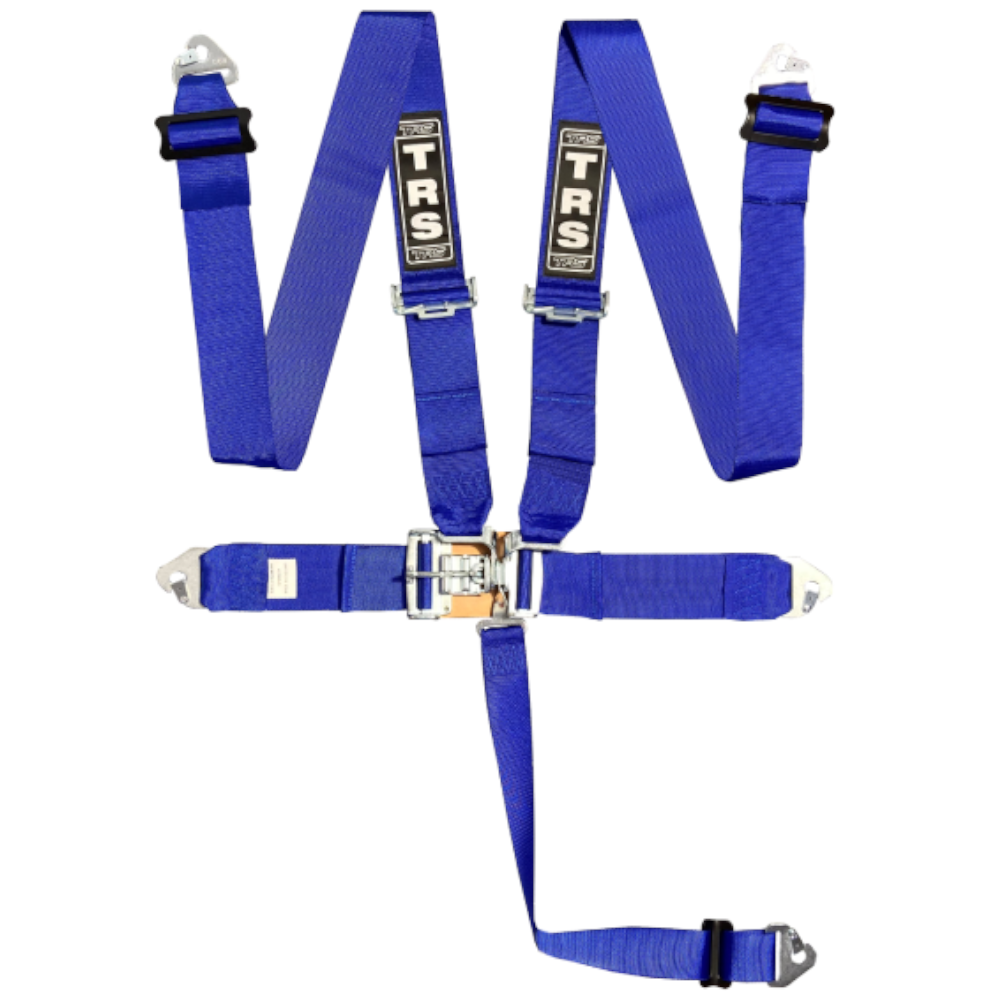
| 5 point | Two shoulder, two lap, one sub strap | A single centre strap up to the buckle. Common on Nascar-style and off-road belts |
| 6 point | Two shoulder, two lap, two sub straps | A pair of straps either side, which stops the lap belt riding up. The competition default |
That sub strap is the whole argument. Without one, a lap belt can ride up off the pelvis under hard deceleration, which is the thing every competition regulation is trying to prevent. With one, or better a pair, the lap belt is pulled down and stays on the bone where it belongs.
Four or six, the real decision
For almost everyone this is the only choice that matters, and it comes down to what the car is and what your regulations say.
Four point suits a road car that sees occasional track use, especially one keeping its standard seats or running a reclining bucket. It is quick to get in and out of, it does not need a hole in the floor or a tunnel mount for the sub straps, and it is the easier retrofit by a distance. Our FIA homologated four point belts start at £111.00 inc VAT.
Six point is the competition answer and, for a car with a proper bucket seat, the better one. The two sub straps pass through the seat and pull the lap belt down properly, which is what lets the seat do its job. If you are running a bucket with sub strap holes already in it, you may as well use them. FIA homologated six point belts start at £174.00 inc VAT.
Cameron’s rule of thumb across the counter: if the seat has holes for sub straps, fit a six point. If it does not, and cutting the floor is not on the cards, fit a four point and wear it tight. What you should not do is buy a six point and leave the sub straps dangling, because then you have a four point with extra webbing and a worse buckle position.
Where five point fits
Five point belts are not the middle rung of a ladder, they are a different tradition. Ours are mostly the TRS Nascar range, where a single wide sub strap runs up the centre to the buckle, plus one Luke off-road belt. They start at £144.00 inc VAT, which makes them the cheapest way into a sub strap belt.
They suit what they were built for: Nascar-style saloon racing, off-road and buggy use, and single seaters where the seat and floor are built around a centre strap. For a typical UK club car with a bucket seat drilled for two sub straps, a six point is the more natural fit and the more widely accepted one.
So do not rule five point out, but do not assume it is the sensible compromise between four and six either. Buy it because the car or the class wants it.
-
From £168.00 Incl. VATFrom £140.00 Excl. VATPayPal CreditAmazing valueSelect options This product has multiple variants. The options may be chosen on the product page
-
From £156.00 Incl. VATFrom £130.00 Excl. VATPayPal CreditAmazing valueSelect options This product has multiple variants. The options may be chosen on the product page
The FHR Only label
Some of our belts, including several in the Nascar range, are listed as FHR Only. That is not marketing, it is a homologation restriction and it is worth understanding before you buy.
Under the FIA harness standard, the narrower 44mm shoulder straps, the ones the trade calls two inch, are restricted to use with a frontal head restraint. A wider 70mm shoulder strap works either way. So a belt built with narrow shoulders is homologated on the basis that you are wearing an FHR with it, and using it without one is outside what it was approved for.
If you do not run an FHR, buy a belt with the wider shoulder straps. If you do, the narrow ones are lighter and sit better under the device. That is the whole width decision in two sentences, and the full guide is here including the third option, belts that neck down only where they cross the device.
What the layout actually costs
Worth putting real numbers on, because people budget for this badly in both directions. These are the entry prices for FIA homologated belts on our shelves today.
| Layout | FIA belts start at inc VAT | What that buys |
|---|---|---|
| 4 point | £111.00 | LUKE GMax, model specific. The general LUKE GHR is £114.00 |
| 5 point | £144.00 | LUKE off-road belt. TRS Nascar range from £154.80 |
| 6 point | £174.00 | LUKE Professional. The QMS 6 Point HANS belt is £186.12 |
So the whole ladder spans about sixty pounds. That is the point worth taking away: the layout decision is not really a money decision, it is a seat and regulations decision, and sixty pounds is nothing against a bucket seat, a set of mounts and a day of somebody’s time fitting it.
One honest note on those figures. They are the cheapest FIA homologated belts in each layout, and some are built for a specific car such as a Caterham or a Westfield. We also sell road and street harnesses that are not FIA homologated and start lower again; those are a different product for a different job, and if you are competing they are not what you want. Say what the car is for and we will point you at the right half of the range.
-
From £270.00 Incl. VATFrom £225.00 Excl. VATPayPal CreditAmazing valueSelect options This product has multiple variants. The options may be chosen on the product page
-
From £202.67 Incl. VATFrom £168.89 Excl. VATPayPal CreditSelect options This product has multiple variants. The options may be chosen on the product page
-
From £214.20 Incl. VATFrom £178.50 Excl. VATPayPal CreditSelect options This product has multiple variants. The options may be chosen on the product page
-
From £186.12 Incl. VATFrom £155.10 Excl. VATPayPal CreditSelect options This product has multiple variants. The options may be chosen on the product page
Where most people land
The QMS six point at £186.12 and the OMP First at £202.67 are the two we sell most to club competitors putting belts in for the first time, and both sit just above the cheapest FIA six point. On the four point side the Sparco Club Racer at £214.20 is the easy retrofit, and the TRS Magnum Superlite at £270.00 is the step up for somebody who wants British-made webbing and less weight.
All four are FIA homologated. Which means, as ever, the label year matters, and the expiry guide explains how long that gives you.
- All FIA homologated
- Six point from £186.12, four point from £214.20
- Label year read to you before dispatch
- Tell us your seat and we will match the layout to it
It is only as good as its mountings
A harness is a system, and the belt is the part you can see. The anchorage points, the angles the straps run at and the hardware holding them are what turn it into a restraint, and getting those wrong undoes a good belt entirely.
The short version: shoulder straps want to run roughly level from your shoulders back to the mounting, not steeply downwards, and there is a stricter limit again if you wear an FHR. Lap straps want to pull down onto the pelvis. Mounting hardware is a specification, not whatever is in the toolbox. And if you are looping the shoulder straps around a harness bar, there is a right way to thread the slide.
That is a page of its own and it is next on our list. In the meantime, if you are fitting belts yourself, ring us before you drill anything, because the mounting is the part we get asked to fix after the event.
Common questions
Is a six point safer than a four point?
A six point controls the lap belt better, because the sub straps stop it riding up off the pelvis, and that is why competition regulations lean on it. Whether it is the right choice for your car depends on the seat and the mounting points available. A properly fitted four point in a car set up for one beats a six point with the sub straps left unfastened or badly anchored.
Can I fit a six point to a standard seat?
Usually not properly, because the sub straps need to pass through the seat and anchor to the floor, and a standard seat has nowhere for them to go. That is what makes the four point the normal answer on a car keeping its original or reclining seats. Tell us the seat and we will tell you honestly which layouts are realistic.
What does FHR Only mean on a listing?
The belt is homologated for use with a frontal head restraint, because its shoulder straps are the narrower 44mm type that the FIA standard restricts to that use. If you do not wear an FHR, choose a belt with the wider 70mm shoulder straps. Our width guide covers the whole decision.
Why is a Willans listed as 4x4 or 6x6?
The first number is the layout, four or six point, and the second is the number of mounting points it needs. A 6x6 is a six point belt with six anchorages. Different notation, same products as the rest of the range.
Do I need a five point for anything?
If your class or your car calls for it, yes, and the Nascar-style belts exist for exactly that. For a typical UK club car with a bucket seat drilled for two sub straps, a six point is the more usual and more widely accepted choice. Buy a five point on purpose, not as a compromise.
Can I use these belts on the road?
Competition harnesses and road use is its own conversation and depends on the belt and the car. We have belts sold specifically for road and track use, and if that is what you want, say so when you ring and we will point you at the right part of the range instead of the competition one.
What we would fit
Bucket seat with sub strap holes and a class that allows it: a six point, and the QMS at £186.12 does the job without drama. Standard or reclining seats, or a car you would rather not cut: a four point, worn tight, and the Sparco Club Racer at £214.20 is the easy one. Five point if the car or the class specifically wants it.
Then check the shoulder strap width against whether you run an FHR, because that is a homologation rule and not a preference, and check the label year while you are at it.
Every one of these answers changes with the seat, so that is the thing to have to hand. The full range is under FIA motorsport harnesses, with the FHR-specific belts in their own category.
Ring 0115 9893488 with the seat, the car and whether you wear an FHR, and Garreth will have you on the right layout in about five minutes.