Call Garreth, Cameron & CallyAI: 0115 9893488

FREE UK shipping on orders over £100.00 & FREE gifts on checkout

Useful Links
Your Account

Talk to us

Garreth, Cameron & CallyAI · Mon to Fri
Call 0115 989 3488Free advice on your build
Thanks, that’s with us. We reply the same working day.
That didn’t send. Please give us a call instead.

Useful Links

Quick Access

Want to chat?

Call Garreth, Cameron, CallyAI
Today On: 0115 9893488
Click Here For Our Contact Form


Social
FacebookXInstagramTikTokYouTubePinterest

What it costs to have a roll cage fitted: weld-in, bolt-in and clubsport prices

Once someone has settled on a cage, the next question is nearly always the same one. What is it going to cost to have it fitted? We supply roll cages for well over a thousand applications and we do not fit them, so there is no fitting bill of ours to defend on this page.

What follows is the homework instead. We went through the price lists UK cage fitters publish, years of owner reports on the forums covering what people actually paid, and the fitting instructions the cage manufacturers issue to installers, and pulled it into the numbers you should expect to hear when you ring around.

The short version: the type of cage sets the bill long before you pick a shop. A bolt-in half cage is an afternoon of work. A full weld-in with the dash out and door bars tight to the shell is a week or more of skilled labour, and the quote reflects that.

  • A bolt-in half cage runs 3 to 6 hours of fitting labour, roughly £200 to £500
  • A supplied weld-in kit costs £800 to £1,700 in labour to weld into a stripped shell
  • UK cage fitters charge £40 to £75 an hour plus VAT, ordinary garage money
  • Delivering the car already stripped is the single biggest saving on any quote
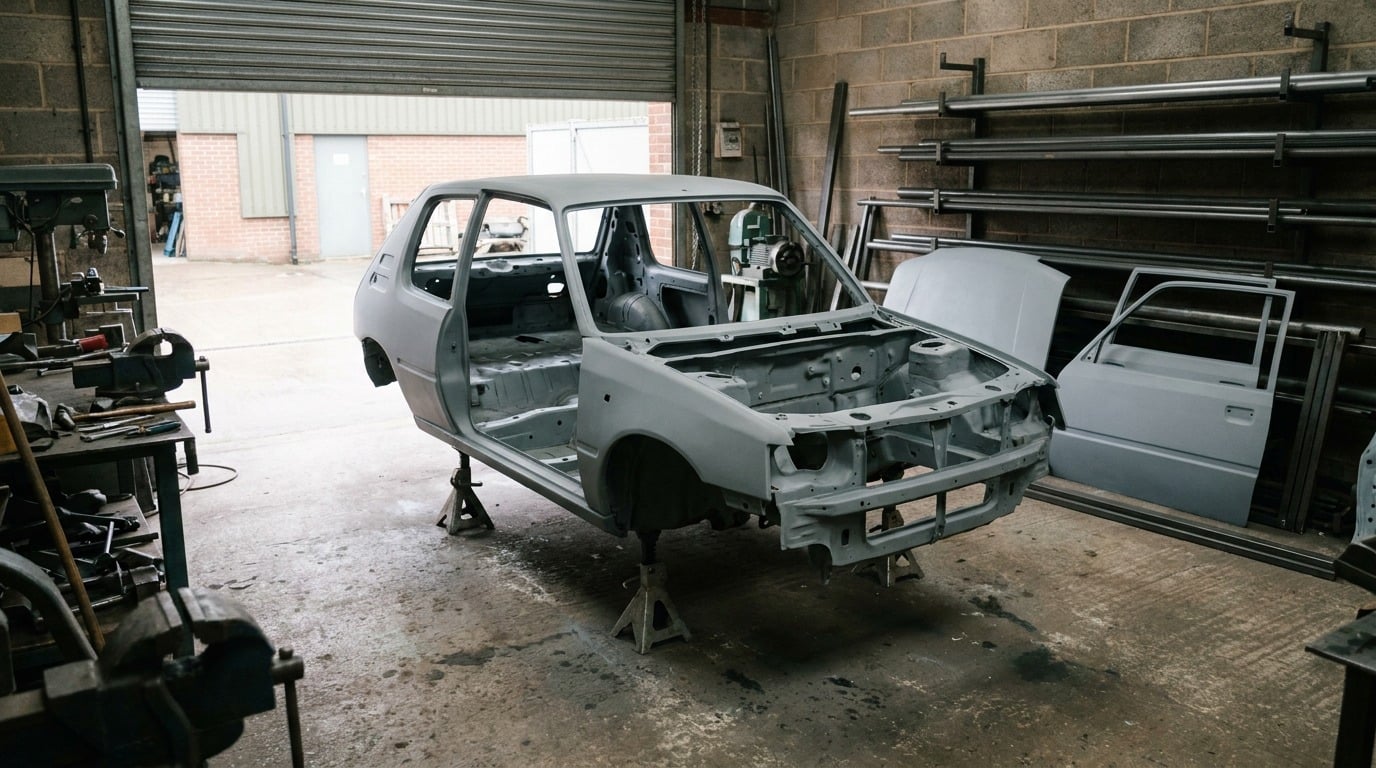
A fully stripped car bodyshell on axle stands in a fabrication workshop before roll cage fitting
How every weld-in job starts: a bare shell, and nothing left inside to burn.

Why two quotes for the same cage can be a thousand pounds apart

Ring three fitters about the same cage in the same car and you can hear three numbers that barely seem related. It puts people off getting the job done, and it should not, because the spread almost always comes down to three things that are in your control to pin down before anyone quotes.

1

How the car arrives

Fitters price around a stripped car. Custom Cages asks for a bare rolling shell for weld-in work and bills £40 an hour for anything they have to remove themselves.

2

What the word fitted includes

Mounting plates, gussets, paint and refitting the interior are separate line items in one quote and bundled into the next. Two quotes rarely cover the same list of jobs.

3

What turns up at strip-down

Corrosion near a mounting point has to be put right before a cage can go onto it, and nobody finds it until the carpets are out.

The one thing every fitter agrees onStrip the car yourself. Seats, carpets, trim, headlining, the lot. Stripping is billed at £40 to £67.50 an hour at the fitters that publish rates, a full strip and refit can be ten hours or more each way, and it is work that needs no special tools. It is the difference of several hundred pounds on a weld-in quote.

The short answer: what fitting costs in 2026

The table is the whole guide in one place. It assumes you are supplying the cage and delivering the car with the interior already out, which is how most fitters want the job to arrive. The sections after it show where each number comes from.

£40-£75What UK cage fitters charge per hour, plus VAT
10-20 hrsTo weld a supplied kit cage into a stripped shell
30-40 hrsA full weld-in install from an experienced fitter
2 weeksHow long shops typically want the car for a weld-in
Cage typeTypical labour hoursTypical fitting cost
Rear bolt-in half cage, clubsport style3 to 6 hours£200 to £500
Full multipoint bolt-in cage6 to 10 hours£300 to £600
Bolt-in cage with welded feet9 to 16 hours£450 to £900
Full weld-in kit cage, shell already stripped10 to 20 hours£800 to £1,700
Full weld-in with the shop stripping and refitting30 to 40 hours£1,700 to £2,500 all in
Fully custom fabricated cage40 to 70 hours£2,500 to £3,500 and up

Those ranges are drawn from published fitter price lists and dozens of owner-reported quotes going back to 2008, with the older figures adjusted up to current money. They are a sanity check for the quotes you get, and no substitute for a written one on your own car.

What fitters charge per hour

Cage fitting is not exotic labour. The rates sit in the same band as a decent independent garage, and the size of the bill comes from the hours, not the rate. From the fitters that publish figures and the rates independent fabricators quote:

  • Custom Cages bills stripping work at £40 an hour
  • GDF Steelworks charges £67.50 an hour plus VAT for strip and refit labour
  • 24-7 Motorsport lists race preparation from £71.50 an hour plus VAT
  • Independent fabricators and mobile welders quote £40 to £75 an hour, with premium motorsport shops at £80 to £100

The maths follows directly. A 10 hour kit weld-in at £60 to £70 an hour lands at £600 to £700, and a 35 hour full install at the same rate is £2,100 to £2,450. The owner-reported quotes through the rest of this page sit almost exactly on those lines, which is a good sign nobody is making the numbers up.

The full weld-in cage

The proper competition install. The cage is trial-fitted to the shell, tacked, then fully welded with 360 degree welds on every joint and stitch-welded to plates on the body. It is the strongest way to put a cage in a car, it is the version FIA-regulated events require, and it is where quotes vary the most, because the job runs from welding a pre-bent kit into a shell somebody else prepared right up to building a bespoke cage around the car from straight tube.

Costing a cage build end to end is a regular part of my job on the counter here, I am Cameron by the way, and the weld-in is where estimates go wrong most often. So here is what people have actually paid.

  • Welding a supplied 6 point kit into a stripped E46 cost £420 at a Yorkshire motorsport fabricator a few years back, call it £550 to £650 in current money
  • Recent owner-collected quotes for an E46 M3 full weld-in ran £800 to £1,665 in labour depending on the shop
  • Current supplied-and-fitted packages: £1,800 for a welded-in 6 point CDS cage with door and roof bars from a Rugby tube specialist, from £2,200 at GDF Steelworks, around £2,500 at a Birmingham motorsport shop
  • Fully custom cages built to the car start around £2,500 and one experienced estimate put a full custom build at 70 hours of work

On time, one installer reported about 10 hours for a kit cage in a stripped car including all the cutting, welding and finishing, and an experienced race car builder put a full install at 30 to 40 hours from someone who knows what they are doing. A line from an American fabricators’ forum explains the gap between those numbers: of 25 hours spent on a cage, maybe 3 are spent bending tube. The rest is fitting, prep and welding in awkward positions.

Whatever the billed hours, most shops want the car for a while. Two weeks in the workshop is the figure fitters publish, and the quickest professional turnarounds we found were still measured in days.

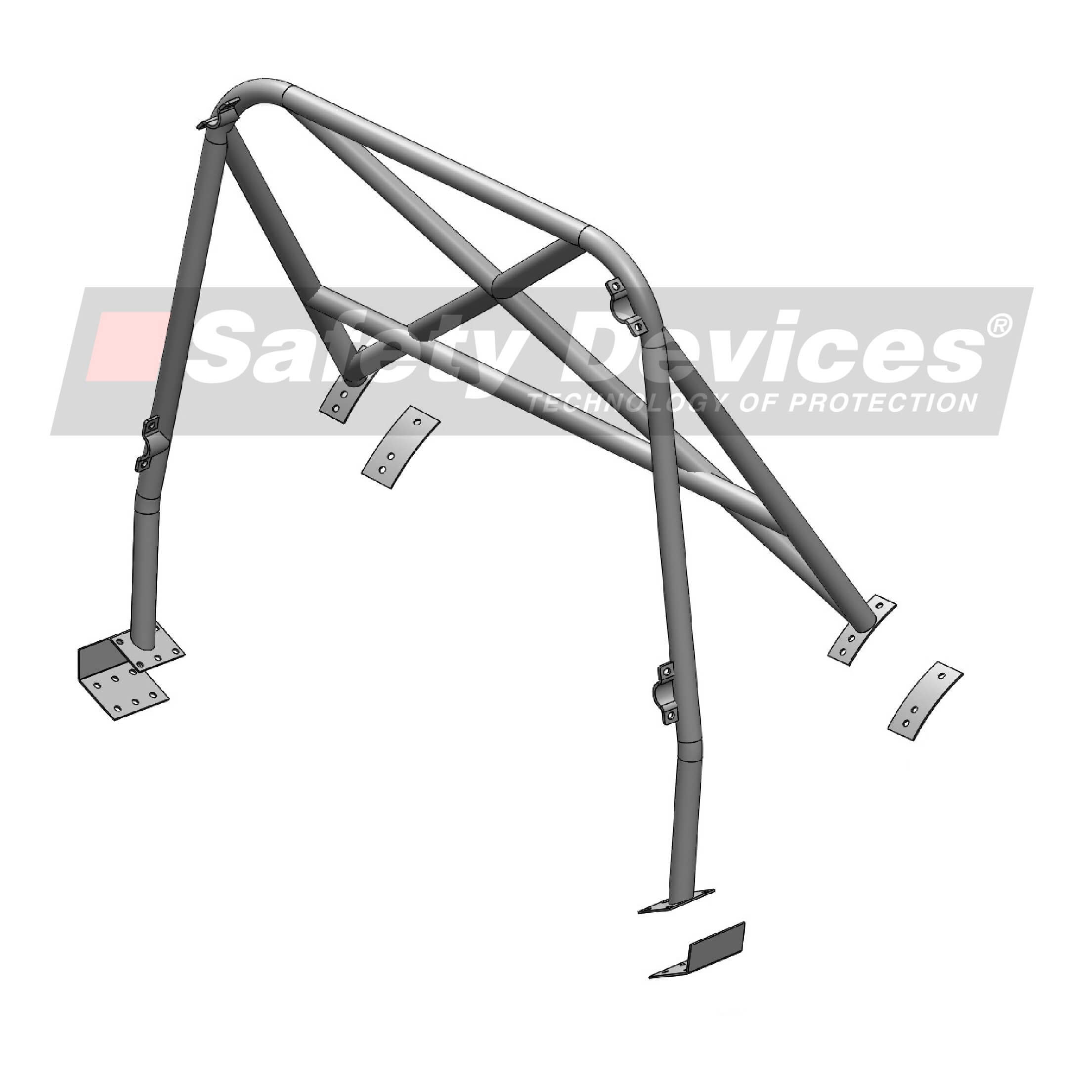
Nearly all the weld-in cages we sell are pre-bent kits developed for one exact shell, like the E36 kit here. The tubes arrive profiled and part-shaped, so the fitter’s time goes into fitting and welding instead of fabrication, and that is exactly why a kit lands at 10 to 20 hours of labour where a scratch-built cage runs 40 or more.

It is also why the kit route is the one I point most people at. The £600 to £900 a typical weld-in kit costs to buy is bought back in fabrication hours you never pay for, and the design is already proven against the shell, so there is no head-scratching on your invoice either.

  • £996.00 Excl. VAT Select options

Bolt-in with welded feet, the version most cars end up with

Here is the bit of the rulebook that surprises people. Under Motorsport UK’s fixing requirements, each foot of a bolt-in cage sits on a steel reinforcement plate of at least 3 mm thickness and 120 cm² area attached to the shell, with a minimum of three M8 bolts of 8.8 grade per foot. In practice, the clean way to meet that is to weld the spreader plates to the shell and bolt the cage to them. So a compliant bolt-in install usually involves a welder anyway, and you get most of the strength of a weld-in mounting with a cage that can still come out of the car.

Plenty of the bolt-in kits we sell ship with the mounting plates in the box, so the welding is a few hours for a fabricator and the cage bolts down once the plates are on. What that stage costs on its own, from the reports we collected: £150 from a retired welder on an E36 Compact with the owner helping, £420 to £480 per car from independent motorsport welders, and £800 to £900 quoted by one shop on an already stripped E46.

Why plate welding is quoted in days, not minutesThat £800 quote came with reasoning worth knowing. The shop said it could not position the plates properly without assembling the whole cage in the car first. So the real sequence is build the cage up, mark and fit the plates under its feet, pull it back out, weld, refit and bolt down. The welding is minutes. The fitting around it is the day.

All in, labour for this style on a stripped car clusters between £400 and £900. For current supply-and-fit context, GDF Steelworks lists a bespoke rear half bolt-in cage with welded spreader plates from £1,650, and SW Motorsports builds full bolt-in Motorsport UK cages with laser-cut weld-in foot plates, fitted at its own workshop.

Clubsport bolt-in cages and half cages

The friendliest budget of the three, and the version plenty of owners fit themselves. A pure bolt-in cage bolts through the floor with plates sandwiching the panel, no welder involved, and a rear half cage, the classic clubsport setup of main hoop and backstays, is the quickest of the lot because it leaves the front of the cabin alone.

The owner reports are consistent. A half cage that picks up existing mounting points went into a Clio 182 in about an hour and a half including the strip-out. With drilling for spreader plates, a half cage is a half-day job at home. A full multipoint bolt-in with the interior out is a comfortable weekend for a first-timer, or 6 to 10 hours for a shop, which at UK rates is £300 to £600 of labour. On the US Porsche forums, where bolt-in roll bars are the same job, the settled shop figure is 3 to 6 hours for a rear bar.

Half cage kits start at just over £300 including VAT, so a clubsport setup fitted at home is comfortably the cheapest way into a caged car. These are the kind of thing:

  • From £461.00 Excl. VAT Select options This product has multiple variants. The options may be chosen on the product page
  • From £262.55 Excl. VAT Select options This product has multiple variants. The options may be chosen on the product page
  • £503.00 Excl. VAT Select options
  • From £440.00 Excl. VAT Select options This product has multiple variants. The options may be chosen on the product page

Move up to a full multipoint bolt-in and the same weekend of your own time, or a day of a shop’s, covers cages like these:

  • £550.88 Excl. VAT Add to basket
  • From £715.00 Excl. VAT Select options This product has multiple variants. The options may be chosen on the product page
  • From £799.00 Excl. VAT Select options This product has multiple variants. The options may be chosen on the product page
  • From £748.00 Excl. VAT Select options This product has multiple variants. The options may be chosen on the product page

One thing to check before you order any of them: no welding does not always mean no cutting. Some applications need carpet and interior plastics trimmed around the bars, and a few need small sections of body metal cut for the brackets. The product listing notes carry the car-specific details, and the brand lineup guides cover whole ranges make by make.

What a weld-in install involves

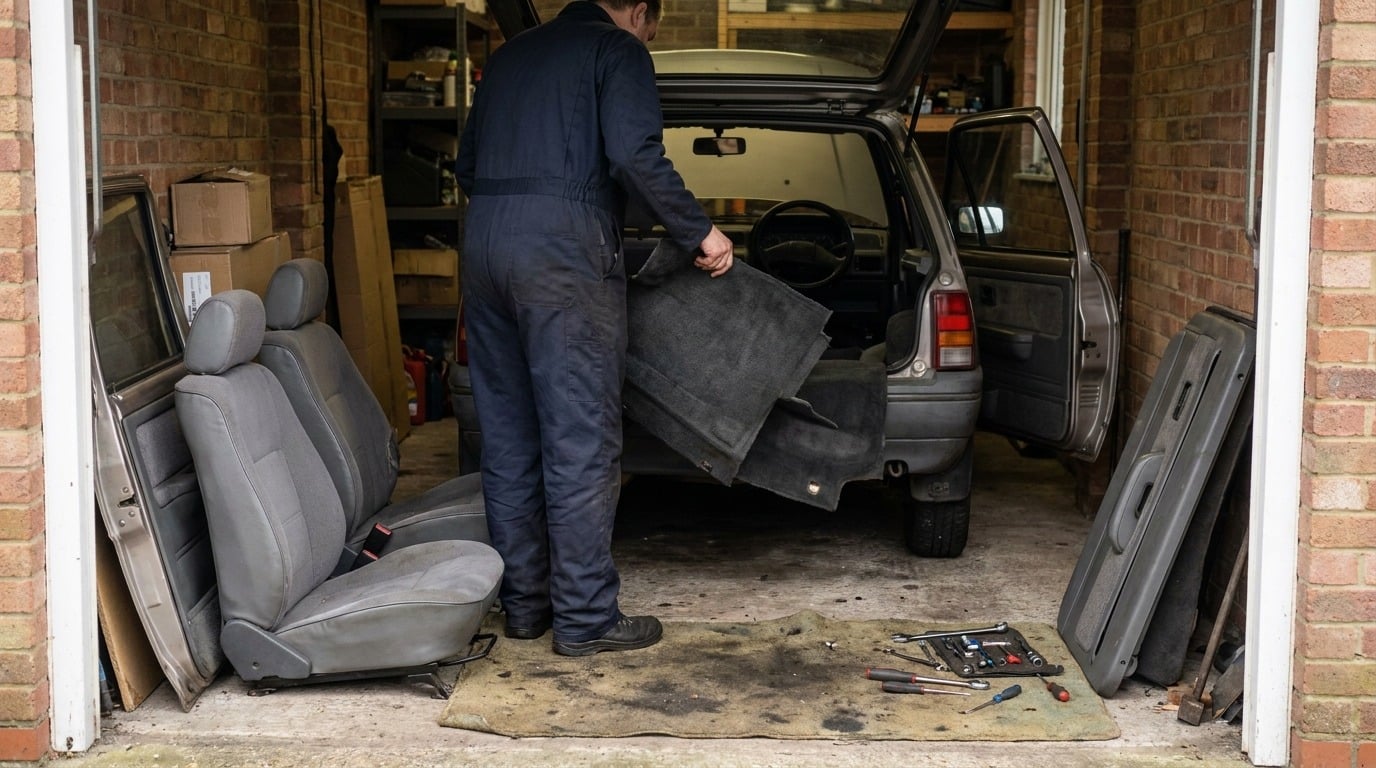
Carpets and seats being removed from a hatchback before a roll cage install
The stage you can do yourself. Everything comes out, right down to the carpets and headlining.

Reading the fitting instructions Safety Devices issues with its weld-in cages, alongside the workshop requirements Custom Cages publishes its fitting terms, explains most of the price gap between bolt-in and weld-in. A weld-in is fabrication work on the shell of the car, and the manufacturer-specified sequence runs to more stages than most people expect.

It also shows exactly where your own labour saves money. Everything in the first stage is yours to do with hand tools, and it is a solid two days of work you are otherwise paying a fabricator’s hourly rate for.

  1. Strip the car completely. Seats, carpets, underfelt, all trim, seat belts, dashboard, headlining, sun visors and mirror. For weld-in work the manufacturers want the glass out too, and Custom Cages asks for a bare rolling shell.
  2. Disconnect the battery and drain or remove the fuel tank before any welding starts.
  3. Trial-fit the cage loose in the shell, trimming tubes to suit, with the floor plates kept loose until the whole structure sits right.
  4. Tack everything in position and confirm the fit before any final welding.
  5. Weld the joints fully. The roof joints are the slow, skilled part, because getting a 360 degree weld across the top of a joint means dropping the whole cage down inside the car, or lifting the roof skin, to reach the topside, then setting it back up.
  6. Stitch-weld the mounting plates to the body, with 40 mm minimum weld lengths in the Safety Devices instructions, and add any gussets and front triangulation into the engine bay.
  7. Prime and paint after the welding, then refit whatever is going back into the car.

Two notes from the manufacturers that affect the budget. A shell with significant corrosion near the mounting points needs repair before a cage can be fitted to it, so it pays to lift the carpets and look before you book. And on an accident-damaged shell the advice is to straighten the car to suit the cage, because altering a homologated cage’s design takes its paperwork with it.

The extras that catch people out

The headline quote is rarely the finished bill, and the gaps are predictable. Agree each of these up front and the invoice holds no surprises.

The extraWhat to budget
Strip and refit by the shop£40 to £67.50 an hour plus VAT at the fitters that publish rates. A full strip and refit can be ten hours or more each way, and some fitters strip but do not refit at all.
Glass out and back inWeld-in installs are glass-out jobs, and the windscreen going back in with a glazing firm usually sits outside the cage quote.
Dash removal and refitWorth agreeing in writing. On one E30 install it accounted for most of a £500 difference between two versions of the same job.
PaintPowder coat on a bolt-in cage before fitting runs £60 to £100. On a weld-in the paint goes on after the welding, so agree who is painting and to what finish.
Shell repairs found at strip-downCorrosion near a mounting point gets repaired before the cage goes on. A look under the carpets before you book keeps this one off the invoice.
Certification paperworkCustom Cages certificates run from £40 plus VAT for its own certificate to £80 plus VAT for the Motorsport UK and FIA versions.

Track day, club racing or FIA: what the event changes

Where the car is going decides how much of the above you need. For track days, bolt-in or weld-in are both welcome and nobody will inspect the welds. For UK club competition under Motorsport UK rules, a bolt-in cage is fine when it is a homologated design or meets the tube and fixing specifications in the Yearbook. Cages for FIA-regulated international events have to be welded in.

For a competition car, the fitting and the paperwork happen together. Under the Custom Cages certification scheme the installer welds test pieces that are logged and load-tested, each welder’s approval stands for twelve months, and the fitment itself is signed off in two stages by video, once at tack-in before final welding is allowed to start, and again fully welded showing complete 360 degree welds on every tube.

If the car is heading for scrutineeringTell your fitter which series the car will run in when you book, and ask about weld certification in the same conversation. The sign-offs happen during the fit, at tack stage and again at final weld, so certification has to be planned into the job from the start. It cannot be added to a finished cage afterwards.

Questions I get asked about cage fitting

Can I fit a bolt-in cage myself?

Yes, and plenty of our customers do. A half cage that uses existing mounting points is one to three hours. A full multipoint bolt-in is a weekend, with the slow parts being interior trimming and drilling the floor accurately, not the bolting itself. Get a second pair of hands for the main hoop, it is an awkward lift inside a car.

Do I really need to strip the car before delivering it?

You do not have to, but you are paying a fabricator £40 to £67.50 an hour plus VAT to do work that needs nothing more than hand tools and patience. For weld-in jobs the manufacturers want the car close to a bare shell anyway, and at least one major fitter will strip a car but not refit it, so the refit is yours whatever happens.

How long will the shop have the car?

A half cage can be a day or two. For weld-in work, two weeks in the workshop is the figure fitters publish, and full builds with paint and refit run to three. Book ahead too: good cage fitters have waiting lists, and the cage kits themselves can take four to six weeks to arrive in busy periods.

Should the cage be painted before or after fitting?

A bolt-in cage gets painted or powder coated before it goes in, which is £60 to £100 as a factory option on many of the cages we sell. A weld-in has to be painted after the welding, because the heat takes the finish off every joint. Either way, paint is usually its own line on the quote, so ask.

Will a general garage fit a cage?

A bolt-in, often. For anything involving welding you want a motorsport fabricator, which costs no more per hour, and for a competition car you want one who can run the weld certification paperwork. The hourly rates are ordinary garage money, so there is no saving in going elsewhere.

Is a weld-in worth the extra over a bolt-in?

It depends where the car is going. FIA-regulated internationals require welded cages, so there the question answers itself. For UK club events a homologated bolt-in is accepted, and for track days either is welcome. The bolt-in’s other advantage is that it comes back out, which matters if the car might be returned to road trim and sold on.

Why is the same cage £400 to fit at one shop and £900 at another?

Usually because the two quotes describe different jobs. One assumes a stripped car, the other includes the stripping. One is welding plates only, the other includes trial-assembling the cage to position them. One includes paint and gussets, the other leaves them out. Ask each shop to list what is included and the gap generally closes.

Do you fit the cages you sell?

No, we supply only, which is why this page can be straight with you about fitting money. What we will happily do is talk through which cage suits the car and the events you have in mind before you buy, so the fitting bill lands in the range you planned for.

What I would actually do

For a first track car on a budget, a bolt-in kit fitted at home. A half cage is an afternoon, a full bolt-in is a weekend, and the fitting bill is zero. For a club competition build, a bolt-in with the plates welded by a motorsport fabricator, delivered stripped, with £500 to £900 set aside for the labour.

For anything running under FIA rules, the weld-in kit for your shell, a genuinely bare car, two weeks booked with a fitter who handles certification, £800 to £1,700 for the labour, and paint and refit agreed in writing before the car goes in.

Final thoughts

The cage decides the fitting bill before any fitter sees the car, so the money conversation really starts at the point you choose between a half cage, a bolt-in and a weld-in. Get that call right for the events you actually plan to enter and the rest of the numbers on this page fall into place.

We stock around 1,500 cages across Safety Devices, Custom Cages, OMP, Sparco, JP and SW Motorsport, so whichever route fits your car and budget, the cage itself is the easy part. If you want a second opinion before you order, ask for me.

Got a question about the equipment we sell?

Ask us anything. If it helps other drivers, we’ll turn your question into a full blog guide and share the answer on our site.

Why Choose Garreth And Cameron At GSM Performance?

We listen to every customer, continually refine the advice we give based on real feedback, and only supply parts we trust to deliver the results you need.
Our showroom virtual walk through!
Have a walk around our showroom before you even buy your new seats. 
Our hands on experience, is what allows us to bring you our recommendations.

Need a personal recommendation?

We're here to ensure you pick the right seat. Contact us today.
Free UK Shipping

On all orders above £100

In-Store Shopping

Try before you buy

Easy Delivery Tracking

Aftership Tracking Updates

How can I help?

Before you leave. Is there anything I can assist with? With 17 years of industry knowledge and hands-on experience, I’m here to help. Let’s get you race ready!