What Bucket Seats Are Suitable for an IVA Test?
Kit car seat guide
If you are building a kit car or a heavily modified car in the UK, there is a good chance it will need an Individual Vehicle Approval (IVA) inspection before it can be registered for the road. The seats are one of the many things the inspection looks at, so it pays to choose them with the test in mind from the start, not after a retest.
We are a seat retailer, not a testing body, so this guide does not tell you what will pass. What it does is explain the seat features that matter for an IVA build, fixed back or reclining, head restraints, seat belts or harnesses, harness slots, mounting and finish, so you can read the current IVA manual with the right questions and choose a seat that makes those checks easy.
- IVA is a one-off inspection for vehicles that are not mass type approved, such as kit cars
- The current IVA manuals are published by DVSA on GOV.UK
- Front seat head restraints, seat security and belt anchorages are all part of the inspection
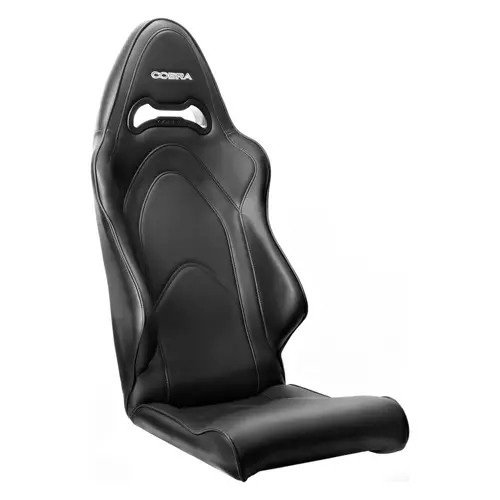
- Seats with an integrated head restraint remove one variable
- Winged race seats can restrict side vision in a road car
- Your IVA test station is the authority on what your car needs

What IVA is and why the seats matter
Individual Vehicle Approval is the scheme for cars that are built or imported in low numbers and are not covered by a manufacturer’s type approval: kit cars, one-off builds, some imports and heavily rebuilt cars. The inspector works through the car against the IVA inspection manual, from lights and brakes to interior edges, and that includes the seats, their mounting, the head restraints and the belt anchorages.
The seats matter because they are part of what protects you in a crash, and because a seat problem found on the day means a fix and a retest. DVSA publish the current manual for passenger cars on the IVA manual page on GOV.UK, and the rules are updated from time to time. Read the seat, head restraint and seat belt sections of the current version before you buy, and if anything is unclear, ask your IVA test station. They are the ones who decide.
What we can do is help you choose a seat with the right features and fit it properly. The rest of this guide goes through those features one by one.
Fixed back or reclining seats
A fixed back bucket seat has a one piece shell or frame with no backrest mechanism. There is less to go wrong, nothing to latch, and most have a high back with the head restraint built in. For a kit car that is often the simplest route.
A reclining seat adds comfort and makes it easier to share the car between drivers, but the mechanism has to be up to the job. The backrest must lock firmly and stay where it is put, with no play. If you choose a recliner, go for a well made seat from an established brand, check that the latch engages fully on both sides, and check how its head restraint and belt routing suit your build. A recliner that wobbles or does not lock cleanly is a safety problem whether or not it is being inspected.
Head restraints: integrated or adjustable
Head restraints protect your neck in a rear impact, and the IVA manual sets out requirements for them on the front seats, covering things like their height, their strength and how securely they are attached. Check the current wording in the manual rather than relying on a number you have read on a forum.
There are two ways a seat can provide one. Most bucket seats have an integrated head restraint: the high back of the shell does the job and cannot be forgotten, slip or rattle. Some classic style seats use a separate headrest on posts or bolted on. Those need to lock or bolt firmly in place, be properly padded with no hard edges behind the padding, and be tall enough for the people who will drive the car.
Low back vintage seats with no head restraint at all are the ones to be most careful with. If you love the look, talk to your test station about it before you buy.
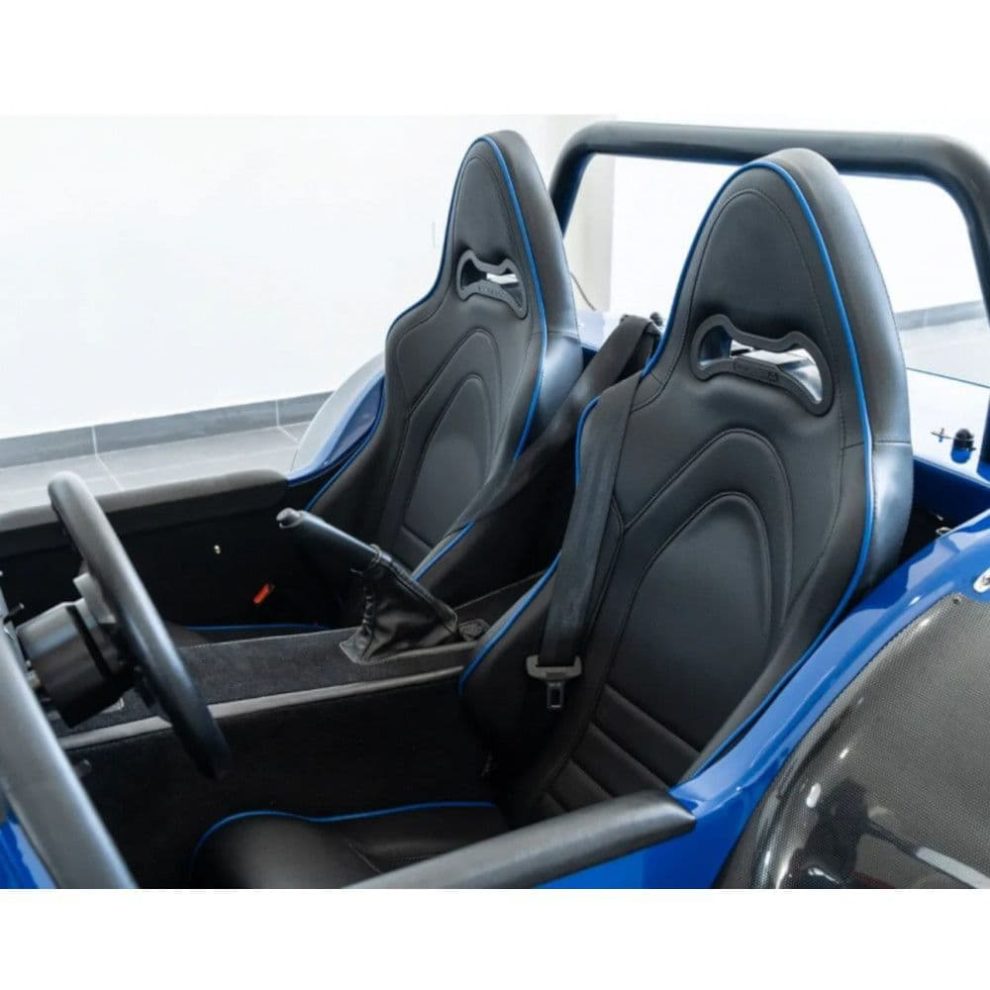
Our own preference for an IVA build is a seat with the head restraint built into the shell. It is one less part to fit and one less thing to check on the day, and a well shaped high back also gives you support where you want it on the road.
In a seven style car the Cobra Roadster range is designed around the tight cockpit and the angle of the rear bulkhead, which is why a general purpose bucket rarely fits those cars well.
Seat belts or harnesses
Every seat needs the right restraint for the person in it, and the belt anchorages are part of the inspection. The IVA manual covers both conventional seat belts and harnesses. Which your car should have depends on the build, so read the seat belt section of the current manual and confirm your plan with the test station before you drill anything.
Three point inertia reel belts. If you use road car style belts, the seat must let the belt do its job: the shoulder belt should lie flat across your chest, run over a smooth edge, and retract freely, and the buckle must be easy to reach with the seat’s side bolsters in place. Bucket seats with high sides can make the buckle awkward, so check it with the seat in the car.
Harnesses. If you choose a multi point harness, buy one from an established maker and fit it exactly as the maker’s instructions say. The shoulder straps must anchor to the chassis or a harness bar at the height and angle the harness maker specifies, never to the seat itself, and the lap straps need strong anchorages with proper backing plates. Our guide on how to fit a motorsport harness covers the anchor points in more detail.
Harness slots and head support
If you run a harness, the seat needs slots in the right place. The shoulder slots should sit at or just below your shoulder line when you are seated, so the straps come straight back over your shoulders. Slots far below your shoulders pull the straps down onto your spine in an impact; slots far above them let you move. Tall and short drivers should choose the seat size with this in mind.
Do not run harness straps around the sides of a head restraint on a seat that has no slots. Choose a seat made for a harness instead. If you are keeping standard belts, a seat without big racing slots can suit better, because the shell supports your shoulders and the belt sits across them comfortably.
Think about vision too. Race seats with large wings around the head are built for circuit crashes, but in a road car they can make it hard to look over your shoulder or check mirrors. For an IVA road build we suggest a seat with normal shoulder support and no wrap around head wings.
Seats worth looking at for a kit car build
These are seats kit car builders often ask us about. None of them is “IVA approved”, because IVA approves the whole vehicle, not a seat, but each has features that make the checks above easier.
- Cobra Clubman: a fixed back steel framed bucket with a built in head restraint, 850mm tall on a 500mm base, four point harness compatible. A road and track seat, not FIA.
- Cobra Monaco Pro: FIA 8855-1999, fully steel plated, fixed back with integrated head support, four or six point harness compatible, and it can be base or side mounted.
- Cobra Roadster 7: a narrow fit seat for seven style cars on a 400mm base, 750mm tall, shaped around the rear bulkhead.
- Cobra Roadster 7 Sport Turbo: the tall version, 920mm high and 400mm wide, with harness slots, for taller drivers in a seven style cockpit.
- Cobra Nogaro Club Sport: a fibreglass shell, 910mm tall, with harness slots for four or six point belts, listed for drivers over six feet.
-
From £269.00 Incl. VATFrom £224.17 Excl. VATPayPal CreditKlarna ReadySelect options This product has multiple variants. The options may be chosen on the product page
-
From £282.00 Incl. VATFrom £235.00 Excl. VATPayPal CreditKlarna ReadySelect options This product has multiple variants. The options may be chosen on the product page
-
From £569.00 Incl. VATFrom £474.17 Excl. VATPayPal CreditKlarna ReadySelect options This product has multiple variants. The options may be chosen on the product page
-
From £743.00 Incl. VATFrom £619.17 Excl. VATPayPal CreditKlarna ReadySelect options This product has multiple variants. The options may be chosen on the product page
Seat problems to sort before the test
- No head restraint, or a weak one. A low back seat with nothing behind the head, or an adjustable headrest that slides down or rattles, is the most obvious seat issue.
- A seat that moves. Expect the inspector to push and pull the seat. Thin brackets, unreinforced floors, low grade bolts or runners with play all show up here.
- A backrest that does not lock. A recliner or tip forward seat must latch firmly every time.
- Sharp edges. Bare metal harness holes, bracket corners, runner ends and bolt tails near the occupant should be trimmed, rounded or covered.
- Poor harness installation. Shoulder straps anchored to the floor behind the seat, eye bolts through thin panels without backing plates, or straps routed around a seat with no slots.
- Vision and controls. A seat mounted too high, too far over, or so wide it fouls the handbrake, gear lever or door.
The IVA manual lists what the inspector checks. Work through the seat and belt sections of the current version with your car in front of you, and you will find most of these before the inspector does.
Installation tips
Use proper hardware. High tensile bolts, large spreader plates under thin floors, and locking nuts or thread locker so nothing works loose. Tiny washers on a bolt through thin fibreglass will not impress anyone.
Mount the seat solidly. If you use sliding runners, choose ones that lock on both sides, so the seat cannot twist. A fixed seat with no runners is fine if the driving position suits everyone who will drive the car.
Reinforce the mounting points. On a fibreglass tub or thin floor, add steel or thick aluminium sections to spread the load. When the seat is bolted down it should feel as solid as a production car seat.
Get the angle, height and position right. A slight recline is comfortable and helps the head restraint sit where it should. Check you can see the road and the mirrors clearly, that your head clears the roll bar or roof, and that the seat is centred on the wheel and pedals with every control in reach.
Check the belts with the seats in. Pull an inertia reel belt out and let it go: it should lock and retract fully without catching on the seat. With a harness, check every fixing is tight and every clip is latched.
Run your hand around the seat. Anywhere your hand snags, cover it, trim it or round it off, and do it neatly and permanently.
Getting help with your choice
Choosing seats for an IVA build is manageable once you know which features matter. Garreth’s advice is to send us the car, the space you have, how you will use it and the seat you are thinking of. We will tell you what that seat has, head restraint, harness slots, mounting type and dimensions, and suggest the mounts and runners to go with it. The final word on what your car needs always belongs to the IVA manual and your test station.
Is there such a thing as an IVA approved bucket seat?
No. IVA approves the whole vehicle, so what matters is how the seat, its head restraint, its mounting and the belts meet the current IVA manual on your car.
Do my seats need head restraints for IVA?
The IVA manual sets requirements for front seat head restraints, so choose seats with a proper head restraint and check the current manual for the detail.
Can I use a reclining seat in an IVA build?
A recliner can be used if it is well made and the backrest locks firmly with no play. Check the current manual and ask your test station if unsure.
Can I run a harness instead of seat belts?
The IVA manual covers both, so check the seat belt section and confirm your plan with your test station before fitting anything.
Who decides whether my seats are acceptable?
The IVA inspector, working to the current DVSA manual. Your test station can answer questions before the day.
💬
Our suggestionA fixed back seat with a built in head restraint
Fewer parts to check, and a harness slot or belt route that suits your build.
Need a personal recommendation?
We're here to ensure you pick the right seat.
Contact us today.