
“Wool Tartan Fabric – Weir Ancient” has been added to your basket. View basket
What You Need To Know When Sending Us Your Own Fabric For Seat Trimming
Seat trimming advice, December 2024
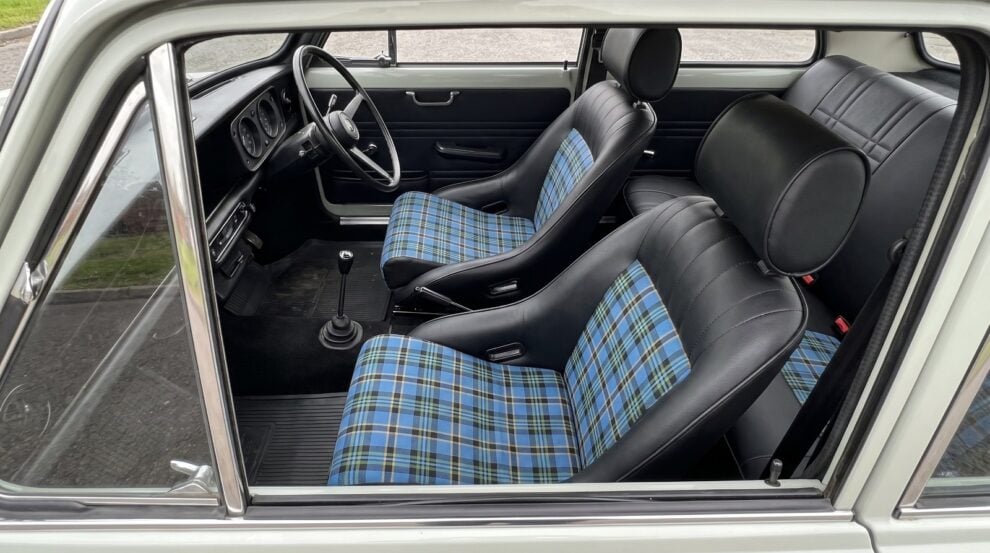
A seat trimmed in a fabric you have chosen yourself is one of the best ways to make an interior your own, and more of you have been asking whether you can send us your own material for a seat build. You can, but the fabric makes a big difference to how the finished seat looks and how long it lasts.
The wrong material can wear quickly, pull out of shape or never sit quite right on the seat. Here is what we look for in a fabric, how much to send, and a few things to think about before you buy, whether you have a tartan, a bold pattern or a plain cloth in mind.
- Choose a stable, hardwearing fabric made for upholstery or car use
- A polyester base is ideal; wool blends can work, but not 100 percent wool
- Aim for at least 250g per square metre, or medium to heavyweight
- A backed fabric gives a firmer, neater finish
- Send about 1 metre per seat centre for a plain fabric, 3 to 4 metres for a bold pattern
- Any material we do not use is returned to you
What is on this page
What to look for in a fabric
A seat has a hard life. It is sat on, slid across, warmed by the sun through the glass and cleaned more often than most furniture. The fabric on it needs to be stable, so that it keeps its shape once it is stretched over the foam, and durable, so that it does not wear through at the bolsters. Three things decide most of that.
A polyester base. Ideally the fabric should have a polyester base. It is hardwearing, resists fading and is easy to look after. We can work with wool based fabrics, but the material should not be 100 percent wool, which is less stable when it is stretched and fitted.
The right weight. Look for a fabric of 250g per square metre or more, or one sold as medium to heavyweight if it is measured per linear metre. Heavier cloth holds its shape and wears better on a seat. A good upholstery tartan, for example, is around 400g per linear metre.
A proper backing. A backed fabric has the structure a seat needs. It is easier to work with, it does not stretch out of line as it is fitted, and it gives a firmer, neater finish.
How much fabric to send
The amount depends on the pattern and on how many seats you are trimming. A pattern has to line up across the seat, and between one seat and the other, which takes more material.
Plain or lightly patterned fabric: we usually need no more than 1 metre per seat centre.
Bold or detailed patterns: send 3 to 4 metres, so the pattern can be matched and centred properly.
Any fabric we do not use comes back to you. If you are not sure how much to buy, tell us the seat and send us a picture of the pattern, and we will give you a figure before you order the material.
Tartans and other special fabrics
If you have your heart set on a tartan or another speciality cloth, a few extra points are worth checking before you buy it.
Choose a material made for upholstery or car interiors, not a dress or furnishing fabric. It needs to cope with the stresses of a seat. Medium to heavyweight cloth, around 400g per linear metre, is the right sort of weight for long life.
Look at a sample in daylight and in the car if you can. A fabric can look lighter or darker once it is fitted, and next to the rest of the interior.

Our new tartan fabric range
If tartan is the look you are after, you do not have to source it yourself. We have recently added a range of tartan fabrics to the site, the same cloths used on the Corbeau and Cobra tartan seats, sold by the metre for re-trimming and new builds.
The range covers bright and traditional patterns, from Weir Ancient and Blair Ancient to Stewart Dress Modern and the navy Earl of St Andrews. The cloth is 140cm wide and weighs 415g per square metre, well inside the weight we look for. One metre covers a centre panel, and two metres typically covers the back and base. It is sold as fabric only, without foam or backing.
Before you send anything
Talk to us first. Tell us the seat, the fabric’s make-up and its weight, and send a photo of the pattern. We will tell you whether it is suitable and how much we need, which saves buying the wrong cloth or too little of it.
Garreth’s advice is to buy a little more than you think you need, especially with a pattern. It costs far less than finding the pattern will not line up halfway through a seat, and anything left over is returned to you.
Can I send my own fabric for a seat trim?
Yes. Talk to us first with the fabric’s make-up, weight and a photo so we can check it is suitable.
What weight of fabric is best for seats?
At least 250g per square metre, or medium to heavyweight; around 400g per linear metre is ideal for tartan.
Can I use a 100 percent wool fabric?
We ask for a fabric that is not 100 percent wool; a polyester base is ideal.
How much fabric should I send?
About 1 metre per seat centre for a plain fabric, and 3 to 4 metres for a bold pattern.
What happens to fabric you do not use?
Any unused material is returned to you.
💬
Get it right first timeStable, heavy, backed
A backed, polyester based upholstery fabric of 250gsm or more makes the best seat trim.
Need a personal recommendation?
We're here to ensure you pick the right seat.
Contact us today.
