Call Garreth, Cameron & Jack: 0115 9893488

FREE UK shipping on orders over £100.00 & FREE gifts on checkout

Your garage NewAdd your car and see the parts that fit
Useful Links
Your Account

Talk to us

Garreth, Cameron & Jack · Mon to Fri
Call 0115 989 3488Free advice on your build
Thanks, that’s with us. We reply the same working day.
That didn’t send. Please give us a call instead.

Useful Links

Quick Access

Want to chat?

Call Garreth, Cameron, Jack
Today On: 0115 9893488
Click Here For Our Contact Form


Road Legal Belts vs. FIA Motorsport Harnesses: What You Need to Know for UK MOT Compliance

Harness guide

A harness is one of the most common upgrades for a car that does track days, and one of the most common questions that follows is whether the car will still pass its MOT. The short answer is that the safest route is to keep the factory seat belts fitted and working, and add the harness alongside them.

This guide explains how road belts and FIA harnesses differ, what the MOT looks at, where road approved harnesses fit in, and how to set a car up so it works on the road and on track. We are a retailer, not a testing station, so where the rules matter we point you to them.

  • The MOT checks that the seat belts a car must have are fitted, secure and working
  • FIA harnesses are competition equipment, homologated for motorsport
  • Road approved harnesses carry ECE approval for use on the public road
  • Keeping the factory belts alongside a harness is the straightforward way to keep a car MOT ready
  • A harness is only as good as its seat and its mounting points
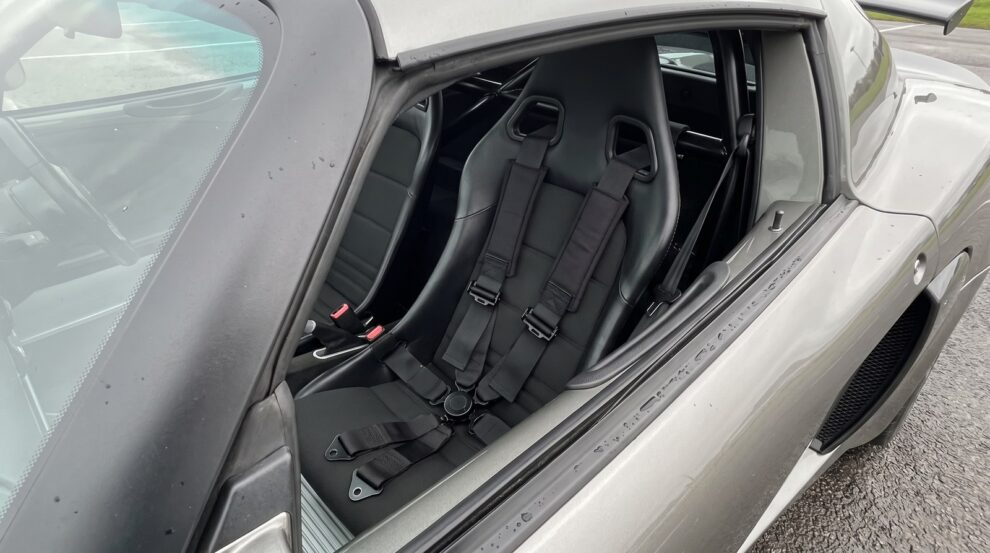
A black four point harness fitted over a bucket seat in a grey Lotus Exige, with the factory seat belt still fitted beside it
A four point harness in a Lotus Exige, with the factory seat belt left in place.

Road belts and FIA harnesses: the difference

Road seat belts are made to the road vehicle standards a car is built to. Most are three point inertia reel belts: the webbing moves freely as you lean and locks under a sudden stop. They work with the car’s airbags and pretensioners, and they are what the MOT expects to find.

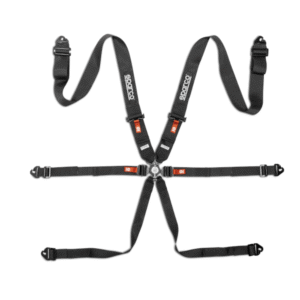
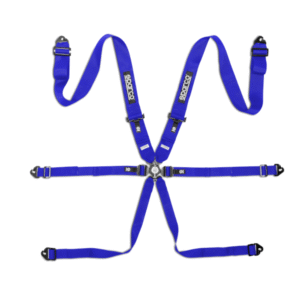
FIA harnesses are competition equipment. The current standard is FIA 8853-2016, and you will still see older belts marked FIA 8853/98 or 8854/98. They come as four, five or six point belts with no inertia reel: once adjusted, they hold the driver firmly in the seat. They need a seat with harness slots, and correct mounting points behind and below the driver.

Being FIA homologated does not make a harness road approved. They are made for different jobs.

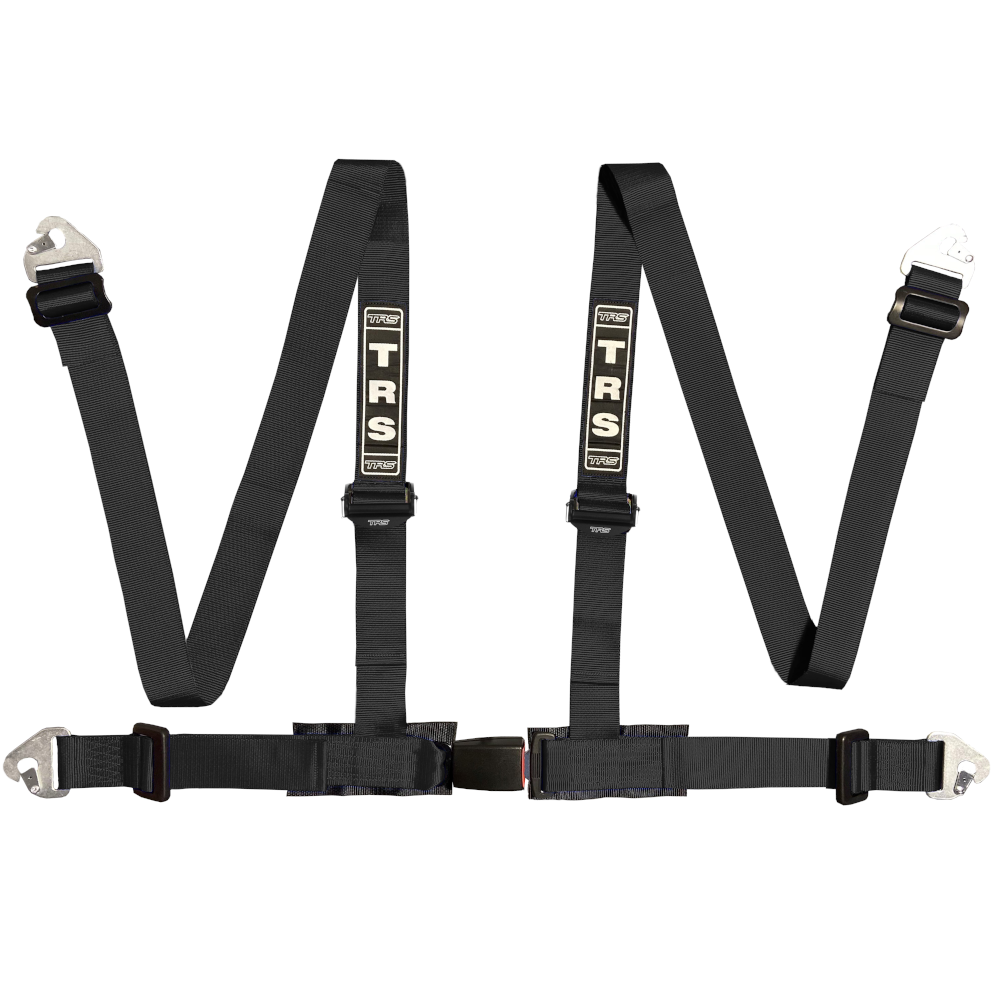
Harnesses also differ in how they fit. Clip-in harnesses use snap hooks onto eye bolts, so they can come out without tools. Bolt-in harnesses fix directly to mounting points.

For a car that goes on the road, a clip-in harness can make life easier: unclip it and the original belts and their mountings are easy to reach.
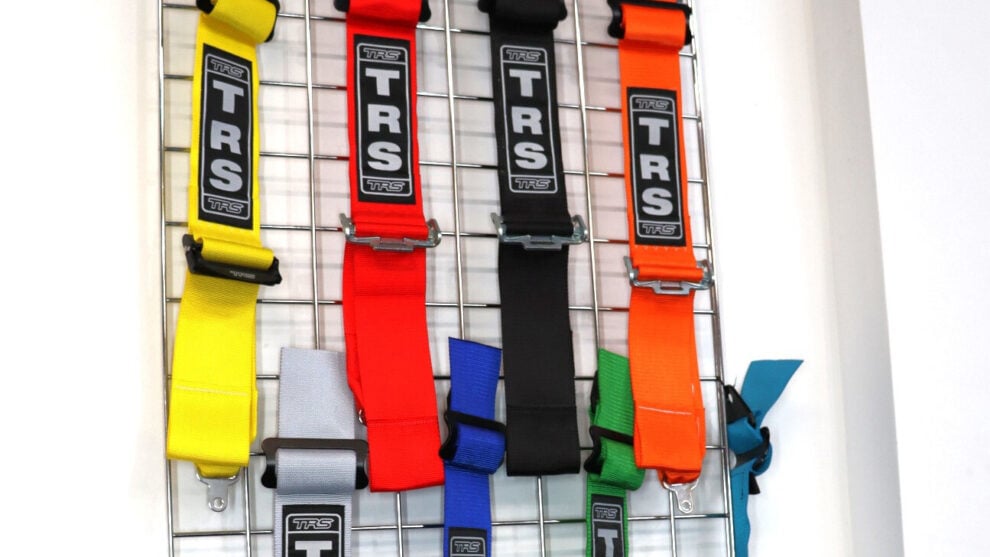
TRS harness shoulder straps in yellow, red, black, orange, grey, blue, green and teal hanging on a mesh display in the showroom
TRS harnesses on the showroom display.

What the MOT looks at

The MOT inspection manual sets out which seats must have a belt and what type, depending on the car and when it was first used. The tester then checks that those belts are present, secure, in good condition and working, including that retracting belts wind back in properly.

Harnesses are less clear-cut, which is one more reason we suggest keeping the factory belts in place alongside a harness. If you are unsure about a particular car, ask your testing station before you change anything.

Keeping the factory belts alongside a harness

For most people this is the simple answer. Leave the factory belts fitted and working, and add the harness on its own mounting points. The car keeps the belts it was built with for the road and the MOT, and you use the harness on track.

It does need some thought. With a bucket seat, the factory belt still needs to reach and buckle properly, which may mean a seat belt bracket or buckle extension suited to the seat. And the harness must not be anchored in a way that stops the factory belt working.

If the factory belts come out and the car relies on an FIA harness alone, expect trouble at the MOT, and bear in mind that a pass on the day is not the same as the car being right for the road.

Road approved harnesses

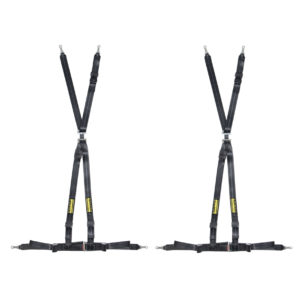
There is a middle ground. Some harnesses are approved to ECE Regulation 16, the road vehicle standard for seat belts, and sold as road and track belts. We list them from brands including Schroth, OMP and TRS, and you can see them together in our road legal harness range.

Two points to know. Road approved harnesses are not FIA homologated, so they are not the belt for competition that asks for an FIA harness. And the ones we list are not HANS compatible. If you race, or your class requires a head and neck restraint, you need an FIA 8853-2016 harness.

Fitting a harness properly

Whichever harness you choose, the mounting is the whole job. The shoulder straps should run back from your shoulders level or slightly downward to a harness bar, cage or mounting behind you, never up from a low point. In a car without a cage that usually means eye bolts with proper spreader plates.

The seat matters too. A harness needs a seat with the right slots for its straps, and it should be fitted to the harness maker’s instructions. Our guide on how to fit a motorsport harness goes through it step by step, and our four point against six point guide helps with choosing a layout.

Garreth’s advice is to tell us the car, the seat and what you do with it before you order. We will help you pick the belt and work out where it mounts. As with any change to a car, let your insurer know about it too.

An FIA harness is not road approved on its own. Keep the factory seat belts fitted and working, and use the harness alongside them for track use.

The MOT checks the belts the car must have. If the factory belts are present, secure and working, an added harness should not stop that check being done.

Yes. Some harnesses are approved to ECE Regulation 16 and sold as road and track belts, from brands including Schroth, OMP and TRS.

The road approved harnesses we list are not HANS compatible. For a HANS you need an FIA 8853-2016 harness.

A harness needs a seat with the right slots for its straps, which usually means a bucket seat, and proper mounting points.

💬
The simple routeKeep the factory belts

Add the harness alongside them and the car stays right for the road and the MOT.

Need a personal recommendation?

We're here to ensure you pick the right seat. Contact us today.
Our showroom virtual walk through!
Have a walk around our showroom before you even buy your new seats. 
Our hands on experience, is what allows us to bring you our recommendations.
Free UK Shipping

On all orders above £100

Showroom

Try before you buy, by appointment

Delivery Tracking

Updates by email and text