“Schroth Profi XLT 2×2 Pull Up Harness Belt” has been added to your basket. View basket
You've unlocked two free gifts
All two are in your basket at no charge.

Gift box
GSM Performance Customer Car Colouring Book Edition 1
Pull-Up vs. Pull-Down Harnesses: What's the Difference, and What Should You Know?
Harness guide
When you choose a competition harness, one of the options on many listings is the lap belt adjustment: pull-up or pull-down. It is easy to skip past, but it changes how you tighten the belt once you are sat in the car, and in some seats one style is simply easier to use than the other.
Both styles hold you just as securely once they are tight. The difference is the direction you pull the loose tail of the webbing to tighten the lap belt, and where that tail and the adjuster end up. Here is how each works and how to choose.
- Pull-up: you tighten the lap belt by pulling the loose tail upward
- Pull-down: you tighten it by pulling the loose tail downward
- Both are equally secure once tight; the difference is how you adjust them
- The seat's shape and the room beside it often decide which is easier
- Many harnesses come in both versions, some in one only
- Some Schroth harnesses can be set up either way
What is on this page
What pull-up and pull-down mean
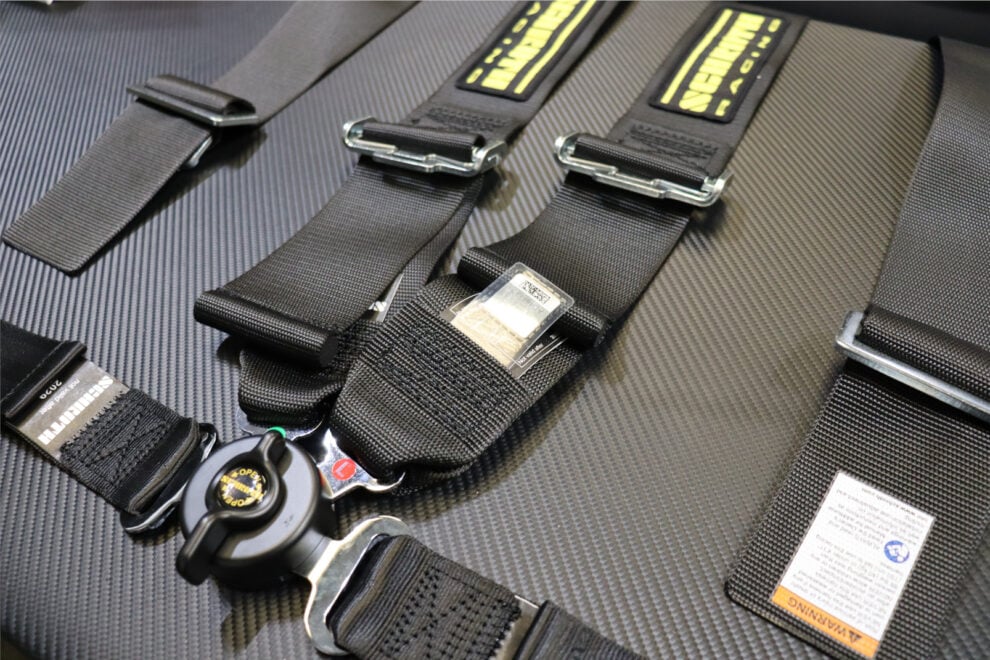
Each lap belt has an adjuster, a metal slide the webbing runs through. To tighten the belt you pull the loose tail of the webbing through the adjuster. The name tells you which way you pull.
Pull-up. You tighten the lap belt by pulling the loose tail upward. Schroth, for example, describe it simply as pulling the loose tail upward, and some drivers prefer it in a saloon with a more upright seating position. OMP point out that their pull-up adjusters can be worked sitting in the car with a helmet on.
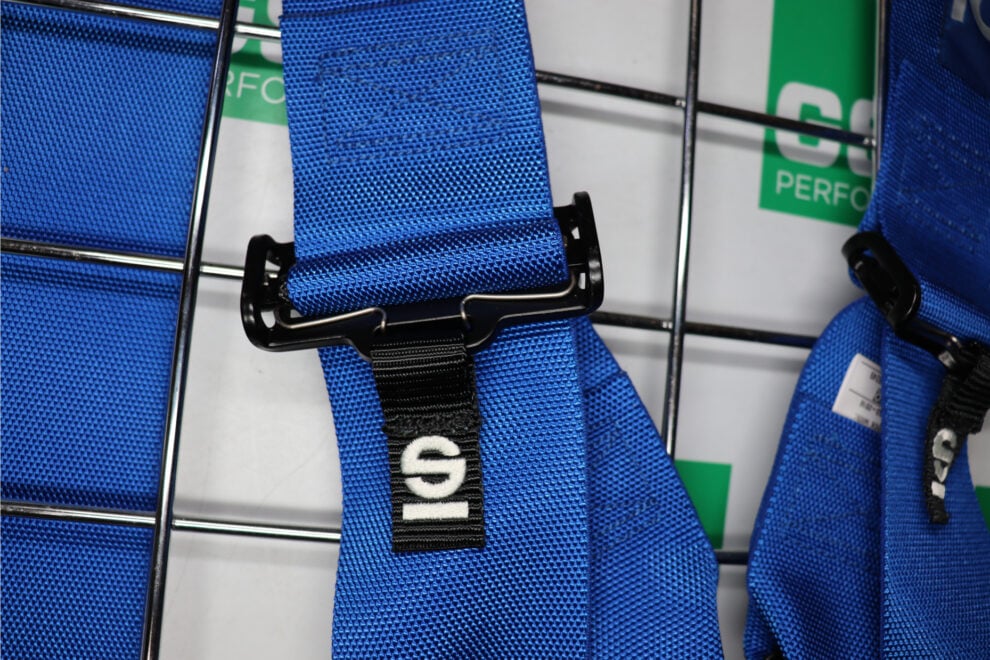
Pull-down. You tighten the lap belt by pulling the loose tail downward. Sparco describe their pull-down version as the one to have in a narrow seat or tight cockpit where there is no room to pull up, and as the version endurance teams choose because it is quicker at a driver change.
Makers do not all describe the two in the same way, so the best guide is to picture your own seat and where your hands can reach.
Pull-up lap belts
With a pull-up belt, you pull the tail up towards you. For many drivers that is a natural movement once strapped in, because the hands are already in the lap area.
Pros: easy to reach and tighten from the driving position, and the motion suits a more upright seat.
Cons: the loose tails and adjusters can sit in the lap area, and in some deep bucket seats with high thigh bolsters there is less room to pull upward.
Pull-down lap belts
With a pull-down belt, you pull the tail downward to tighten it, so the loose webbing ends up lower, away from your lap.
Pros: quick to tighten, which is why it is popular in endurance racing where drivers swap and the belts are adjusted at every stop, and it can suit a narrow seat where there is no room to pull up.
Cons: you need room to pull down beside or in front of the seat, and in some seats the adjuster can end up close to the hip bone, which some drivers find uncomfortable.
Which harness should you choose?
1. Your seat. This is the biggest factor. Look at the lap belt openings in the seat, the height of the thigh bolsters and how much room there is beside the seat. Ask yourself which way your hand can pull the webbing without hitting the seat, the door or the tunnel.
2. How the car is used. If several drivers share the car and the belts are adjusted at every change, the speed of pull-down adjusters is worth having. For a single driver, comfort and ease of reach usually decide it.
3. The harness you want. Some harnesses are made in both versions, others in one only, and a few, such as Schroth’s Flexi belts, can be set up either way and even differently on the left and right. So the style may be decided by the model you choose.
4. Try it. If you can, sit in your seat with the harness laid over you and go through the motion of tightening it. Garreth’s advice is to do this with a helmet and gloves on, because that is how you will be adjusting it on the day.
-
From £324.00 Incl. VATFrom £270.00 Excl. VATPayPal CreditKlarna ReadySelect options This product has multiple variants. The options may be chosen on the product page
-
From £324.00 Incl. VATFrom £270.00 Excl. VATPayPal CreditKlarna ReadySelect options This product has multiple variants. The options may be chosen on the product page
-
From £222.00 Incl. VATFrom £185.00 Excl. VATPayPal CreditSelect options This product has multiple variants. The options may be chosen on the product page
Fitting and anchor points
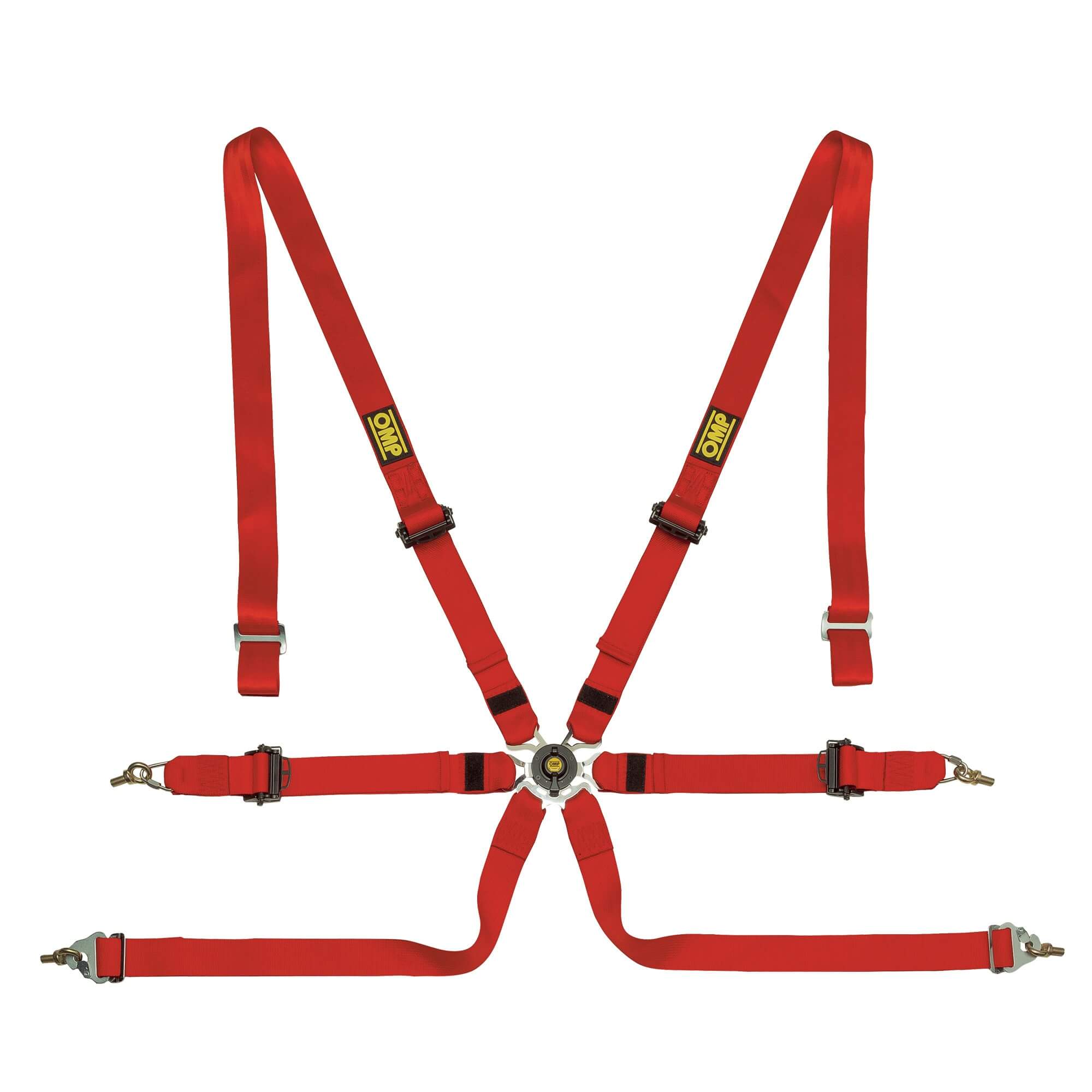
The adjustment style does not change the rules for mounting the harness. The lap belts still need proper anchor points at the right angle to hold the pelvis, the shoulder straps still need the right angle to the harness bar or anchor, and a six point harness needs its sub straps mounted correctly under the seat. Our guide on how to fit a motorsport harness covers the angles and anchor points.
If you are still deciding between a four and a six point harness, read our guide to 4 point against 6 point harnesses first, then choose the adjustment.
Common misconceptions
“One style is safer.” Not in itself. Both are made to the same approval standards, and once tight they hold you the same way. What matters is that the harness is approved for your use, fitted correctly and tight.
“Pull-down is always better.” It is the favourite in some settings, particularly shared cars, but in some seats a pull-up is easier to reach and more comfortable.
“You can switch later on any harness.” Only on harnesses designed to be reconfigured. On most, the adjustment is fixed, so choose before you order.
What is the difference between pull-up and pull-down harnesses?
It is the direction you pull the loose tail to tighten the lap belt: upward on a pull-up, downward on a pull-down.
Is a pull-down harness safer than a pull-up?
No. Both hold you the same way once tight; the difference is how you adjust them.
Why do endurance racers use pull-down belts?
They are quick to tighten, which helps when drivers change and belts are adjusted at every stop.
Can I change a harness from pull-up to pull-down?
Only on harnesses designed for it, such as some Schroth models; on most the style is fixed.
💬
Our adviceChoose for your seat
Sit in your seat, go through the motion, and pick the adjustment your hands can reach easily.
Need a personal recommendation?
We're here to ensure you pick the right seat.
Contact us today.