Sitting Too Low In A Clio Mk4? The Mounts That Put You Back Up
A bucket seat on direct fit side mounts sits as low as a Clio Mk4 will physically allow. Here are the two ways a seat mounts in one, and what both builds cost per side.

Call Garreth, Cameron & CallyAI: 0115 9893488
FREE UK shipping on orders over £100.00 & FREE gifts on checkout
Call Garreth, Cameron, CallyAI
Today On: 0115 9893488
Click Here For Our Contact Form
He came in with one seat already decided. He tried it, then worked along the rest of the row the way most people do, and by the time he reached the Mirco RTX-7 the original plan was gone.
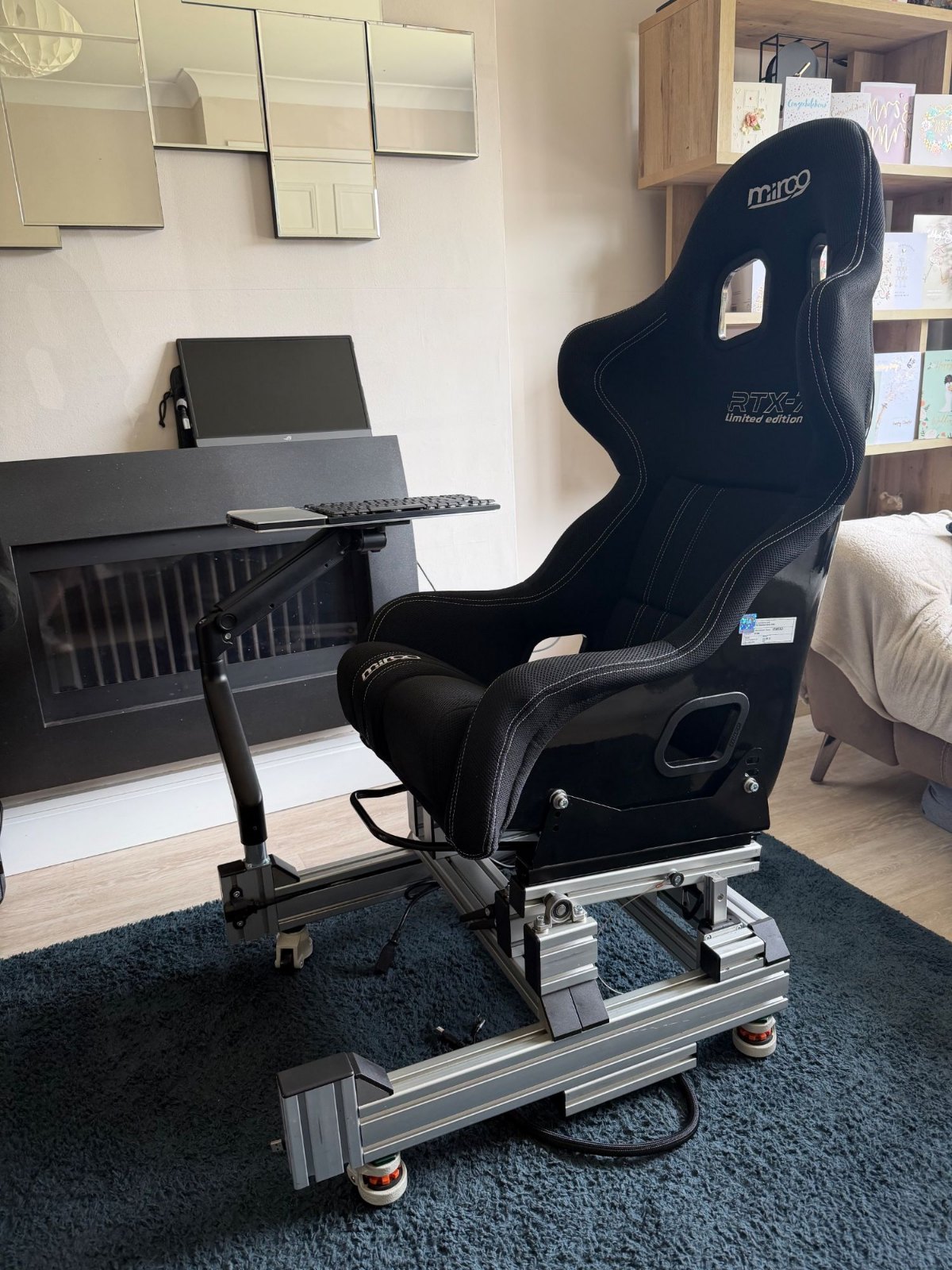
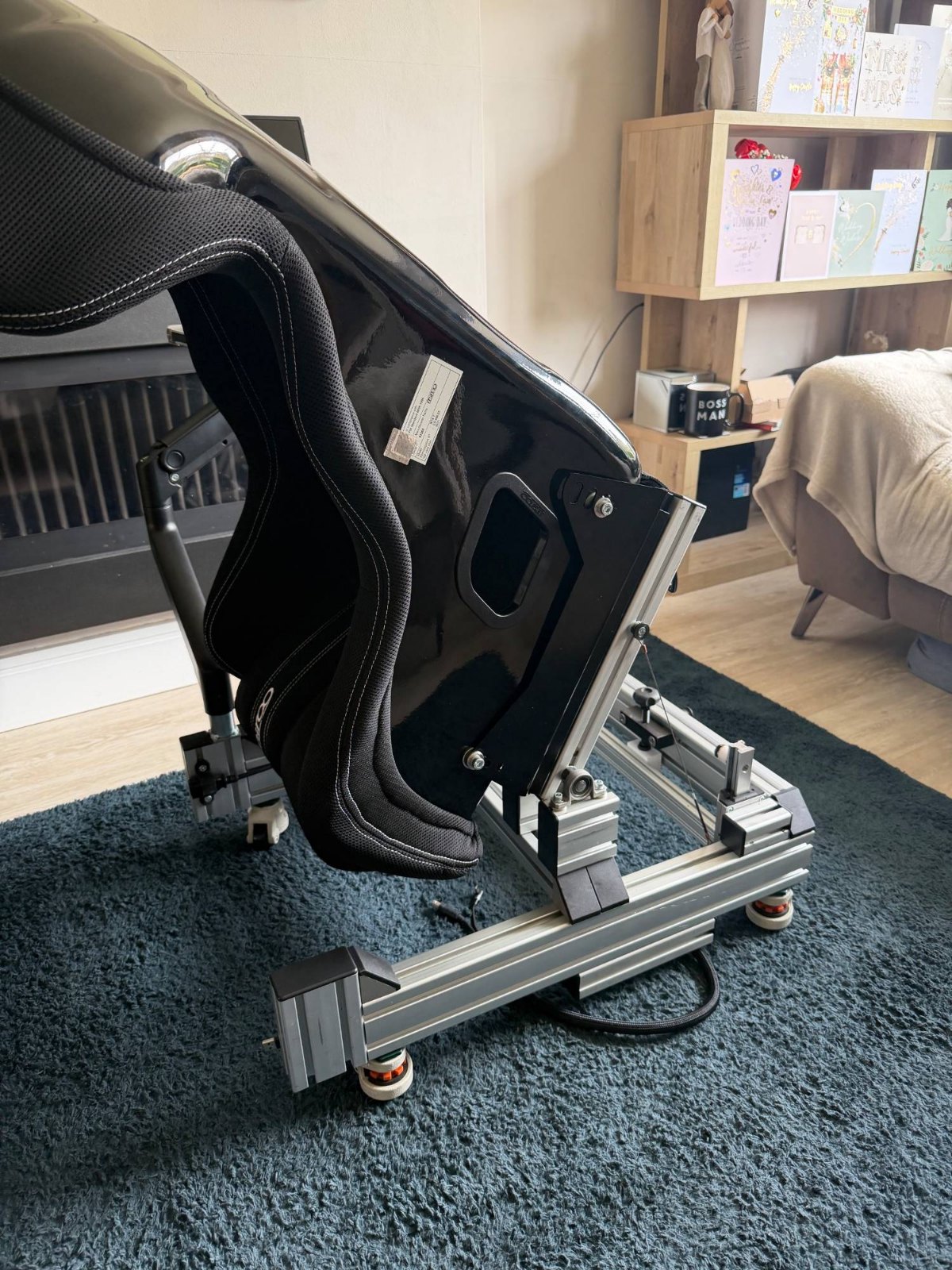
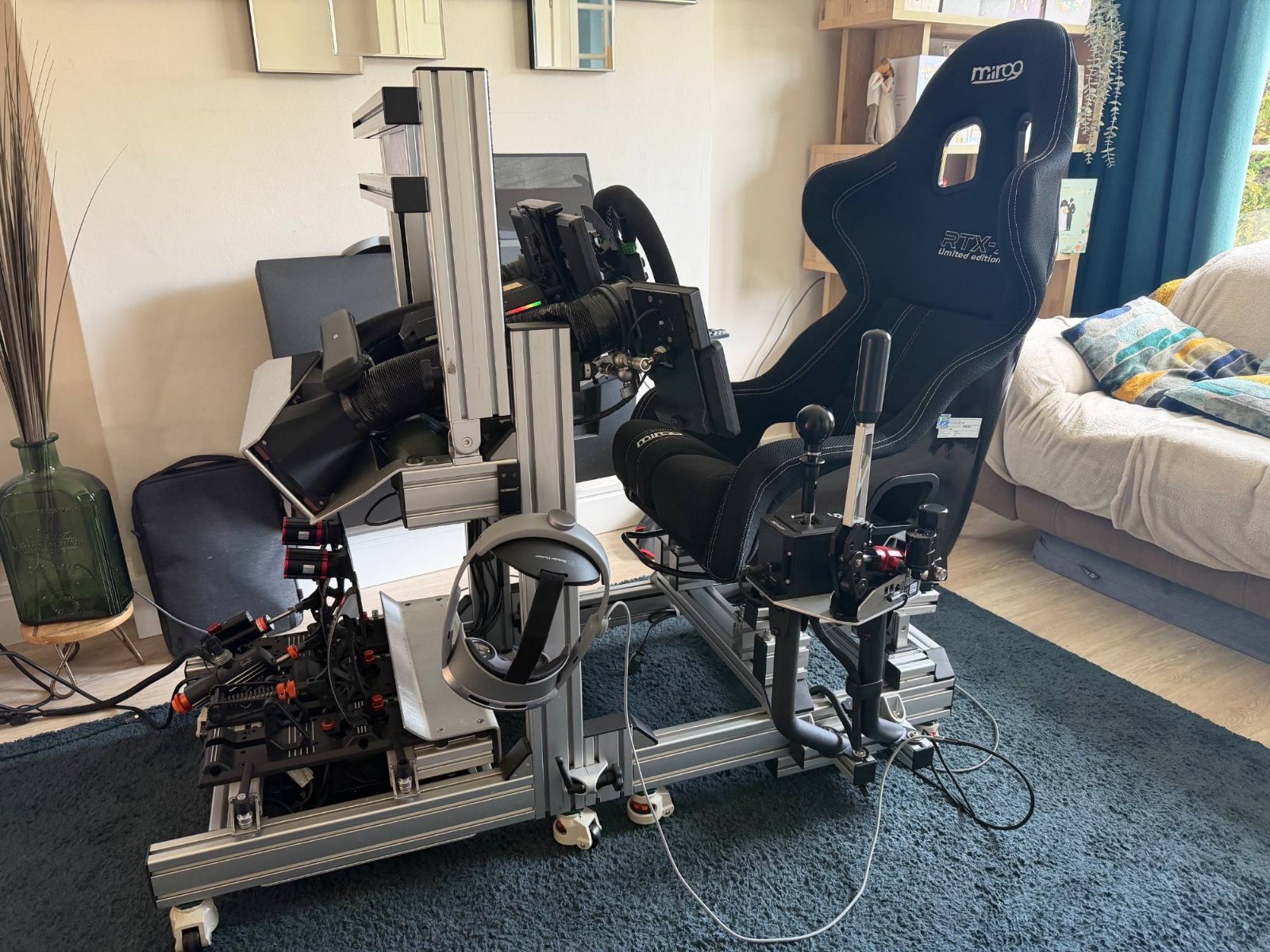
Forty eight hours later the photographs landed. The RTX-7 bolted into his own aluminium profile rig, side mounts straight onto the extrusion, wheelbase on the front upright, actuators sitting underneath.
Rig builders ask me a specific question and it is a good one. Will this seat still be holding me properly two hours into a stint? That is what most of this page is about, along with the brackets that got it bolted down so quickly.
Working out which seat suits which job is what I do here, so this runs in the order I would go through it on the shop floor. Thanks to the customer for sending the pictures through.

What is on this page
Get the seat right and the whole thing comes alive. You are held where a driver should be held, the wheel loads up against your arms, the chassis works underneath you, and it all arrives through your body in the order it would on track. That feeling is what people are chasing when they build one of these, and it is fantastic when it lands.
Two things make the seat the piece that delivers it. Sessions on a rig run long, because there is no fuel to buy and no packing up at the end of the day, so a two hour endurance stint is an ordinary evening. And a motion chassis is moving you the whole time, so you want to be held firmly enough that the movement reads as information.
Endurance running is where a rig comes into its own. Two hours is a normal evening, and the seat decides how much you enjoy the second one.
With actuators working under you, being held firmly is what turns the movement into grip, kerbs and weight transfer you can read.
Hold a driver the way a race seat holds one and the rig starts to feel like driving. That is the moment people describe when they say it has clicked.
The shell does most of that work, which is what makes a proper fibreglass bucket worth the money. The trim decides how comfortable you are in the first ten minutes. The shell decides how well you are held for the whole stint.
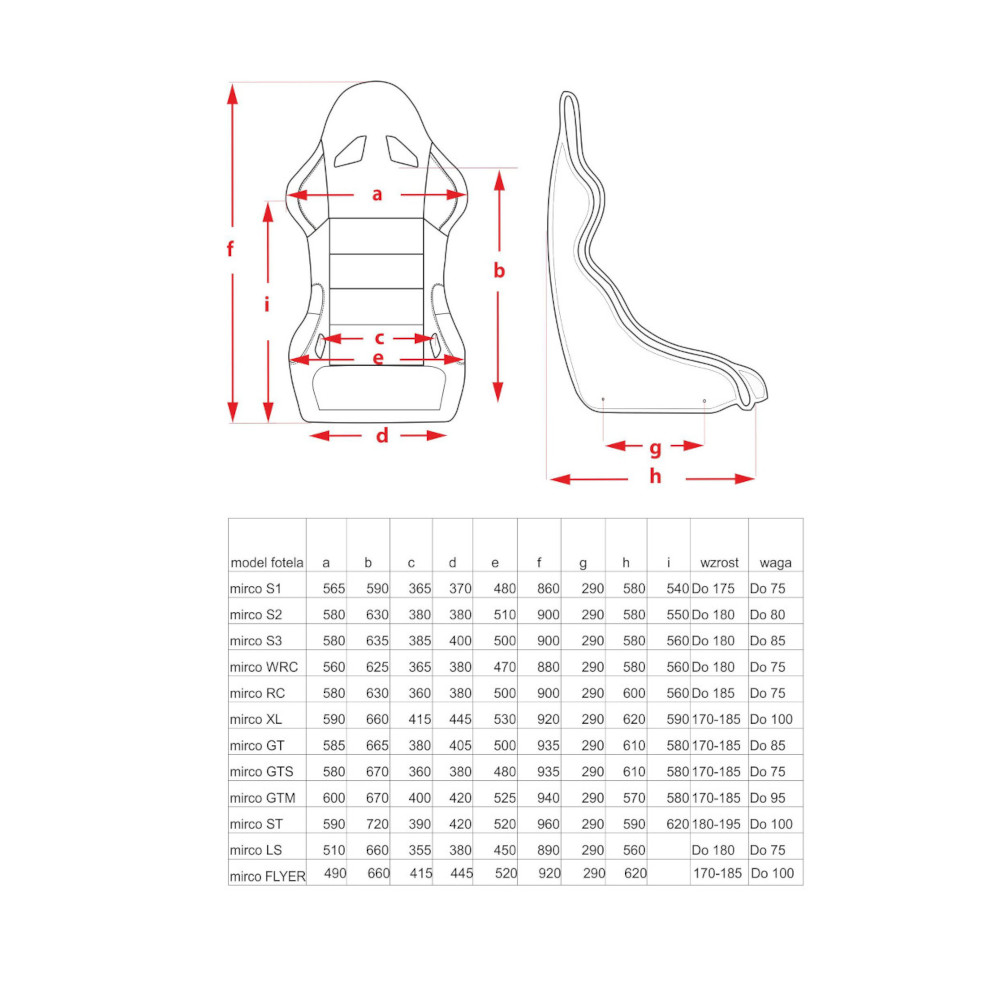
Mirco publishes a dimension drawing for the RTX-7 and it sits on the product listing as the fourth image. Everything in this section is read off that drawing, not estimated.
Drawn to scale at 0.55 pixels per millimetre, straight off Mirco’s RTX-7 dimension drawing. The green bar is the industry side mount pattern, shown for size only.
The rest of the drawing gives 645 mm of backrest, 620 mm from the base up to the shoulder slots, and 420 mm across the bottom of the base. The shell is polyester glass laminate with a gloss gel coat, and it weighs between 9 and 10 kg depending on which of Mirco’s own figures you read. Mirco rates it for a driver up to 95 kg and 190 cm.
The lumbar and leg cushions come out, which is the quickest way to buy a bit more room without changing seat.

This is the bit that explains why he changed his mind halfway down the row.
Mirco’s range chart covers twelve of its seats and gives shoulder widths from 490 mm on the Flyer up to 600 mm on the GTM. The RTX-7 sits at 600 mm, right at the top of that spread. At the waist there is 385 mm between the lap belt slots and 490 mm across the hip bolsters.
You want both ends working together. Tight at the hips so your pelvis is located and stays located, and proper shoulder support above it so your upper body is held too. Get the pair right and you are genuinely held in, which is the feeling worth paying for.
Where it turns into a judgement call is when the seat has to suit more than one driver. A looser hip is the usual compromise if several people of different sizes will share the rig. Shoulder depth follows your build: a flatter shoulder suits a broader chest, a deeper one wraps a narrower frame more closely. It is one of the reasons the RTX-7 works for so many people, because 600 mm of shoulder gives a broad driver somewhere to sit while the hips still do their job.
I used to talk people through hip width first and treat the shoulders as an afterthought. Sitting in a row of them back to back cures that quickly, because the ones that feel best are always the seats doing both jobs at once.
The other thing you notice picking one up is how little the bolsters move. Push a thumb into the edge of a cheaper fibreglass shell and you feel the laminate give. These barely move at all, and firm bolsters are what makes the shoulder support work when a wheelbase loads up.
It is the RTX-7 3D, trimmed in Mirco’s 3D SpaceTech mesh, black shell and black trim with the silver stitch. It starts at £418.80 including VAT.
The mesh is the trim I would pick for a rig. It breathes, which matters in a room that warms up over a long stint, and it holds a cotton shirt instead of letting it slide. Velour feels softer under the hand and takes the wear better where you get in and out, and it costs the same, so between those two it is purely a taste call.
Here is why the whole job took two days, not two weeks.
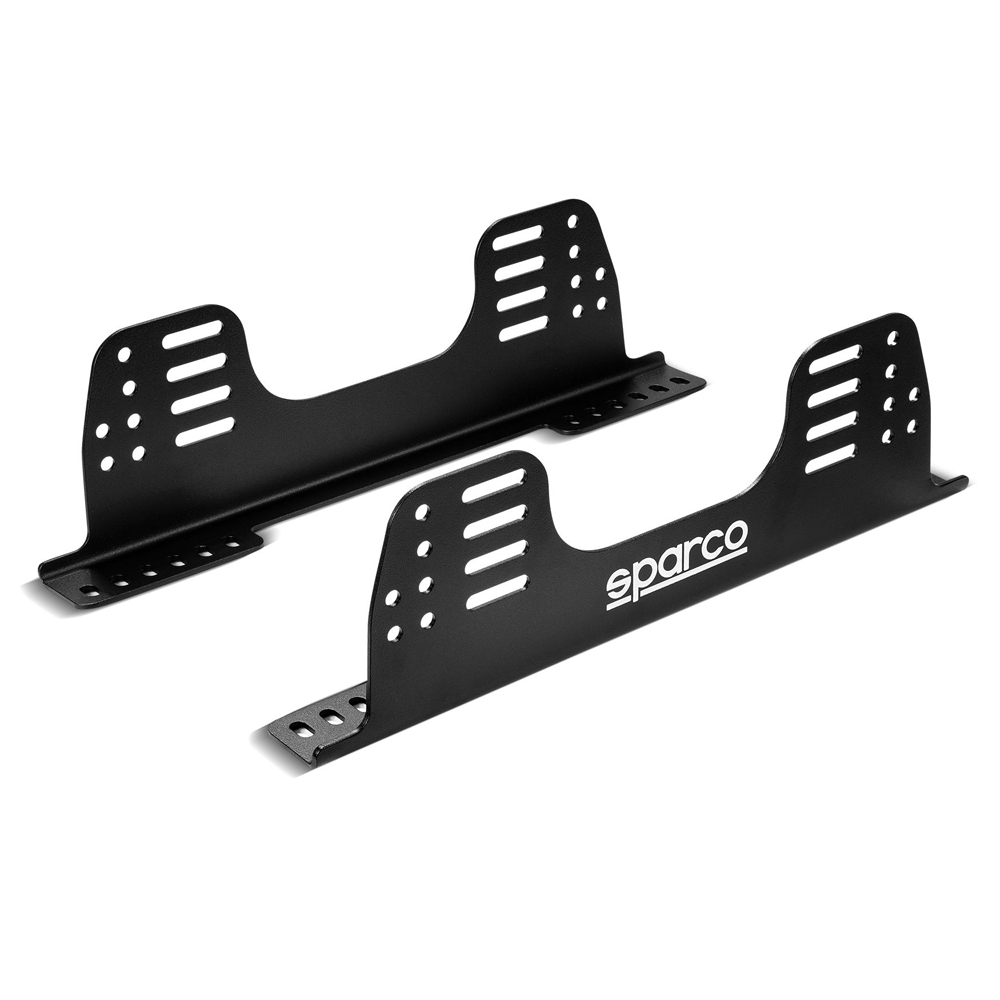
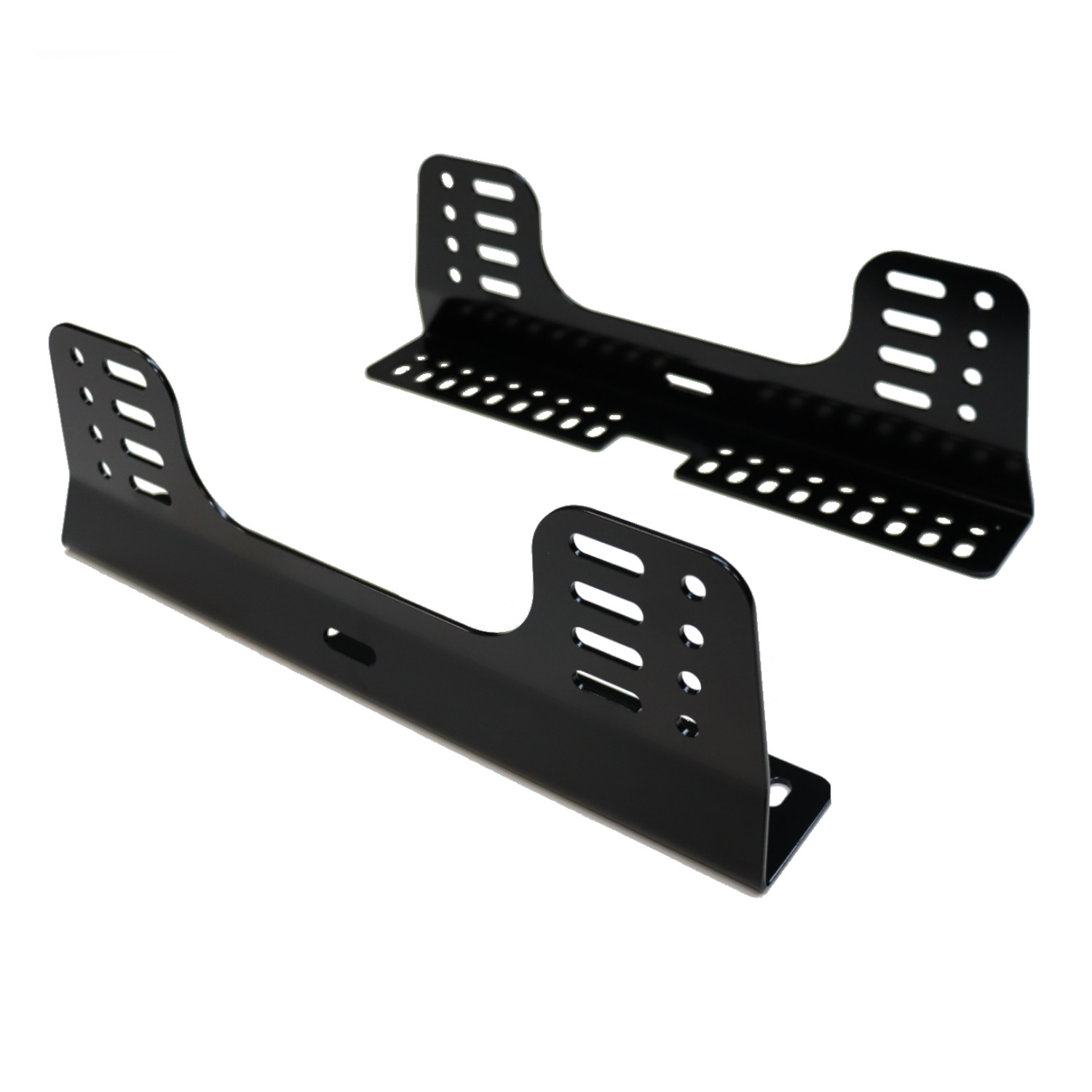
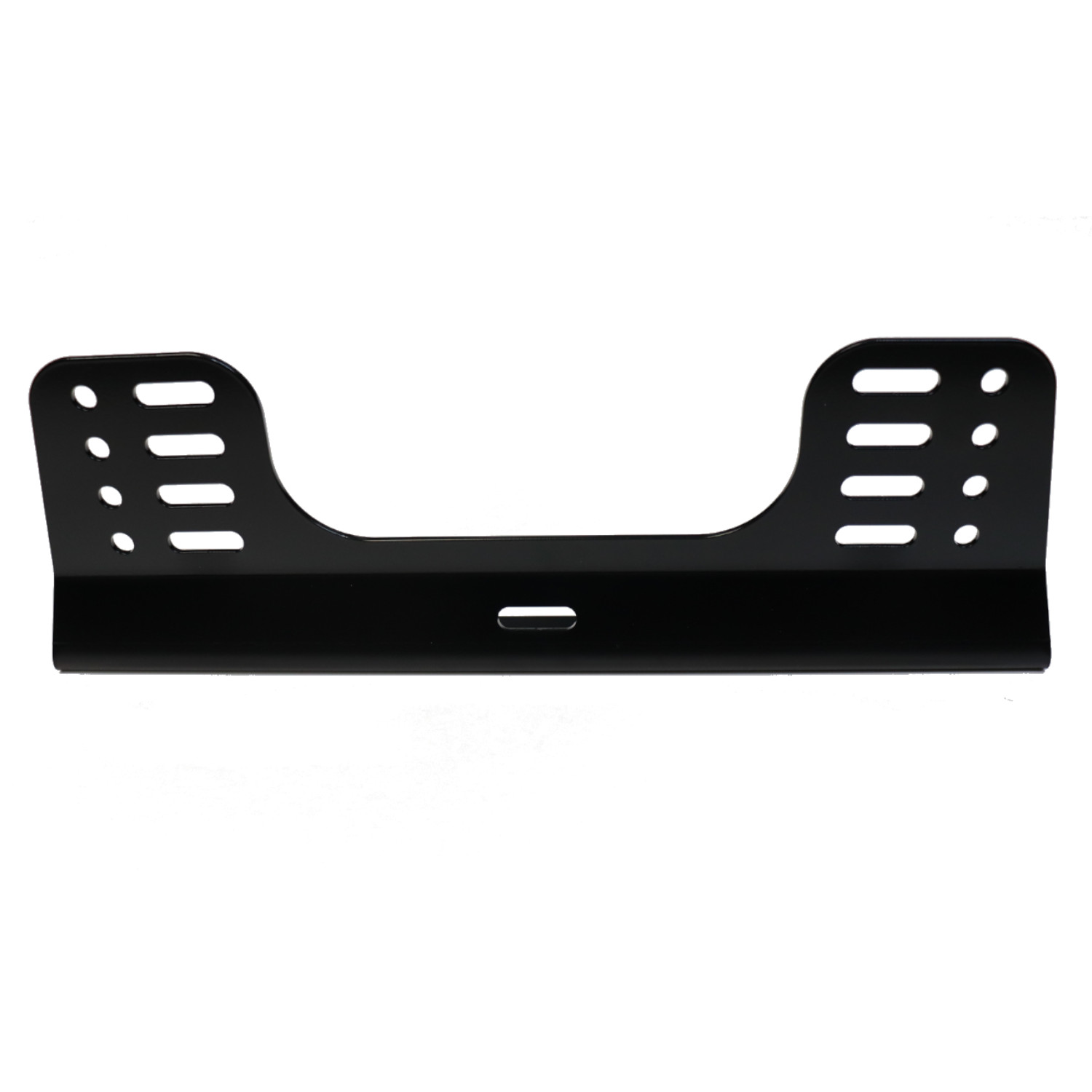
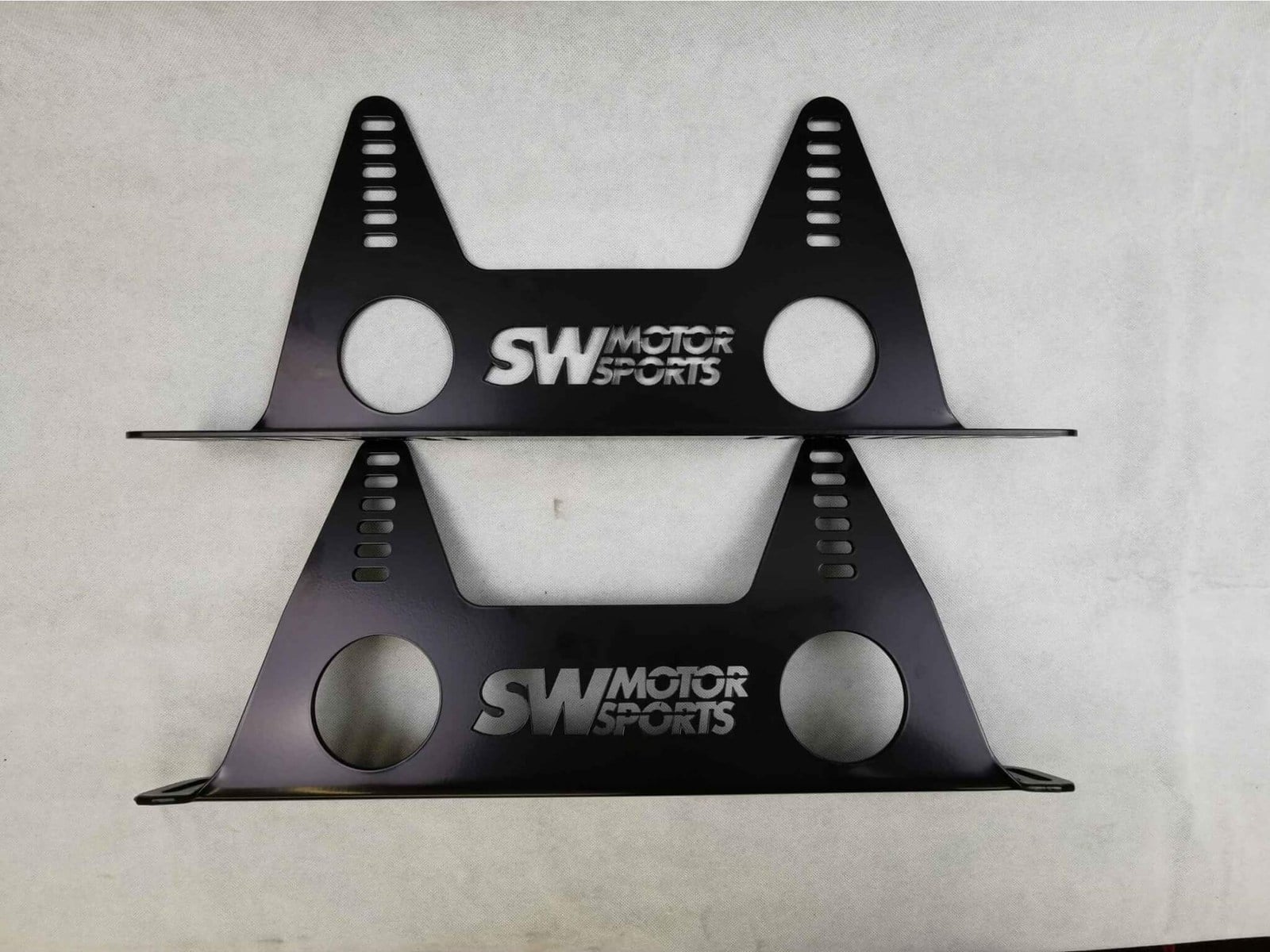
The RTX-7 is a side mount seat. Two bolts a side, four in total, into threaded inserts in the shell. That is the same arrangement Sparco, OMP, Sabelt, Cobra and Corbeau all use, and the trade has settled on 290 mm between the two holes. Our own Sparco long side mount listing says it plainly: it fits most Sparco side mounted seats and also seats from OMP, Sabelt, Motamec, Cobra and Corbeau with a 290 mm side hole spacing. Mirco’s own range chart gives 290 mm for all twelve seats it charts.
So the seat end of the joint is standardised and the rig end is a T slot you can put a bolt anywhere along. He did not need a part making. He needed a pair of brackets and an afternoon.
One thing the drawing does tell you: the two mounting points sit at 55 mm and 80 mm above the base line. They are not level with each other, so the seat carries a built in rake, the two holes in your bracket are not level either, and you cannot turn a bracket over and expect it to line up.
The full range is in seat side mounts. If your rig runs a different profile size, the rail spacing side of the same job is covered in the Sim-Lab P1X fitment guide.

On profile you choose your own seat angle, and it is worth taking the time over it. Somewhere between upright enough to see and reclined enough to be comfortable for two hours is the target, and everybody lands somewhere slightly different.
A few things worth knowing before you tighten anything down.
The shell is identical across the range. What changes is the trim and the stitch, and the shell colour if you want one.
Black is the standard shell. Blue, grey, orange, red, white and yellow are all listed and carry a supplement, and they are the usual reason an order takes a little longer. The whole lot sits in Mirco FIA seats.
| Version | Trim | From, inc VAT | Where it suits |
|---|---|---|---|
| RTX-7 3D | 3D SpaceTech mesh | £418.80 | The one in the photographs. Breathes, so it is the rig pick |
| RTX-7 Velour | Velour | £418.80 | Softer to the hand, wears well at the entry point |
| RTX-7 Velour Black and Red | Velour | £418.80 | Red inserts and stitch |
| RTX-7 Fluorescent Green Stitch | Velour | £418.80 | Green stitch on black |
| RTX-7 3D STI Edition | 3D SpaceTech | £430.80 | Black and blue |
| RTX-7 Vinyl Houndstooth | Houndstooth and vinyl | £520.80 | Period look in a road build |
| RTX-7 Vinyl | Vinyl | £538.80 | Plain, no embroidery |
| Two RTX-7 Velour | Velour | £837.60 | The pair listing, cheaper than two singles |
Prices include VAT and were correct on 3 August 2026. Shell colours other than black and the name embroidery are both supplements on top.
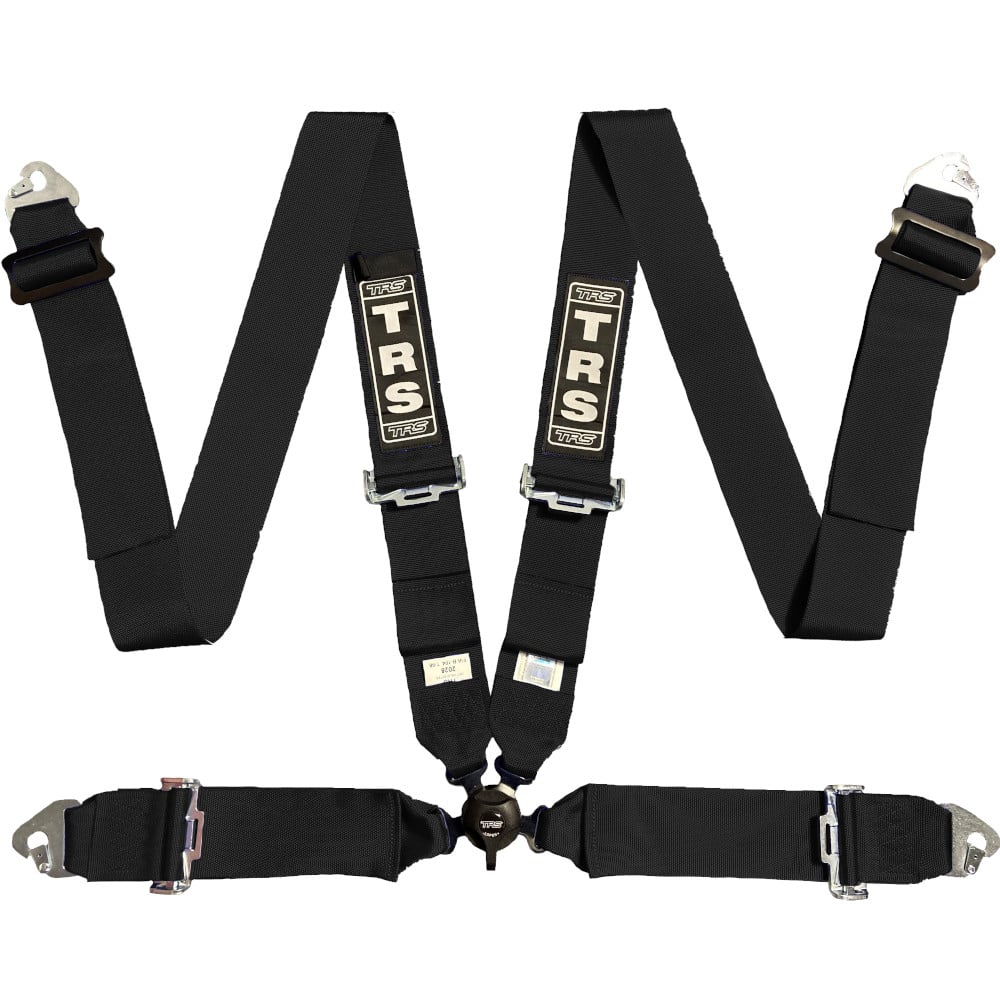
The RTX-7 has five slots, which covers a four, five or six point harness, and the shoulder slots are cut for a HANS device.
Whether you want a harness on a rig at all is a fair question and the answer is not obvious. Plenty of people run a bucket seat with no belts and are happy, because the seat is doing the holding and there is no crash load to plan around. Others find a lap belt on its own stops the small amount of shuffling that builds up over a long stint, and that is enough on its own.
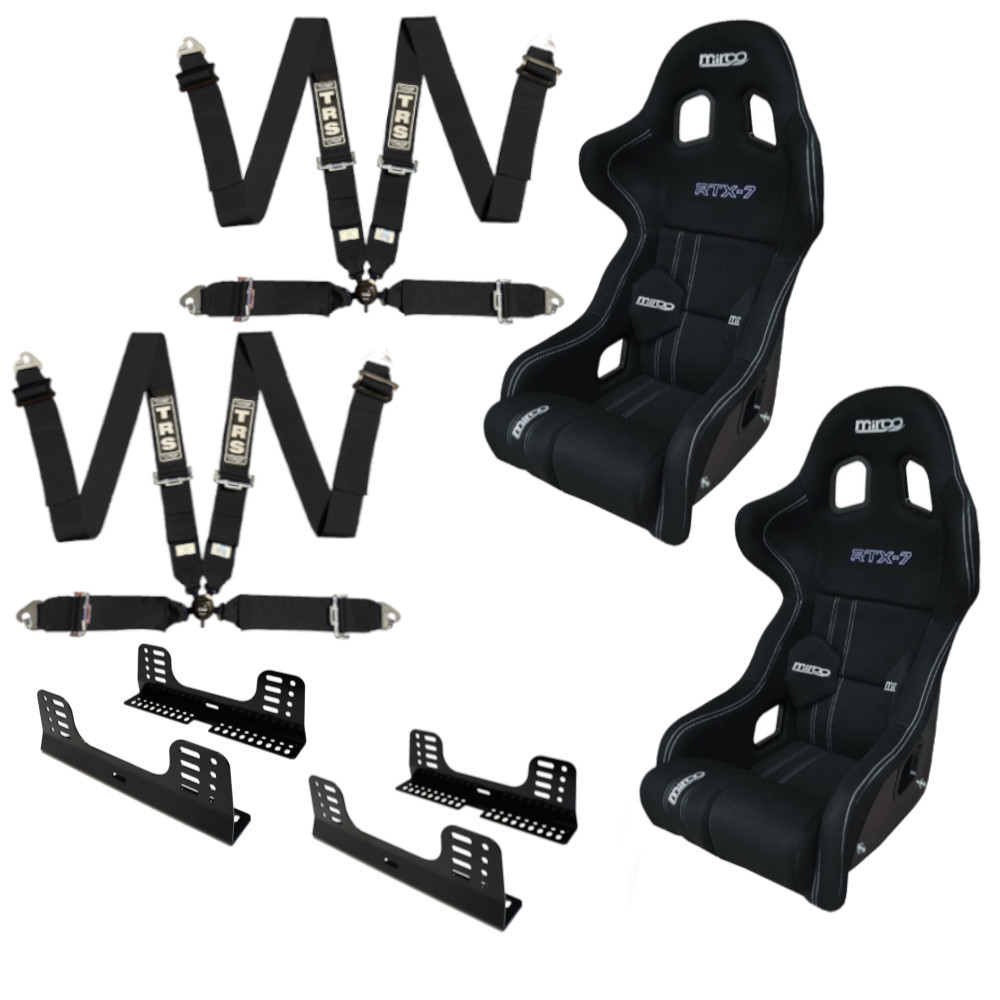
What I would say is buy the seat with the slots instead of trying to add belts later to a seat that has none. The RTX-7 has them whether you use them or not, and the bundle pairs it with a harness and the multi point mounts in one go.
| Item | Figure |
|---|---|
| Approval | FIA 8855-1999, homologation CS.488.22 |
| Shell | Polyester glass laminate, gloss gel coat |
| Weight | 9 to 10 kg. Mirco publishes both figures |
| Driver | Up to 95 kg and 190 cm |
| Harness slots | Five, for 4, 5 or 6 point |
| HANS | Shoulder slots cut for a HANS device |
| Fixing | Side mount, two bolts a side |
| Mount hole heights | 55 mm and 80 mm above the base line |
| Across the shoulders | 600 mm |
| Between the lap slots | 385 mm |
| Across the hip bolsters | 490 mm |
| Base width | 420 mm |
| Base length | 615 mm |
| Backrest height | 645 mm |
| Base to shoulder slots | 620 mm |
| Overall height | 920 mm |
| Cushions | Removable lumbar and leg supports |
| Trims | Velour, 3D SpaceTech, vinyl, houndstooth, jacquard, alcantara imitation |
| Shell colours | Black as standard, plus blue, grey, orange, red, white and yellow |
Dimensions are read from Mirco’s RTX-7 drawing. The approval and the driver limits come from Mirco’s own product page.


If the rig takes a side mounted bucket seat then yes, that is the standard fitment. The variable is the distance between your two rails, because that has to suit both the seat and the bracket you put between them. The rail spacing side of it is covered in the Sim-Lab P1X guide.
Broad across the chest and the RTX-7’s 600 mm is the reason to look at it, because there is room to sit, not a bolster pushing on you. Narrower across the chest and a smaller shell will wrap the shoulders more closely, which some drivers prefer. The hips are the easier end to judge, so start there and let the shoulders decide between the two or three seats that already fit.
Fit it around the largest driver and accept a slightly looser hip for everybody else. A wider shell with the cushions left in works well for that, because the lumbar and leg supports come out for the bigger driver and go back in for the smaller one. It is the usual compromise on a shared rig and it works.
Not for using it. It matters if the seat later goes into a car that gets scrutineered. An 8855-1999 seat carries a not-valid-after date tied to the year of manufacture on its label, and manufacturers can extend it in steps, so a seat bought for a rig now still has paperwork left if it moves into a car.
Yes. Seven shell colours are listed and Mirco quote over 250 trim combinations. If what you want is not in the dropdown, ring us and we will ask.
Between 9 and 10 kg. Mirco publishes both figures so treat it as about that. It is a one person lift but an awkward one, and worth a second pair of hands when you are lining four bolts up blind.
The lumbar and leg supports are removable. It is the quickest way to find another bit of room without changing seat, and worth trying before you decide a seat is too tight.
The shell and every dimension are the same, and so is the price. The 3D is an open mesh that breathes, the velour is a closer, softer finish that takes the wear better on the bolster edges you slide across. On a rig indoors I would take the 3D.
For a rig, the 3D in black with black trim, a pair of multi point M8 side mounts, and nothing else until you have run it. The mesh is right for a seat you sit in for long sessions indoors, black hides everything, and the multi hole brackets mean you can move the seat after the first stint instead of living with wherever you guessed.
If the rig is somewhere people see it, the velour looks better and costs the same. If you are building two seats, the pair listing comes in under two singles.
The thing worth taking from this one is how much a rig lets you get exactly right. You pick the seat, you put it precisely where you want it, and you can move it again next week if the first guess was not quite there. Spend the time on that and it pays you back every session.
Which is the argument for coming and sitting in a few. He came in for one seat and left having ordered a different one, and that only happens in a room with the seats in it. If you are working out a rig build and want a hand narrowing it down, ask for me.

A bucket seat on direct fit side mounts sits as low as a Clio Mk4 will physically allow. Here are the two ways a seat mounts in one, and what both builds cost per side.

The five reclining sport seats we rate for the Land Rover Defender, with three direct-fit frame routes from Cobra, Corbeau and Endurance Motorsport covering all years.
What it takes to fit bottom mount Recaros from an Evo 5 into a Honda Integra DC2, why the two lowest DC2 mounts are closed to you, and the one measurement to take first.
Which Motordrive range, which size and which shell, answered with the seats on our floor and what they cost. Club Pro from £474.00, Race Classic to £954.00, plus the truth about how long an FIA 8855-1999 seat is actually good for.
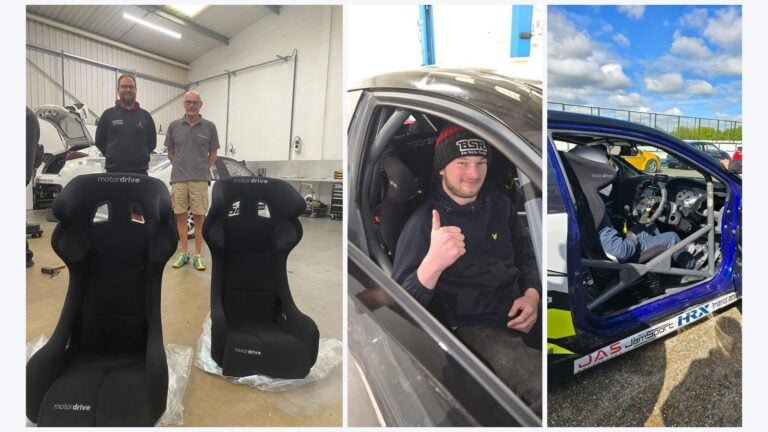
Motordrive sent over photos of Ben Sharpe Racing’s Honda Civics on Motordrive seats. Which model the team chose, why it suits a caged race car, and the full range you can come and sit in at our Nottingham showroom.
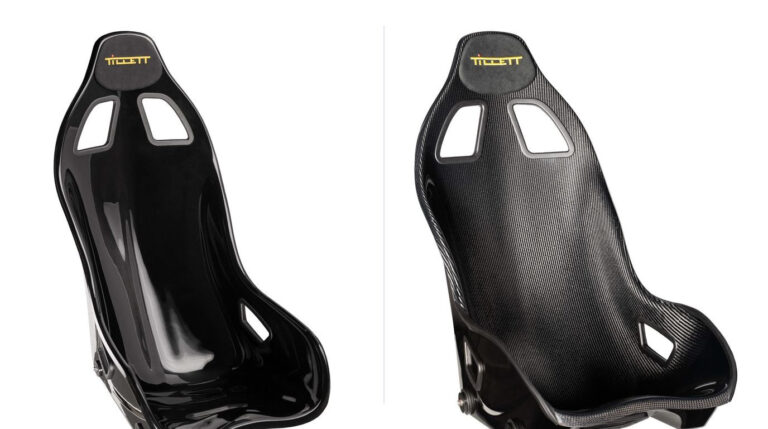
How much movement is normal in a bucket seat, and what fibreglass, Kevlar and carbon actually change. Manufacturer weights for the same shell in both laminates, why an FIA seat is the heavier one, and the three different things the word carbon means on a seat listing.
On all orders above £100
Try before you buy
Aftership Tracking Updates