“Sparco Sprint L FIA Motorsport Bucket Seat” has been added to your basket. View basket
You've unlocked two free gifts
All two are in your basket at no charge.
Gift box

GSM Performance Customer Car Colouring Book Edition 1
How A Roll Cage Changes Your Seat And Frame Options
What changes when the cage goes in
Most people ring after the cage quote, not before. The cage is chosen, sometimes already ordered, and then the question comes up: do the seats change? The short answer is yes on most builds, and knowing why saves a couple of phone calls.
Door bars change the access line, so a reclining seat with a wide bolster can foul the bar or wedge you in on entry. Multipoint harnesses route the shoulder straps through a slot in the seat back, and reclining seats do not have that slot. Work those two things out and the frame choice mostly follows.
- 38 Custom Cages bolt-in kits across 16 makes, no welding required, from £1,020 to £2,793 inc VAT
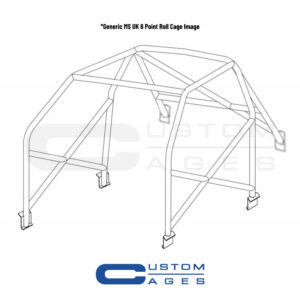
- Door bars sit at roughly elbow height on a multipoint cage, which rules out wide-shouldered reclining seats on most cars
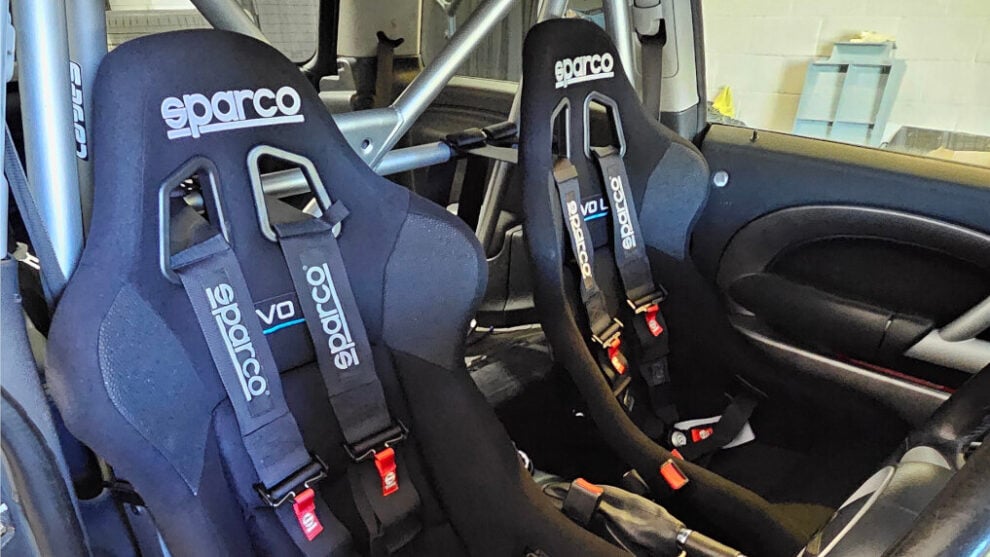
- Multipoint harnesses need a slot in the seat back for the shoulder straps. FIA bucket seats have this slot; most reclining sport seats do not
- Side mount brackets keep the seat lower than under-seat subframes, giving the driver more clearance to the main hoop
- Cameron can spec seats and frames around any bolt-in kit before you order
Two things the cage changes
☰
Door bar clearance
A multipoint cage runs a bar across each door opening. On most cars it sits at roughly elbow height. Wide, padded bolsters on a reclining sport seat often foul the bar on entry, and the fixed headrest can clip the main hoop on shorter drivers. The cage sets the geometry; the seat has to fit around it.
▢
The harness slot
A four or five-point harness routes the two shoulder straps through a slot in the seat back. FIA bucket seats are designed with that slot. Reclining sport seats are not. You can route harness straps over the top of a reclining seat back in some builds, but that changes the shoulder angle and most builders find it less adjustable and less comfortable.
Both of these are practical constraints, not regulations. There is no rule that says you must fit an FIA seat with a bolt-in cage. But the door bar clears only certain seat widths, and the harness needs somewhere to anchor behind the driver, so most builds land on the same answer: a bucket seat with a harness slot. An FIA-rated one if the competition you are entering requires it.
What seat to fit
An FIA bucket seat is narrower than a reclining sport seat of the same shell width. The side bolsters are designed around a driver in a race suit, which makes it easier to clear door bars. The fixed back keeps the harness geometry consistent, and the harness slot means the shoulder straps sit where they should, not floating above the shoulder.
For track days and club competition, FIA-rated means the seat has been tested to a specification. On a bolt-in cage build not entered in formal competition, the rating is optional. What is not optional is the physical fit around the cage bars and the harness slot, and those two things are what Garreth checks on every cage-and-seat order before anything goes on the system.
FIA homologation datesFIA seat homologation typically runs for five years from the manufacture date stamped inside the shell. For club events the scrutineer usually checks the seat is undamaged rather than reading the label. For Motorsport UK national events the label date is checked. Cameron can confirm whether a specific seat still carries valid homologation before you order.
Frames and bases: what works with a cage
Under-seat subframes that bolt to the standard floor points work fine on most cars without a cage. Once the cage is in, height becomes the issue. A subframe adds 30 to 60mm between the floor and the seat shell. On some cars that is fine. On others the driver’s helmet is now close to the main hoop, which is not where you want to end up.
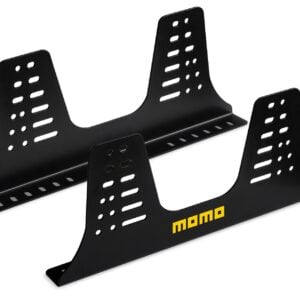
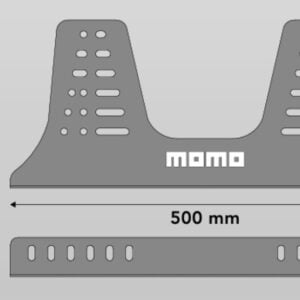
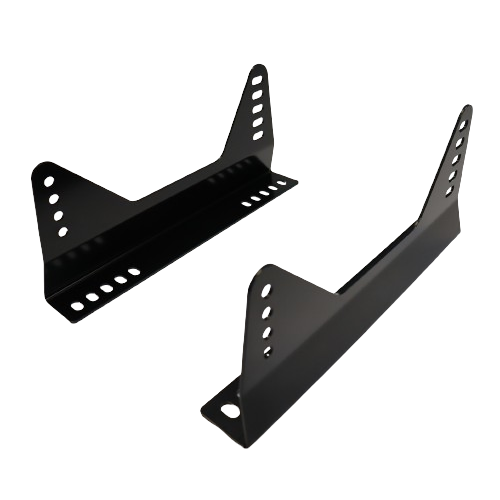
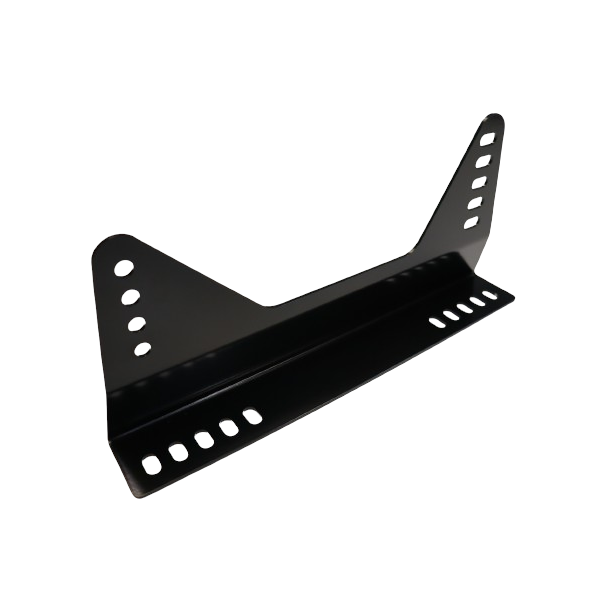
Side mount brackets fix the seat directly to a rail that sits on the floor. No stack of subframe and runner, just the bracket and the seat shell. They get the seat as close to the floor as the car allows. Car-specific frames from M2, Recaro and OMP work the same way for the cars they support, and most are lower-profile than a universal under-seat setup.
The right frame depends on the car and the cage. On some builds a specific manufacturer’s subframe puts the seat at exactly the right height. On others a universal side mount is the only thing that fits cleanly around the cage legs. If you need help narrowing it down before ordering, drop us an email or click to open a chat and we will help you confirm it.
◫
Universal side mounts
Steel brackets that bolt the seat shell directly to a pair of side rails on the floor. No runners, no under-seat stack. Used where car-specific frames are unavailable or where the builder needs the seat as low as the cage allows. MOMO and Endurance Motorsport both make these in a range of widths.
⚙
Car-specific subframes
Manufacturer-specific frames from M2, Recaro, OMP and others bolt to existing floor fixings and replace the standard runner. Height varies by product. If a frame exists for your car, it is usually the right starting point. Confirm the combined height leaves helmet clearance once the cage is in.
Custom Cages bolt-in kits
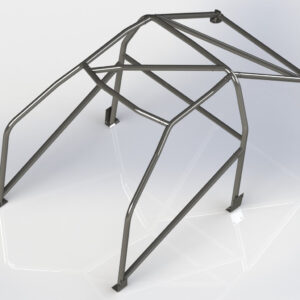
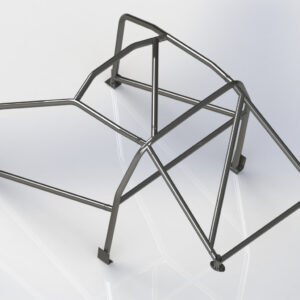
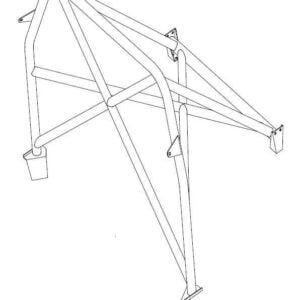
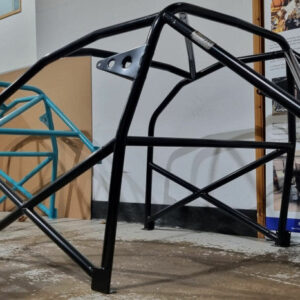
Custom Cages make 38 bolt-in kits across 16 makes. Bolt-in means the cage mounts to existing body points without welding, so the build does not need a fabricator for the cage itself. Cameron builds these alongside seat and harness packages at the showroom regularly. The kits run from £1,020 to £2,793 inc VAT.
Bucket seats for cage builds
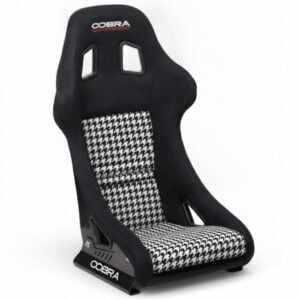
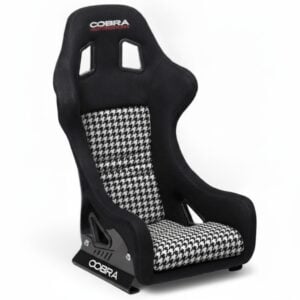
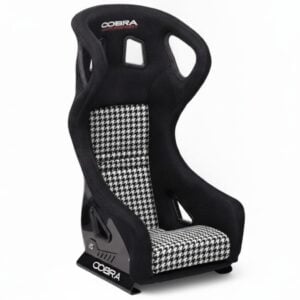
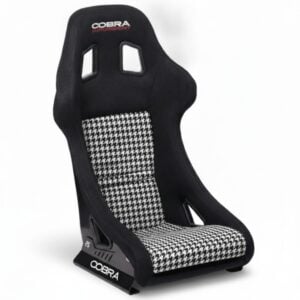
Six seats that work well alongside a cage. The Sparco Sprint is the most common starting point for track day and club use. The Cobra Imola, Suzuka and Evolution are the ones Garreth reaches for when the car is built for a specific championship and the seat will see regular hard use.
-
From £252.00 Incl. VATFrom £210.00 Excl. VATPayPal CreditSelect options This product has multiple variants. The options may be chosen on the product page
Side mounts and subframes
Universal side mounts and a couple of the car-specific frames that come up most often on cage builds.
-
From £34.80 Incl. VATFrom £29.00 Excl. VATPayPal CreditSelect options This product has multiple variants. The options may be chosen on the product page
💬
Not sure what you needSend us the cage and the car
Cage choice, seat choice, and frame choice interact with each other. Send Cameron the make, model and the cage you are looking at, and he will tell you which seats clear the door bars, which frame keeps the helmet away from the hoop, and what the package comes to. Ring 0115 9893488 or email us and we will check it before anything gets ordered.
Common questions on cages and seats
Can I keep my reclining sport seat with a bolt-in cage?
It depends on the cage. A half cage or a rear half kit with no door bars leaves the seat choice mostly open. A full multipoint cage with door bars is where the problem shows up. Cameron checks the bar height against the seat bolster width and whether you are planning a multipoint harness, which needs a slot in the seat back that most reclining sport seats do not have.
Does the seat need to be FIA-rated with a bolt-in cage?
Not on its own. The cage type and the seat rating are separate questions. If you are running at a Motorsport UK event, check the supplementary regulations for your class because some specify a seat homologation year. For track days and casual club use the rating is optional. The physical fit around the cage bars is what matters first.
How much helmet clearance should I aim for?
The driver’s helmet should clear the main hoop with room to spare when belted in and sitting normally. Most builders aim for at least 50mm. Cameron can talk through which frame combinations leave enough room on your specific car if that measurement is borderline before you order.
Are side mounts stronger than car-specific subframes?
Fixing strength depends on the brackets and the floor fixings, not the mounting type. A well-made universal side mount on proper floor fixings is as secure as any manufacturer subframe. What side mounts give you is lower seat height and more flexibility in positioning, which is usually why they are chosen on a caged car.
Can I run the standard seat runners with a cage?
Mechanically yes, but height is still the issue. Standard runners sit above the floor and add to the combined seat height. On most caged builds they come out and the seat goes in through a subframe that runs directly to the floor fixings, keeping the seat as low as possible.
Where to go from here
The bolt-in vs weld-in guide covers which cage type suits which build. Mounting harnesses to a cage covers anchor points, bar placement and slot position. Multipoint or historic explains which kit type suits which competition category.
For the seats and frames question on your specific car, ring 0115 9893488 or email us with the make, model and the cage you have in mind, and Garreth or Cameron will work through the package with you.
Need a personal recommendation?
We're here to ensure you pick the right seat.
Contact us today.