Call Garreth, Cameron & CallyAI: 0115 9893488

FREE UK shipping on orders over £100.00 & FREE gifts on checkout

Useful Links
Your Account

Talk to us

Garreth, Cameron & CallyAI · Mon to Fri
Call 0115 989 3488Free advice on your build
Thanks, that’s with us. We reply the same working day.
That didn’t send. Please give us a call instead.

Useful Links

Quick Access

Want to chat?

Call Garreth, Cameron, CallyAI
Today On: 0115 9893488
Click Here For Our Contact Form


Mounting Harnesses To A Roll Cage: The Points That Matter

Cages and harnesses, how they connect

Three mounting zones, and one question worth settling before the cage goes to Custom Cages. The shoulder straps need a transverse tube across the main hoop. The lap belts need floor or sill mounts. The crotch strap needs its own fixing point further forward on the tunnel or floor. Get those positions confirmed at the design stage and the harness routes cleanly; retrofit work on a finished cage is slow and not cheap.

Below is what each zone needs, what Custom Cages include in their kits by default, and the one specification worth checking before you commit to an order. The harnesses are at the bottom of the page.

  • A roll cage needs three harness mounting zones: a harness bar for the shoulders, floor or sill mounts for the lap belts, and a crotch strap point on the tunnel
  • The harness bar is a transverse tube across the main hoop or backstays; Custom Cages spec it at 38mm x 2.5mm or 40mm x 2.0mm CDS steel
  • Shoulder straps loop around the bar or bolt through threaded inserts welded into the tube
  • The shoulder strap angle from bar to shoulder should be close to horizontal; a steep downward run changes how the harness loads
  • Lap belt floor mounts take M12 grade 8.8 hardware as a minimum
A race-prepared hatchback with its driver door open in a motorsport paddock, showing the silver roll cage interior and red harness shoulder straps routed through the bucket seat
The shoulder straps route over the seat bolsters and back to the harness bar across the main hoop. The lap belts come up from the floor either side. All three zones need to line up before the harness sits correctly.

The three mounting zones

Shoulder straps

The two shoulder straps route over the seat shoulder bolsters and back to the harness bar, a transverse tube welded across the main hoop or the backstays. The bar is the most critical part of the cage-to-harness interface: it needs to be in the right position before the cage leaves the fabricator.

Lap belts

The two lap belts come up from the floor or sill, one each side. The mounts are typically fabricated plates welded to the floor or sill structure as part of the cage build, bolted with M12 grade 8.8 hardware as a minimum. Position and spread affect how the lap belt sits across the hip bones.

Crotch strap

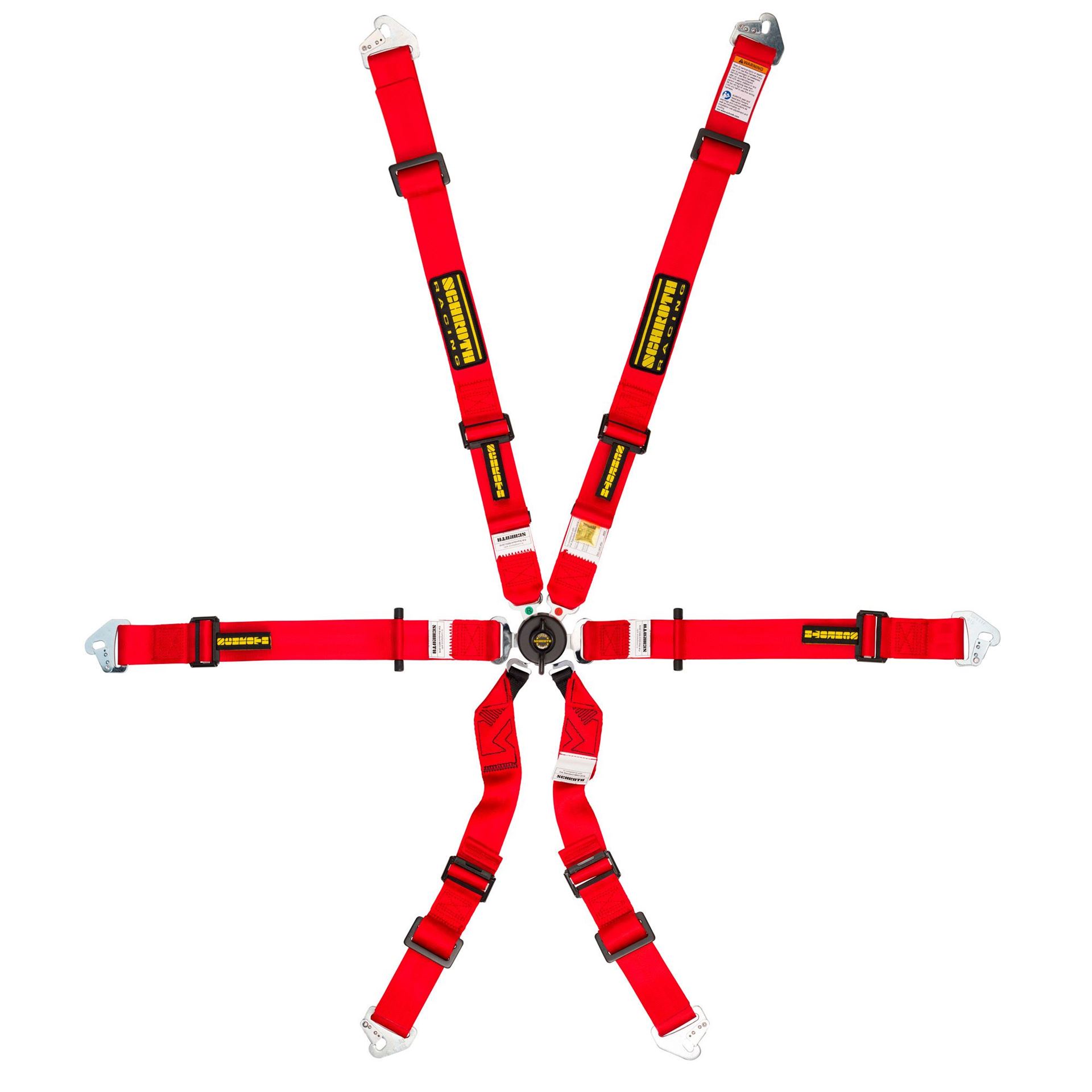
The central crotch or sub strap runs down between the legs and fixes to a point on the tunnel or floor. On a six-point harness there are two of these; on a five-point, one. The fixing point is straightforward but needs to be included in the cage build rather than bolted to the OEM floor later.

All three need to be thought about at the cage design stage. The harness bar is the one most commonly missed on a first build, because it is not part of the main cage structure and can read as optional when it is not.

The harness bar

The harness bar is a single transverse tube bridging the main hoop or the two backstays, positioned to accept the shoulder strap attachment. It is a separate item from the main cage structure and is often specified as an add-on when ordering, not a default part of every kit.

The Motorsport UK NCR sets a minimum tube specification for a harness bar: 38mm x 2.5mm wall, or 40mm x 2.0mm wall, in cold drawn seamless carbon steel with a minimum tensile strength of 350 N/mm2. That is the same grade of steel used in the cage itself. Custom Cages build to this specification when a harness bar is included or ordered as an addition.

DimensionMinimum specification
Tube outer diameter / wall38mm x 2.5mm, or 40mm x 2.0mm
MaterialCold drawn seamless carbon steel
Tensile strength350 N/mm2 minimum
Wall typeCircular section only

Harness bar minimum specification from the Motorsport UK NCR 2026, Chapter 7 Appendix 3 Article 19. Custom Cages build to this standard.

The shoulder strap connects to the bar in one of two ways. A loop-around attachment routes the strap end around the tube and back through its own buckle. A threaded-insert attachment uses a steel insert welded into the tube to accept a standard bolt through the strap end fitting. Both methods are accepted in the regulations. The harness manufacturer specifies which attachment type their product is designed for, so the strap end on your harness should match what the bar offers.

Shoulder strap angle

The harness bar sits behind the seat. The shoulder straps run from the bar over the seat’s shoulder bolsters to the buckle at chest height. The angle this creates matters: a bar positioned close to shoulder height produces a near-horizontal strap run, which is the geometry the harness is designed around. If the bar is significantly lower than the shoulder bolsters, the straps angle steeply upward from the bar and then fold over the seat, which changes how the belt loads and can cause the strap to slide out of position over a long session.

The practical guide is that the harness bar should be at roughly seat-shoulder height or a little below. Cameron can confirm the bar position in a given Custom Cages kit before the order goes in, if you ring 0115 9893488 with the kit reference.

Bar height and seat height work togetherThe harness bar position makes most sense once the seat and its sub-frame are in the calculation. If you are speccing a cage and harness together, give Cameron both the cage enquiry and the seat you plan to run so the bar goes in at the right height for that combination.

Lap belts and the crotch strap

Lap belt mounting points are typically fabricated plates welded to the sill or floor structure as part of the cage build. The minimum bolt hardware for lap belt floor mounts is M12 grade 8.8, or 7/16 inch UNF for harnesses with FIA-specified fittings. The exact bolt spec is in the harness manufacturer’s fitting instructions, which ship with every harness in the range.

The spread between the two lap belt mounts affects how the belt sits across the hips. Too narrow and the lap belt can migrate up onto the soft tissue of the abdomen; too wide and it pulls at an angle that is hard on the hip bolsters of the seat. Most cage builders position the mounts relative to the seat sub-frame, which is another reason to have the seat in the conversation before the cage goes in.

Crotch and sub-strap points on the tunnel or floor are simpler: a threaded boss or a plate with the right bolt pattern, fabricated to the floor and welded during the cage build. On a six-point harness both crotch straps need their own fixing point. On a five-point, the single crotch strap needs one. Both need to be in the cage build, not bolted through the OEM floor mat later.

Is the harness bar included in the kit?

Not always. Some Custom Cages kits include the harness bar as standard; others list it as an option. The kit title and product description will say if the bar is in the kit. If it is listed as an option or not mentioned, ring Cameron on 0115 9893488 before ordering, because adding the bar at the fabrication stage costs a fraction of what a retrofit costs once the cage is in the car.

The same applies to the lap belt and crotch strap mounts. A cage built for sprint use with the original belts retained might not have these, so it is worth confirming what is included if you are planning to run a harness from the outset.

Order with the cage

A harness bar added at the fabrication stage is a simple addition: a single tube cut and welded in. The cost is in the tube and a small amount of fabrication time. Ask for it when the kit goes on order, not after the cage arrives.

Retrofit is possible but slower

Adding a harness bar to a cage already in the car means cutting access, welding in the bar, and in many cases taking the interior out a second time. It can be done, but it is a full additional job. If you are unsure at order stage, specify the bar and leave it out of use until the harness is ready to go in.

What the FIA harness range costs

All prices include VAT, taken from the live site in September 2026. Six representative models from the FIA motorsport range, covering budget to premium and three manufacturers.

FIA motorsport harness prices inc VAT, SportSeats4u range

QMS 6pt HANS FIA187.0 £
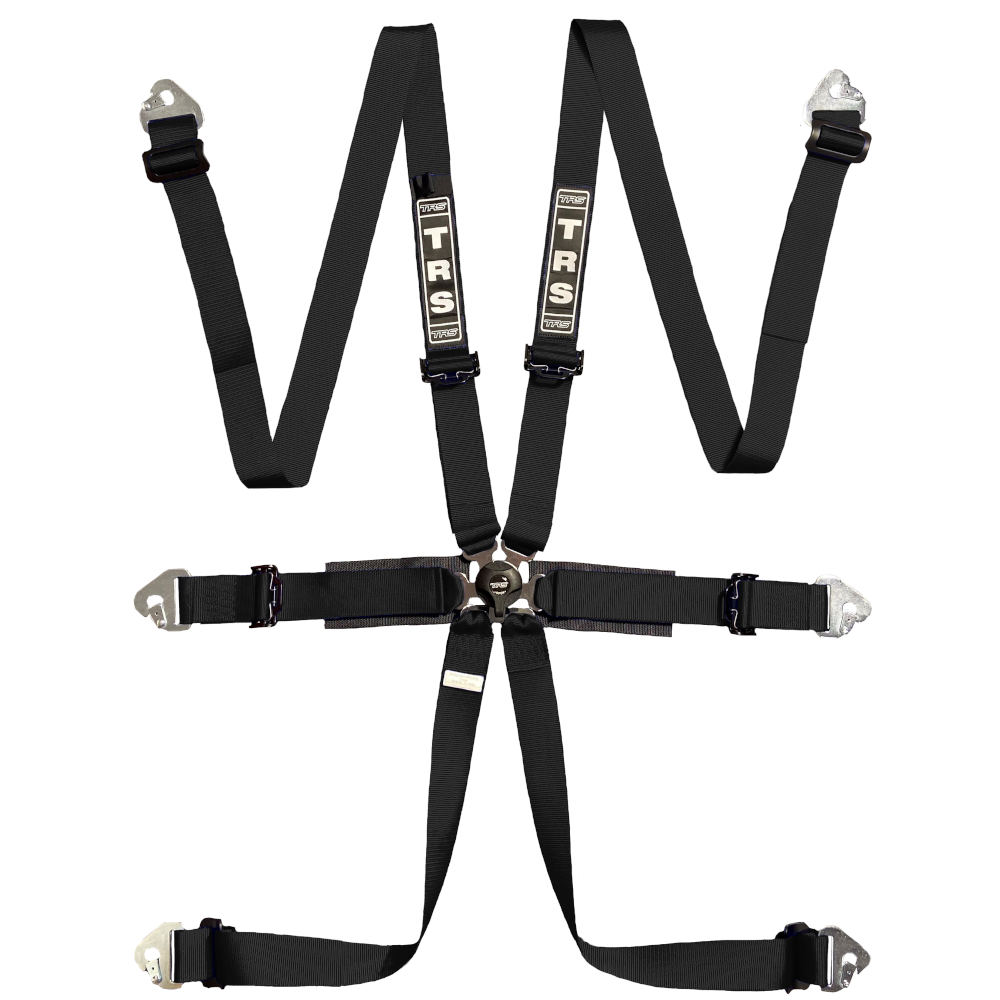
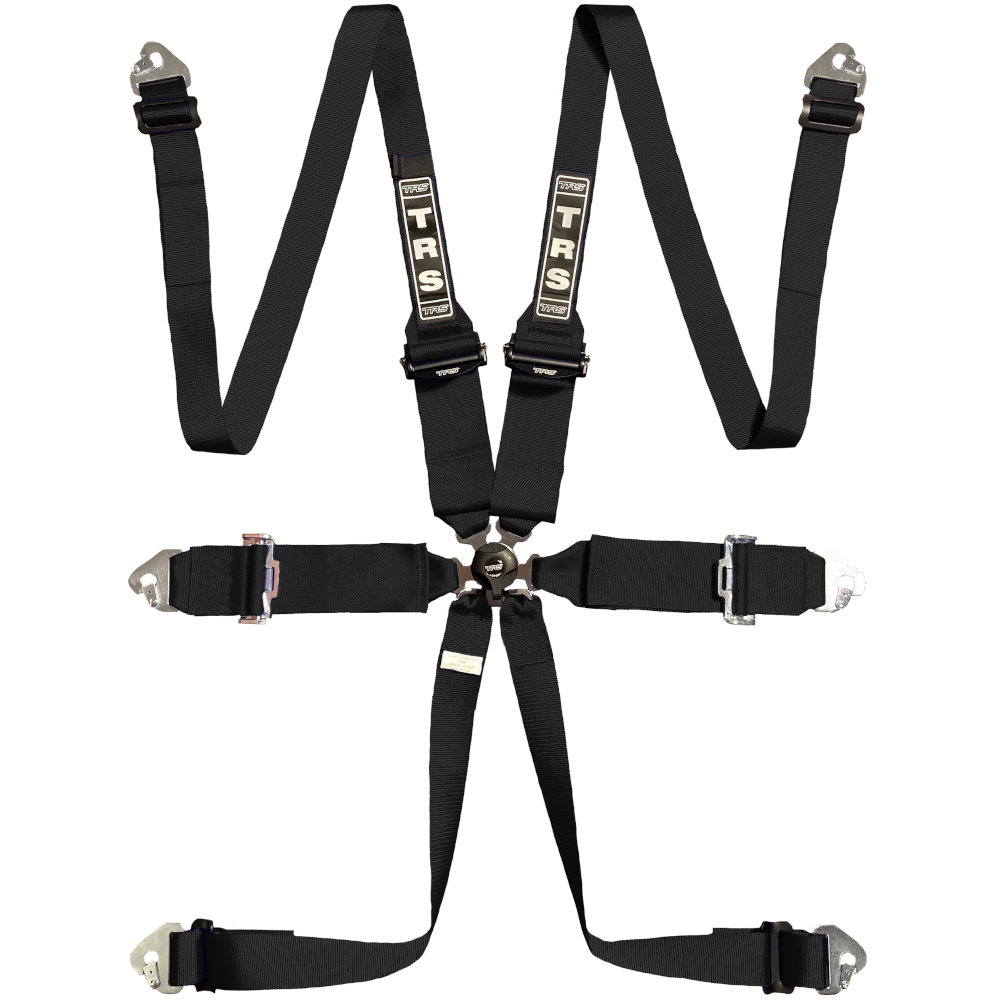
TRS Pro International222.0 £
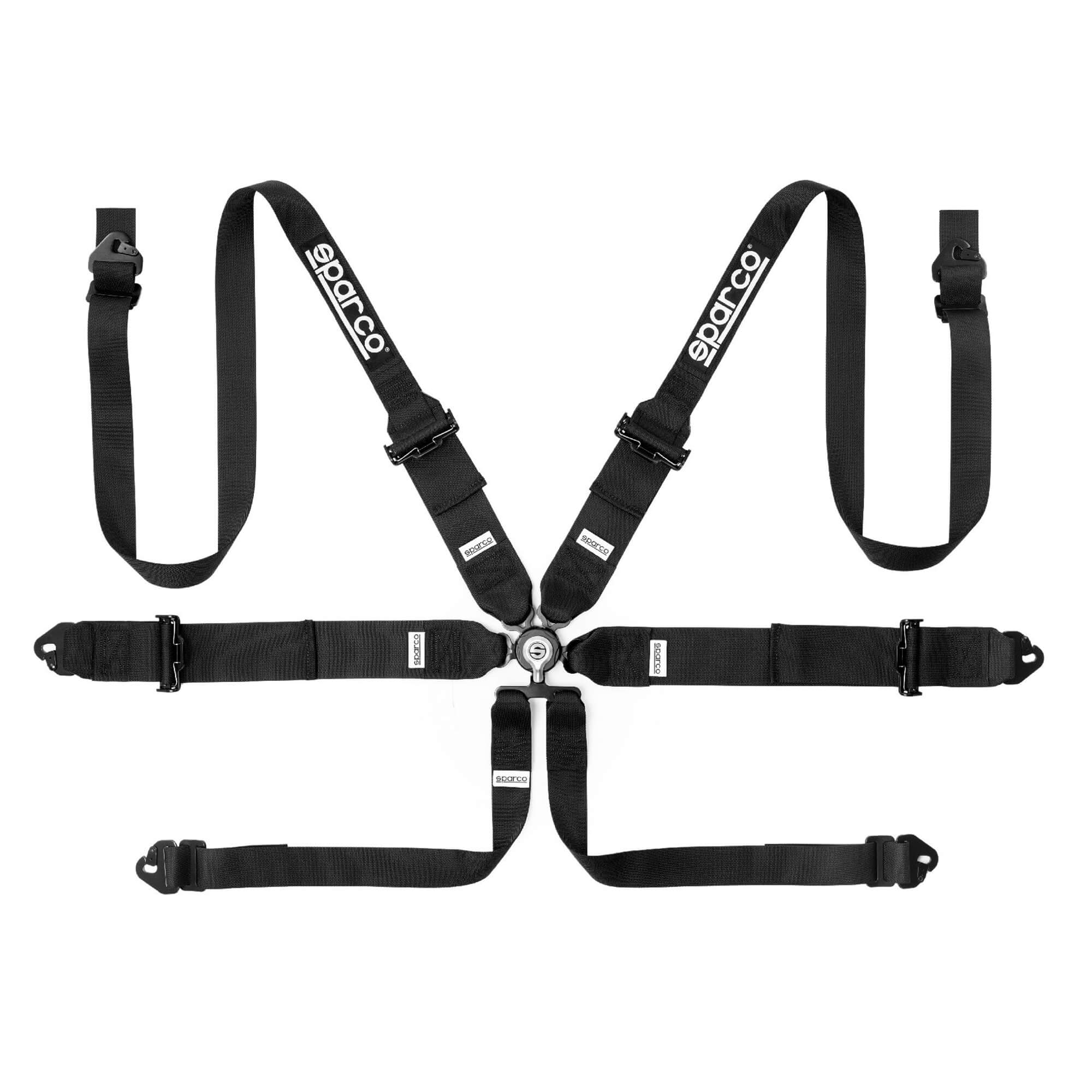
Sparco Pro Racer 6pt275.0 £
TRS Magnum Superlite306.0 £
Schroth Clubman 2x2363.0 £
Schroth Profi 2x2430.0 £
0100200300400

Six FIA-rated 6-point harnesses from the range, priced including VAT as at September 2026. TRS and QMS are at the budget end; Schroth covers the premium section. All are HANS/FHR-compatible. The full FIA motorsport range on the site runs from under £200 to over £600 per harness.

FIA motorsport harnesses from the range

Six from the FIA motorsport harness range, covering QMS, TRS, Sparco and Schroth. All are 6-point designs with HANS/FHR device compatibility. The full harness range on SportSeats4u runs to over 340 products including road harnesses, quick-fit designs for specific cars, and pairs for the co-driver seat.

💬
Not sure which harness works with your cage setupGive Cameron the cage kit reference and the harness you are looking at

The attachment type on the strap end, the bar diameter in the cage, and the bar height all need to be compatible. If you ring 0115 9893488 with the cage reference and the harness you have in mind, Cameron can confirm whether the two work together or whether a different strap end is needed. Garreth can step in on anything that involves a more involved build question.

Common questions

Not all of them. Some kits include the harness bar as standard; others list it as an option. The product description will say. If you are planning to run a harness and the listing does not mention the bar, ring Cameron on 0115 9893488 before ordering so it goes in at the fabrication stage.

The harness needs to match the bar. The strap end attachment type needs to suit the bar in the cage, whether that is loop-around or bolt-through with a threaded insert. The bar diameter also sets which loop-around strap ends will fit. Cameron can check the compatibility if you give him the cage kit reference and the harness.

The Motorsport UK NCR specifies a minimum of 38mm x 2.5mm wall or 40mm x 2.0mm wall in cold drawn seamless carbon steel with a minimum tensile strength of 350 N/mm2. Custom Cages build to this specification. If you are checking a cage from another manufacturer, those are the figures to look for.

The strap should run close to horizontal from the bar to the shoulder bolster. If the bar is much lower than the top of the seat back, the strap angles steeply upward before folding over the seat. Getting the bar height confirmed before fabrication is easier than adjusting it afterwards.

M12 grade 8.8 is the minimum for lap belt floor mounts. For harnesses with FIA-specified fittings, the harness manufacturer’s fitting instructions take precedence; they ship with every harness in the range.

That depends entirely on the series or club rules you are running under. Many championships require a cage before a harness can be used; some do not. Read your championship or club regulations, or ring Cameron on 0115 9893488 and he will point you to the right answer for the type of event you are running.

If the cage steel question is still open, the T45 vs CDS cage steel guide covers what each material is, what the regulations actually require, and what the range currently costs in each.

On fitting type, the bolt-in vs weld-in guide goes through what bolt-in fitting involves, which makes have the option, and what it costs. If you are working out whether your car needs a multipoint or a historic design, the multipoint vs historic guide settles that.

The full Custom Cages range is worth browsing if none of the make guides above cover your car yet. Cameron is on 0115 9893488 with the make, model and year and can pull the specific kit reference and confirm whether the harness bar is in the kit.

Need a personal recommendation?

We're here to ensure you pick the right seat. Contact us today.
Our showroom virtual walk through!
Have a walk around our showroom before you even buy your new seats. 
Our hands on experience, is what allows us to bring you our recommendations.
Free UK Shipping

On all orders above £100

In-Store Shopping

Try before you buy

Easy Delivery Tracking

Aftership Tracking Updates