Can You Pass Your IVA Test Using Just a Lap Belt? Or Do You Need a Full Harness?
Kit car and IVA belt guide
Kit car and one-off builders ask us this more than almost anything else: will the car get through its IVA test with lap belts, or does it need three point belts or a harness? It is a fair question, because the belts are one of the things the test looks at closely, and a lap belt is the cheapest and simplest thing to fit.
We are a seat and harness shop, not the testing body, so we cannot tell you what will pass. The rules are in DVSA's current IVA inspection manual, and the test station is the place to confirm them for your car. What we can do is explain the belt types, what a lap belt does and does not do, and how to choose and fit belts so you go to the test with the right kit. Garreth's short answer: do not plan a build around a lap belt in the front.
- IVA is DVSA's inspection for vehicles without full type approval, such as kit cars and one-off builds
- The belt requirements are in DVSA's current IVA inspection manual; your test station confirms them
- A lap belt gives no upper body restraint, so we do not recommend one for a front seat
- The usual choices for front seats are a three point belt or a harness with shoulder straps
- Check every belt carries a readable approval label
- Anchorages, strap angles and buckles matter as much as the belt itself
What is on this page
What the IVA test is
Individual Vehicle Approval, IVA, is DVSA’s inspection scheme for vehicles that do not have full type approval: kit cars, heavily modified cars, one-off builds and some imports. Passing it is how a vehicle like that is approved for registration and road use.
Seat belts are one of the areas the test covers. In broad terms the examiner will look at what type of belt is fitted to each seat, whether it carries an approval mark, how it is anchored to the car and whether it works as it should. The detailed requirements, including which belt types are accepted for which seat positions and how anchorages must be positioned, are set out in DVSA’s IVA inspection manual, which is updated from time to time. Read the current version for your vehicle category, and if anything is unclear, ask the test station before you build it in.
The three kinds of belt
Lap belt (two point). A single strap across the hips, anchored either side of the seat. It holds the pelvis but does nothing for the upper body, so in a frontal impact the head and chest are free to move forward. Lap belts are found on some rear and centre seats and on side facing seats in older vehicles.
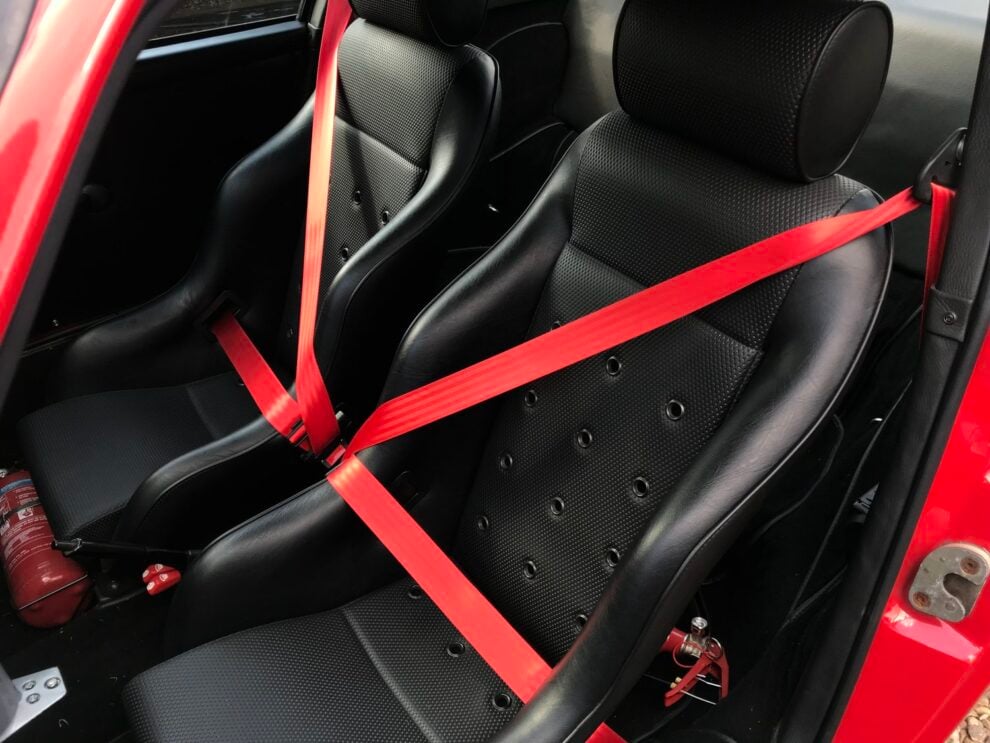
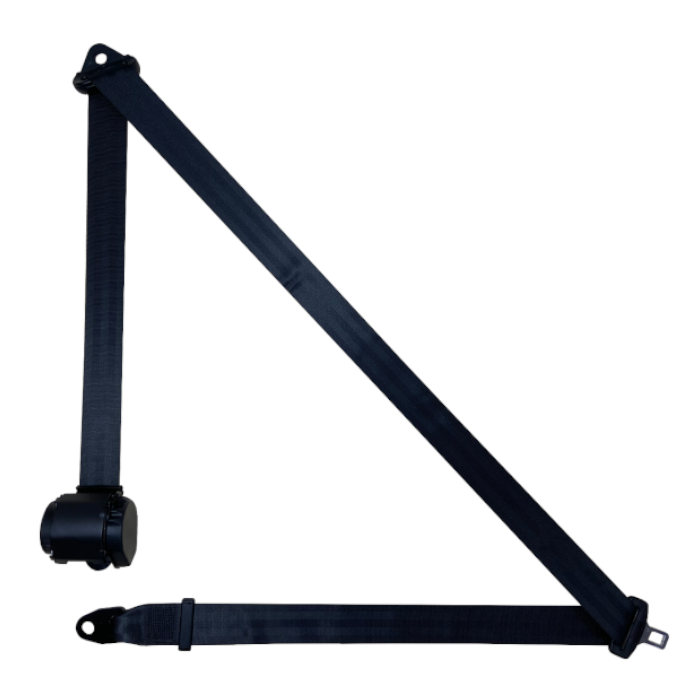
Three point belt. The lap and diagonal belt you have in most road cars, with a lap strap and one shoulder strap across the chest. It can be static, with a fixed length, or inertia reel, where a retractor takes up the slack and locks under sudden load. An inertia reel belt is easier to live with because it adjusts itself to the occupant.
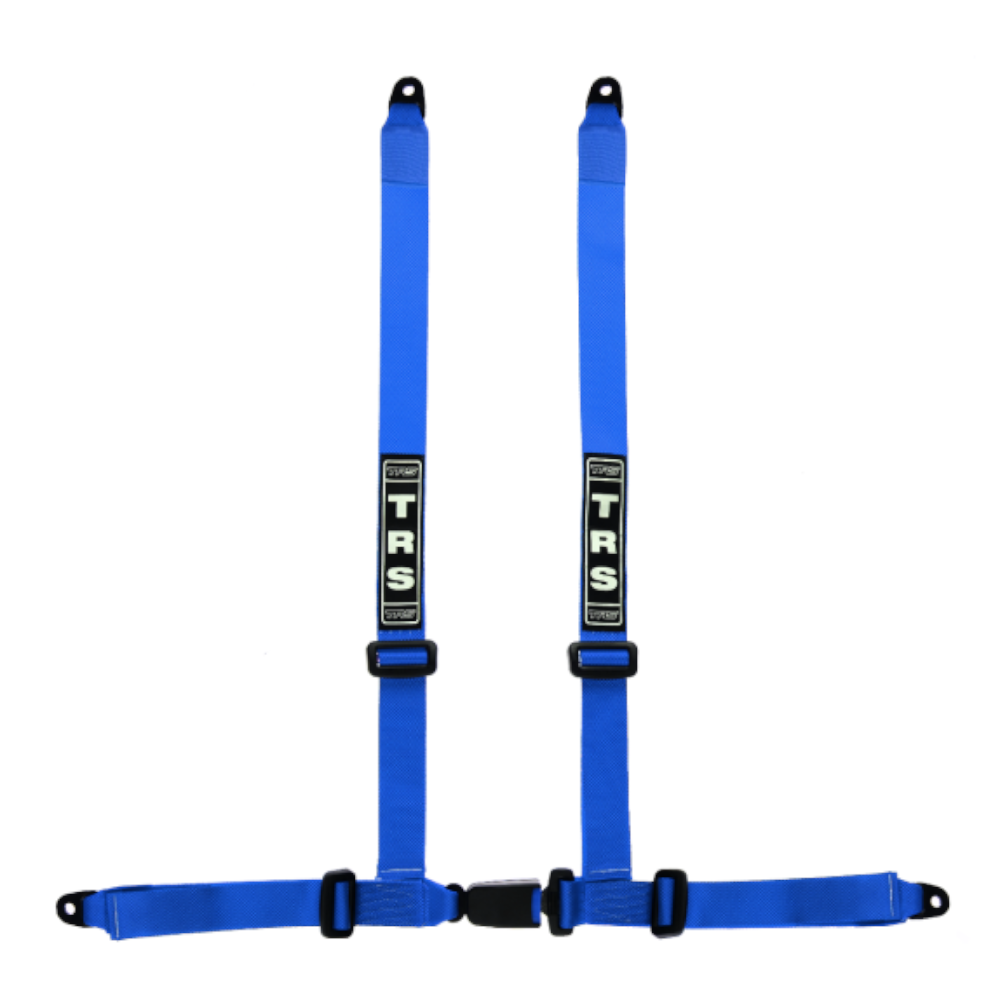
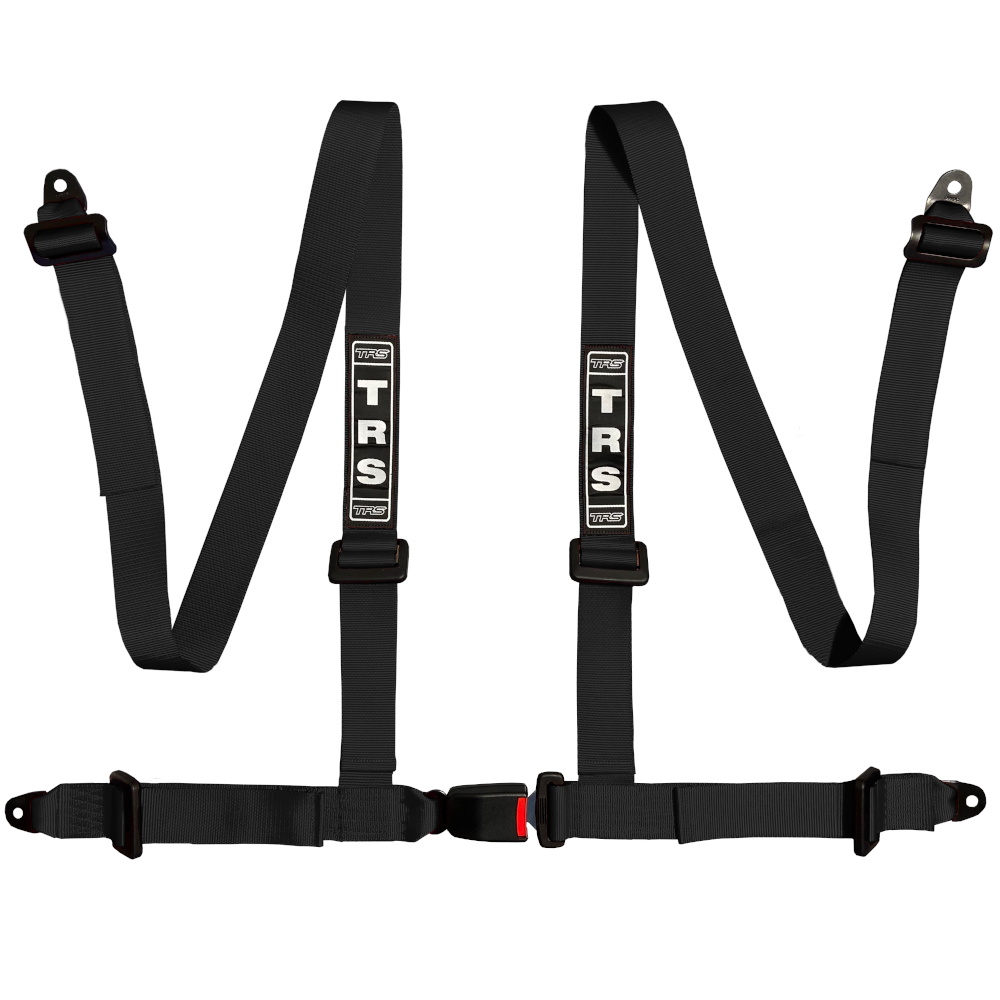
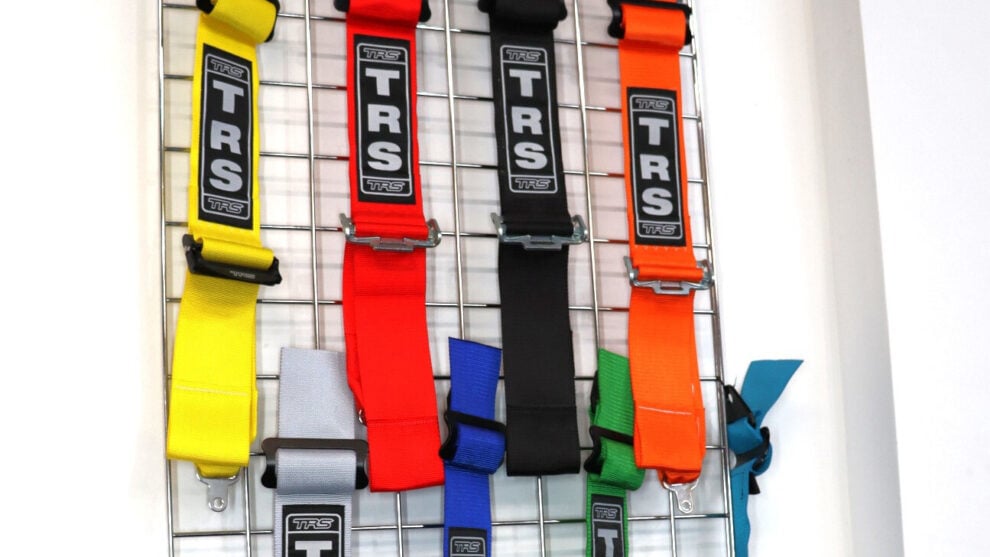
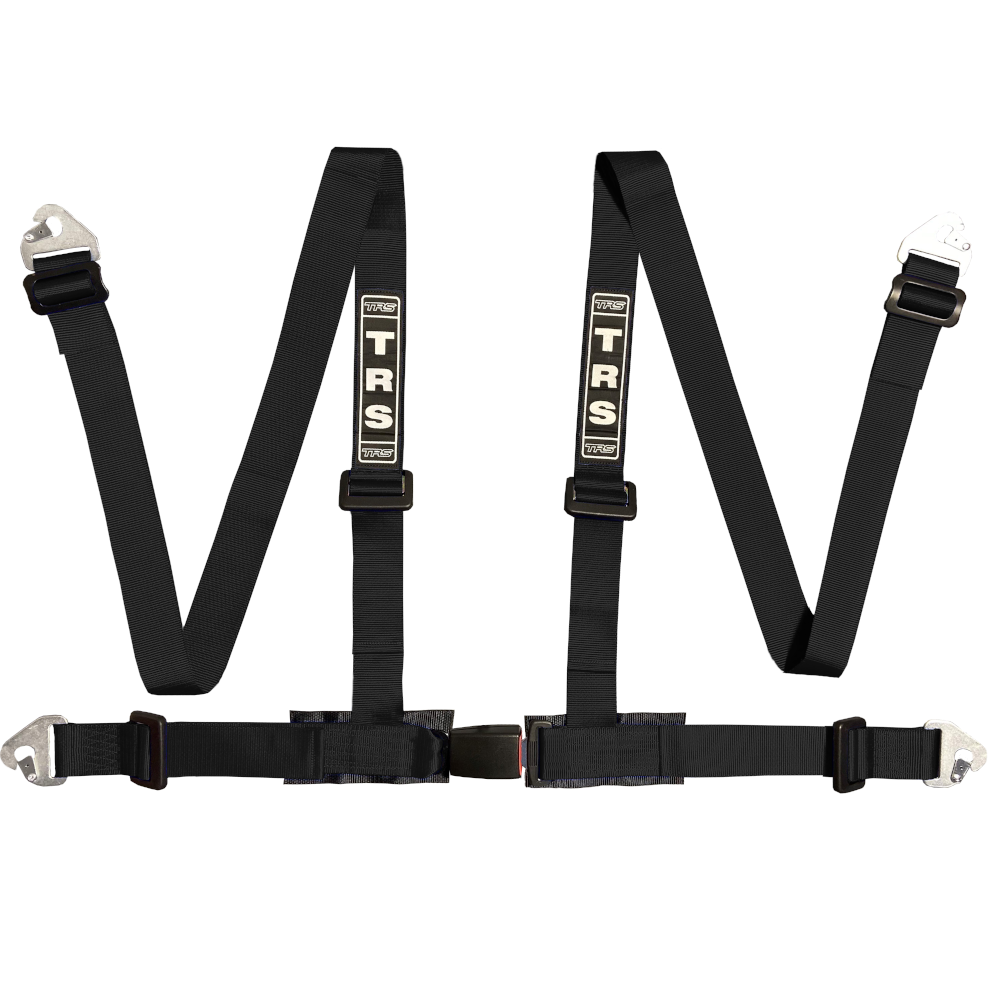
Harness (four, five or six point). A lap belt and two shoulder straps, with one or two crutch straps on five and six point versions. A harness holds both shoulders and suits cars without a normal B pillar to mount a three point belt, such as open cars and many kit cars. Harnesses come with road approval, FIA motorsport approval or sometimes both.
For most kit cars the decision is between a three point belt and a four point harness. A three point inertia reel belt is the most familiar and the easiest to use every day. A four point harness holds you better, and in a car with a harness bar or roll bar it can be simpler to mount the shoulder straps than to find a suitable upper anchor for a three point.
Whichever you choose, pick one with road approval. On a road harness that means an E mark label. An FIA only harness is approved for motorsport, and it is a question for the test station whether it will be accepted on the road.
So can you use just a lap belt?
For the driver and front passenger, our answer is no. A lap belt alone does not restrain the upper body, and a forward facing front seat is exactly where that matters most. The IVA manual sets out which seats need which kind of belt, but you do not need to read it to know a lap belt is the weakest option in the front of a car. Plan for a three point belt or a harness with shoulder straps on every front seat, even if a lap belt would look more period correct.
Lap belts do still have a place. You will find them on side facing seats in some older vehicles, on some rear and centre seats, and in the back of some classic and 2+2 designs. Whether a lap belt is acceptable in a particular seat of your car is a question for the IVA manual and your test station, not for us, and it depends on the seat position, the direction it faces and the vehicle.
Belts we sell for kit cars and builds
These are the road approved options we usually talk kit car builders through:
- TRS three point lap and diagonal retractable belt. A road approved inertia reel belt with a push button buckle, for cars where the original belt has gone or is blocked, with a choice of stalk lengths for the buckle.
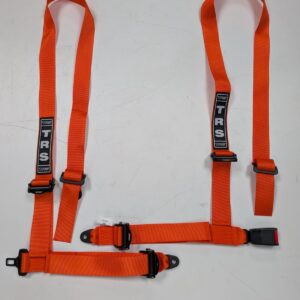
- TRS Clubman three and four point harnesses. ECE road approved, with a push button buckle, in bolt-in or clip-in versions and a wide choice of colours.
- TRS Caterham and Westfield harnesses. ECE 16.08 road approved four points with strap lengths cut for those cars. TRS need the car details before they make them.
- Schroth road harnesses. Including the Rallye ASM range and car specific versions.
If your car is also going to compete, FIA harnesses such as the TRS Magnum range are the other route, but check with the test station that what you plan to fit is acceptable for the road as well.
-
From £45.60 Incl. VATFrom £38.00 Excl. VATPayPal CreditAmazing valueSelect options This product has multiple variants. The options may be chosen on the product page
-
From £120.00 Incl. VATFrom £100.00 Excl. VATPayPal CreditAmazing valueSelect options This product has multiple variants. The options may be chosen on the product page
-
From £102.00 Incl. VATFrom £85.00 Excl. VATPayPal CreditAmazing valueSelect options This product has multiple variants. The options may be chosen on the product page
-
From £114.00 Incl. VATFrom £95.00 Excl. VATPayPal CreditAmazing valueSelect options This product has multiple variants. The options may be chosen on the product page
Fitting belts and harnesses properly
The way belts are fitted matters as much as which belts you buy. The IVA manual has its own requirements for anchorages, and the belt maker’s instructions have theirs. Follow both. In general:
Shoulder straps. They should run back from the shoulders level or at a small downward angle to their anchor, not steeply down to the floor. Anchored too low, they pull down on the spine in an impact. A harness bar or roll bar at the right height usually solves this in a kit car. Harness makers publish the angle they allow; read it before you choose the mounting point. Our guide on how to fit a harness covers angles and anchor points.
Lap straps. They should sit low across the pelvis, not the stomach, with anchors that let the strap run at the angle the maker specifies.
Anchorages. Every anchor needs to be into strong structure, with reinforcement behind thin panels, using the bolts and fittings supplied or specified by the belt maker. The TRS Caterham road harness, for example, comes with 7/16in UNF bolts. If you are adding new anchor points, check the IVA manual’s requirements for them first, because they will be inspected.
Routing. Straps should run straight, without twists, and should not rub on sharp edges of the seat or the car. Tidy any loose webbing so it cannot flap about or catch.
A checklist before the test
- Labels. Every belt and harness has a readable approval label. A belt with no label cannot show what it is.
- Type for each seat. You have checked the current IVA manual for the belt type needed at each seat, and every front seat has an upper body restraint.
- Condition. Webbing is free of cuts, fraying and fading. Avoid second hand belts whose history you do not know.
- Buckles. They latch cleanly and release easily. Inertia reels retract and lock as they should.
- Anchorages. Tight, reinforced and in the positions the manual and the belt maker ask for.
- Fit. Straps line up with the seat openings, sit correctly on the occupant and have no loose ends.
- Questions. Anything you are unsure about has been checked with the test station before the day.
If you would like help choosing the belts, send us the car, the seats and a photo of the mounting points, and we will suggest what suits. We cannot pre-approve a car for IVA, but we can make sure you are buying approved belts that suit how they are going to be fitted.
Can a kit car pass IVA with just lap belts?
We do not recommend a lap belt alone for any front seat. Check the current IVA inspection manual and your test station for what each seat needs.
Where are the IVA seat belt rules?
In DVSA’s IVA inspection manual for your vehicle category; read the current version and ask the test station if anything is unclear.
Is a harness acceptable for IVA?
Harnesses are fitted to many kit cars. Choose one with road approval and check with your test station before fitting.
What should I check on a belt before IVA?
That it carries a readable approval label, is in good condition, latches and releases cleanly, and is anchored securely.
Can GSM Performance tell me if my car will pass IVA?
No. We can help you choose approved belts and harnesses, but only the test station can say what passes.
💬
For front seatsA three point belt or a harness
Plan for upper body restraint on every front seat, and check the details with your test station.
Need a personal recommendation?
We're here to ensure you pick the right seat.
Contact us today.