Which Sparco Evo QRT Seat Is Right For You?
Sparco Evo QRT, Evo L QRT or Evo XL QRT? Compare shoulder width, hip room, seat depth and weight using Sparco’s own dimensions, with all three on display at GSM Performance.
Call Garreth, Cameron & CallyAI: 0115 9893488
FREE UK shipping on orders over £100.00 & FREE gifts on checkout
Call Garreth, Cameron, CallyAI
Today On: 0115 9893488
Click Here For Our Contact Form
💺Reclining adjustable sport seats from just £247.20 Reclining seats💺
📢Customer questions answered daily in our blogs. Read our blogs today📢
🛍️Visit Garreth and Cameron at our Nottingham showroom Visit us today🛍️
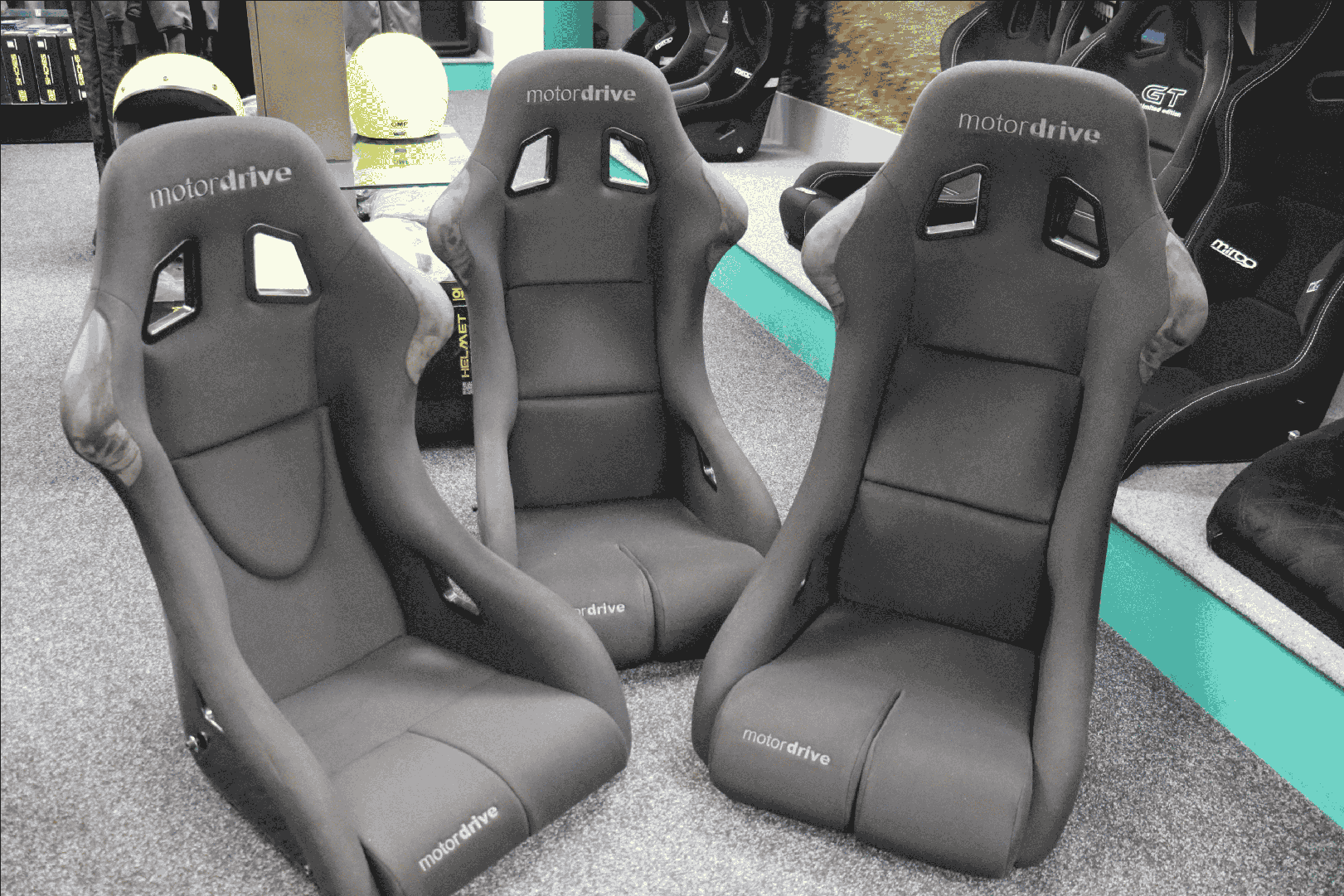
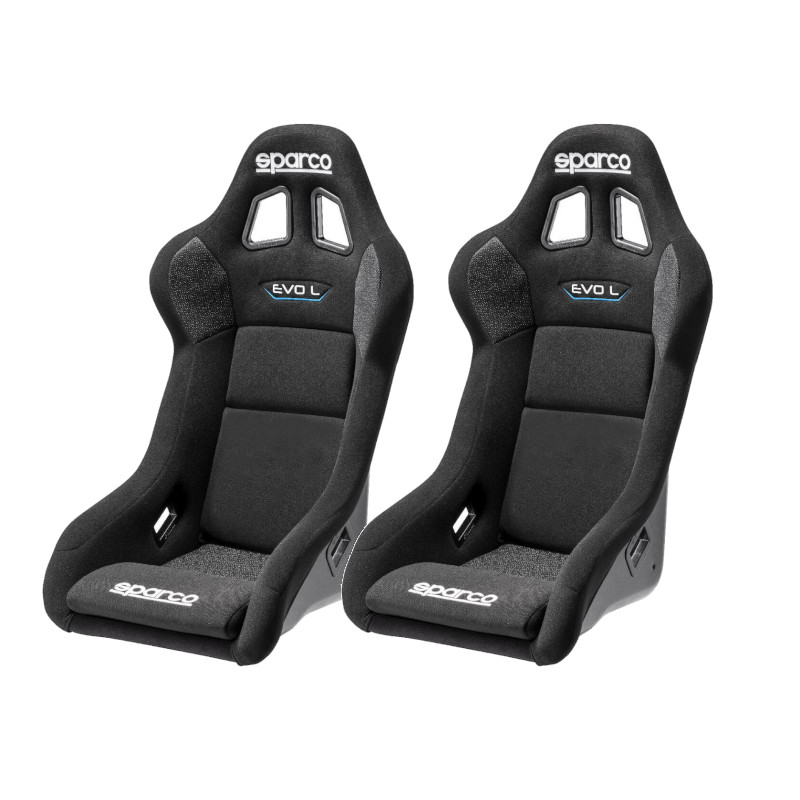
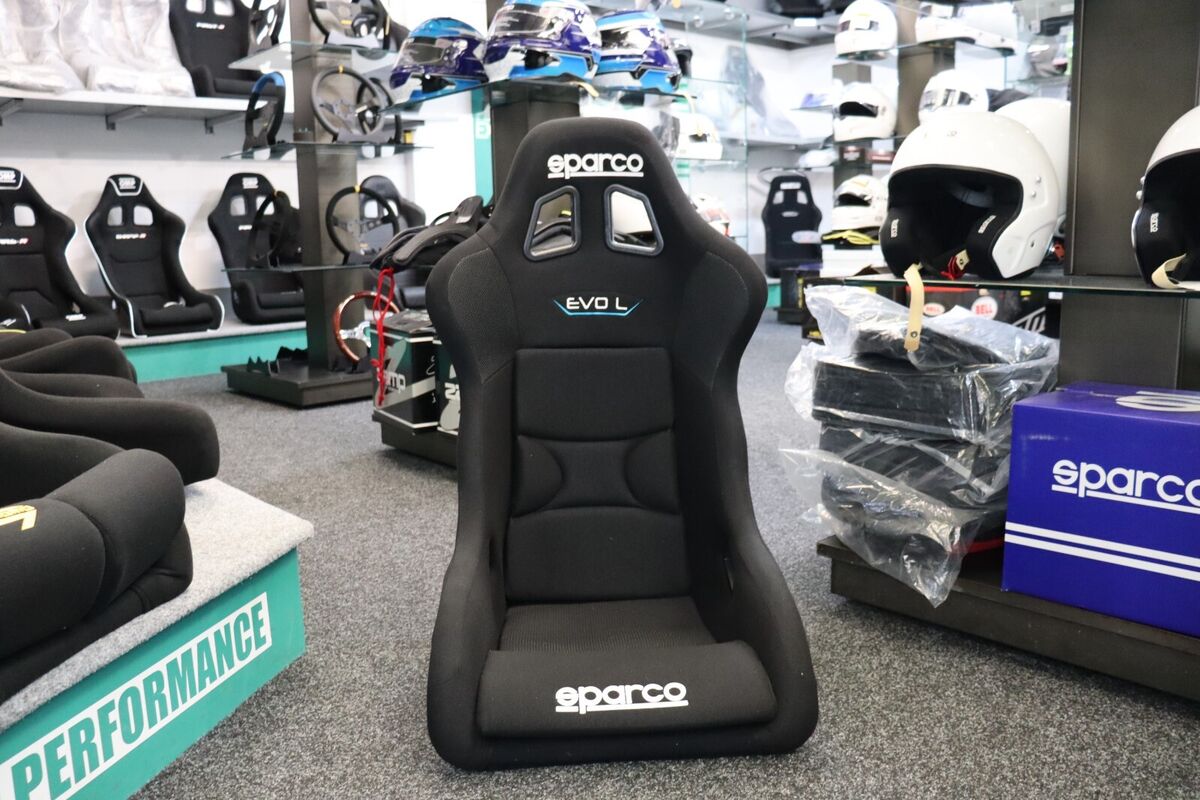
We have had all three Sparco Evo QRT sizes on the showroom floor for a while now, and I have spent a fair bit of time getting in and out of them. The Evo QRT, the Evo L QRT and the Evo XL QRT.
The question I get asked most is which one to buy. Usually over the phone, usually from somebody who has been staring at three near identical photos on a screen for half an hour and is none the wiser.
So this is what I have worked out from actually sitting in them. I am Cameron, by the way, and if you ring us about seats there is a good chance you will get me.
Here is what the photos will not tell you. All three share the same shell technology, the same FIA 8855-1999 approval, the same 290 mm side mount pattern and the same fixed back with no head restraint. Lined up on the floor they look like one seat in three sizes.
They are not, quite. And the difference between them is not the one most people expect.
I will come back to that, because it is the single thing that settles most of these conversations.
QRT stands for Quick Resin Transfer. It is how Sparco make the fibreglass shell, and it is the reason you notice the weight the moment you pick one up.
Sparco reckon the process takes around 30 percent out compared to a conventional fibreglass shell. The standard Evo QRT is 6.8 kg. I can carry one out to a customer’s car in one hand without thinking about it, which is not true of everything on our floor.
The other thing you feel is the stiffness. Push on the bolsters of a cheaper fibreglass shell and you get a bit of give. These barely move. That is the shell holding its shape rather than the foam doing the work, and it is why they still feel supportive an hour in.
All three are FIA 8855-1999 approved, which covers what most UK club motorsport and track day organisers want to see. Approval is time limited, so if you are looking at a used seat somewhere, find the homologation label and check the date before you part with any money.
None of the three has a head restraint. If you need one built into the shell, that is a different Sparco seat and I will point you at the right one.
Sparco size the Evo range by waist, and having sat in all three I think that is the right way round.
The standard Evo QRT is up to about a 34 inch waist. The Evo L QRT goes to roughly 36. The Evo XL QRT is built for around 38.
Treat that as a starting point rather than gospel. A bucket seat is meant to grip you, so it will feel tighter than whatever you drove here in, and that is correct. If you fall between sizes and the car has the room, most people end up happier going up. If you are racing and want to be pinned in place, stay tight and give it a couple of sessions before you decide.
One thing worth saying: measure over the kit you actually drive in. A race suit and a rib protector are not the same as a t-shirt, and that catches people out more often than you would think.
This is the one that fits most people, and it is where I would start unless there is a reason not to.
Sitting in it, the shoulder bolsters are noticeably closer than the older Evo. Sparco narrowed them on this generation and that is what lets it drop into tighter cockpits. If you are in a caged car without much room between the door bar and the transmission tunnel, this is usually the seat that goes in without an argument.
It is also the only one of the three with integrated lumbar support, and you can feel it in the small of your back straight away. For a car that does road miles as well as track days, that matters more than the spec sheet makes it sound.
At 6.8 kg it is the lightest of the three as well.
Key features
The Evo L is the one people get wrong, and I had it wrong myself until I sat in them back to back.
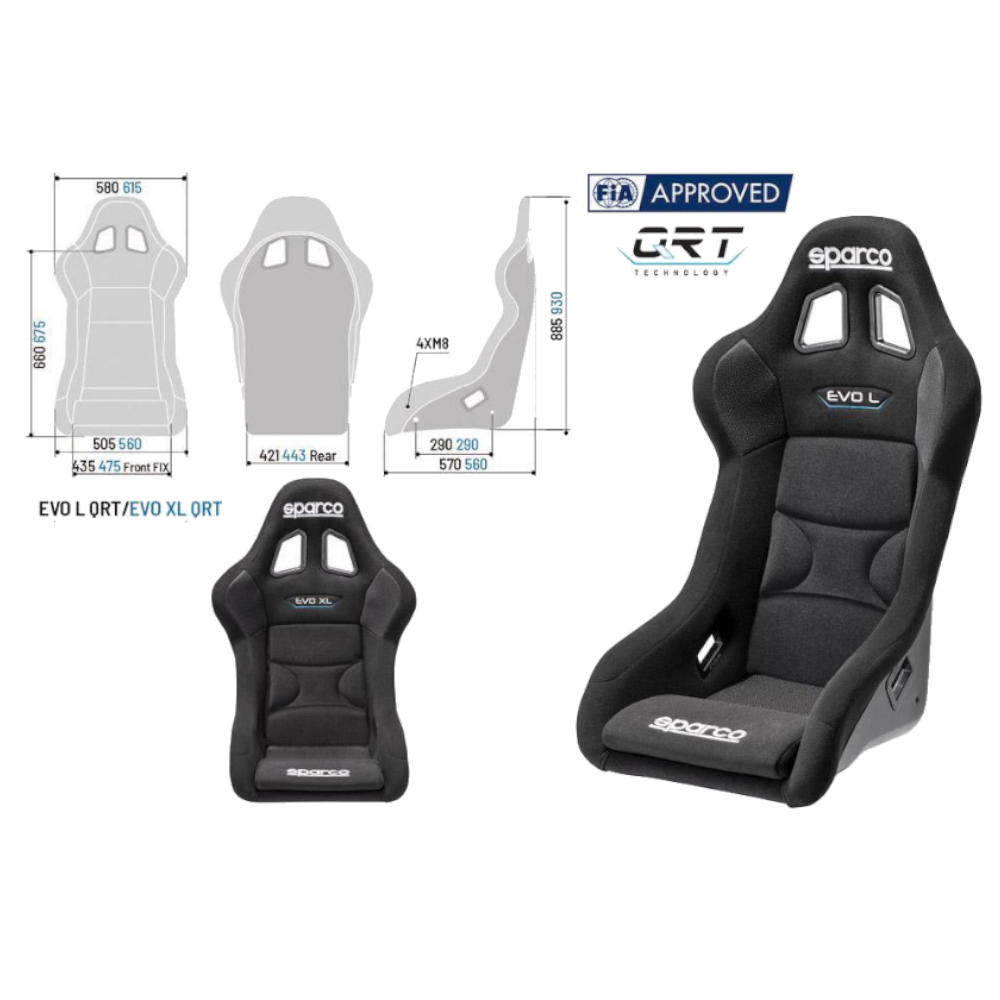
I assumed it was a wider seat. It is not. Across the shoulders it is exactly the same 580 mm as the standard Evo. What you actually get is 570 mm of seat depth against 510 mm, and 505 mm across the hips against 490 mm. It sits slightly lower too, 885 mm against 900 mm.
Get into one straight after the standard Evo and the difference is under your legs, not around your chest. There is more base beneath your thighs and a bit more room through the hips.
So this is the seat for a taller driver. If you sat in an Evo and your legs felt like they were hanging off the front edge, the L sorts that out. If your shoulders felt squeezed, it will not, and you want the XL.
Key features
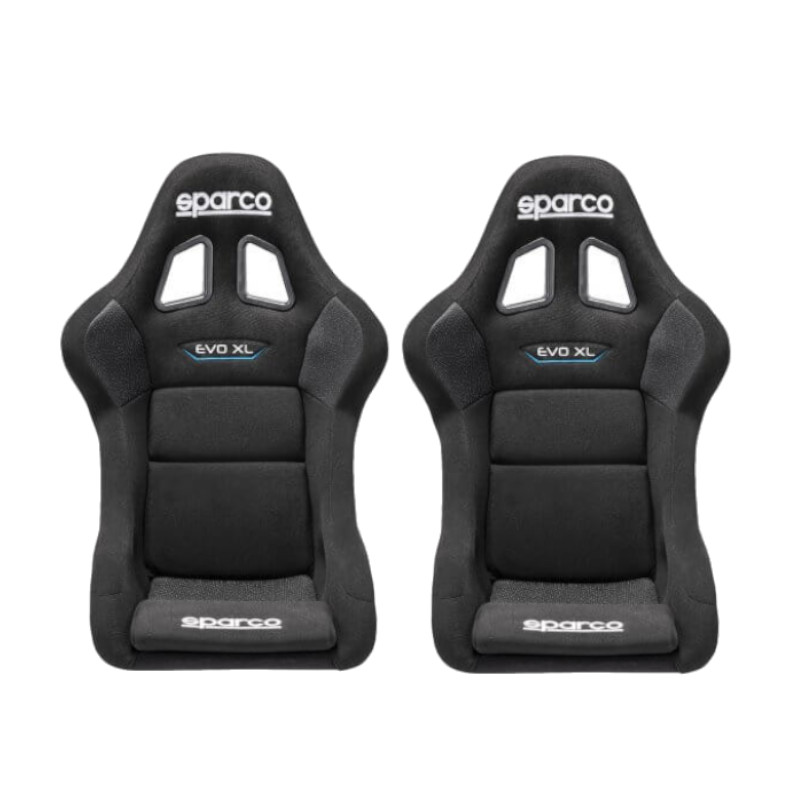
The XL is the biggest seat Sparco make without a head restraint, and it is a genuinely different shell rather than a stretched Evo. They based it on the Rev II.
This is the only one of the three that gives you real shoulder room, 615 mm against 580 mm, and you feel it the moment you sit down. It opens up at the hips as well, 560 mm against the standard Evo’s 490 mm, and it is the tallest of the three at 930 mm.
Getting into it after the other two, the thing that stands out is that it still holds you. It is a big seat but it does not feel loose, which is the trap a lot of larger drivers fall into when they buy a smaller shell and end up moving around in it.
The trade off is space in the car. 615 mm across the shoulders wants checking against your door cards and cage bars before you order, especially in a smaller hatchback. We have put plenty into Civics and Imprezas, but measure first. It is a two minute job and it saves a return.
Key features
We keep all three on the floor so you can get into one, get out, and get straight into the next. Ten minutes of that will settle it better than anything I can write here.
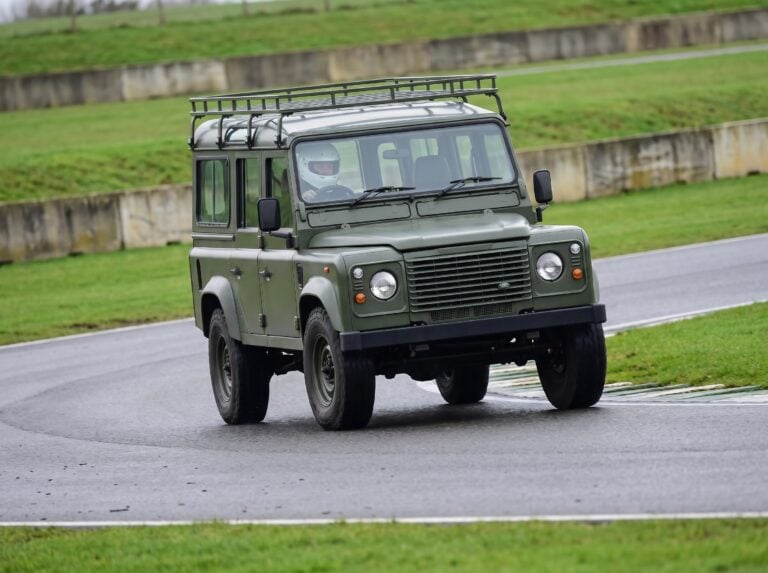
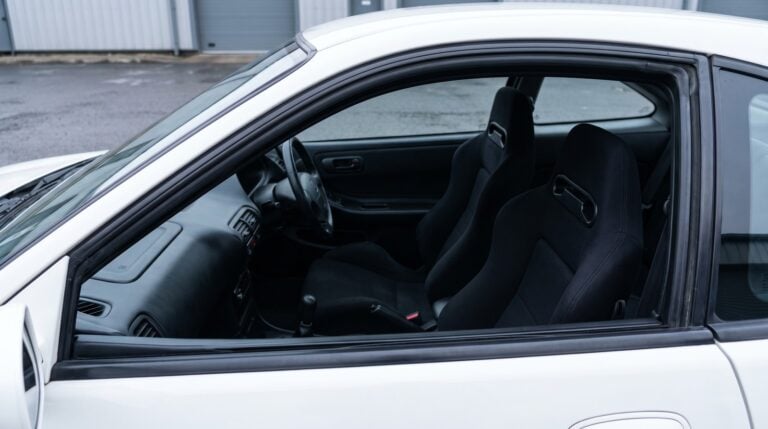
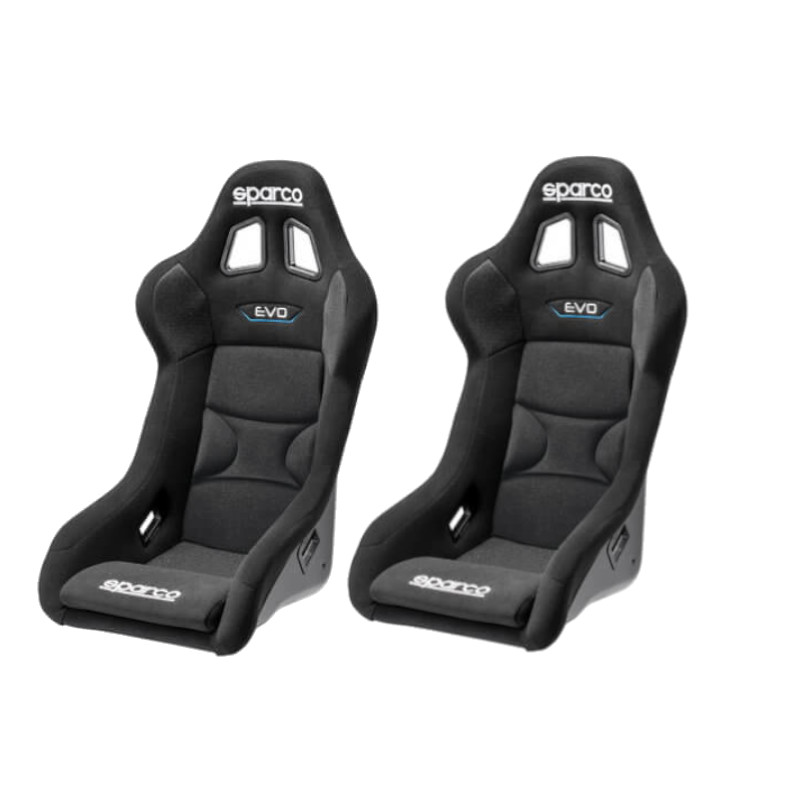
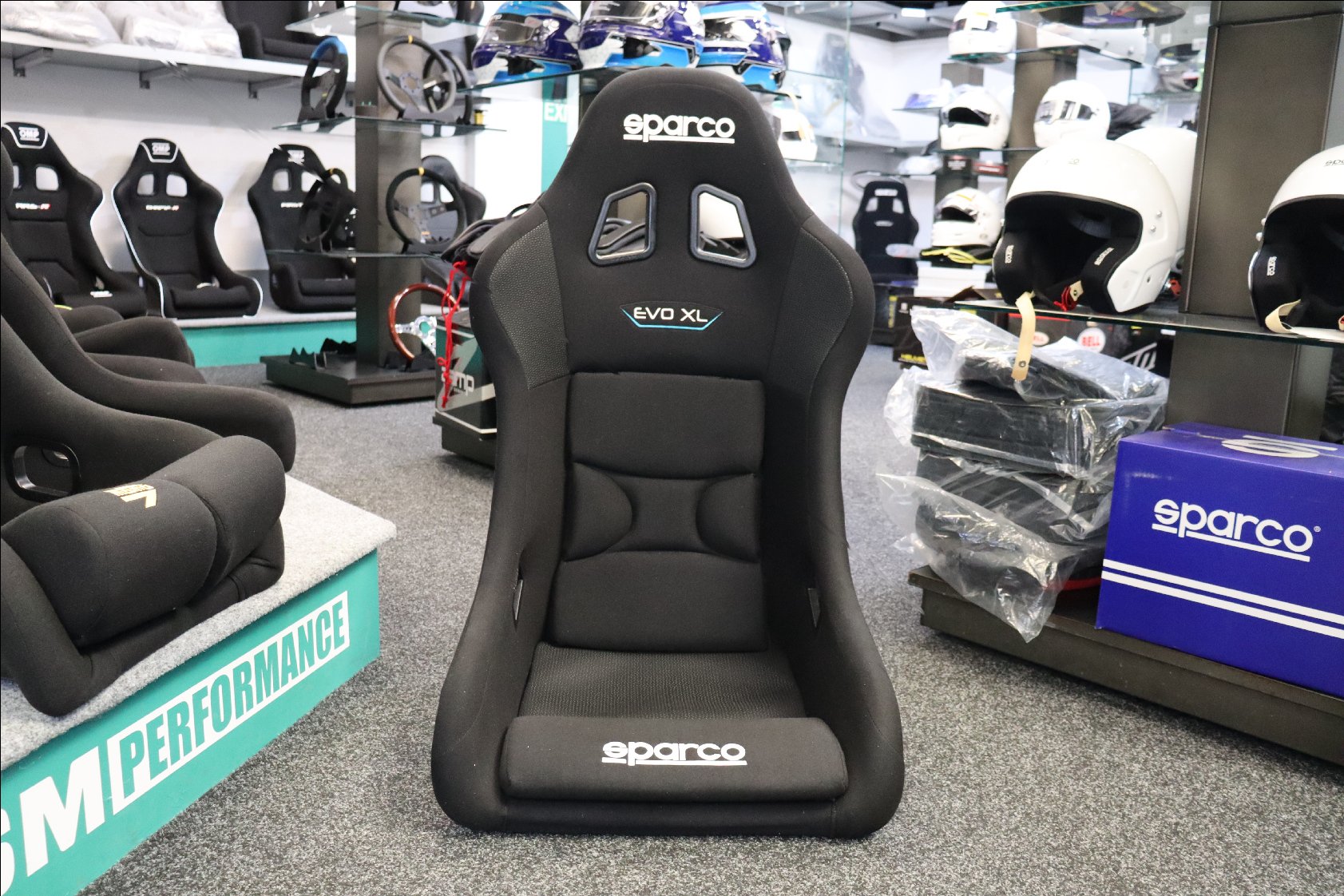
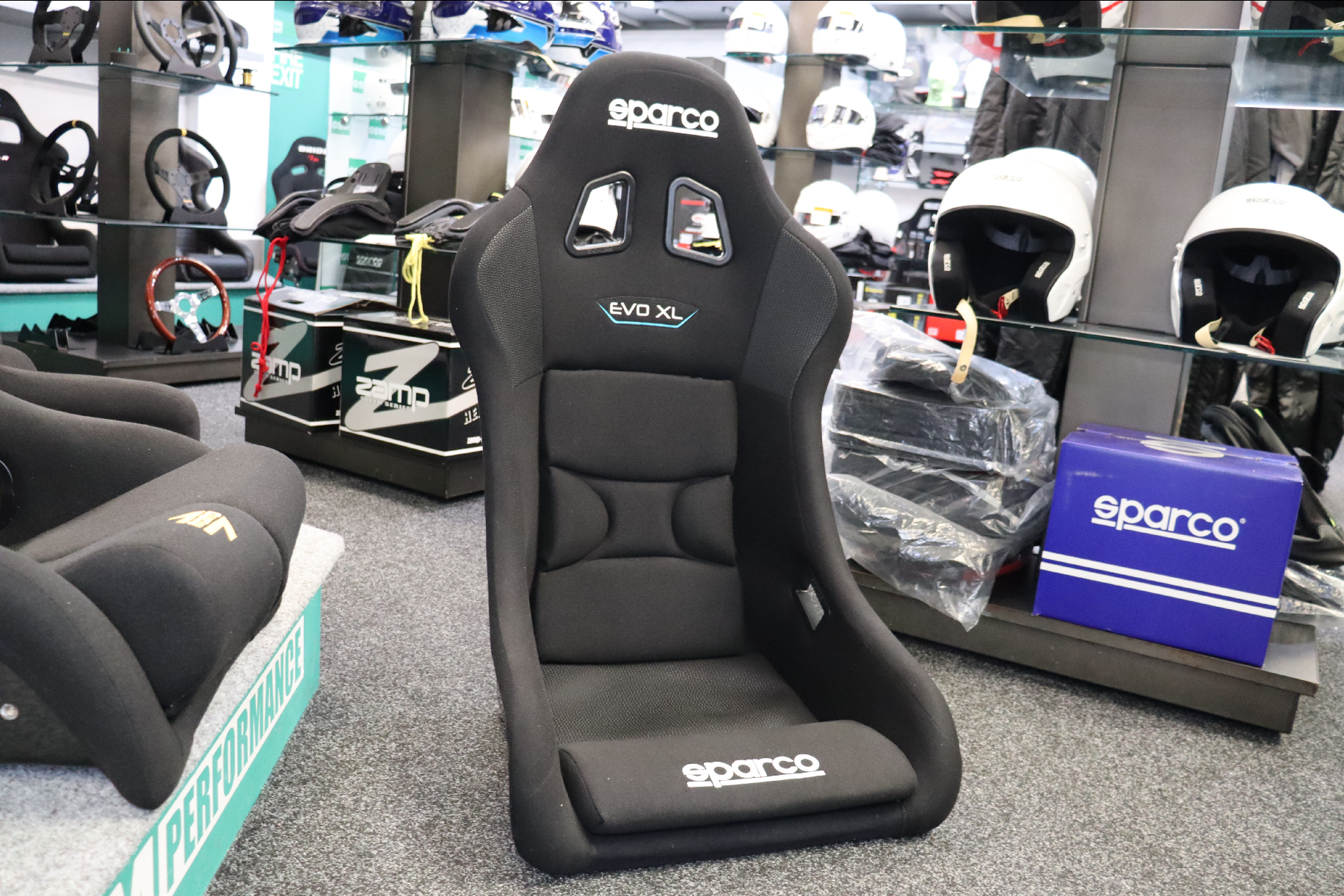
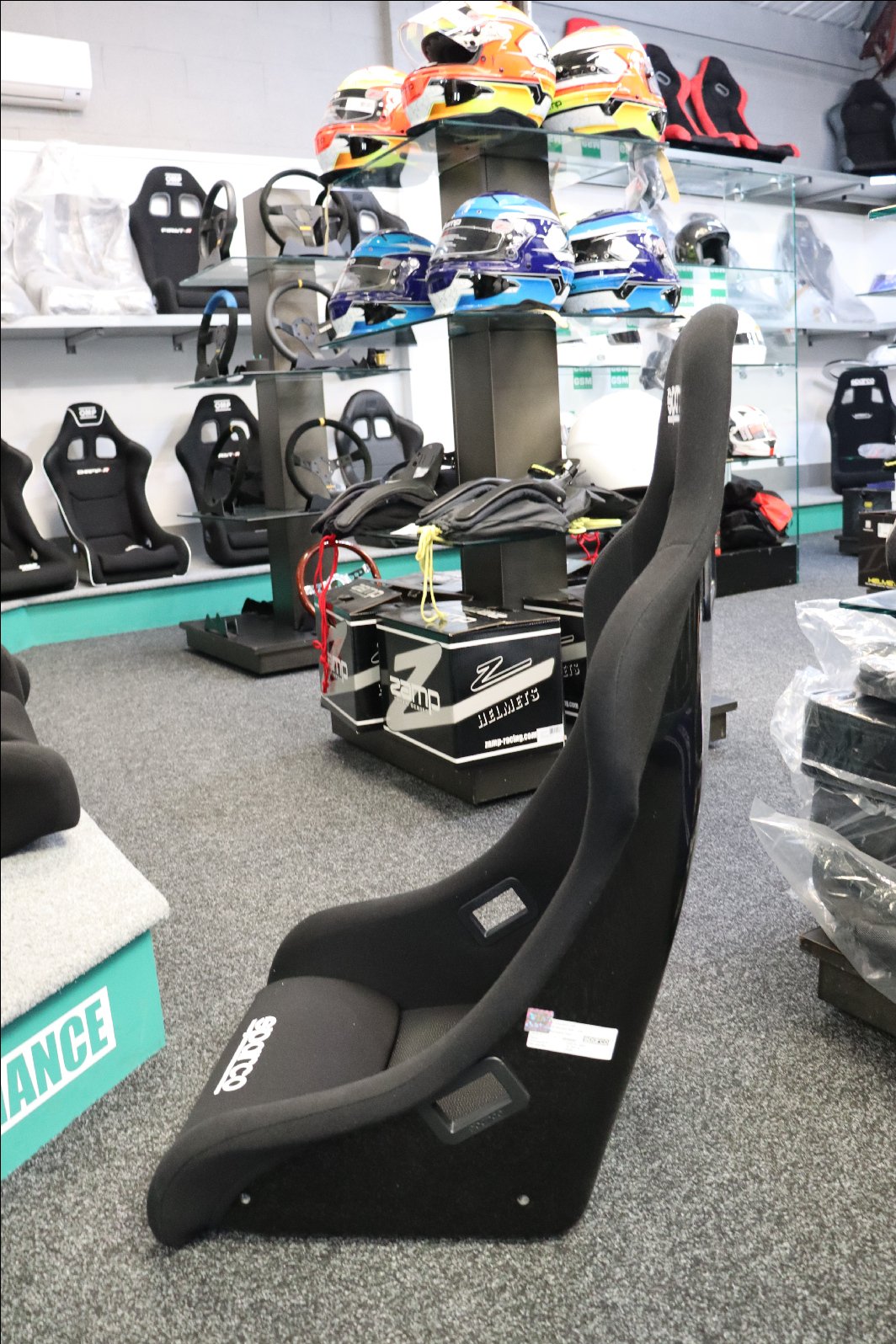
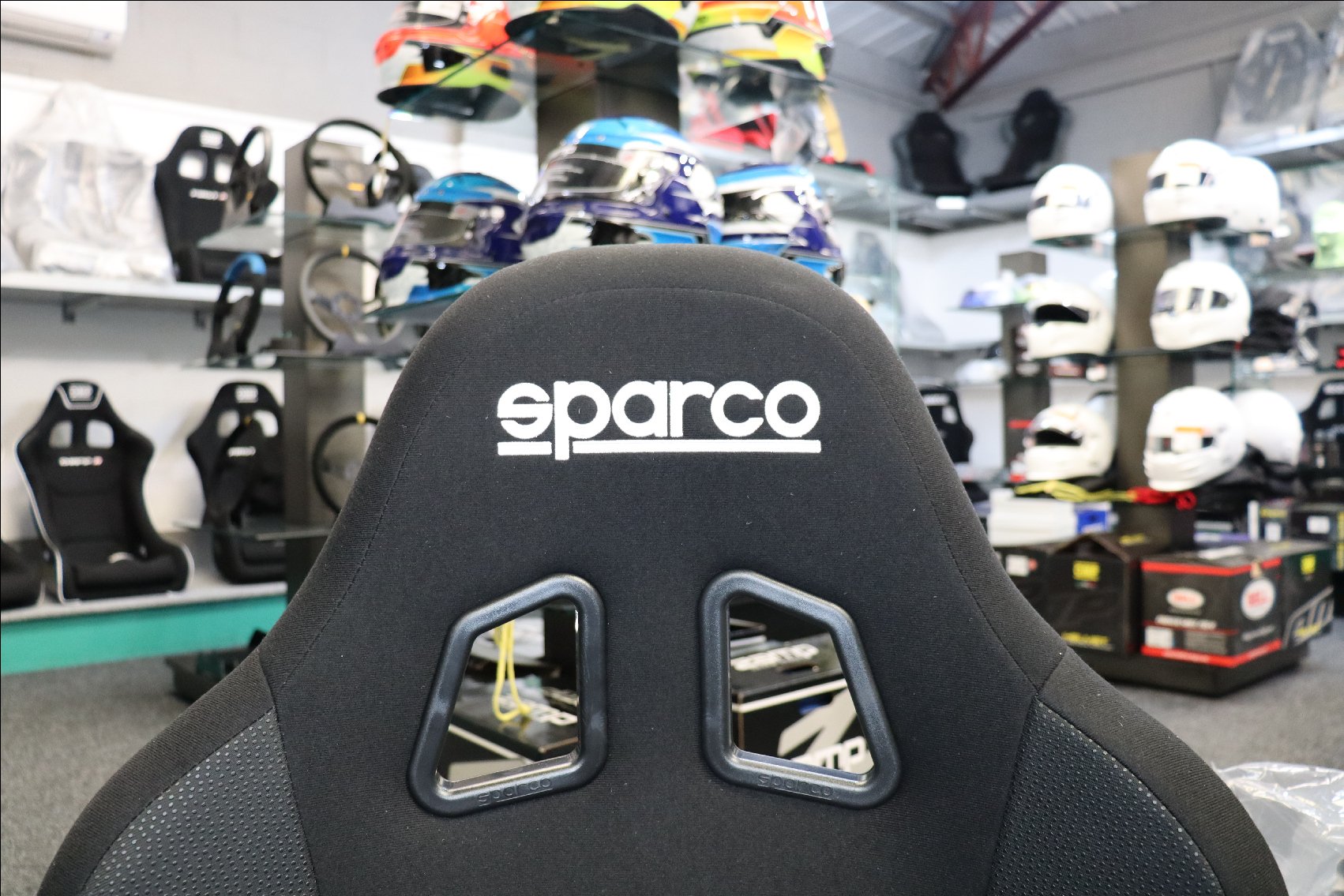
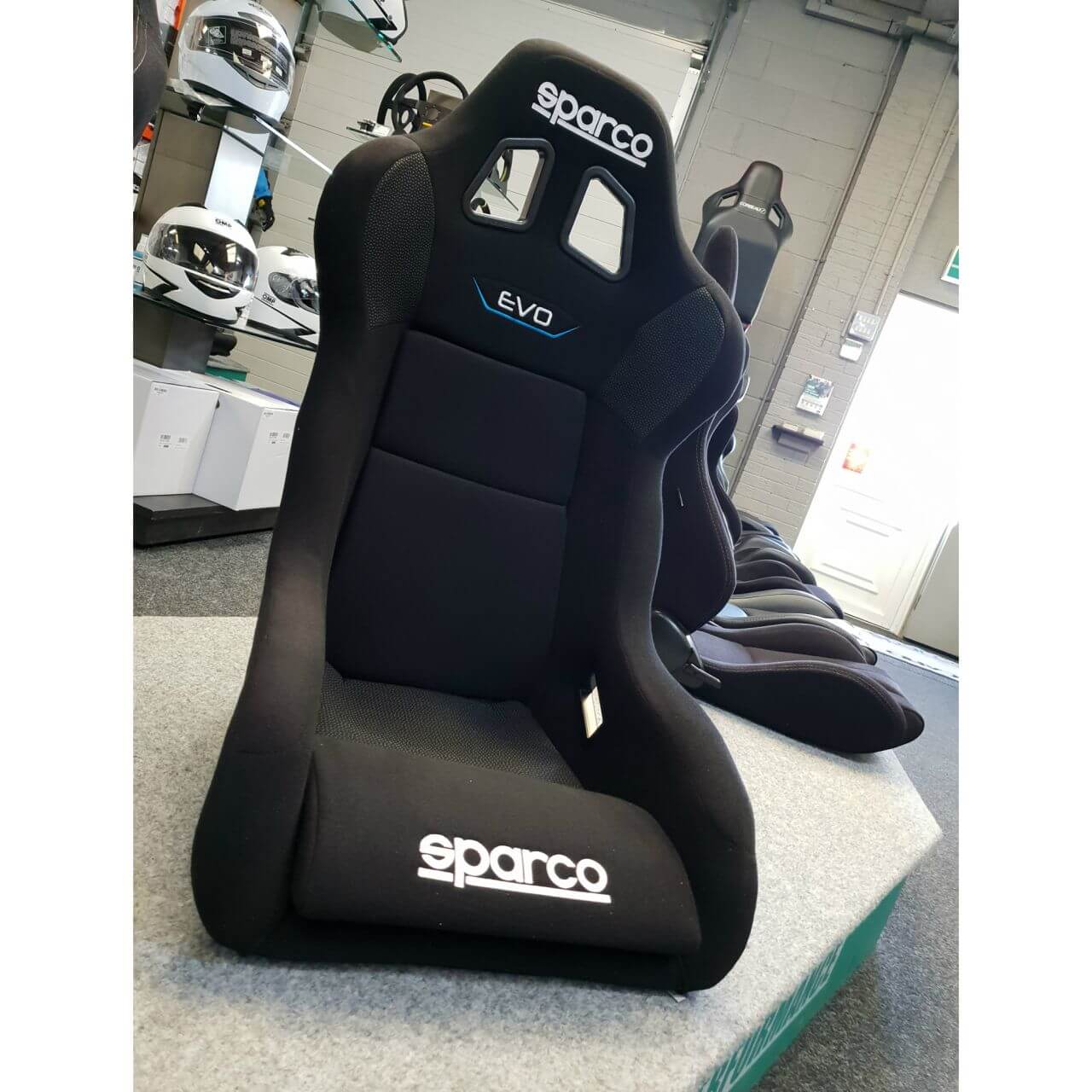
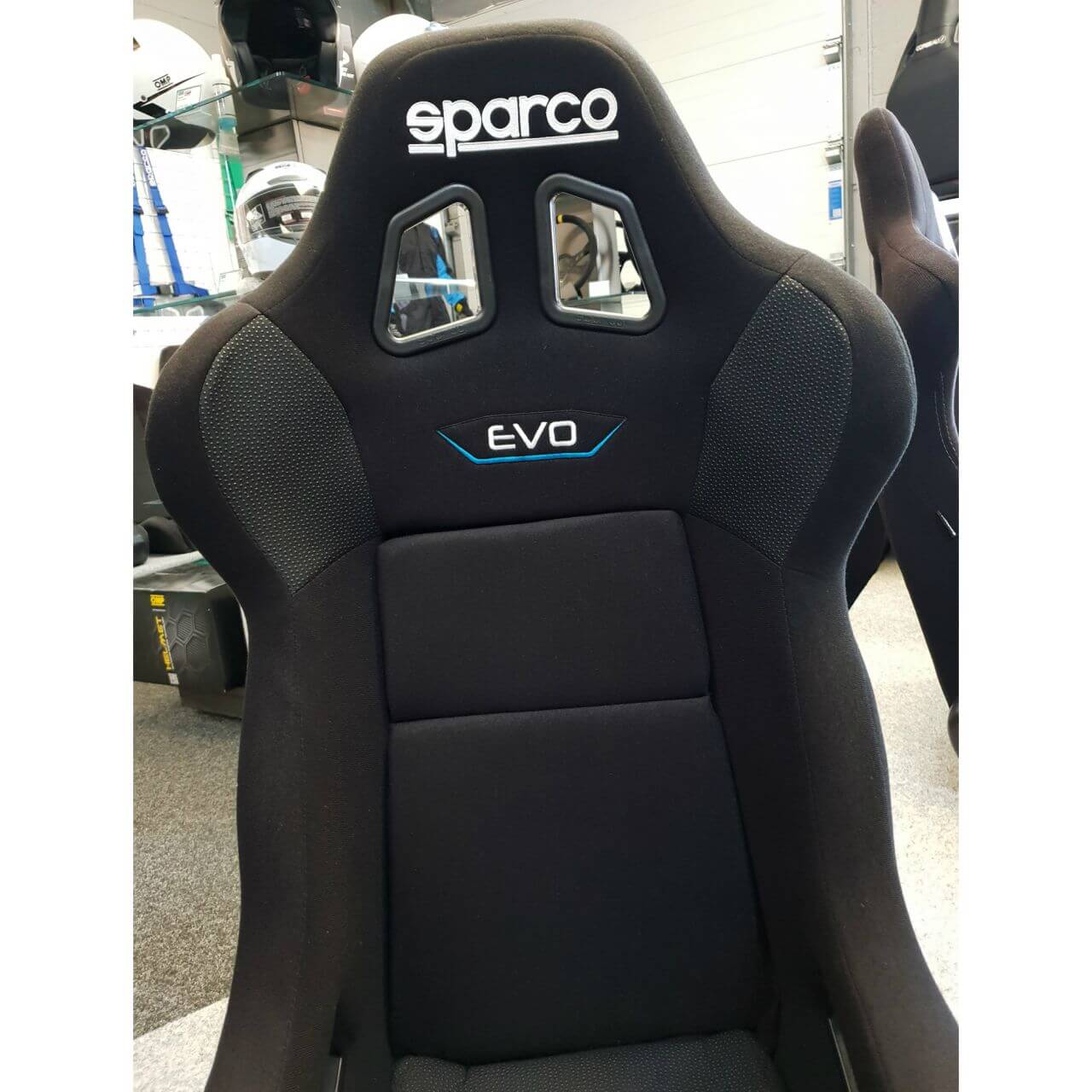
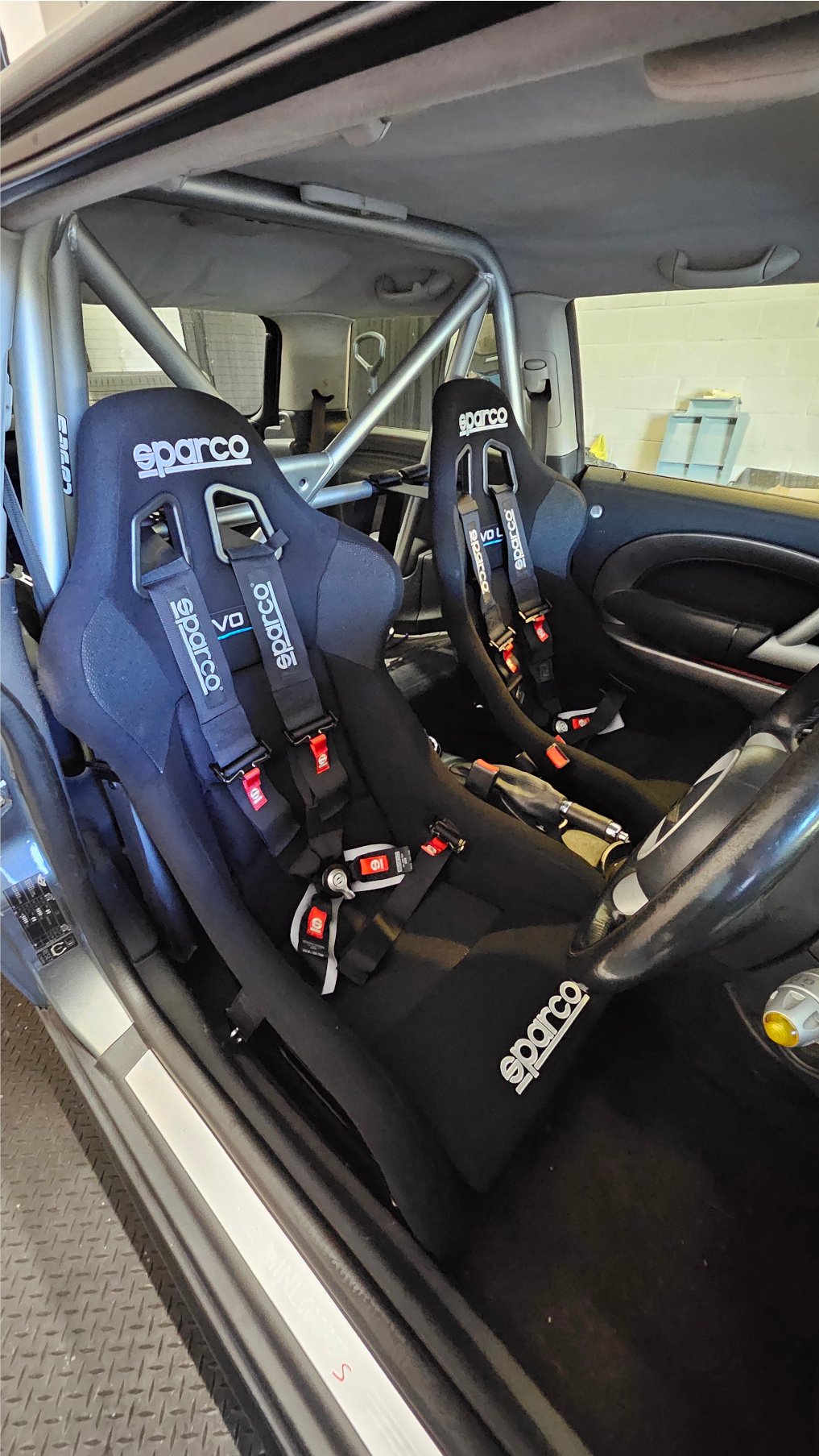
Below are some shots from the showroom, plus a couple of cars we have fitted. The blue Mini R53 has a pair of Evo L seats in it, and the Civic Type R is running the Evo XL with red TRS harnesses.
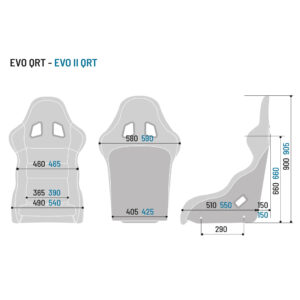
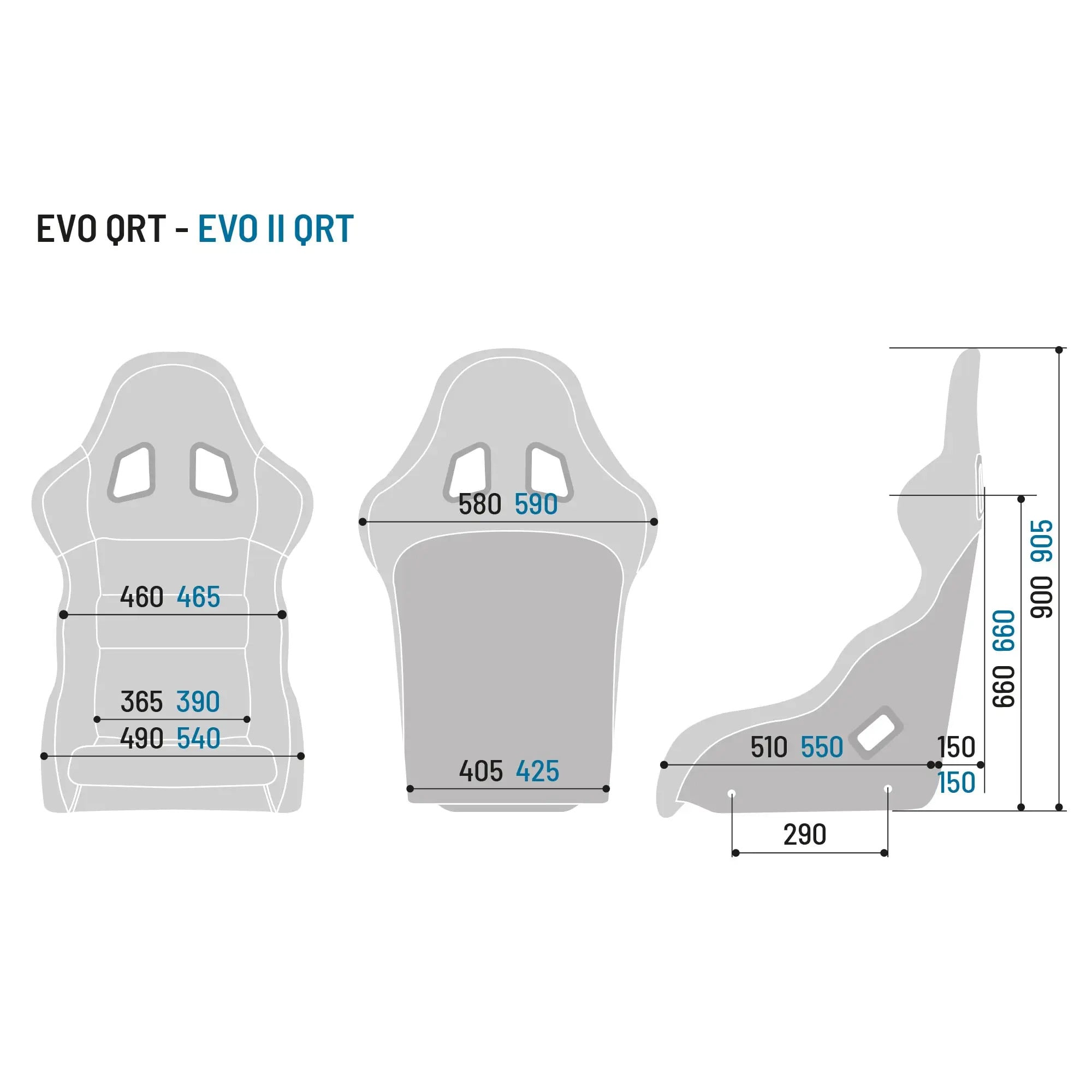
Here are the numbers side by side. They all come from Sparco’s own drawings, and both charts are in the gallery above if you would rather read them yourself.
| Evo QRT | Evo L QRT | Evo XL QRT | |
|---|---|---|---|
| Waist guide | Up to 34 in | Up to 36 in | Around 38 in |
| Shoulder width | 580 mm | 580 mm | 615 mm |
| Hip width | 490 mm | 505 mm | 560 mm |
| Rear width | 405 mm | 421 mm | 443 mm |
| Seat depth | 510 mm | 570 mm | 560 mm |
| Overall height | 900 mm | 885 mm | 930 mm |
| Backrest height | 660 mm | 660 mm | 675 mm |
| Side mount pitch | 290 mm | 290 mm | 290 mm |
| FIA 8855-1999 | Yes | Yes | Yes |
| Head restraint | No | No | No |
All three are side mounted on the same 290 mm bolt pattern, so the same universal side mounts work right across the range.
A normal install is a pair of universal side mounts onto a vehicle specific subframe, or straight onto floor mounts in a stripped car. If you are swapping from one Evo size to another you can usually keep the mounts you already have, which is not something you can say about most seat changes.
When you go up to the XL, the thing to check is shoulder clearance against your cage, not the mounting. The mounts are almost never the problem.
If you remember one thing from all of this, make it this one.
Going up a size in the Evo range does not get you more shoulder room until you reach the XL. The Evo and the Evo L are both 580 mm across the top. What the L adds is length in the base and a bit more hip.
So if what bothered you about a standard Evo was pressure on your shoulders, the L will feel the same and you want the XL. If what bothered you was feeling perched, with nothing much under your thighs, the L is exactly right and the XL is more seat than you need.
That one distinction sorts out most of the phone calls I take about these seats.
Most people who ring convinced they need the XL end up in the standard Evo or the L. A bucket seat is supposed to feel closer around you than a road seat does, and that catches people out the first time they get into one.
If you can get to us, come and sit in all three. It takes ten minutes and you will know. If you are ordering online, measure your waist over the kit you actually drive in, measure the gap between your door card and your transmission tunnel, then ring us with both numbers and ask for Cameron.
I would rather spend ten minutes on the phone than have you post a seat back. You can see the whole range on the Sparco FIA racing bucket seats page, and there is more on the shell technology over on Sparco’s own site.

Sparco Evo QRT, Evo L QRT or Evo XL QRT? Compare shoulder width, hip room, seat depth and weight using Sparco’s own dimensions, with all three on display at GSM Performance.

R100, R100 Vinyl, R100 Martini, R333, R500 or GT? Sparco’s own dimensions for all four shells, drawn to scale, with driver fitment notes from our showroom.

The Cayenne has a wide cabin, so seat choice is about what suits the job rather than what fits. The rugged seats worth fitting, with dimensions and why they work off-road.

Updated Sparco 6 Point Racing Harness Range for 2026 As the 2026 motorsport season approaches, Sparco has updated and expanded its range of FIA-approved 6-point

The Complete Guide to Safety Devices Roll Cages for Citroën Models Safety Devices has built a strong reputation within the motorsport industry for producing some

Discover the Auto Style Type AK Reclining Sports Seat At GSM Performance, we’re always looking for well-balanced seating solutions that cater to both comfort and
On all orders above £100
Try before you buy
Aftership Tracking Updates