
Understanding Seat Belt Integration With Aftermarket Seats
Seat fitting guide
Somebody asks us a version of this every week, across the counter and on the phone: I am fitting aftermarket seats, so what happens to my seat belts? The short answer has not changed since we first wrote this page, but the long answer deserved better than the quick tour it used to get, so here it is rebuilt properly, with the actual routes and the advice we give when the car is in front of us.
The one rule everything else hangs off: the belt never bolts to the seat itself. Aftermarket seats are universal by design, they carry no belt mountings, and the belt anchors to the car or to hardware built for the job. The good news is that the hardware exists, it is not expensive, and for most cars the swap barely disturbs the belt at all.
- The belt never bolts to the seat shell: it anchors to the car or to hardware built for the job
- The pillar side of the belt, reel and top loop included, is untouched by a seat swap
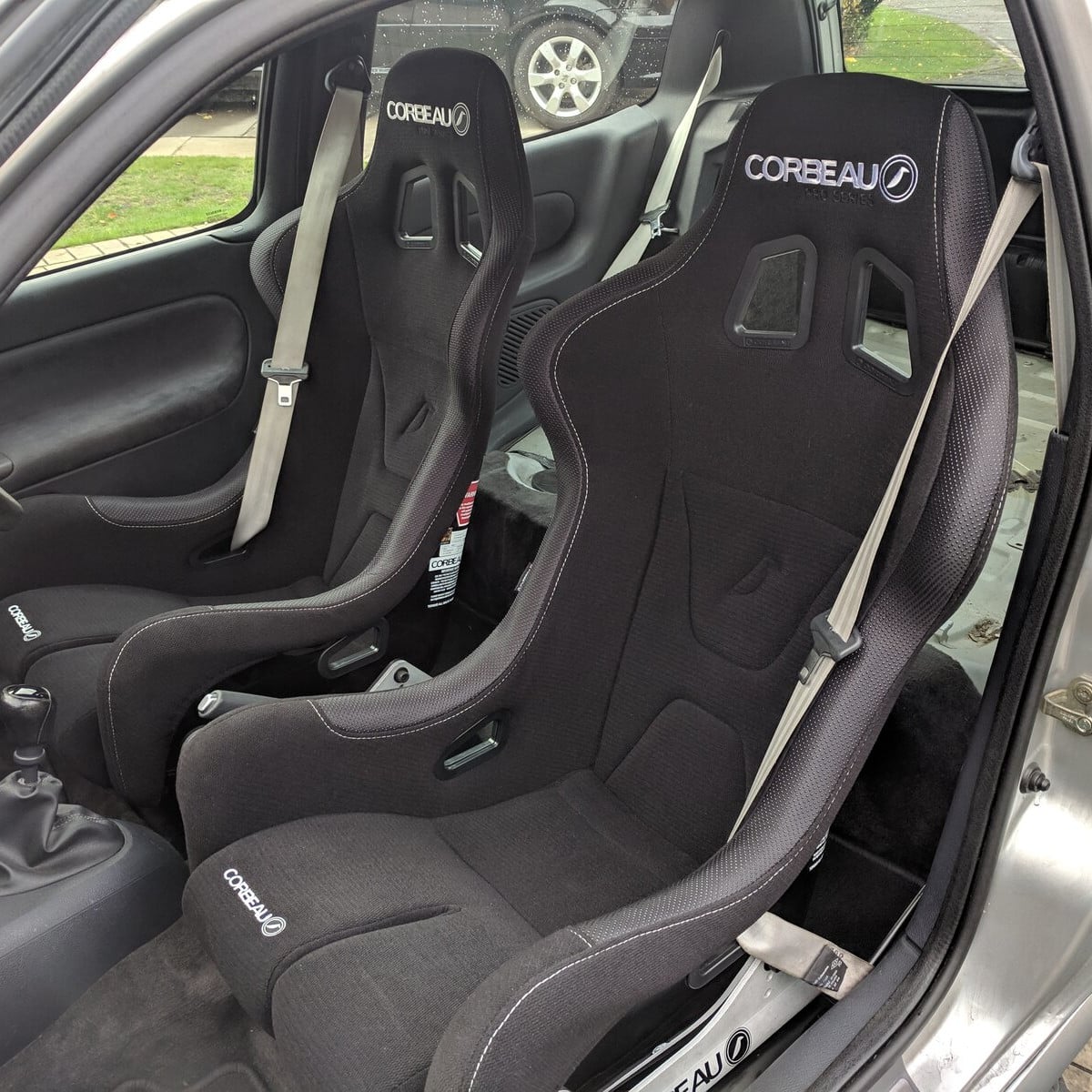
- Most car-specific frames from Sparco, Planted, Corbeau, Cobra and Recaro carry a belt tab
- Endurance Motorsport belt brackets rehome the buckle for 20 named seats, from £39.99
- The standard belt should reach, run, retract and click home exactly as it did before the swap
The short answer
No, you cannot bolt a seat belt directly to an aftermarket seat, and no maker drills the shell for one. That is not a gap in the product, it is the design: a seat built to fit hundreds of different cars cannot carry belt geometry that changes with every one of them, so the belt mounts to the car and to the fitting hardware instead.
In practice the question is smaller than it sounds, because most of the belt never enters the conversation. What follows is the part people are actually asking about, which is the buckle, and the two routes that give it a proper home.
The two halves of a three point belt
Look at where your belt actually attaches and a seat swap gets much less dramatic. The inertia reel sits in the pillar or the sill. The top loop is on the pillar. The outboard lower anchor is on the sill or the floor. None of those care what seat is in the car, and they stay exactly where the factory put them.
The half that needs a decision is the buckle stalk, because plenty of cars bolt it to the original seat frame. Take that seat out and the buckle comes out with it, so the swap has to give it a new anchor at the same height and reach it had before. Both routes below do exactly that.
The two halves of a three point belt, drawn side on and not to scale. Everything on the pillar side stays exactly where the factory put it. The amber half, the buckle stalk, is the part that often lived on the original seat frame, and rehoming it properly is what the rest of this page is about.
Route one: a fitting frame with a belt tab
The tidiest answer is built into the fitting hardware you already need. A car-specific frame bolts to the floor using the original mounting points, and on most of the brands we sell the frame carries a tab or a threaded hole placed to take the original buckle stalk. The belt ends up anchored where the maker of the frame decided it should sit for that exact car, which is the geometry question answered for you.
| Frame brand | Belt provision on the car-specific frames |
|---|---|
| Sparco | Belt tab on most applications |
| Planted Technology | Belt tab on most applications |
| Corbeau | Belt tab on most applications |
| Cobra | Belt tab on most applications |
| Recaro | Belt tab on most applications |
| OMP | Mostly not: the range is built for motorsport and fixed back seats, where harnesses take over |
The same picture the old version of this page painted, and it still holds. Check the individual listing before ordering, because a handful of applications in every range do their own thing.
The five collections are here: Planted Technology, Cobra, Sparco, Corbeau and Recaro, around a thousand car-specific frames between them. Tell Cameron the car and the seat and he will confirm whether the frame for your combination carries the tab before you order anything.
Route two: the Endurance Motorsport belt bracket
Sometimes the frame route does not carry the buckle: the frame for your car has no tab, or you are running side mounts, or the seat went in long ago and only the belt is left to sort. That job has a dedicated part. The Endurance Motorsport belt bracket is a steel bracket made for a named seat, it fits at the seat side and gives the original buckle stalk a proper bolted anchor in the position the seat maker’s shape demands, driver and passenger versions both catered for.
Because the bracket is matched to the seat, this is not a universal strip of drilled steel from an auction site. You pick the bracket for the seat model in the car, and the buckle lands where it is supposed to be.
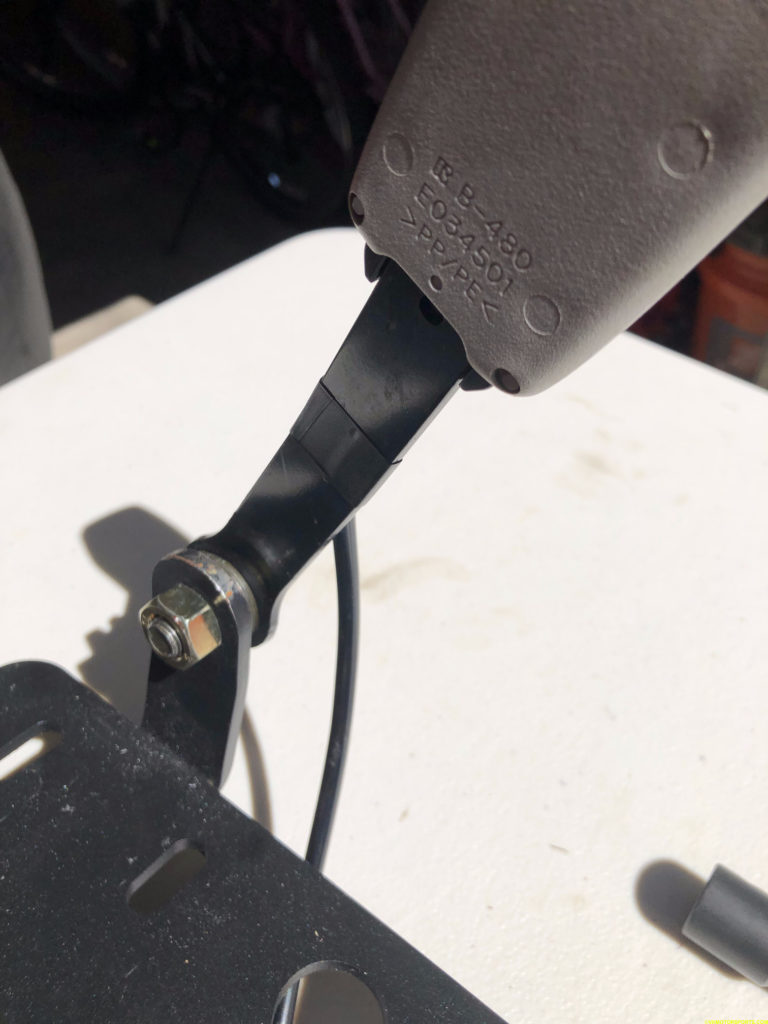
Twenty seats are covered: from Cobra the Daytona, Misano, Monaco Pro and Stuttgart; from Corbeau the Boss Evo 2, Evo RB, RRB, RRS, RS2 and RXI; from OMP the Design 2, Strada, TRS-E and TRS-X; and from Sparco the GT, R100, R333, SPR, Sprint and SPX. Pricing starts at £39.99 a side. If your seat is not on that list, ask before ruling it out, because a lot of this kit can be ordered to spec beyond what the options show.
-
From £39.99 Incl. VATFrom £39.99 Excl. VATPayPal CreditPerfect add-onSelect options This product has multiple variants. The options may be chosen on the product page
The OMP exception and the motorsport route
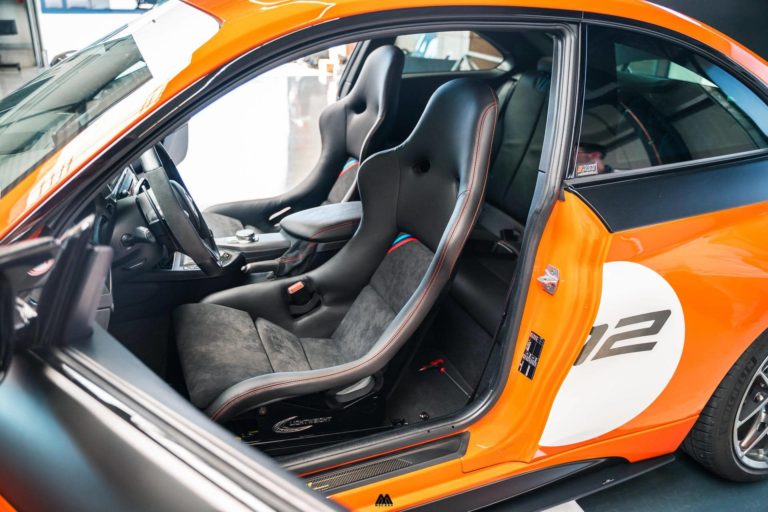
OMP sit apart from the other frame brands for an honest reason: their fitting hardware is built for motorsport, where the seat is a fixed back bucket and the restraint is a harness anchored to the car, so a tab for a road buckle is not part of the brief. If your build is heading that way, the belt conversation becomes a harness conversation, and we have written that up properly: our harness fitting guide covers the angles and anchor points, and the quick release clip-in route covers running one without a cage.
Worth repeating for road cars whatever the seat looks like: a fixed back bucket and the standard three point belt are a perfectly good pairing. Garreth’s view has not moved on this in twenty years: fit the seat you actually want, keep the standard belt doing the daily work, and add a harness only when the driving justifies it.
Keeping the original belt working
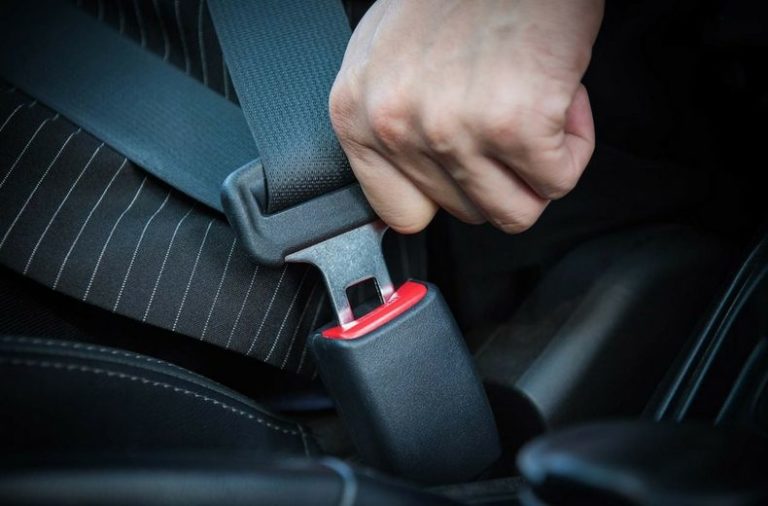
Whichever route the buckle takes, the finished install has one test and it takes ten seconds: sit in the seat and use the belt. It should reach without stretching, run flat across you without fouling the bolsters, retract on its own, and click home with the stalk sitting at the height it had from the factory. If any of that feels different, something in the install wants another look before the car goes anywhere.
Two details catch people. Deep side bolsters on a bucket can trap the webbing if the top loop feeds the belt at an awkward angle, which is usually solved by seat position, and a buckle stalk that ends up too low disappears between seat and tunnel, which is exactly what the seat-matched bracket exists to prevent. Neither is a reason to avoid the swap; both are reasons to plan it.
How we would run the whole job
- Pick the seat and the frame togetherThe frame decides the height, the fit in the car and usually the belt answer too, so treat seat plus frame as one decision. Cameron takes these calls every day and will tell you straight if a combination fights the car.
- Settle the buckle before anything is orderedFrame tab or Endurance bracket, decided while everything is still in boxes. Retrofit thinking is where the awkward installs come from.
- Fit, then test the belt properlyReach, run, retract, click. Sit in the passenger seat and do it again on that side. Ten seconds per seat, and the job is either finished or it is not.
- Not sure at any point? Ring before you drill0115 9893488 with the car and seat in front of you beats any amount of guessing, and if the answer needs checking against the hardware we will do it while you are on the phone.
Common questions
Can I bolt my seat belt straight to an aftermarket seat?
No, and no seat maker provides for it. The shell is universal and the belt geometry is car-specific, so the belt anchors to the car, to a frame with a belt tab, or to a seat-matched bracket like the Endurance one. All three keep the belt doing its job exactly as designed.
Does the reel or the pillar side of the belt change at all?
No. The inertia reel, the top loop and the outboard lower anchor all belong to the car and a seat swap leaves them untouched. The buckle stalk is the only part of the system that may need rehoming.
Which frames come with a belt tab?
Most car-specific frames from Sparco, Planted Technology, Corbeau, Cobra and Recaro carry one. OMP frames mostly do not, because that range is built around motorsport installs. Always check the individual listing, and ask us if it does not say.
My seat is already fitted and only the buckle is homeless. What now?
That is the exact job the Endurance Motorsport belt bracket exists for. Twenty seats across Cobra, Corbeau, OMP and Sparco are covered in driver and passenger versions from £39.99, and unlisted combinations are worth an ask because much of this kit can be ordered to spec.
What about harnesses instead of the standard belt?
A different subject with its own pages. Start with the harness fitting guide for the angles and anchor rules, and keep the standard belt fitted and working either way, because it carries the everyday miles whatever else is in the car.
💬
The next stepTell us the car, the seat and where the buckle currently lives
Those three facts are the whole conversation. Cameron will confirm whether your frame carries a belt tab or whether the Endurance bracket is the answer, and the right hardware goes out with nothing left to guess. Ring 0115 9893488 or call into the showroom and sit in the seats first, which is honestly the better version of this page.
Need a personal recommendation?
We're here to ensure you pick the right seat.
Contact us today.

