

Steel-frame FIA bucket seats
These are usually the affordable end of the competition-seat range, but they do not all feel alike. We use the dimensions to make a shortlist, then look at hip support, shoulder shape, harness-slot height and how much room the car actually gives us.
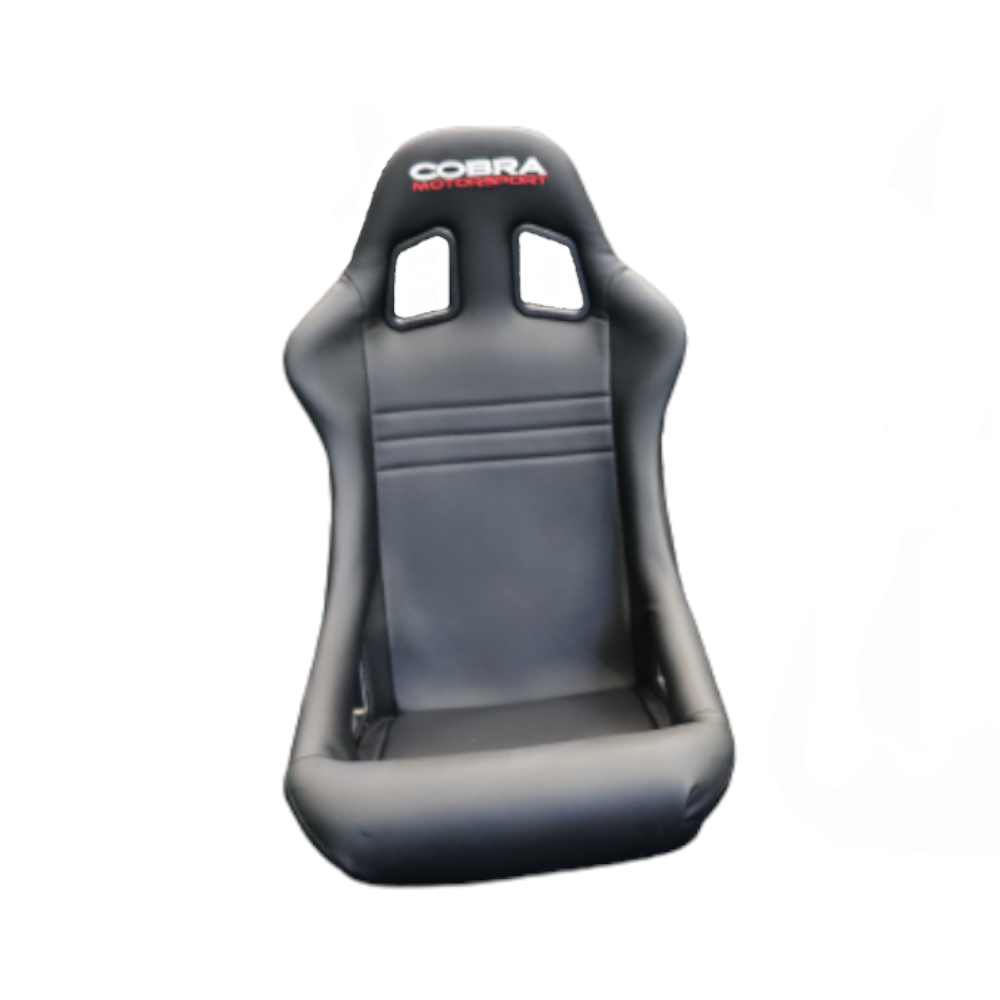
Start with the Sparco Sprint or Cobra Monaco M-Sport for a compact shell, the OMP TRS-E where you want a different shoulder and thigh shape, and the Sprint L or TRS-E XL when the standard versions pinch. Treat those as starting points, not promises based on waist size.
A steel-frame seat is only FIA homologated if the exact model carries the appropriate label. Check the label, date, technical list and event rules. The same-looking road or sim version is not made competition-approved by sharing a shape or name.
Measure the driver, then sit in the seat
A 36-inch trouser waist does not tell us where the driver is 36 inches wide.
01Hips and thighs
Measure across the widest point while seated. The base should hold you without hard pressure on the hip bones or forcing the thighs together.
02Shoulders and torso
Check where the shoulder supports touch and whether the backrest follows the driver. Broad shoulders do not always mean a wide hip measurement.
03Harness-slot height
Sit at the final recline angle and compare the shoulder line with the openings. A seat can feel comfortable but still put the slots in the wrong place.
Our old guide gave each model a maximum height and waist. That was handy, but too definite. Cameron can put two drivers of the same height into one seat and get a different answer because one carries more length in the torso and the other in the legs.
Wear roughly what you will drive in. A race suit, back protector or winter layers can turn a close showroom fit into an uncomfortable session.
Four sensible starting points
The current links below replace five dead product links from the old guide.
01Sparco Sprint
A compact, familiar starting point for narrower cars and drivers. Its shoulder shape comes forward more than the Monaco, so compare both rather than choosing on overall width.
02Cobra Monaco M-Sport
Broader and flatter through the upper body than the Sprint in the showroom. The lower-feeling shoulder openings can suit a shorter torso, subject to an actual seated check.
03OMP TRS-E
A different middle-ground shape, with noticeable kidney support and a shorter-feeling thigh section. Worth trying when the Sprint feels narrow at the shoulders.
04Roomier versions
The Sparco Sprint L and OMP TRS-E XL are not simply standard seats with extra padding. Their usable space and fit need checking as separate models.
The GT-090 is no longer a current product on SportSeats4U, so we have taken out its broken link instead of pretending it is still available. Tell us what you liked about it and we will compare the current shells.
Do you need the standard seat or the larger one?
Pressure points are useful information. Work out where the standard shell is too small.
A good close fit
- Hips are supported without a hard pinch
- Thighs can operate the pedals freely
- Shoulders sit naturally rather than being pushed forward
- Helmet and head remain in the intended seat area
- Harness openings line up for the installed angle
Signs to try another shell
- Pain on the hip bones after a few minutes
- Bolsters forcing knees inward
- Shoulders rolled forward by the sides
- Driver sitting on top of the base padding
- Harness slots too low for the seated shoulder line
Do not buy an XL only because it sounds more comfortable. Too much free space means the seat does less of the lateral support you bought it for. Equally, squeezing into the smallest shell is not a badge of honour. If it hurts in the showroom, a warm twenty-minute session will not improve it.
The seat has to fit the car as well
Measure at the height where the mounted shell will actually sit.
Measure tunnel to sill
Find the narrowest usable width near the seat base. Include trim, bolt heads, adjusters and anything that cannot safely be removed.
Check shoulder clearance
Look at the door, B-pillar, cage and centre console. The upper shell can touch even when the base drops between the tunnel and sill.
Build up the mounting stack
Add the vehicle frame, side or base mounts and sliders where used. Published seat height alone does not give the final driving position.
Put the driver in the calculation
Check steering-wheel clearance, pedal reach, eyeline and helmet room with the padding and final recline angle.
Plan the belts
Confirm the lap, shoulder and anti-sub strap routes and anchorages. Do not choose a seat first and hope the harness geometry sorts itself out.
The quickest showroom answer is often to place the display seat beside the car and measure both. Garreth would rather spend ten minutes doing that than sell a larger shell that catches the door card.
Read the FIA label and mounting instructions
The model name tells you what to search for. The label tells you what is on that seat.
| Check | Why it matters | Where to confirm it |
|---|---|---|
| Standard | 8855-1999 and 8855-2021 have different homologation and support requirements | Seat label, FIA technical list and manufacturer documents |
| Date | Competition acceptance is tied to the label and event rules | Label on the actual stock seat and current regulations |
| Supports | The seat may have been tested with specified side or base supports | FIA technical-list entry and fitting instructions |
| Installation | A valid seat can still be mounted incorrectly | Manufacturer drawing, Motorsport UK NCR and championship rules |
For UK National Events, some disciplines allow an 8855-1999 seat for up to two years beyond the original label validity, but that is not permission for every event. Read the exact regulations that apply to your car. Advanced and 8855-2021 seats may require the homologated support named for that seat.
Use the current FIA homologation lists and the Motorsport UK seat articles. If the remaining label life affects the value of the purchase, ask us to read the date on the available seat before it leaves.
The models discussed above
Current product records checked on 4 August 2026. Availability and label dates can change.
-
From £239.40 Incl. VATFrom £199.50 Excl. VATPayPal CreditSelect options This product has multiple variants. The options may be chosen on the product page
-
From £252.00 Incl. VATFrom £210.00 Excl. VATPayPal CreditSelect options This product has multiple variants. The options may be chosen on the product page
-
From £269.00 Incl. VATFrom £224.17 Excl. VATPayPal CreditKlarna ReadySelect options This product has multiple variants. The options may be chosen on the product page


What customers ask about steel-frame seats
Are steel-frame bucket seats FIA approved?▾
Some are and some are not. Construction material does not decide the approval. Check the homologation label on the exact seat, its standard and date, then compare it with the current FIA technical list and your event regulations.
How do I know whether a bucket seat will fit me?▾
Use the internal dimensions as a shortlist, then sit in it if possible. Hip width, thigh support, torso length, shoulder width and harness-slot height all matter. Trouser waist and overall height are only rough clues.
How do I know whether the seat will fit my car?▾
Measure the narrowest point between tunnel and sill, the shoulder space around the door and cage, and the height available with the approved mount. Allow for sliders, side mounts, the steering wheel and helmet clearance.
Is a steel-frame seat heavier than a fibreglass seat?▾
Usually, but compare the published weight for the exact models. Steel-frame seats are often chosen for value and a little more give, while composite shells usually offer lower weight and a wider range of shapes.
Can I use generic side mounts?▾
Only where the seat homologation, manufacturer instructions and event rules allow that support. Some newer or advanced seat standards homologate the seat with specified supports, so check before buying a convenient bracket.
Does an FIA label make the seat road legal?▾
No. FIA homologation is a competition approval. Road use also raises questions about belt routing, access, visibility, airbags, warning systems, insurance and the vehicle inspection requirements.
What happened to the Sabelt GT-090 in the old guide?▾
It is no longer a current product on our site, so we have removed the dead buying link. If you liked its taller harness-slot position and deeper shape, call us and we will compare the current alternatives.
Can you check the seat date before dispatch?▾
Yes. If the remaining usable homologation period matters for your championship, ask us before ordering. We can check the label on the available stock rather than estimating from the product name.
The showroom comparison is worth the journey
Bring your measurements, the event rules and details of the car. Garreth or Cameron can compare the shells with you and check the label on the actual stock seat.
Browse FIA seatsCall 0115 9893488Get directionsRead the FIA lists