

 Hundreds Of Products Ready Today. Dispatch/Collection
 Which seats should you choose for your racing boat
Choosing the right seat for a racing boat isn’t just about comfort; it’s about safety and durability in a harsh, demanding environment. Racing boats subject seats to constant pounding from waves, high G-forces, saltwater spray, and intense sun. A seat that might be fine in a car could literally crack, corrode, or come loose when used in these conditions. In this post, we’ll break down what to look for in a racing boat seat and answer the key question: which seats should you choose for your racing boat? We’ll cover why the right seat matters, the best types of seat designs and materials for marine use, how to protect against saltwater damage, mounting tips, and specific seat models that fit the bill.
Why the Right Seat Matters in Racing Boats
Racing boats put unique stresses on seats that road cars simply don’t. Offshore and high-performance boats are constantly exposed to moisture, salt, vibration, and hard impacts. Every wave jump or high-speed turn can slam the occupants into the seat with significant force. A normal car seat might fail quickly when exposed to this kind of saltwater and shock loading. If a seat or its mounts were to break mid-race, the driver could be injured or lose control at the worst possible moment. That’s why choosing a proper marine-capable racing seat is so important.
In a marine environment, durability and support trump comfort. Of course you want a seat that’s comfortable enough for the ride, but the priority is a seat that will hold together and hold you in place when conditions get rough. The right racing boat seat keeps you securely braced, maintains its structural integrity despite constant pounding, and withstands salt and UV exposure without deteriorating. In short, it’s a critical piece of safety equipment. Choosing wisely means you can focus on racing and trust that your seat won’t be a weak link.
Fixed-Back Bucket Seats vs. Reclining Seats at High Speeds
For high-speed boats that experience heavy G-forces and sudden impacts, a fixed-back bucket seat is strongly recommended over any reclining seat. Reclining (adjustable) seats are designed for comfort and adjustability in regular road cars; they have hinge mechanisms that simply aren’t built for repeated high-impact loads. The reclining mechanism introduces a pivot and locking system that can flex or even slip under extreme loads. In offshore racing conditions, that flex becomes unwanted movement, which over time can lead to fatigue cracking or even failure of the seat back. Saltwater exposure only makes this worse, as it accelerates corrosion inside the recline hinges, risking the mechanism seizing up or failing unexpectedly.
Fixed-back bucket seats, on the other hand, avoid all these issues. With a one-piece shell and no moving parts, a proper bucket seat distributes impact forces evenly and stays rigid even under punishing conditions. There’s a reason virtually all professional motorsport and offshore racing boats use fixed-back shells, they provide consistent support and have much higher structural integrity when subjected to high G-forces and constant pounding. In practical terms, a bucket seat will keep you more securely in place (especially when used with a multi-point harness) and won’t wobble or change position no matter how rough the ride gets. For racing boats that see high speeds or rough water, avoid reclining seats altogether and stick to a quality fixed-back bucket design.
Fiberglass Shells vs. Steel Frame Seats in Marine Environments
Equally important as the seat style is the seat structure and material. In a wet, saltwater environment, composite shell seats (fiberglass, GRP, or carbon fiber shells) are strongly preferred over seats built on steel frames. The reason is simple: composites don’t rust or corrode, whereas steel will. A fiberglass or carbon shell is a one-piece bucket; there are no welded metal joints or tubes that can hide internal rust. These shells retain their strength even after years of exposure to salt and moisture. All the major racing seat brands (Mirco, Cobra, Sparco, OMP, Sabelt, etc.) offer seats with one-piece composite shells that are well-suited to marine use.
By contrast, a traditional steel-frame bucket seat (often found in entry-level or older designs) is vulnerable in marine conditions. Even if the steel is powder-coated, saltwater can sneak into seams and crevices. Over time, internal corrosion can weaken the frame from the inside out, and you often won’t realize it until a failure occurs. The harsh vibration and impacts in a boat can also accelerate metal fatigue in a steel seat frame. For offshore racing, this is far from ideal. A composite shell avoids those rust issues entirely and is also typically lighter in weight, which reduces stress on the boat’s mounting points. Lighter weight can also aid performance, though the priority here is longevity and safety. The takeaway: for any racing boat, choose a fiberglass or carbon composite seat over a steel-framed seat for better durability and saltwater resistance.
Got a question about the equipment we sell?
Why Choose Garreth And Cameron At GSM Performance?
Saltwater Protection: Upholstery and Hardware Considerations
When saltwater is involved, protection from moisture and corrosion is key, not just for the seat shell, but for its covering and hardware. Upholstery that works fine in a car (like cloth or suede) can be a disaster on a boat. Always opt for vinyl or other waterproof upholstery for a racing boat seat. Marine-grade vinyl doesn’t absorb water and doesn’t trap salt; they’re also much easier to clean. After a day of running in salt spray, you can simply wipe down or rinse off a vinyl-covered seat without soaking the cushioning inside. Vinyl and waterproof materials also resist mildew and odor; cloth that stays damp with saltwater will quickly start to smell and degrade. Additionally, vinyl or “hydrophobic” fabric variants are far more UV-resistant than standard car seat fabrics. Constant sun can fade or crack normal cloth and leather, so using a UV-stable marine vinyl keeps the seat looking good and prevents the material from breaking down as fast.
Most motorsport seat manufacturers now recognize these needs and offer special upholstery versions of their seats. Look for keywords like “Sky” or “X” in model names – for example, Sparco and OMP use “Sky” to denote vinyl-covered versions of popular seats (such as the Sparco EVO QRT Sky or OMP TRS-E Sky). These seats use the same strong composite shells, but come with weather-resistant trim designed for open vehicles and boats. Even if a particular seat model doesn’t explicitly have a marine version, you can often request a vinyl trim or add a protective seat cover. The goal is to avoid having any absorbent fabric exposed to the elements.
Also consider exposed metal hardware on the seat. In a marine setting, any metal parts should ideally be stainless steel, aluminum, or otherwise corrosion-resistant. Many composite shell seats have steel inserts or brackets for mounting; make sure these are treated to resist rust, or better yet, use replacement hardware that is stainless or anodized aluminum. For instance, Mirco seats use stainless-steel side mounting plates by default, which helps ensure no rust issues in wet conditions. If your seat has metal harness holes or mounting inserts, keep them rinsed and consider a light coat of anti-corrosion spray after exposure to saltwater. A little preventative care goes a long way to maintaining the seat’s integrity.
Finally, maintenance is part of saltwater protection. It’s wise to rinse your seats and mounts with fresh water after each saltwater outing. This simple step washes away salt that could cause corrosion. By choosing the right materials (vinyl upholstery, composite shell, rust-proof hardware) and taking care of them, you’ll greatly extend the life of your racing boat seat.
Best mounting practices for racing boats
Even the best racing seat will not work properly if it is poorly mounted. Racing boats put a huge amount of force through the seat and its fixings, so a strong and reliable mounting setup is essential. We always recommend using side mounts rather than bottom mounts. Most motorsport bucket seats are designed to be side mounted, with brackets fixing to the sides of the shell. This setup is stronger, keeps the seat lower in the boat, and spreads loads more evenly into the seat and the structure of the boat.
Alloy side mounts are the best choice for marine use. Unlike steel, aluminium does not rust, making it far better suited to saltwater environments. Alloy mounts are lightweight, strong, and easier to maintain, which makes them a more durable long term solution.


Where possible, avoid using sliding runners. While sliders are useful in cars, they introduce extra movement and additional components that can wear or corrode in a marine environment. A fixed mounting setup is always stronger and more reliable for racing and offshore use. If adjustability is absolutely needed, use the best quality components available and maintain them carefully.
Finally, seats should always be mounted to a reinforced structure. Using backing plates or large washers helps spread the load and prevents fixings from pulling through the floor under heavy impacts. The aim is to make the seat feel like part of the boat rather than something bolted on afterwards.
A simple, fixed setup using alloy side mounts and proper reinforcement will give the best results for safety, durability, and performance.
Examples of Suitable Racing Boat Seats (Fixed-Back Composite Models)
All of the seats listed below follow the same core principles we recommend for racing boat use. They are fixed back bucket seats with composite shell construction and vinyl or waterproof trim materials. This combination offers the best resistance to saltwater, avoids corrosion issues associated with steel frame seats, and provides maximum support and safety under the strong forces experienced on the water.
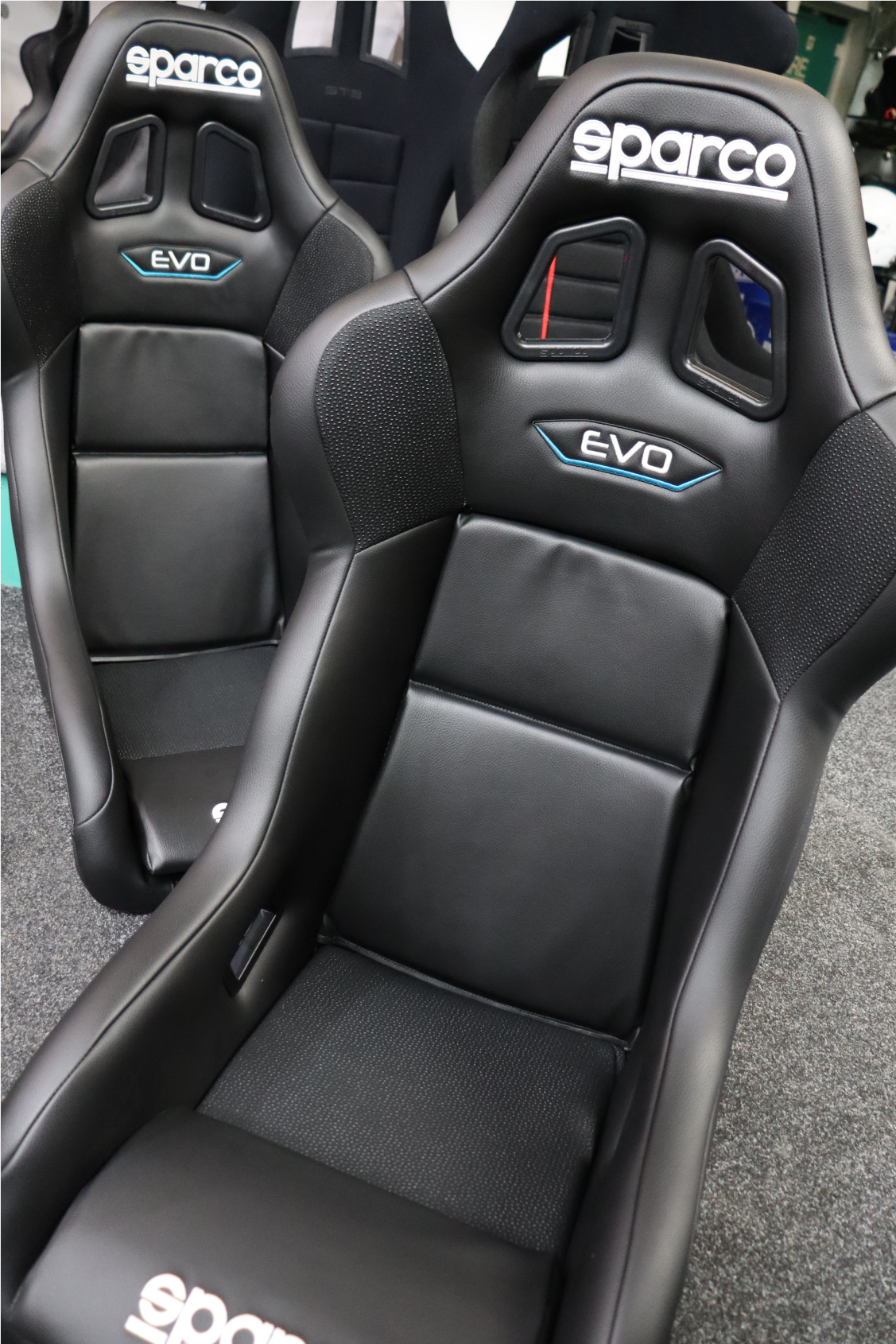
Sparco Evo Sky: A well-proven motorsport bucket seat with a composite shell and waterproof vinyl trim. The Evo Sky is designed for open environments and copes well with moisture and spray. It is a solid choice for racing boats where durability and lateral support are priorities.
Sparco Evo Waterproof range (Evo, Evo L, Evo XL): This range offers the same composite shell and waterproof vinyl trim across three different sizes. Having multiple size options makes it easier to achieve the correct driver fit without compromising on materials or construction. This is especially useful for boats shared between drivers of different builds.
Mirco GT Vinyl: A simple and robust fibreglass bucket seat trimmed in vinyl. The Mirco GT focuses on low weight, strength, and durability, making it well-suited to offshore and racing boat environments where reliability matters more than added features.
Corbeau Sprint X Vinyl (Standard and XL): Available in standard and XL sizes, with a choice of fibreglass, Kevlar, or carbon shell construction. This gives flexibility depending on budget, weight targets, and performance goals. The fixed back composite design and vinyl trim make it a strong option for demanding marine use.
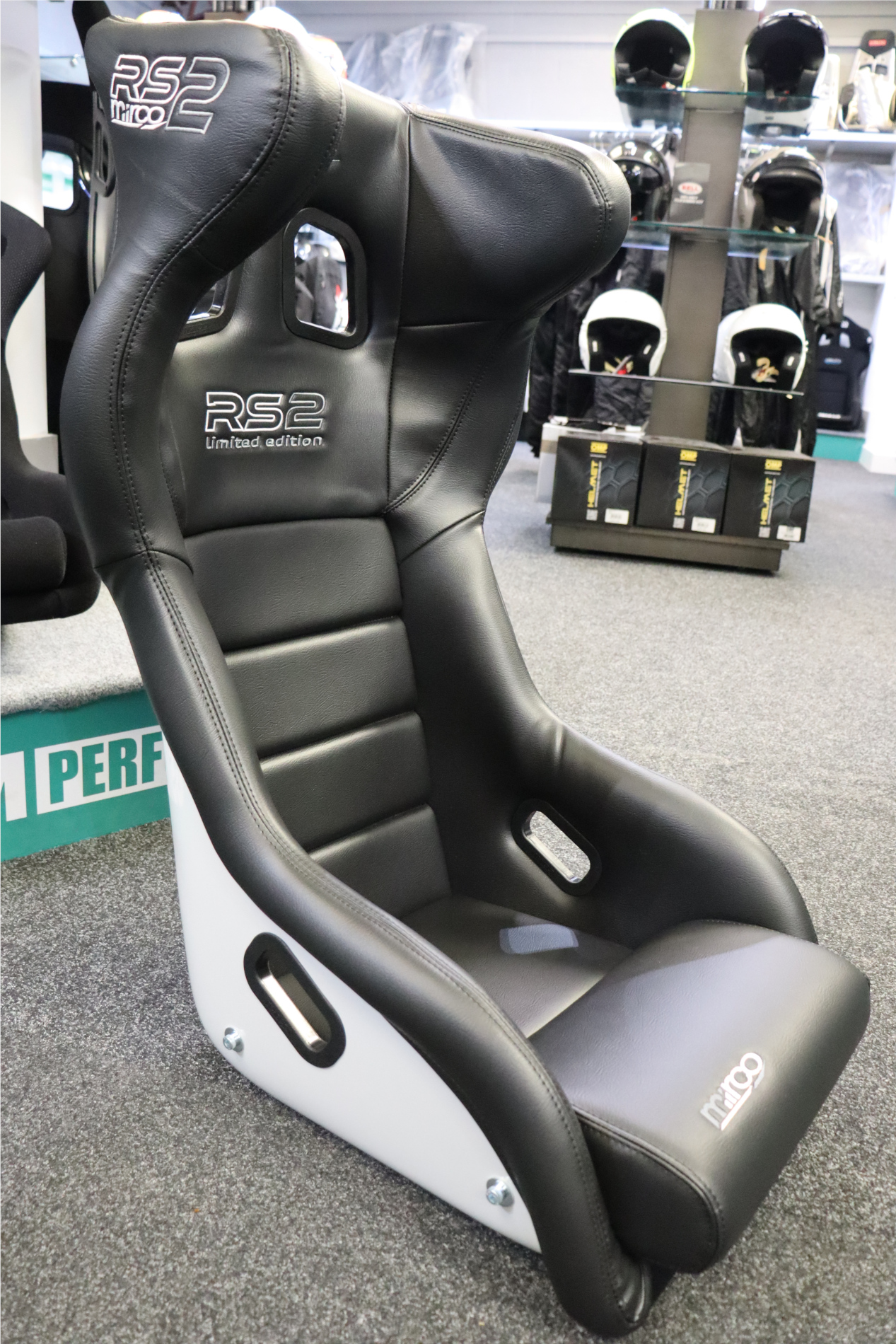
Mirco RS2 Vinyl FIA Motorsport Seat: A composite fibreglass bucket seat with integrated head support. The RS2 Vinyl is FIA approved and designed for high impact environments. The added head restraint is particularly beneficial in racing boats where lateral movement and sudden impacts are more aggressive.
All of these seats avoid steel frame construction, which helps reduce corrosion risk in saltwater conditions. They also avoid reclining mechanisms, which are not suitable for the repeated impacts and loads seen in racing boats. Sticking to a fixed back composite bucket seat with tough vinyl trim is the safest and most durable setup we recommend for marine racing applications.
-
From £583.20 Incl. VATFrom £486.00 Excl. VAT Select options This product has multiple variants. The options may be chosen on the product page
-
From £450.00 Incl. VATFrom £375.00 Excl. VAT Select options This product has multiple variants. The options may be chosen on the product page
-
From £399.60 Incl. VATFrom £333.00 Excl. VAT Select options This product has multiple variants. The options may be chosen on the product page
-
From £708.00 Incl. VATFrom £590.00 Excl. VAT Select options This product has multiple variants. The options may be chosen on the product page






Mounting options depending on your setup
For dedicated racing boats, we recommend side mounting the seat directly to the floor or seat base structure using alloy side mounts. This keeps the seating position low and removes unnecessary components.
In more mixed use setups, where multiple drivers may use the boat, adjustable solutions can be considered. This typically involves using a solid base structure combined with side mounts and limited adjustment. However, this will always introduce more components and a slightly higher seating position.
As with cars, the simpler the setup, the more reliable it tends to be in extreme conditions.
Final thoughts choosing the right seat for racing on water
Choosing seats for a racing boat follows many of the same rules as choosing seats for motorsport. Fixed back fibreglass bucket seats offer the best combination of safety, support, and longevity, especially when paired with alloy mounting hardware and a rigid installation.
Whether you are racing offshore, competing on closed circuits, or running a high performance boat in demanding conditions, the right seat will reduce fatigue, improve control, and help keep you safe when it matters most.
If you are unsure which type of bucket seat or mounting approach suits your setup, our team is always happy to talk through the options and help you make an informed decision.