Cage Padding: Where It Goes And Where It Is Required
Roll cage padding, explained
Where padding goes depends on which tubes your head and body can reach, and how much is compulsory depends on the rulebook for your event. For FIA events, FIA 8857-2001 Type A padding is compulsory on all tubes identified in Drawing 253-68 and on all roof reinforcements. For Motorsport UK national events, non-flammable padding should be fitted, and FIA-homologated energy-absorbing material within 150 mm of the helmet is recommended, though championship-specific rules may go further.
The two products below cover both uses. If you are not certain which spec your event requires before ordering, drop us an email or click to open a chat and we will confirm it for you.
- FIA 8857-2001 Type A padding is compulsory on Drawing 253-68 tubes and all roof reinforcements
- Motorsport UK national rules say padding "should" be fitted, FIA-homologated material within 150 mm recommended
- In a car without a co-driver, FIA rules require padding on the driver's side only
- "8857-2001 Type A" is a tested performance specification, not a foam grade or colour
- Championship-specific rules often require padding where national regulations only recommend it
What is on this page
Which tubes get padded
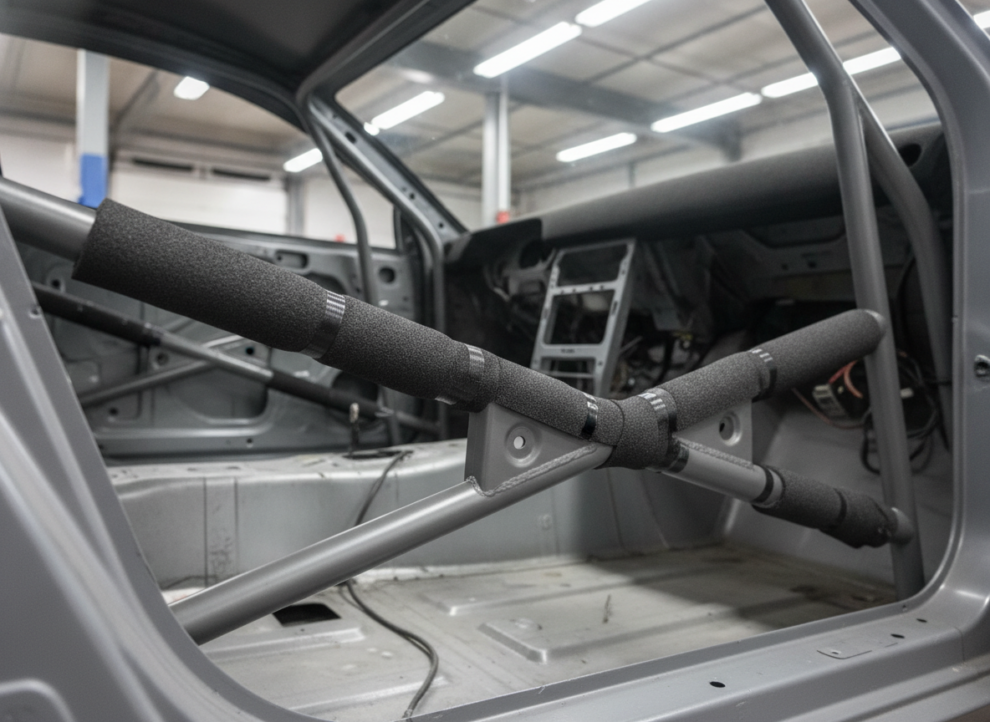
The principle is the same across both rulebooks: any tube your head or body could reach in a crash needs covering. In practice that means the main hoop, the door bars, and all roof reinforcements. Cars built to the FIA specification follow Drawing 253-68, which identifies each member by name.
⚙
Main hoop
The loop running across the car directly behind the driver's head. It is the closest steel to the helmets in a standard seating position and the first tube anyone pads. Named in both the FIA drawing and the Motorsport UK specification.
☰
Door bars
The tubes that close off the door openings. They run alongside the driver and co-driver and need padding along the length within reach. Most builds pad the full bar length to keep scrutineering straightforward.
★
Roof reinforcements
Every tube running across the roof of the cage. Under FIA rules, all of them must be padded, not just the ones at head height. This catches people out who focus on the main hoop and leave the roof bars bare.
Co-driver side: FIA requires both, unless there is no co-driverThe FIA wording is that all tubes in Drawing 253-68 and all roof reinforcements must be padded, but for competitions without a co-driver, padding is compulsory on the driver's side only. If you are running with a co-driver, both sides of every named tube need covering.
Fit it before the event, not the morning ofPadding is one of the quickest and cheapest additions to a finished cage. Garreth's advice is to fit it before the car goes to its first event, not the morning of, because cutting and fitting foam under pressure is no fun for anyone.
What the rulebooks actually require
FIA and Motorsport UK use different language and that difference matters.
FIA Appendix J Article 253 says: “Where the occupants’ bodies could come into contact with the safety cage, flame retardant padding must be provided.” All tubes in Drawing 253-68 and all roof reinforcements must use padding that meets FIA standard 8857-2001 Type A. That is a must, not a should.
Motorsport UK NCR 2026 Chapter 7 Appendix 3 Article 16 says non-flammable padding “should” be provided where the occupant could contact it, and FIA-homologated energy-absorbing material within 150 mm of the helmet is “recommended”. At national level those are advisory, but championship-specific rules can and often do make them compulsory for the class.
Check your championship regs as well as the national onesMotorsport UK's national wording is advisory. Many championships write padding into their own class regulations as a hard rule. Read both the NCR and the championship-specific regs for your class before deciding how much to fit.
FIA 8857-2001 Type A is a performance specificationIt covers how the material absorbs energy under impact. A product has to be tested and certified to that standard. You cannot substitute a generic foam and assume it qualifies, even if it looks and feels similar to a certified product.
If your event regulations are not clear on which standard applies, send Cameron the championship name and class and he will find the relevant wording before anything gets ordered. Drop us an email or click to open a chat.
Cage padding for Custom Cages kits
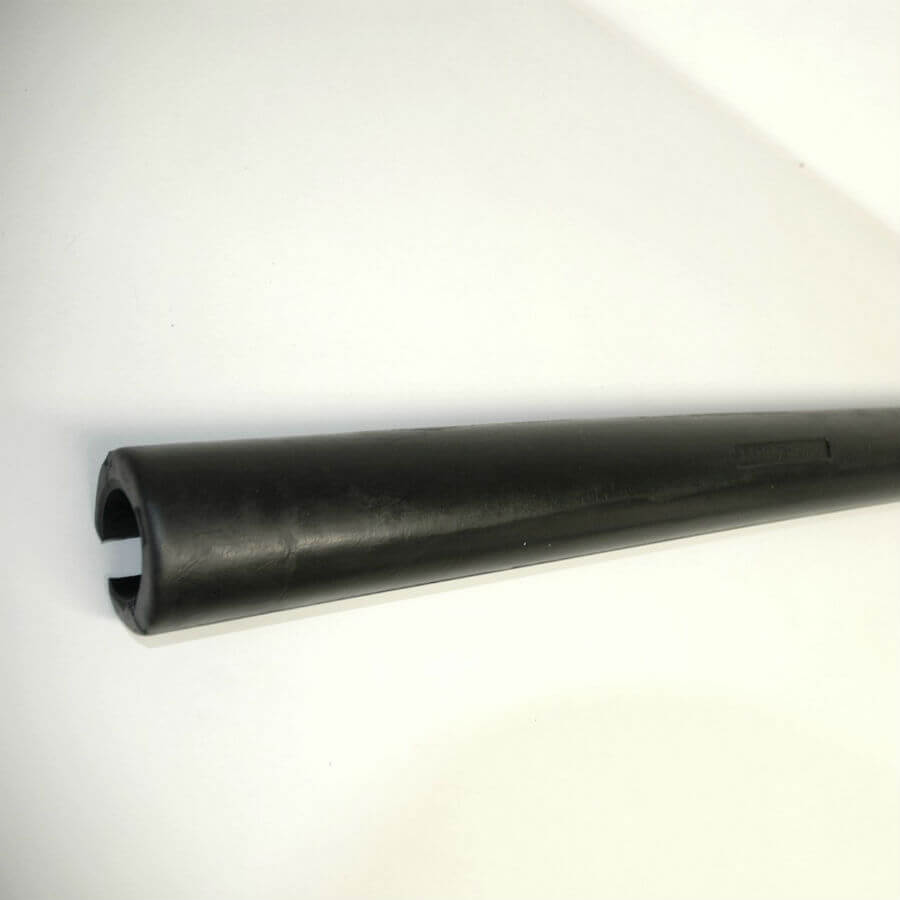
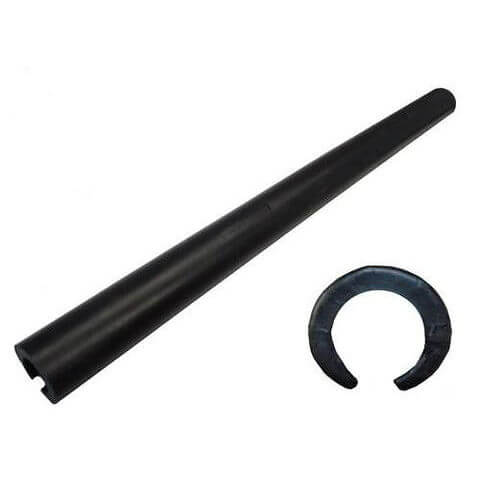
Two products, covering the primary structure and the door bars. The main cage padding fits the larger tubes of the hoop and bracing. The door bar padding is shaped for the lower members alongside the driver. Both are the products the Custom Cages technical builds team recommend for use with their kits.
💬
Not sure which spec your event requiresSend us the championship and we'll confirm it
FIA, Motorsport UK national, or a specific series with its own class regs, they each use slightly different language. Send Cameron the event name and class and he will find the regulation wording and tell you which products cover it.
Common questions about cage padding
Is cage padding compulsory?
For FIA events, yes. FIA 8857-2001 Type A is mandatory on all tubes in Drawing 253-68 and all roof reinforcements, and there is no advisory language in the FIA text. For Motorsport UK national events, the national wording is advisory, though championship-specific rules may make it compulsory for your class.
What does FIA 8857-2001 Type A mean?
It is the FIA specification for energy-absorbing padding used inside cages. The standard covers impact performance rather than foam grade or colour. A product has to be tested and certified to meet it. A generic foam, even a stiff or flame-retardant one, does not automatically qualify.
Does the co-driver's side need padding too?
Under FIA rules, yes, when a co-driver is in the car. Both sides of every tube named in Drawing 253-68 must be padded. For a car running without a co-driver, the FIA requires padding on the driver’s side only.
Can I use any foam, or does it have to be a specific product?
For FIA events, the material has to be certified to FIA 8857-2001 Type A. For Motorsport UK national events, non-flammable material is the stated requirement and FIA-homologated energy-absorbing material within 150 mm of the helmet is recommended. Generic foam that has not been tested and certified to those standards does not meet either.
How much padding does a full cage take?
The main hoop and door bars typically take one to two packs depending on the cage build. If you want a count for your specific kit, drop us an email or click to open a chat with the cage model and we will work it out with you.
Where to look next
For the steel the cage is built from, the T45 vs CDS guide covers what each material is, what the rulebooks specify, and the full price breakdown across the range in both steels.
The full Custom Cages range lists every kit we hold by make and model. More make-specific guides are being added to the programme regularly.
If the championship regulations are not clear on padding requirements, ring 0115 647 8650 with the event name and class and we will go through the regulation wording with you before anything gets ordered.
Need a personal recommendation?
We're here to ensure you pick the right seat.
Contact us today.