How Deep Are Bucket Seat Head Supports? Cameron Measured Every Shell In The Showroom
Head supports measured: 13 seats, three numbers each
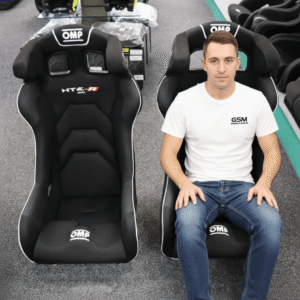
When we compared head supports for a classic 911 customer earlier this month, we hit a wall: no seat maker publishes how far their head supports actually reach forward. Sparco print one depth figure, Cobra draw one on a diagram, OMP publish widths only. So Cameron took a tape measure round the showroom and measured every shell with head supports on display. This page is those numbers, and nobody else has them.
Why bother? Because head support depth is the biggest difference between two seats that look the same in a photo. It decides how held your head is in a corner, and it decides what you can see at a junction. Deep is not better or worse than shallow. They are different tools, and this page is about picking the right one.
- Measured by Cameron with a tape on the showroom shells, because no maker publishes these figures
- Internal depth runs from 190mm (OMP RS-PT) to 300mm (Cobra Evolution GT)
- Width between the supports runs from 300mm (OMP HTE-R 400) to 450mm (Evolution GT)
- Deep and narrow holds a helmet; shallow and wide keeps your shoulder checks
- Every measured seat that is in stock is linked below
The three numbers, and where the tape went
Each seat gets three figures. Sit in the seat with your head against the backrest and they describe the pocket around your head. The internal front to back figure is the working one: it is how far the support runs forward alongside your head from where the back of your head rests. The external figure is the same measurement taken on the outside of the shell, so it includes the shell and padding behind you, and the gap between the two tells you how thickly padded the seat is back there. Width is the opening between the two supports.
The three numbers, seen from above with forward up the page. Internal is the one you feel: it is how much support actually runs alongside your head. External includes the shell and padding behind you, so it is always the bigger figure. Not drawn to scale for any one seat.
Internal depth compared: the aggression ranking
This is the ranking that matters. The deeper the support, the further forward it reaches alongside your head, and the more aggressive the seat is about keeping your head where it put it.
Cameron’s tape, straight off the showroom shells. The deeper the bar, the further the support reaches forward alongside your head. Race Pro STD and XL share one row because the head support is identical on both sizes.
Two things stand out from the tape. The spread is enormous: the Evolution GT reaches 110mm further forward than the RS-PT, which is the difference between a support that ends level with your ears and one that runs past your eyeline. And the clustering is real: most competition shells land between 260mm and 290mm, so the outliers at each end are deliberate design choices, one built for maximum containment, one built to stay out of your way.
Width: how much room your head gets
Depth is half the story. A deep support that sits wide of your head still lets you move; a moderate support close to your helmet locates it firmly. The tightest opening we measured is the OMP HTE-R 400, which is no accident: it is the narrow-wing shell OMP build for tight cockpits, and its 220mm depth with a 300mm opening holds a helmet without reaching far forward. The three Mirco shells sit just behind it, which is exactly what they are for: a helmeted head in a rally or race car, held.
The space your head lives in. The tight end suits a helmet you want held; the wide end leaves room to move your head in day to day driving, and suits broader shoulders too.
The trade: containment against visibility
The two ends of the range we measured, drawn from above. Same head, same seat back, different wing depth, and the dashed lines show why the deep seat feels so different at a junction.
Sit in the two seats in the diagram and the difference is immediate. In the shallow seat you turn your head at a junction the way you do in any car. In the deep one you learn to use your mirrors properly and turn your shoulders when you genuinely need to look, which is fine on a circuit where everything you care about is ahead or in the mirrors, and wearing on a road car you drive every day.
Garreth puts it like this across the counter: if the car wears a helmet more often than a flat cap, buy deep and narrow. If it parks at supermarkets, think hard before you put your head in a tunnel.
The full table
| Seat | Internal front to back | External front to back | Width |
|---|---|---|---|
| OMP RS-PT | 190mm | 260mm | 350mm |
| OMP HTE-R 400 | 220mm | 260mm | 300mm |
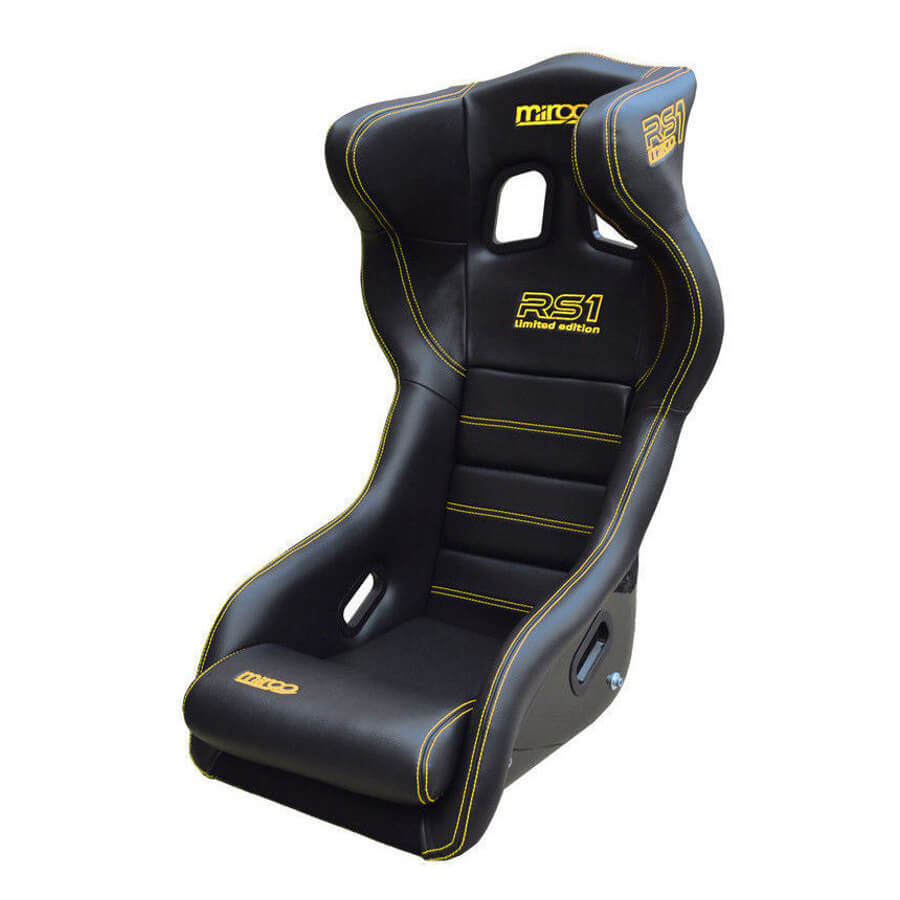
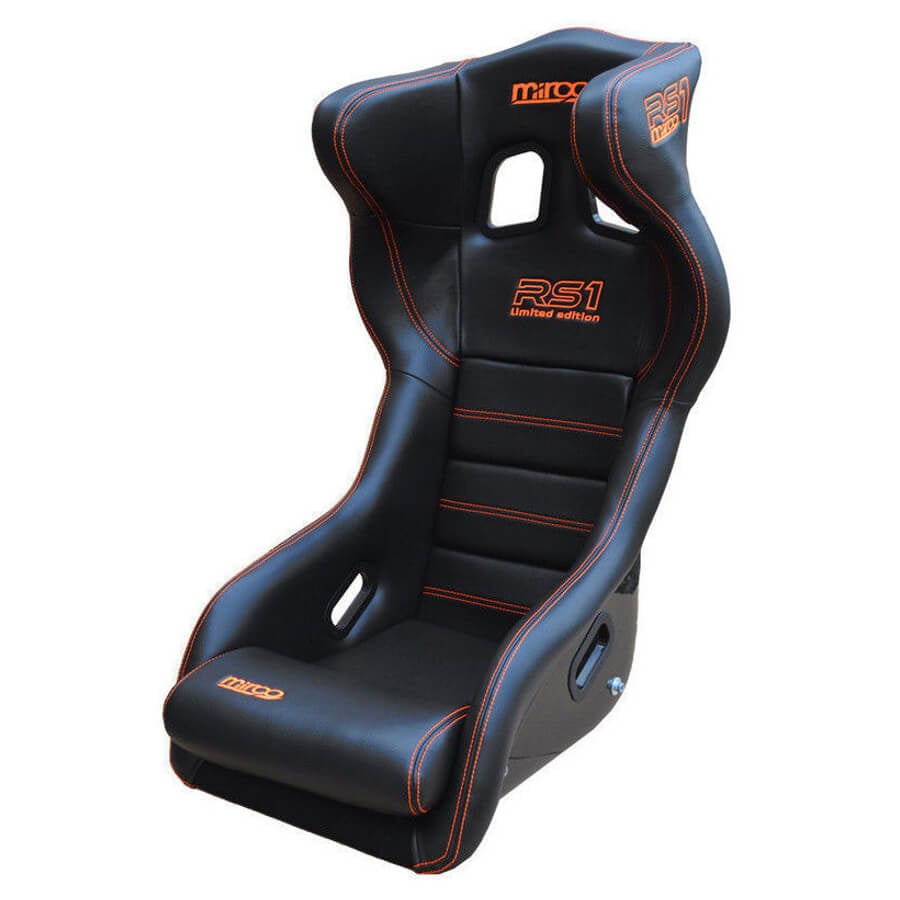
| Mirco RS1 | 260mm | 310mm | 310mm |
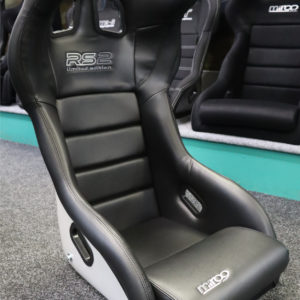
| Mirco RS2 | 260mm | 310mm | 320mm |
| Sparco Circuit | 270mm | 300mm | 380mm |
| Cobra Sebring GT | 270mm | 340mm | 420mm |
| Motordrive Race Pro STD | 280mm | 320mm | 400mm |
| Motordrive Race Pro XL | 280mm | 320mm | 400mm |
| Sparco Circuit II | 290mm | 300mm | 440mm |
| Mirco RS7 | 290mm | 300mm | 330mm |
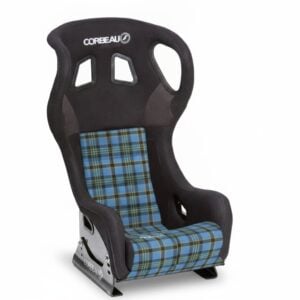
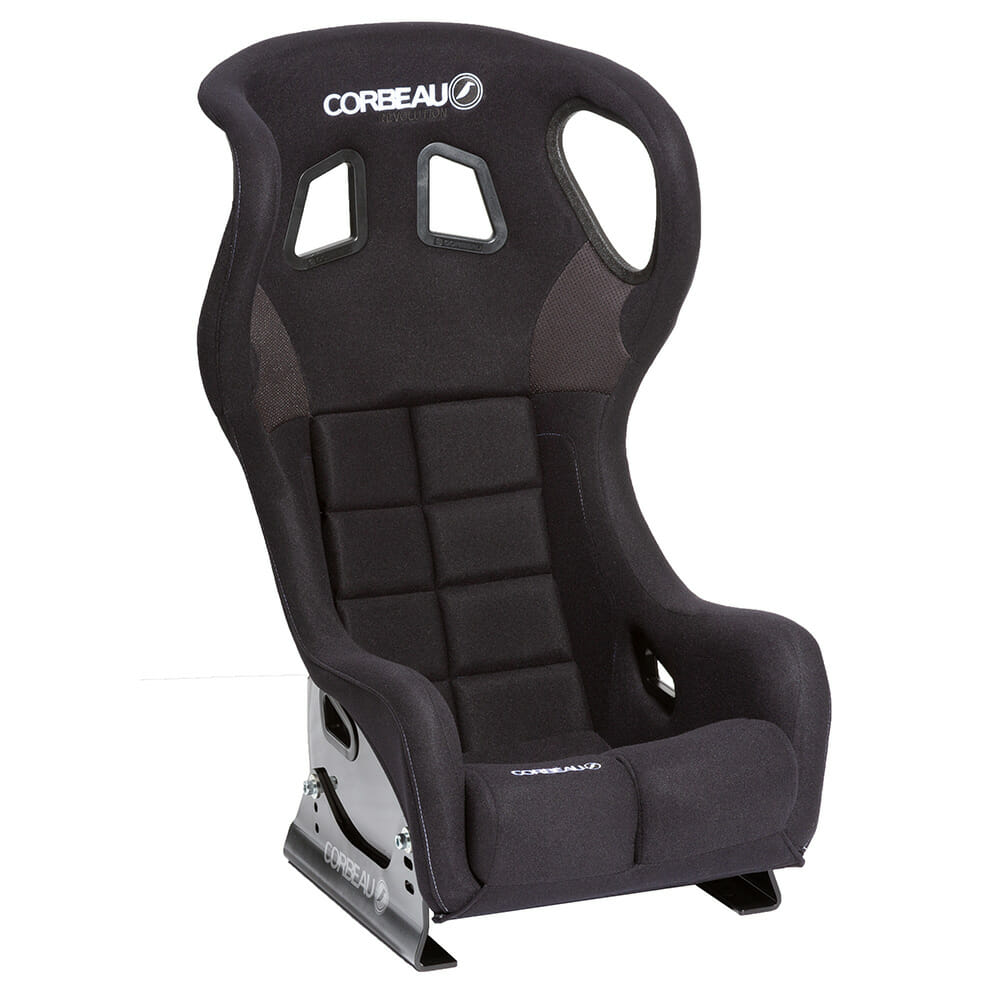
| Corbeau Revolution STD | 290mm | 340mm | 430mm |
| Corbeau Revenge XL | 290mm | 350mm | 400mm |
| Cobra Evolution GT | 300mm | 370mm | 450mm |
Measured by Cameron on the showroom shells, August 2026. Trim and padding batches vary a little, so treat these as accurate to around 10mm and ring us if a single centimetre decides your build.
Which end of the range is yours?
Deep and narrow: the competition end
Evolution GT, RS7, Circuit II, Revolution and Revenge XL for depth; RS1, RS2 and RS7 for a close-fitting opening. This end assumes a helmet and a harness, and it is what you want when the car spends its life on circuit or stage. The Mirco RS7 is the interesting one: 290mm deep AND a tight 330mm opening, which is as located as anything we measured.
Shallow and open: the road end
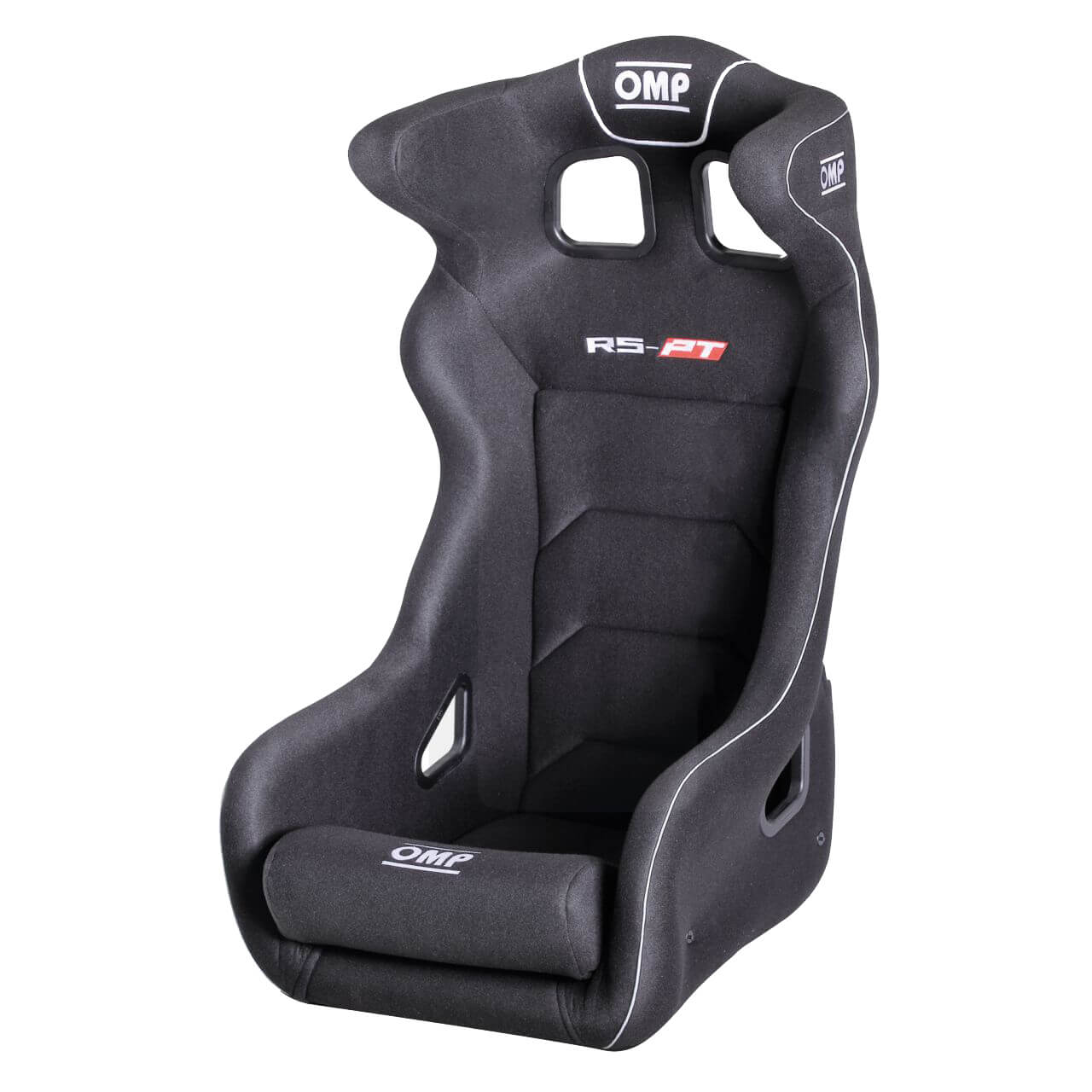
The RS-PT is the standout, 190mm deep with a sensible 350mm opening, a proper FIA shell that still lets you see the give way line. The Sparco Circuit and Sebring GT sit in the middle: real support with liveable sightlines, which is why they end up in so many fast road builds.
-
From £375.00 Incl. VATFrom £375.00 Excl. VAT250+ coloursKlarna ReadySelect options This product has multiple variants. The options may be chosen on the product page
-
From £405.00 Incl. VATFrom £405.00 Excl. VAT250+ coloursKlarna ReadySelect options This product has multiple variants. The options may be chosen on the product page
-
From £646.17 Incl. VATFrom £646.17 Excl. VATKlarna ReadySelect options This product has multiple variants. The options may be chosen on the product page
-
From £895.00 Incl. VATFrom £895.00 Excl. VATKlarna ReadySelect options This product has multiple variants. The options may be chosen on the product page
-
From £920.00 Incl. VATFrom £920.00 Excl. VATKlarna ReadySelect options This product has multiple variants. The options may be chosen on the product page
-
From £960.00 Incl. VATFrom £960.00 Excl. VATKlarna ReadySelect options This product has multiple variants. The options may be chosen on the product page
-
From £890.00 Incl. VATFrom £890.00 Excl. VATKlarna ReadyNew for 2026Select options This product has multiple variants. The options may be chosen on the product page
Common questions
Why does nobody publish these figures?
Honestly, we do not know. Sparco print one depth on their sizing chart, Cobra draw one on a side view, OMP publish widths only, and none of them measure the internal face a head actually sits against. It is why Cameron measured our own stock, and why the classic 911 version of this question turned into a research job.
Is a deeper head support safer?
It holds your head more, which is what competition shells are designed to do as a system with a harness and a helmet. We sell seats, we do not write safety regulations, so check your class rules for what your discipline requires and ring us if the wording is unclear.
Can I daily drive a seat with deep head supports?
People do, and most of them adapt their mirror habits within a week. Our honest advice is to sit in one first. The showroom has both ends of this table on display, and five minutes in a deep shell at a pretend junction tells you more than any diagram.
My seat is not in the table. Can you measure it?
If we have it on display, yes. Ring us and Cameron will put the tape on it the same way, so the numbers compare like for like with this page.
Do these measurements change with trim?
A little. Padding thickness varies by trim and batch, which is why the table carries a roughly 10mm tolerance. The shell shape is the fixed part; the padding fine-tunes it.
Those two answers place you on this table straight away. Cameron will shortlist the seats that match, check your size against the shells, and if you can get to Nottingham, the showroom has the deep and the shallow ends side by side to sit in.
Where to go next
The companion piece to this page is our classic 911 head support comparison, which covers what the makers do publish and how we chased it. Ring 0115 9893488 with the car and how you use it, and we will get the right shell around your head first time.