Call Garreth, Cameron & Jack: 0115 647 8650

FREE UK shipping on orders over £100.00 & FREE gifts on checkout

Your garage NewAdd your car and see the parts that fit
Useful Links
Your Account

Talk to us

Garreth, Cameron & Jack · Mon to Fri
Call 0115 647 8650Free advice on your build
Thanks, that’s with us. We reply the same working day.
That didn’t send. Please give us a call instead.

Useful Links

Quick Access

Want to chat?

Call Garreth, Cameron, Jack
Today On: 0115 647 8650
Click Here For Our Contact Form


The Latest Safety Devices Volkswagen Roll Cage Lineup And Definitive Guide

Roll cage guide, Volkswagen

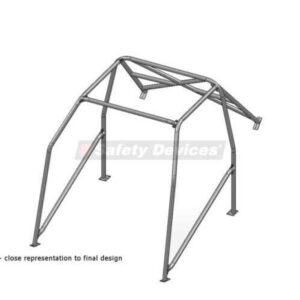
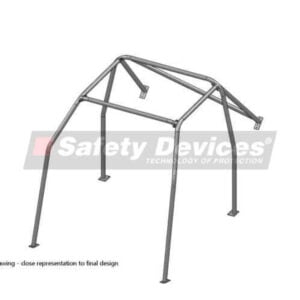
Safety Devices have made roll cages for decades, and their Volkswagen range covers most of the classic VWs people build: Golf Mk1 to Mk4, the Golf Mk7, the Polo G40, the Scirocco Mk1 and the original Beetle. There are two main kinds on our site: rear cages, which bolt in behind the front seats, and full cages, which add a front section and door bars or come as a complete weld-in structure.

This guide goes through what each kind is for, which Volkswagen models are covered, what the options on each cage mean, and what to think about before one goes in the car. It is written by Garreth and Cameron from the questions we get asked most, and anything about approval comes from the listings themselves.

  • Safety Devices VW cages cover the Golf Mk1 to Mk4 and Mk7, Polo G40, Scirocco Mk1 and Beetle
  • Rear cages can be used alone; front sections must be used with a rear cage
  • Rear options include a single fixed diagonal, a harness bar and a cross diagonal
  • Bolt-in cages come in black powdercoat as standard, with other colours available
  • Weld-in cages for the Golf Mk3 and Mk7 come unpainted and oiled, around 44kg
  • Approval varies by cage; each listing says whether it is homologated
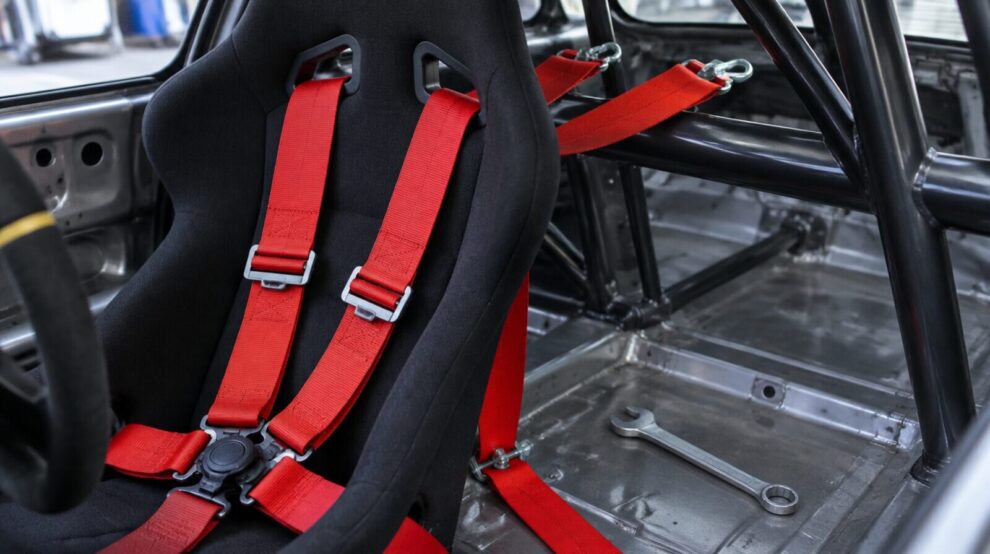
A black bucket seat with a red harness in a stripped car with a black roll cage and harness bar behind it
A bucket seat, harness and roll cage in a stripped car. A general workshop photo, not a Volkswagen or a specific Safety Devices cage.

The Safety Devices Volkswagen range

Each cage is built for one shell, and some models have more than one cage number depending on the year or whether the car has a sunroof. That detail matters: a cage for a Golf Mk2 without a sunroof is a different part from one for a car with a sunroof. These are the full cages on our site, with the approval as each listing gives it.

ModelCageTypeApproval on our listing
Golf Mk1 (1974 to 1982)W0026 point bolt-inListed as FIA approved
Golf Mk1 (1982 to 1983)W0086 point bolt-inHomologated
Golf Mk2 with sunroofW010Bolt-inHomologated
Golf Mk2 without sunroofW0126 point bolt-inHomologated
Golf Mk3W0308 point bolt-inHomologated
Golf Mk3 (3 door, no sunroof)W018CDS weld-inHomologated
Golf Mk4 hatchback with sunroofW0316 point bolt-inRoad and track, not for competition
Golf Mk7 (3 door, no sunroof)W042T45 weld-inHomologated once Safety Devices approve the installation
Polo Mk2 G40W033 / W0156 point / multipoint bolt-inRoad and track, not currently FIA certified
Scirocco Mk1W0046 point bolt-inHomologated
Original Beetle (1950 to 2003)W0016 point bolt-inListed as FIA approved

Rear cages are listed separately for the Golf Mk1, Mk2, Mk3 and Mk4, the Polo G40, the Scirocco Mk1 and the Beetle. If your car is not on the list, ask us; we can check with Safety Devices.

Full cages

A full cage suits a car being prepared for competition, a track car that needs more protection, or anyone who wants the most complete structure. On the bolt-in cages, the full cage is built up from sections: a front cage, a rear cage and door bars. The listings are clear on how they go together: the front section must be used with a rear cage, and the door bars must be used with both.

The front cage on most VW models is designed to clear the normal trim and dashboard, with the front legs mounting to the floor. The Polo G40 multipoint cage is the exception on our list: its front cage goes through the dashboard. Door bars add side protection and tie the front and rear together.

The weld-in cages for the Golf Mk3 (W018) and Golf Mk7 (W042) are different. They come as a complete cage only. The Mk3 cage is a CDS cage with cross door bars, a cross diagonal in the backstays, a roof diagonal, lower backstays, front triangulation, a tunnel brace and a dash bar. The Mk7 cage is T45, with bent cross door bars, harness bars, roof and backstay bracing, windscreen reinforcement bars and gussets. Both are supplied unpainted but oiled, and both come in at around 44kg.

The weld-in cages need proper fabrication. The listing for the Golf Mk7 cage says it is homologated once Safety Devices have approved the installation, which tells you how much the fitting matters.

If you are building a competition car, speak to your scrutineer about what your class needs before you choose between bolt-in and weld-in.

The rear section of a Safety Devices bolt-in roll cage behind the rear seat of a Volkswagen Golf Mk3, showing the diagonal
A Safety Devices W030 cage fitted in a Golf Mk3, from the listing photos.

Rear cages

A rear cage adds a main hoop and backstays behind the front seats. It stiffens the rear of the car and gives the harness somewhere proper to mount, and it keeps the front of the cabin as it was. That makes it a common choice for fast road cars, hill climb cars and lighter track builds.

On the bolt-in VW cages, the rear cage comes in a few forms, chosen from the drop-down on the listing. On the Golf Mk4, for example, the options are a single fixed diagonal, a single fixed diagonal with a harness bar, and a cross diagonal with a harness bar. All three may be used alone.

The useful part is that the rear cage is the starting point for the full cage on the bolt-in models. Start with a rear cage now, and the front section and door bars can be added later, because the front section is designed to go with the rear. On the Golf Mk4, the rear cage backstays mount to the wheel arches.

The cages are finished in black powdercoat as standard. The listings offer grey, charcoal grey, silver, white and red, and unpainted by special request.

Each part number is specific to a shell, so check the year, body style and sunroof before ordering. If in doubt, send us the details and we will confirm the cage number.

A roll cage leg bolted to a floor plate in the rear footwell of a Volkswagen Golf Mk3, next to a fire extinguisher
A cage leg on its floor plate in a Golf Mk3, from the Safety Devices W030 listing photos.

Choosing the right cage for your VW

Start with how the car will be used. If it is going into competition, your championship regulations decide what cage you need, and your scrutineer has the final say. That usually points to a homologated cage. If it is a fast road or track day car, a rear cage with a harness bar is where many builds start.

Then look at the approval on the listing. Some of the VW cages are listed as homologated, and some are road and track only. The Golf Mk4 cage, for example, is listed as not for competition use, and the Polo G40 cages as not currently FIA certified. We will not guess at what a cage is approved for; the listing is the place to check, and we can ask Safety Devices if something is not clear.

Finally, think about the future. On the bolt-in models, a rear cage now and a front section later is a common way to build a car that starts on the road and ends up on track.

Fitting

A roll cage is there to protect the people in the car, so the fitting needs care and experience. We recommend a professional fitter for any Safety Devices cage. They will position the cage properly, torque the fixings, and make sure the mounting plates sit flat against the shell, so there are no gaps or stress points.

Weld-in cages need a qualified fabricator who understands motorsport cage work. The quality of the welding is part of the strength of the cage, and a scrutineer will look at it.

Safety Devices cages are made to order, so allow for the lead time when you plan the build. Tell us when the car needs to be ready and we will give you an idea of timing when you order.

Harnesses and the harness bar

A cage also gives you the right mounting for a motorsport harness. The shoulder straps need to leave the seat at the correct angle, and the harness bar is what makes that possible. Mounting the shoulder straps straight down to the floor puts the load on the body at the wrong angle.

Several of the VW rear cage options include a harness bar, so choose one of those if you plan to run a harness. The harness manufacturer’s instructions set out the angle the straps should run at, and the bar should put the straps level with the harness slots in your seat.

Our guide to base mount or side mount covers the seat side of the job, and we can suggest harnesses to suit your seats, the cage and how the car is used.

Yes. The listings say the rear cage options may be used alone. The front section must be used with a rear cage.

No. The W031 Golf Mk4 cage is listed as road and track, not for competition use.

Black powdercoat as standard, with grey, charcoal grey, silver, white and red available, or unpainted by request.

If you want to run a harness, yes. Choose a rear cage option that includes a harness bar.

We recommend a professional fitter for any cage, and a qualified fabricator for a weld-in cage.

💬
Where to startA rear cage with a harness bar

For most VW road and track builds it is the starting point, and the front can follow later.

Need a personal recommendation?

We're here to ensure you pick the right seat. Contact us today.
Our showroom virtual walk through!
Have a walk around our showroom before you even buy your new seats. 
Our hands on experience, is what allows us to bring you our recommendations.
Free UK Shipping

On all orders above £100

Showroom

Try before you buy, by appointment

Delivery Tracking

Updates by email and text