Call Garreth, Cameron & Jack: 0115 647 8650

FREE UK shipping on orders over £100.00 & FREE gifts on checkout

Your garage NewAdd your car and see the parts that fit
Useful Links
Your Account

Talk to us

Garreth, Cameron & Jack · Mon to Fri
Call 0115 647 8650Free advice on your build
Thanks, that’s with us. We reply the same working day.
That didn’t send. Please give us a call instead.

Useful Links

Quick Access

Want to chat?

Call Garreth, Cameron, Jack
Today On: 0115 647 8650
Click Here For Our Contact Form


Customer Question: What Is The Difference Between Road And Race Harness Belt Webbing?

Harness guide

A customer came into the showroom with a good question: what is the difference between road and race harness webbing? They wanted a harness that looked as close as possible to a factory seat belt, while still giving more support. Plenty of enthusiasts are in the same position: they want the hold of a multi point harness without needing a full FIA competition setup.

To answer it, we laid out road and FIA harnesses from several brands side by side and photographed them. This guide goes through the physical and regulatory differences, why road harnesses cannot be used in competition, and which range comes closest to the look of an OEM seat belt.

  • Road and track harnesses are not FIA approved and cannot be used in FIA regulated competition
  • FIA harnesses are homologated to standards such as FIA 8853-2016 or 8854-98
  • FIA harnesses often use 3 inch shoulder webbing and a rotary or cam lock buckle
  • FIA harness labels carry a date after which they are no longer valid
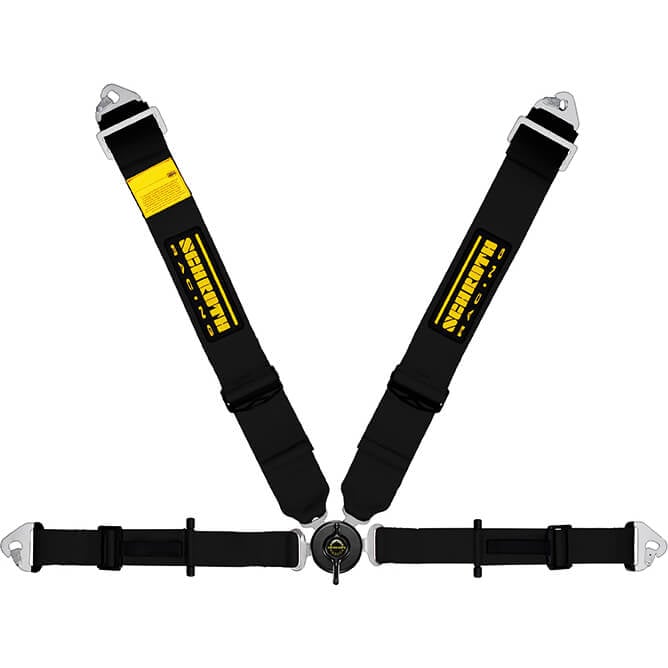
  • Schroth's ASM range has the webbing closest to an OEM seat belt, in road and FIA versions
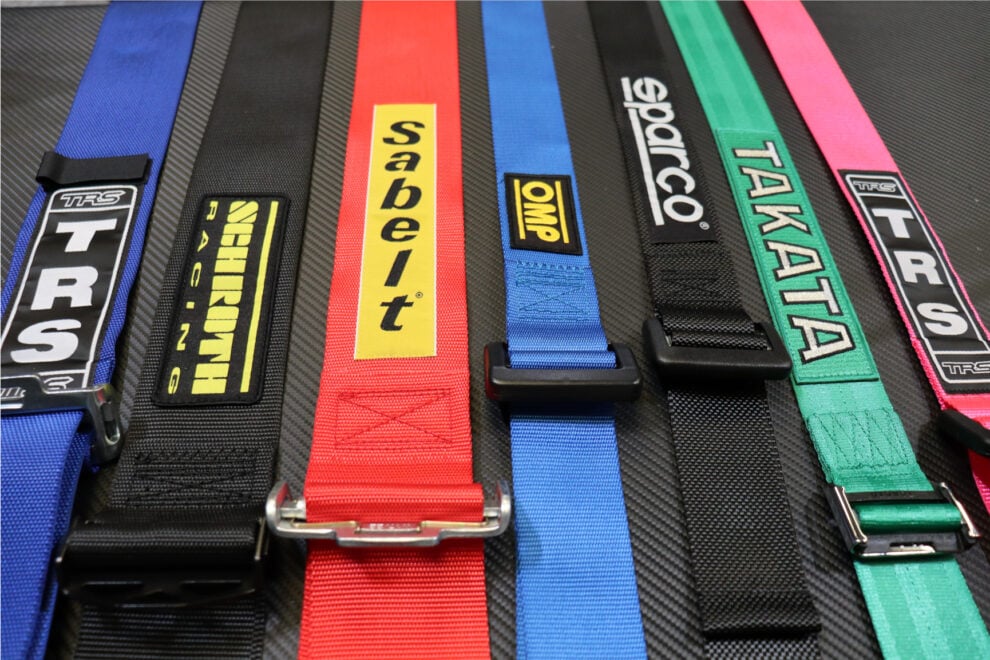
Harness straps from TRS, Schroth, Sabelt, OMP, Sparco and Takata laid side by side on a carbon effect mat
Road and FIA harness straps from several brands, side by side in our showroom.

The physical and regulatory differences

At first glance road harnesses and FIA harnesses look alike. The differences are in the webbing, the hardware and, above all, the approval, which decides where each can be used.

Road and track harnesses

  • Made for road use and non competitive track days
  • Not FIA approved, so not accepted in FIA regulated events
  • Often softer webbing, which is more comfortable day to day
  • Usually bolt in or clip in, and often use factory style mounting points
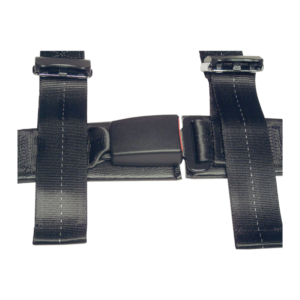
  • Buckles more like a factory seat belt, such as a clip buckle

FIA motorsport harnesses

  • Homologated to FIA standards, such as FIA 8853-2016 or the older 8854-98
  • Tested to take the loads of a serious impact
  • Stronger webbing and reinforced stitching, which reduce stretch in an impact
  • Often 3 inch shoulder straps, with 2 inch versions made for use with a head and neck restraint
  • Rotary or cam lock buckles that release every strap at once
  • Required by championships that ask for an FIA harness, including many circuit, rally and endurance series

Look closely at an FIA harness and you will find a label stitched into the webbing, with the homologation and a date after which the harness is no longer valid for competition. Scrutineers check it.

A road harness has no such label, because it is not homologated. That label, more than the look of the webbing, is what separates the two in the eyes of the rules.
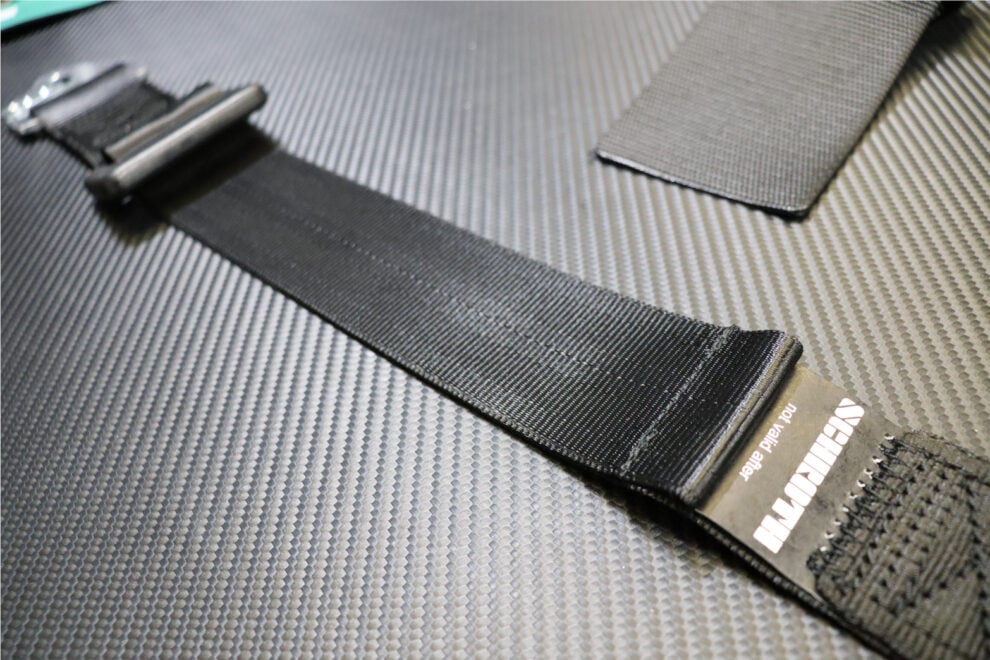
A black Schroth harness strap with its label reading not valid after, on a carbon effect mat
A Schroth strap with its FIA label and validity date.

Why road harnesses are not accepted in motorsport

A common assumption is that a road harness will do for competition. It will not. A road harness does not meet FIA standards, and using one where an FIA harness is required means failing scrutineering and not racing.

  • Road harnesses have not been through FIA homologation testing.
  • Their webbing can stretch more under load, which reduces protection.
  • Clip style buckles are not the rotary or cam lock releases that competition harnesses use.
  • FIA harnesses are designed around competition seats, roll cages and, in many cases, head and neck restraints.

For fast road driving and non competitive track days, a road and track harness is a sensible choice. For competition, an FIA approved harness is the only option.

The harness that looks most like an OEM belt

Our customer’s priority was the look. They wanted a harness that sat well with a factory interior. Comparing the webbing side by side, the Schroth ASM range came closest to an OEM seat belt.

  • OEM style webbing. The weave and finish are close to a factory belt.
  • ASM, Anti-SubMarining. A loop sewn into one shoulder strap lets it extend differently in a frontal impact, pushing the pelvis down into the seat so the driver does not slide under the lap belt.
  • Road and FIA versions. The Schroth Rallye ASM harnesses are road and track harnesses, while the Profi II and Clubman II ASM are FIA 8854-98 homologated. Check the approval on the listing for the one you choose.
  • Easy fitting. Clip in and bolt in versions are available.

Garreth’s advice is to choose by use first and look second: decide whether the car needs an FIA harness, then pick the Schroth version that fits the bill.

Choosing the right harness

It comes down to how the car is used:

  • Road and track days. A road and track harness gives better support than a standard belt, with more comfort. A 4 point ASM harness is a popular choice.
  • Competition. An FIA approved harness is required, with its reinforced webbing, competition buckle and valid label.
  • OEM look. The Schroth ASM range is the closest match to a factory belt, in both road and FIA versions.

Whatever you choose, the seat and mounting points matter as much as the harness. Our guide to using a 5 or 6 point harness with a standard or reclining seat explains why.

Not where an FIA harness is required. Road harnesses are not homologated and will fail scrutineering.

It is homologated to an FIA standard, with reinforced webbing, a competition buckle and a label showing its validity date.

In our comparison, the Schroth ASM range had the webbing closest to an OEM belt.

Anti-SubMarining. A loop in one shoulder strap helps stop the driver sliding under the lap belt in a frontal impact.

Some are. The Profi II and Clubman II ASM are FIA 8854-98, while the Rallye ASM harnesses are road and track.

💬
For an OEM lookSchroth ASM

The webbing closest to a factory belt, with road and FIA versions to suit how the car is used.

Need a personal recommendation?

We're here to ensure you pick the right seat. Contact us today.
Our showroom virtual walk through!
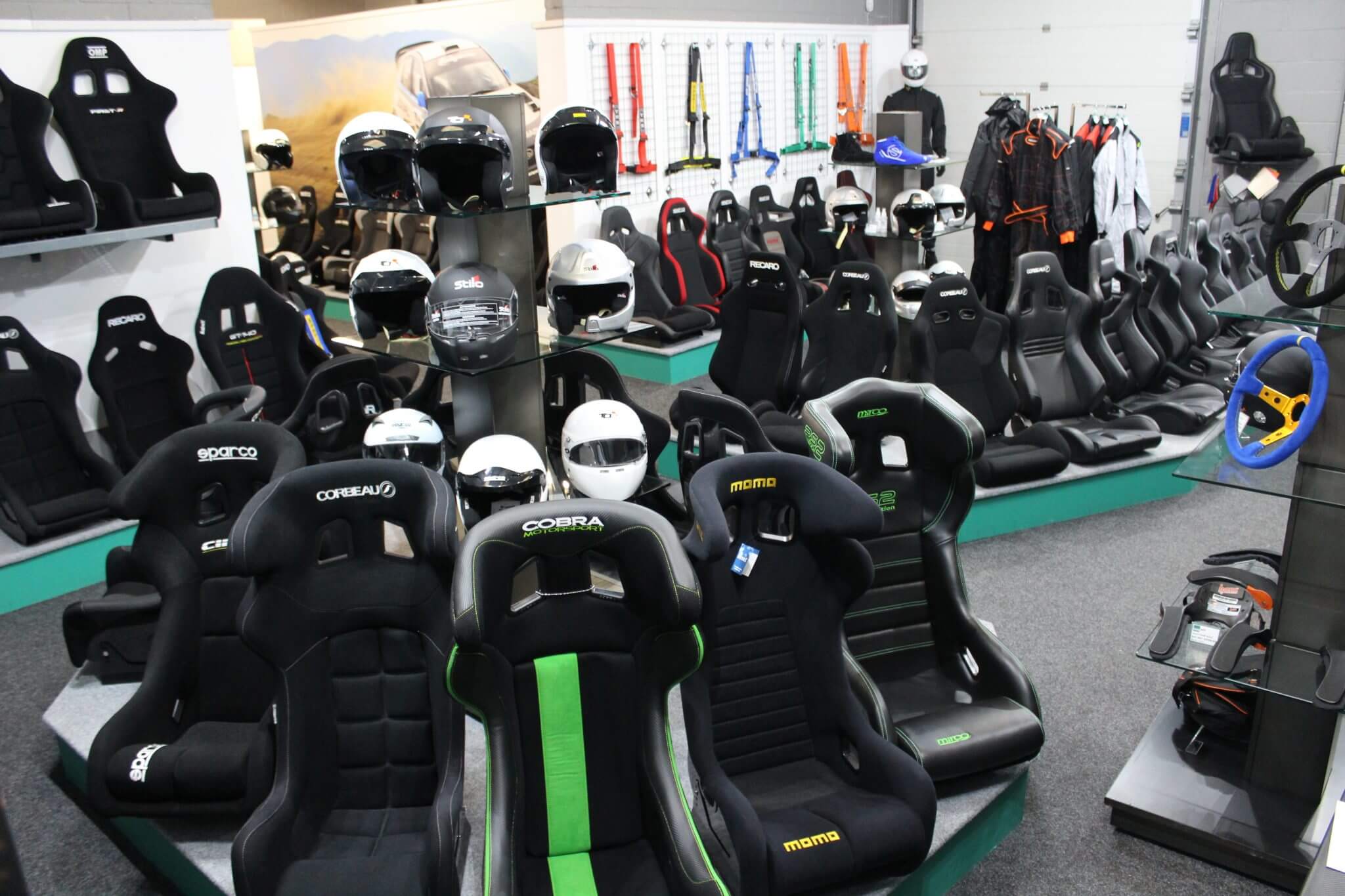
Have a walk around our showroom before you even buy your new seats. 
Our hands on experience, is what allows us to bring you our recommendations.
Free UK Shipping

On all orders above £100

Showroom

Try before you buy, by appointment

Delivery Tracking

Updates by email and text