What's The Biggest FIA Seat I Can Fit Into My Classic Mini Race Car?
The Classic Mini remains one of the most exciting and rewarding cars to take out on track. Its compact size, low weight, and lively handling make it a favourite for everything from club racing to competitive hill climbs. Because of its popularity in motorsport, one of the most common questions we receive is, “What’s the biggest FIA seat I can safely fit into my Classic Mini without modifying the shell?” It’s a question that comes up week after week, and for good reason.
The Classic Mini interior is famously tight, and not all modern FIA bucket seats are designed with such a small cockpit in mind. As drivers get taller, broader, or simply prefer a seat with more support, they naturally search for the largest FIA options that still fit within the Mini’s narrow dimensions. With so many seats on the market, it can be difficult to know which ones genuinely fit and which ones only work with cutting, shell modification, or unsafe mounting angles.
At GSM Performance, we’ve spent years measuring, testing, and physically fitting FIA seats into Classic Minis to find the best solutions. We regularly stock and display these seats in our showroom, meaning we’ve done real-world checks rather than relying on catalogue numbers alone. Through this process, we’ve narrowed down the widest, tallest, and most compatible FIA seats that will fit the Classic Mini’s interior with the least hassle and without compromising safety.
If you’re building a track-ready Classic Mini or planning your first race build, this guide will walk you through the largest FIA seats we confidently recommend, why they work, and what fitting equipment you’ll need for a proper installation.
Understanding the Classic Mini’s Challenging Cockpit
The Classic Mini’s cabin is one of the tightest interiors in UK motorsport. The combination of narrow transmission tunnel clearance, limited shoulder room, and low roof height makes fitting modern FIA seats difficult. Most full-size FIA shells are simply too wide or too tall, and even seats that fit inside the door opening can sit too high or foul on the tunnel once mounted on a frame. This is why choosing the right seat is not just about dimensions on paper; it’s about how the seat behaves once installed in the car.
Because of this, the goal is to choose a seat that is both narrow enough to clear the tunnel and door cards and tall enough to offer proper support without compromising visibility or safety. This is why we stress the importance of pairing the right seat with the correct mounting hardware or, in some cases, opting for a custom installation to achieve a safe and comfortable driving position.
To avoid unnecessary cutting or fabrication work, we recommend sticking within these safe dimensions:
Maximum shoulder width: 590 mm
Maximum base width: 500 mm
Maximum height before roof contact becomes an issue: 910 mm
As you can see in the following image, the Mirco RS2 is possible to fit in the Classic Mini, which is wider at the hips and shoulders compared to the Mirco RS1, but it’s extremely tight and difficult to install as the seat sits against the door pillar and centre tunnel with no extra space, so we recommend going slightly smaller with the Mirco RS1. Anything larger typically requires modifications to the tunnel, doors, or seating position. After extensive testing, we found these three seats to be the best and most realistic FIA-approved options for the Classic Mini.
Mirco RS1 – Tallest FIA Seat We Recommend
The Mirco RS1 is the tallest FIA-approved seat we recommend for the Classic Mini. Unlike the other options, the RS1 includes integrated head support, making it ideal for serious motorsport events that require added protection.
Key Features:
- Full fibreglass shell construction
- Deep lateral bolsters
- Wrap-around head supports
- Large harness slots suitable for 5- and 6-point harnesses
- FIA 8855-1999 approval
- Very supportive backrest and snug hip area
The RS1 provides outstanding safety and feels extremely planted, making it popular with competitors in higher-speed events. It fits the Mini’s height limitations well if installed correctly (more on installation later).
-
From £446.40 Incl. VATFrom £372.00 Excl. VAT Select options This product has multiple variants. The options may be chosen on the product page
-
From £397.20 Incl. VATFrom £331.00 Excl. VAT Select options This product has multiple variants. The options may be chosen on the product page
Sparco Grid-Q – Widest Fibreglass FIA Seat We Recommend
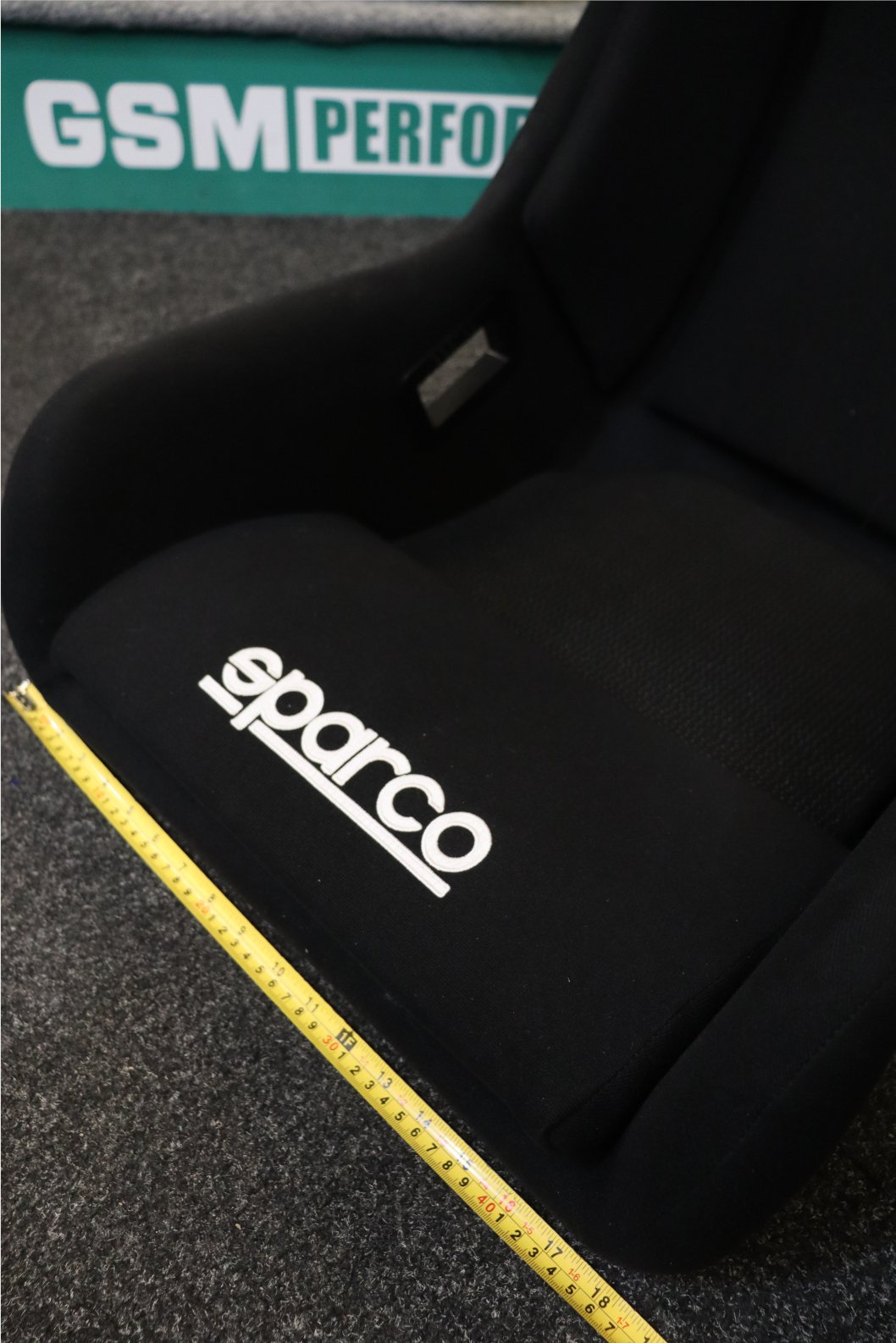
The Sparco Grid-Q is the widest fibreglass seat we recommend for the Classic Mini while still fitting without heavy modifications. Its modular padding system allows more internal room by removing or repositioning cushions.
Key Features:
- QRT fibreglass shell
- Modular removable padding
- Five harness slots
- Side-mount only
- FIA 8855-1999 approved
- Excellent shoulder support
The Grid-Q is popular because it offers generous shoulder width for a small car, while the modular shape helps fine-tune the fit for different drivers.
OMP TRS-E – Widest Steel-Frame FIA Seat That Fits
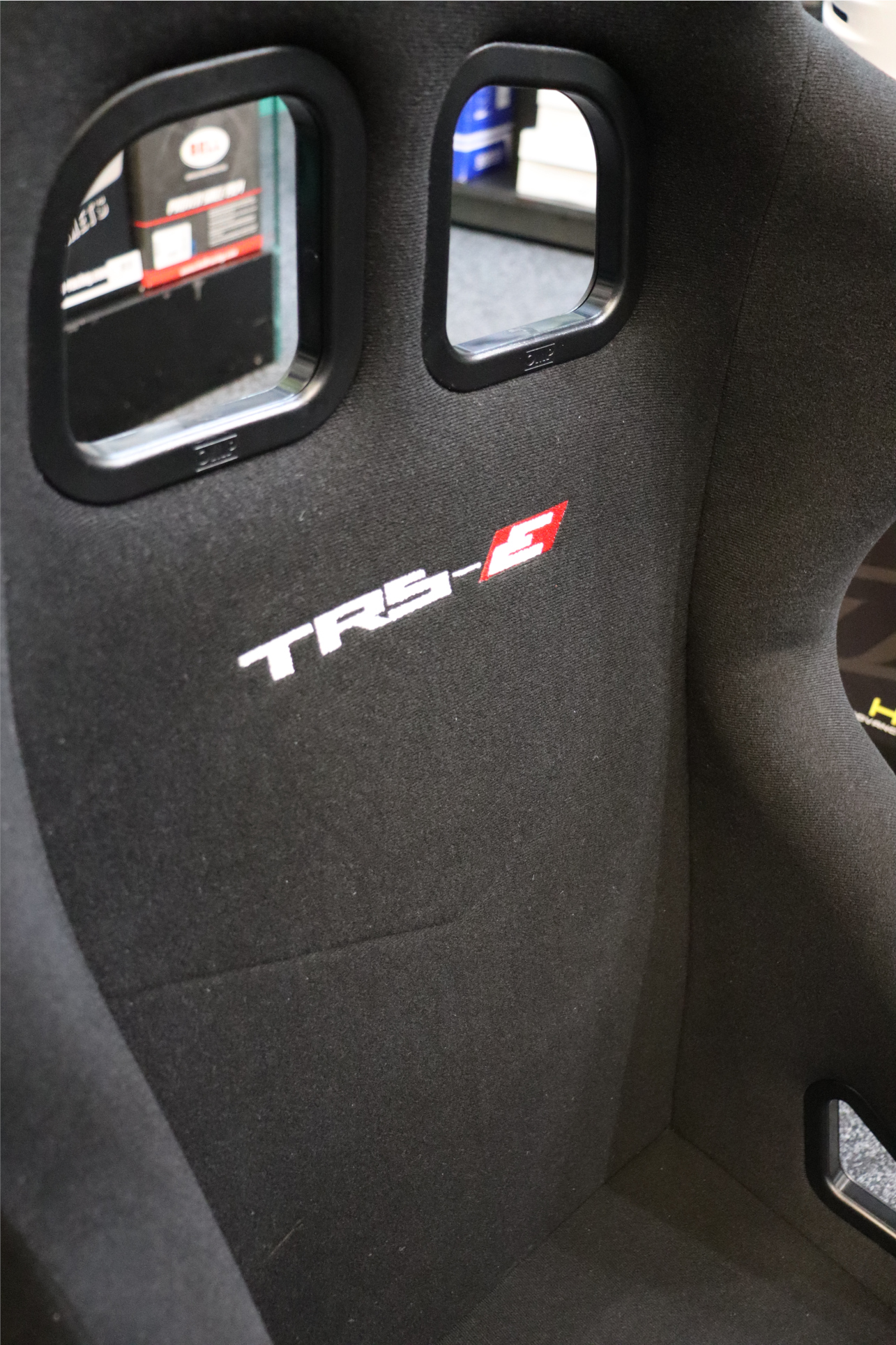
The OMP TRS-E is the widest steel-frame FIA seat we recommend for the Classic Mini. It fits the same shoulder-width limit as the Grid-Q and offers a larger internal fit thanks to a slightly more open hip area.
Key Features:
- Steel-frame construction
- FIA 8855-1999 approved
- Can be base-mounted or side-mounted
- Comfortable padded back and base
- Supportive high bolsters
This seat is versatile, durable, and affordable, making it a great FIA choice for wider drivers who still need to stay under the Mini’s tight dimensional limits.
-
From £239.40 Incl. VATFrom £199.50 Excl. VAT Select options This product has multiple variants. The options may be chosen on the product page
Seat Dimensions – Real Measurements That Fit
Every seat below has been tested and displayed in our showroom. These are the real-world dimensions that matter most for Classic Mini installations:
Sparco Grid-Q
- Shoulder width: 590 mm
- Base width: 490 mm
- Height: 870 mm
- Recommended driver waist: 30–36 inches
- Notes: Extra internal room when modular padding is removed
OMP TRS-E
- Shoulder width: 590 mm
- Base width: 500 mm
- Height: 880 mm
- Recommended driver waist: 30–34 inches
- Notes: More forgiving fit at hips; versatile mounting options
Mirco RS1
- Shoulder width: 570 mm
- Base width: 470 mm
- Height: 910 mm
- Recommended driver waist: 30–34 inches
- Notes: Snug hip fit; tallest seat that still fits with correct installation
Fitting Equipment Available for the Classic Mini
Cobra/Endurance Motorsport Direct Fit Classic Mini Subframes are the go-to solution for installing aftermarket seats in a Classic Mini. In fact, they’re the only frames currently available that directly fit the factory bolt holes of the Mini’s floor pan, which makes them the essential base for any seat upgrade.
Key Benefits:
- Factory mounting points, no drilling or fabricating required
- Adaptable for Sparco, OMP, and Mirco bucket seats
- Steel construction with a strong black powder-coated finish
- Supplied as a pair (driver + passenger)
Whether you’re building a classic restomod or adding a retro touch to your interior, these subframes are the first thing you need to bolt down.
Important note for the Mirco RS1:
We do not recommend using Mini-specific sub-frames. They make the RS1 sit too tall due to its head support design.
For the RS1, the best method is:
- Custom low-profile floor mounts, or
- Direct side-mounting to the Mini’s floor
This not only improves headroom but is safer for competition, as fixed mounts are preferred for high-speed motorsport.
Why the Classic Mini Needs a Special Setup
Let’s break this down. The Classic Mini is compact, charming, and definitely not built for modern seat bolt patterns, which makes installation a bit tricky. OMP, Sparco, and Mirco FIA bucket seats use a 345mm bolt pattern, while the Cobra Classic Mini frame uses a 291mm bolt pattern.
So how do we bridge the gap? We use:
- ✅ Cobra Classic Mini Subframes (vehicle-specific)
- ✅ Adaptation bars to match seat bolt patterns
- ✅ 20mm spacers to perfect the fit and avoid hardware interference
With this combination, everything lines up just right, and you get a flush, solid fit that’s safe and secure.
-
From £46.80 Incl. VATFrom £39.00 Excl. VAT Select options This product has multiple variants. The options may be chosen on the product page
-
From £39.00 Incl. VATFrom £32.50 Excl. VAT Select options This product has multiple variants. The options may be chosen on the product page
-
From £83.40 Incl. VATFrom £69.50 Excl. VAT Select options This product has multiple variants. The options may be chosen on the product page
How the Installation Works (And Why Each Part Matters)
To successfully install FIA bucket seats into your Mini, we use a 3-part mounting system: the Cobra subframe, adaptation bars, and side mounts. Each component is essential for getting everything aligned, secure, and functional. Here’s how it all comes together:
Step 1: Start with the Cobra Classic Mini Subframe
The Cobra Classic Mini subframe is the heart of this installation. It’s the only subframe on the market that’s designed to bolt directly into the factory seat mounting points of the Classic Mini, no drilling, no cutting, and no fabrication required. Without this subframe, there’s no clean or secure way to attach aftermarket seats inside a Mini. It’s the essential starting point that keeps everything OEM-friendly and safe.
Step 2: Add the Cobra Adaptation Bars
The next step is to mount a pair of Cobra adaptation bars onto the subframe. These bars are designed to solve the bolt pattern mismatch between your new seats and the subframe itself. These bars bolt directly to the top of the Cobra subframe and offer a new set of mounting points at the correct 345mm spacing.
Step 3: Install the seat with universal side mounts
Thanks to the universal bolt layout provided by the bars, the seat will sit correctly by using universal side mounts. Once the side mounts are attached to the seats, they will mount to the wider 345mm bolt pattern on the adaptation bars. The OMP TRS-E doesn’t have to be side-mounted, as it can also be base-mounted. Spacers may be needed to clear everything on the spacers so the base of the seat lines up flush with the adaptation bars.
Step 4: Bolt Everything Down and Check Fitment
Once all components are in place, the subframe, adaptation bars, possible spacers, and seat, you can bolt everything down securely. At this stage, you’ll want to double-check that the sliding mechanism is smooth and that there’s no interference between parts.
Want a Full List of What Fits? Check Our Classic Mini Seat Guide
For customers who want to explore even more seat options, we’ve created a dedicated Classic Mini Bucket Seat Guide, which goes deeper into all the seats we’ve measured, tested, and fitted.
This guide follows the same principle used in this blog:
- Do not exceed 590 mm at the shoulders
- Do not exceed 500 mm at the base
Following these limits ensures the best chance of a clean, modification-free install.
Summary – The Biggest FIA Seats That Fit Your Classic Mini
Finding FIA-approved seats for a Classic Mini is a challenge, but with real measurements and hands-on testing, we’ve identified the best large-fitting options without requiring heavy modifications:
- Tallest seat: Mirco RS1
- Widest fibreglass seat: Sparco Grid-Q
- Widest steel-frame seat: OMP TRS-E
These seats deliver the best balance of size, fitment, support, and safety for one of the smallest cockpits in motorsport. With the right frames, side mounts, and adapter bars, you can achieve a secure and comfortable installation tailored to your driving style.
If you’re planning a Classic Mini race build, contact our team or visit our showroom to sit in these seats yourself. We have all three on display, ready for you to compare side by side.