

 Hundreds Of Products Ready Today. Dispatch/Collection
 Can You Retain Back Seats with a Roll Cage? A Definitive Safety Guide
It’s a question we’re regularly asked: Can you keep the rear seats in your car if you’re installing a roll cage? Whether you’re building a dedicated track car, a dual-purpose road and race setup, or even a show car with motorsport-inspired aesthetics, it’s important to understand the serious safety and legal implications of combining a roll cage with rear passenger seating.
Roll cages are critical safety components in motorsport and high-performance driving. They’re designed to strengthen the vehicle’s structure and protect occupants in the event of a crash or rollover. In racing environments where helmeted occupants are secured with harnesses, cages make a measurable difference in survivability. But once you introduce unprotected passengers, especially in the back seats, the equation changes.
We often hear the question:
“Can I retain my back seats if I install a roll cage?”
From a safety standpoint, the answer is a clear no. While it’s physically possible to leave the back seats in place, using them with a roll cage installed introduces serious risks that should not be overlooked.
The core issue is that roll cages are made from hard steel tubing positioned close to where occupants sit. In the event of a crash, especially one involving side or rear impact, unhelmeted rear passengers are extremely vulnerable to striking the cage structure. Head injuries from these impacts can be catastrophic, even at lower speeds. Unlike front seat occupants, rear passengers are rarely restrained in a way that aligns with motorsport safety setups, no harnesses, no helmets, and often standard seatbelts that aren’t designed to work with cage layouts.
In this guide, we’ll explain why retaining and using rear seats alongside a roll cage is unsafe, break down the differences between cage types, and walk through best practices depending on your intended usel, whether you’re heading to the circuit or just want a more focused road setup.
Why Retaining Back Seats with a Roll Cage Is Unsafe
The primary purpose of a roll cage is to create a rigid, protective structure around the occupants of the car. While effective for motorsport, this same rigidity can pose serious risks to rear passengers.
In short, it depends on your cage design and how the car will be used. While technically possible in some situations, retaining back seats alongside a roll cage is rarely advisable for vehicles that carry rear passengers. The main reason is safety. Roll cages are hard, fixed steel structures. In the event of an accident, rear passengers, especially unhelmeted, are at risk of serious injury if their heads or limbs make contact with the cage tubing.
Many bolt-in cages pass through or very near the rear seating area, particularly the rear diagonal and cross bars. Even without rear cross bracing, the potential for impact remains. Unless you’re fitting a highly custom-built cage that accounts for rear passenger safety, with correct padding, spacing, and possibly seatbelt integration, the back seats are best left unused or removed entirely.
1. Increased Risk of Injury
Roll cages are made from solid metal tubing, which can cause severe injuries in an accident. Rear passengers are at risk of:
- Head Trauma: In the event of a collision, passengers can be thrown against the cage’s rigid metal bars, even at low speeds.
- Impact Injuries: Even with padding, the hardness of the roll cage presents significant dangers.
Why Padding Doesn’t Solve the Problem
Some drivers consider padding the roll cage to make it safer for rear passengers. However, while padding can reduce the severity of impacts, it does not eliminate the risk. Metal bars remain a hazard in any collision, particularly to the head and upper body.
2. Regulatory Restrictions
Motorsport regulatory bodies, including the FIA and Motorsport UK, prohibit the use of rear seats in vehicles fitted with internal roll cages. These restrictions are in place to minimize passenger injuries and ensure that vehicles comply with stringent safety standards.
Expert Opinions on Roll Cages and Rear Seats
The automotive and motorsport communities overwhelmingly agree that rear seats should not be used with a roll cage. Discussions on enthusiast forums highlight this issue:
- “Putting passengers in the back seat of a caged car is easily the most dangerous way to ride… Say hello to head trauma even at very slow speeds.”
- “The back seat of a caged car should always remain unoccupied. It’s just not worth the risk.”
These sentiments reflect the consensus that rear seat usage in a caged car compromises safety for passengers.
Types of Cages: Half vs. Full Roll Cages
If you’re building a dual-purpose vehicle, a half cage (rear section only) may seem appealing because it appears less intrusive. These typically mount behind the front seats and include a main hoop with optional rear diagonal and harness bars. While this layout usually makes retaining the physical rear seats possible, it doesn’t make them suitable for passengers. The exposed metal structure remains within head-striking range, and that’s a major safety issue on the road.
Full roll cages, which include front and rear sections with door bars and roof bracing, leave no practical space for rear passengers. These are generally intended for full race applications where the rear seats are stripped out and all occupants wear helmets and harnesses. If you’re going for a full cage, the rear seats are removed by default.


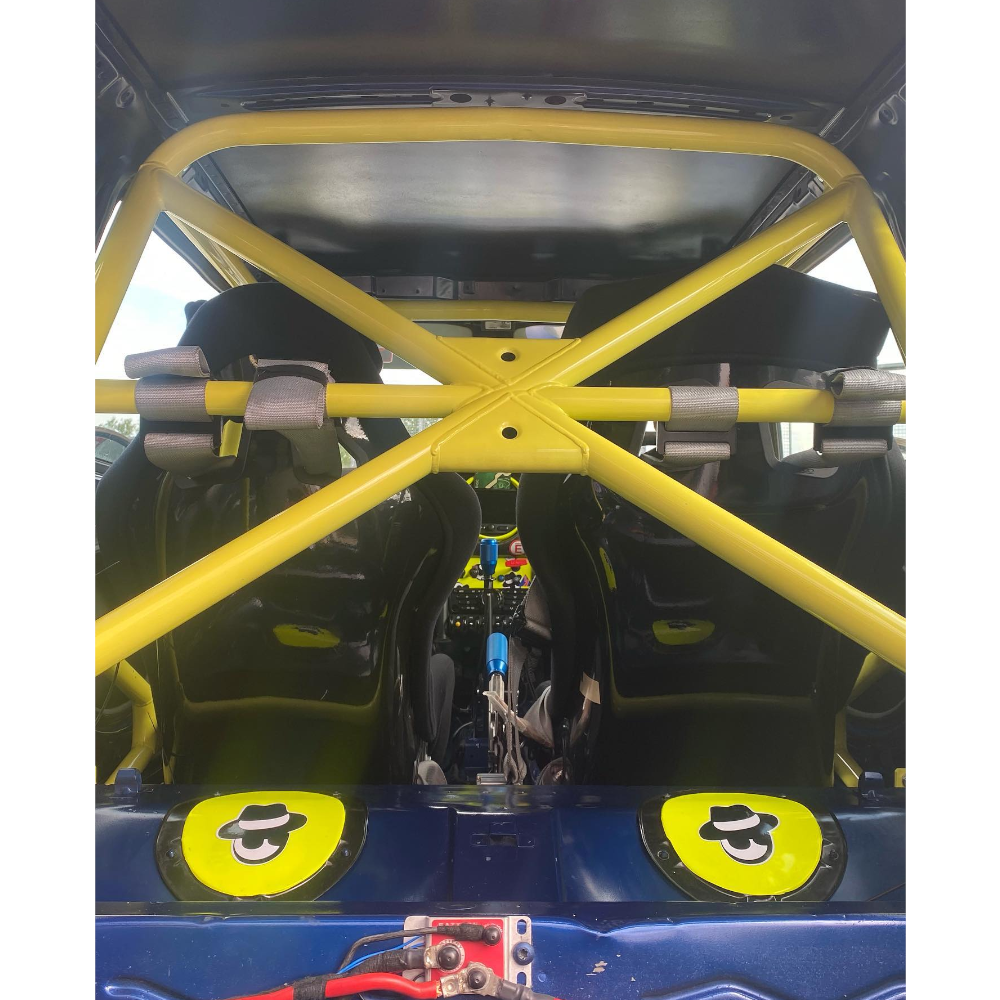
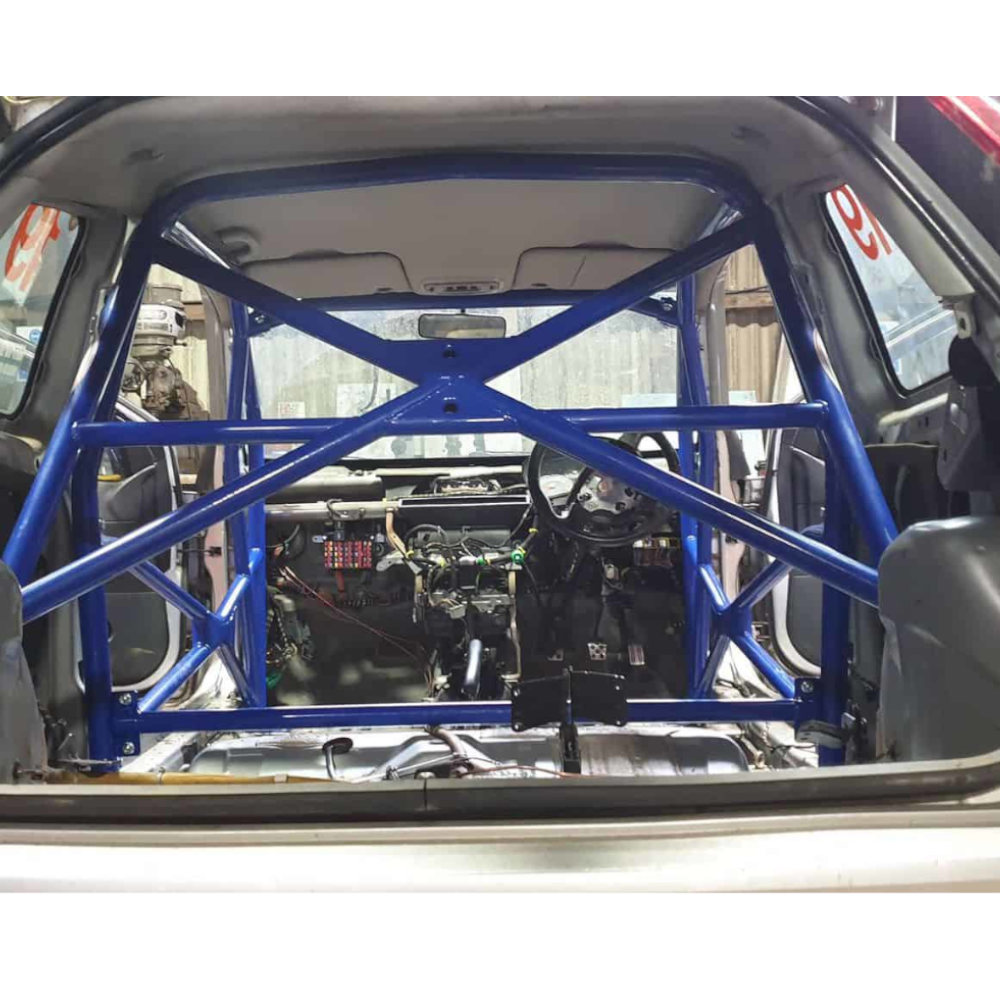
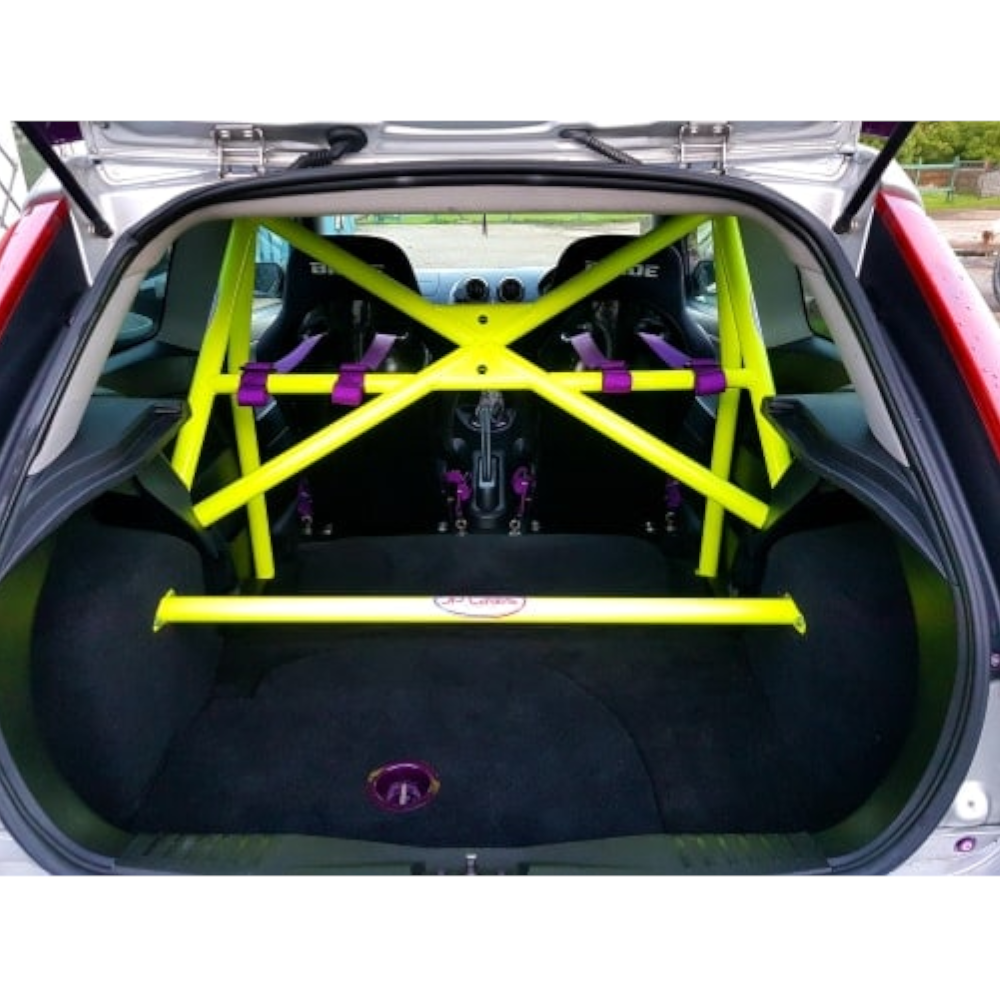
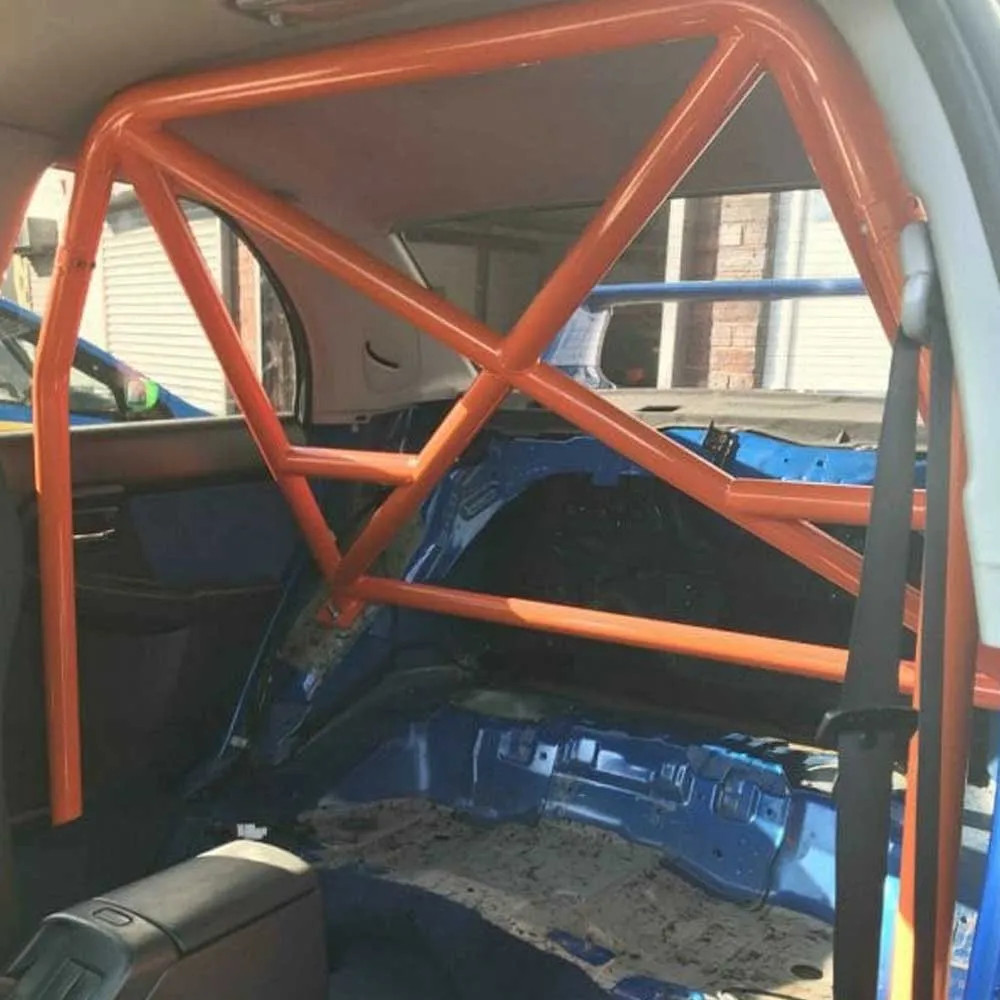
Explore Our Range of Roll Cages and Fitting Equipment
We offer a wide range of weld-in and bolt-in roll cages from top brands like Safety Devices, JP Cages, and SW Motorsport for many popular vehicle platforms. These include rear roll cages, full FIA-approved setups, and various options for fast-road or track day builds. We also offer vehicle-specific harness bars and mounting kits for those looking to improve safety without committing to a full cage setup.
Frequently Asked Questions
Can passengers legally use rear seats in a car with a roll cage?
No. Motorsport regulations and safety standards generally prohibit passengers in the rear seats of caged vehicles due to the risks posed by the roll cage bars.
What if my car is only used on the road?
Even for road use, rear seat passengers in a caged car are exposed to increased risks in a crash. This setup is not recommended for any purpose.
Can I install padding on the roll cage to make it safer?
Padding reduces, but does not eliminate, the risk of injury. It is not a sufficient solution for making rear seats safe in a caged car.
What If I Just Want a Cage for Looks?
If your build is purely cosmetic and you plan to use a show cage or half cage for appearance only, it’s still important to understand the risks. A roll cage should never be installed as a visual upgrade if you intend to carry backseat passengers, even occasionally. Aesthetic cages still present the same risks in the event of a crash, and any exposed metal near occupants becomes a liability.
Legal and Insurance Considerations
Beyond safety, there are legal and insurance implications to consider. In many regions, carrying passengers in the rear while a roll cage is installed may be against road safety regulations. Even if it’s not explicitly illegal, your insurer might consider the presence of a cage a significant modification and either increase your premium or refuse to cover rear seat occupants in a claim.
We always recommend checking with your insurance provider and local vehicle regulations before making any interior changes that affect passenger space or safety.
Why It’s Safer to Remove Rear Seats
Even if your rear seats are still physically in place, it’s generally safer to treat them as non-usable once a cage is installed. Removing them entirely makes your intentions clear; you’re not trying to carry extra passengers in a space that’s no longer safe. It also makes your interior more functional for track day prep or added storage.
Many of our customers opt to remove the rear bench, install carpeted rear delete panels, or use lightweight replacements to clean up the cabin while keeping the car road legal and practical.
Best Practice: Build for Purpose
Ultimately, your decision should match your build’s purpose. If your car is strictly for track use, a full cage and stripped rear end are ideal. If it’s a fast-road or dual-purpose car, a half cage with rear seat removal is usually the best compromise. And if rear seats are a must for family or practicality, it may be best to skip the cage or look at bolt-in harness bars instead.
Final Thoughts: Safety First
Roll cages are designed to protect occupants, but they are not compatible with the safe use of rear seats. While it may be tempting to retain rear seating functionality, the risks to passenger safety far outweigh the benefits.
At GSM Performance, we prioritize safety above all else. Our team is here to help you choose the right roll cage for your needs, whether it’s for motorsport, track days, or personal performance builds.
👉 Contact us today or visit our showroom to explore our range of roll cages from Safety Devices, Custom Cages, and JP Cages.