Call Garreth, Cameron & CallyAI: 0115 9893488

FREE UK shipping on orders over £100.00 & FREE gifts on checkout

Useful Links

Quick Access

Want to chat?

Call Garreth, Cameron, CallyAI
Today On: 0115 9893488
Click Here For Our Contact Form


What Happens if the FIA Label on Your Motorsport Bucket Seat is Damaged?

If you are running a motorsport bucket seat that is FIA approved, the small label stitched or bonded onto the seat is one of the most important parts of the entire product. It is easy to overlook because of its size and placement, but from a scrutineering point of view, it is what proves the seat is eligible for use in regulated motorsport events.

That FIA label confirms that the seat has been tested and homologated to meet specific safety standards. These standards cover things like shell strength, impact resistance, and how the seat performs under load in an accident. Without that label, there is no quick or reliable way for an official to verify that the seat meets those requirements.

In practice, when your car is inspected before an event, the scrutineer is not dismantling the seat or checking manufacturer records. They are looking directly at that label. It needs to be present, clearly visible, and readable. If it is scratched, torn, faded, or missing altogether, the seat cannot be verified as compliant, even if it is technically the exact same model that left the factory fully approved.

This is where a lot of people get caught out. The seat itself might still be structurally perfect, but the approval is tied to that visible identification. No label, or a label that cannot be read properly, means there is no way to prove the seat is still within its homologation.

From a customer point of view, it is worth treating that label with the same care as the seat shell itself. Avoid dragging the seat across floors, be careful when installing side mounts, and watch for rubbing against door cards or roll cages. Small damage over time can add up, and once that label is compromised, it becomes a much bigger issue than it might seem at first.

The FIA label is your proof of homologation

Most FIA-homologated bucket seats carry an FIA homologation label, typically paired with an FIA hologram. Motorsport UK’s own seat guidance tells competitors to check the FIA homologation label to understand the seat’s validity, and notes that seats manufactured since 1 January 2012 have the FIA label overlapped by the FIA hologram.

The FIA also explains the purpose of the hologram itself. It is designed as proof of genuineness and proof of homologation, and it is intentionally fragile so that if someone tries to peel it off or modify it, it will come apart.

This is why scrutineers care about labels. It is not just a sticker. It is the official identifier for the product’s standard, its traceability, and its date information.

Why a damaged label can fail scrutineering

For FIA 8855-1999 seats, FIA Appendix J Article 253 is very direct. It states that the limit for use is 5 years from the date of manufacture indicated on the mandatory label, and that any additional extension must be indicated by an additional label. In other words, the label is not optional, it is part of the compliance chain.

For newer 8855-2021 seats, the FIA’s Technical List for that standard (Technical List No. 91) explains that the validity of the product must always be that indicated on the product homologation label. This again links compliance to what the label says, not what we think the seat might be.

So when a label is scratched, torn, sun-faded, covered, or partially peeled, the risk is simple. If the standard, homologation number, serial details, and date information cannot be clearly checked, scrutineers have no reliable way to verify that the seat is both homologated and in-date for the event you are entering.

Key Points From This Blog

  • FIA labels confirm that a motorsport seat meets safety regulations
  • The label must be clearly visible and fully readable at all times
  • Any damage such as scratches, tears, or fading can invalidate the approval
  • No visible or readable label means the seat will fail scrutineering
  • A damaged FIA label cannot be repaired or replaced to regain approval
  • The seat can still be used for road and casual track day use
  • FIA-approved seats are required for regulated motorsport events
  • Always check the label regularly to avoid issues before an event
  • Take care during installation to prevent damage to the label

Got a question about the equipment we sell?

Ask us anything. If it helps other drivers, we’ll turn your question into a full blog guide and share the answer on our site.

Why Choose Garreth And Cameron At GSM Performance?

We listen to every customer, continually refine the advice we give based on real feedback, and only supply parts we trust to deliver the results you need.

A quick visual guide for customers

If you are unsure what to look for, the FIA label is usually positioned on the lower side of the seat shell, often near the base where the seat meets the side mounts. It is typically a small rectangular patch, roughly a few inches wide, with printed or embedded information that includes the FIA standard number and a homologation code.

Example that should pass inspection

What you should be able to read: FIA standard, homologation number, and date details

On a new seat, the label should be clean, sharp, and easy to read. The text will be clearly printed, with no fading or distortion. You should be able to make out the approval number without needing to guess or tilt the seat in the light. If you cannot read it straight away, that is already a sign something is not right.

Example that can fail inspection

What usually causes rejection: date is unreadable, label cannot be verified, or hologram shows signs of tampering or damage.

As the seat gets used, it is normal to see light wear around the edges of the label, especially if the seat is installed in a tighter cockpit. What you do not want to see is heavy scratching across the surface, peeling layers, or any part of the label missing. If the printed information is broken up or sections are completely worn away, it becomes difficult for a scrutineer to verify it properly.

If your label is damaged, what can you do?

If the FIA label is only lightly scuffed but still fully readable, you may be fine. Clean the area gently and double-check that the key details are still clearly visible. Motorsport UK’s guidance makes it clear that the label is what you use to confirm validity, so if the information can still be verified, you are in a much better position.

If the label is torn, missing, or no longer readable, there is no simple fix that restores the seat’s FIA status for scrutineered motorsport. The FIA hologram is designed to self-destruct if removed or tampered with, and is not something that can be peeled off and re-applied.

In practical terms, that means if you need FIA compliance for events, the realistic answer is replacement. The seat can still be used for road cars and casual track days where FIA homologation is not being checked, but it is no longer a safe bet for FIA or Motorsport UK scrutineered events because approval cannot be proven.

How to protect the FIA label so it does not become a problem later

The boring advice here is the best advice. Protect the label early, and you will never have to think about it again.

Try to avoid letting harness hardware, loose tools, helmet bags, or seat brackets rub against the label area during installation and day-to-day use. The FIA specifically notes the hologram is fragile and functions as a seal, which is why it does not tolerate peeling, scraping, or interference well.

Also be careful when cleaning. Aggressive solvents, harsh scrubbing, and repeated abrasion on the label area are common ways labels get damaged over time. If you are unsure whether a cleaning product is safe, use mild soap and water first and keep heavy cleaners away from the label edge.

A simple extra step we recommend is taking a clear photo of the label when the seat is new and keeping it with your paperwork. This will not replace the physical label at scrutineering, but it can help if you ever need to check dates and details without leaning into the car with a torch.

Our most popular FIA bucket seats to view in person at our showroom

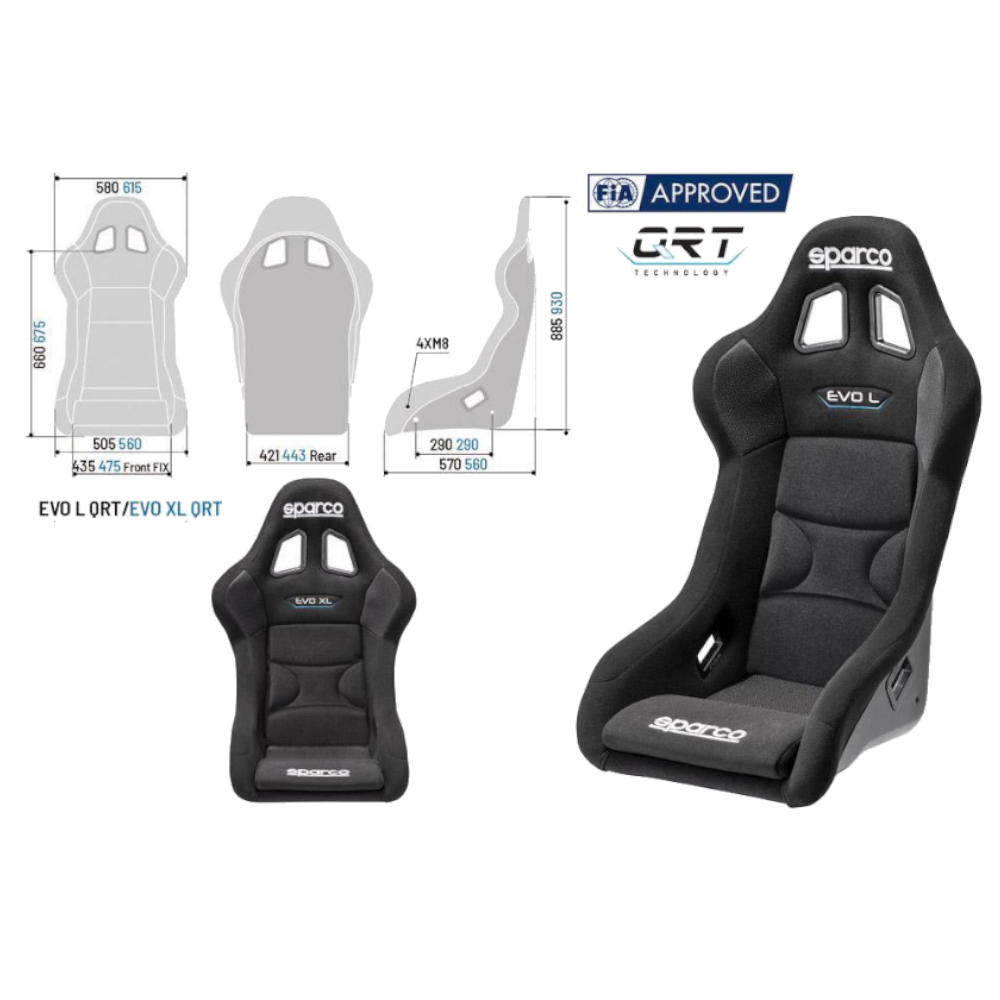
If a damaged label means you need a replacement seat for competition, the good news is that we regularly stock and display FIA bucket seats at our showroom for customers to view and test. Our showroom is built specifically for this, so you can compare fit, bolstering, and driving position properly before committing.

Here are a few popular in-store starting points across the brands that customers ask for most:

  • From £349.00 Excl. VAT Select options This product has multiple variants. The options may be chosen on the product page

  • From £589.97 Excl. VAT Select options This product has multiple variants. The options may be chosen on the product page
  • £510.00 Excl. VAT Add to basket
  • £440.00 Excl. VAT Add to basket
  • From £355.00 Excl. VAT Select options This product has multiple variants. The options may be chosen on the product page
  • £498.00 Excl. VAT Add to basket
  • From £553.00 Excl. VAT Select options This product has multiple variants. The options may be chosen on the product page

  • From £1,096.20 Excl. VAT Select options This product has multiple variants. The options may be chosen on the product page
  • From £829.50 Excl. VAT Select options This product has multiple variants. The options may be chosen on the product page
  • From £495.00 Excl. VAT Select options This product has multiple variants. The options may be chosen on the product page
Final Thoughts: Why Your FIA Label Matters More Than You Think

The FIA label on your motorsport seat might be small, but it carries a lot of importance. It is the single thing that confirms your seat meets the required safety standards for motorsport use, and without it, the seat effectively loses its eligibility for FIA regulated events.

The key takeaway is simple. If the label is damaged, unreadable, or missing, the seat is no longer considered FIA approved. It does not matter if the seat itself is still structurally sound or looks fine overall. From an inspection point of view, there is no way to verify its approval without that visible label.

This is why it is so important to look after both the seat and the label from day one. Small things like careful installation, avoiding contact with sharp edges, and regular checks can make a big difference over time. Preventing damage is always easier than dealing with the consequences later.

If the label does become damaged, there is unfortunately no way to restore the FIA approval. At that point, the seat can still be used for road driving or casual track days, but it will no longer pass scrutineering for competitive events. The only real solution for motorsport use is to replace the seat with a new, fully approved one.

For anyone serious about track driving or competition, this is something worth keeping in mind. A seat is not just about comfort or support, it is also a safety component that needs to meet strict standards. Making sure your FIA label remains intact is a small detail, but it plays a big role in keeping your setup compliant and ready for use.

Need a personal recommendation?

We're here to ensure you pick the right seat. Contact us today.

Will you fit the seat?

Provide us with your height and waist measurements and we'll be happy to talk through which recommended seats are right for your body shape.
Free UK Shipping

On all orders above £100

In-Store Shopping

Try before you buy

Easy Delivery Tracking

Aftership Tracking Updates

How can I help?

Before you leave. Is there anything I can assist with? With 17 years of industry knowledge and hands-on experience, I’m here to help. Let’s get you race ready!